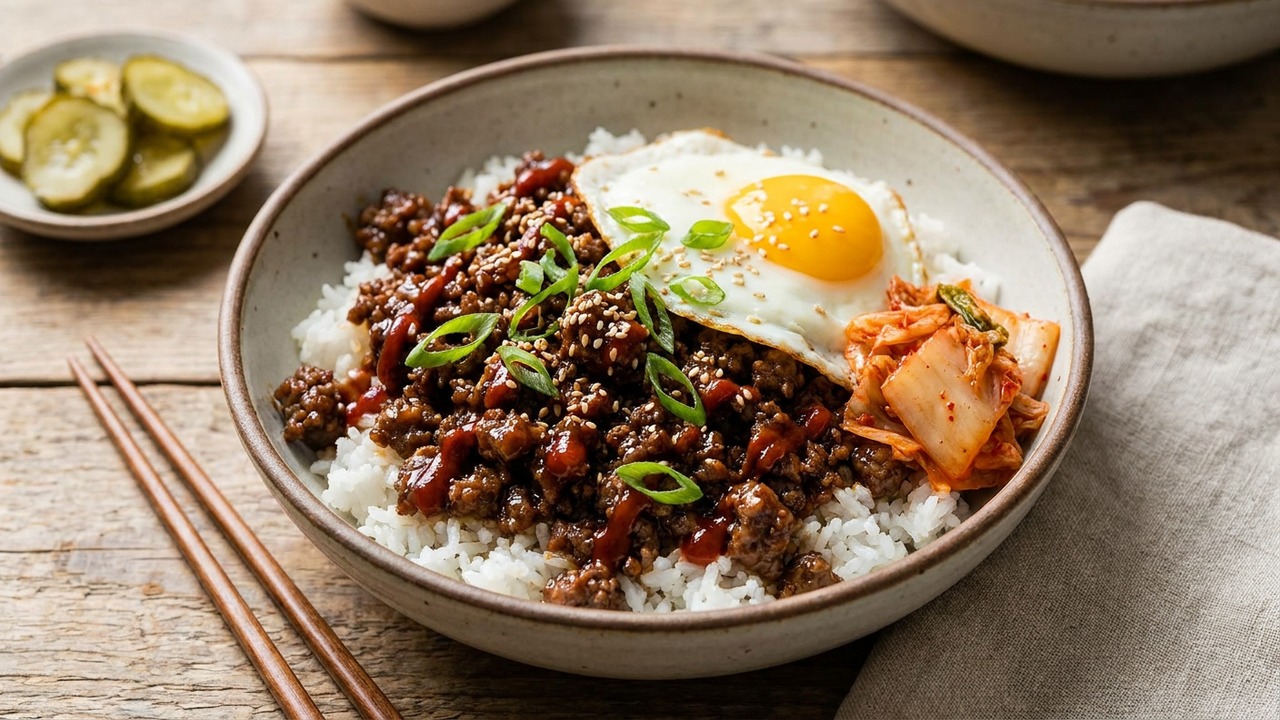
Korean Ground Beef Bowl
A quick bulgogi-inspired ground beef bowl that delivers big Korean flavors in about 30 minutes. Savory-sweet beef with gochujang and sesame makes an easy weeknight dinner served over warm rice and bright green onions.
Ingredient Spotlight
Gochujang (Korean chili paste)
Gochujang is a thick, fermented Korean paste made from red chile flakes (gochugaru), glutinous rice, fermented soy, and salt; it’s a staple in Korean cooking. It provides a complex combination of spicy, sweet, savory, and umami flavors with a sticky texture and mild heat rather than sharp chile heat. Find it in Asian markets, many grocery stores’ international aisles, or online; if unavailable, you can approximate it by mixing miso (or doenjang) with chili paste (sambal oelek or sriracha), a little brown sugar or honey, and a splash of soy sauce, though the fermented depth won’t be identical.
(paid link) — as an Amazon Associate we earn from qualifying purchases.
Ingredient Spotlight
Toasted sesame oil
Toasted sesame oil is made from sesame seeds that have been toasted before pressing, giving it an intense, nutty aroma and flavor used mainly as a finishing or flavoring oil in East Asian cuisines. It’s used in small amounts to add toasts and depth rather than for high-heat cooking because the flavor is strong and it has a low smoke point. You can find it in most supermarkets (oil aisle or Asian section) and at Asian grocers; substitutes include a small drizzle of untoasted sesame oil (less toasted flavor), a touch of tahini thinned with neutral oil, or a mild toasted nut oil such as walnut if you need a similar nutty note.
(paid link) — as an Amazon Associate we earn from qualifying purchases.
About This Recipe
This Korean Ground Beef Bowl is a fast, bulgogi-inspired weeknight main that captures the sweet-salty-spicy profile of Korean flavors without any fiddly prep. Using ground beef lets you get deep caramelization and quick cooking time, while a simple sauce of gochujang, soy, brown sugar, sesame oil and lots of garlic creates a glossy, umami-forward coating that clings to every crag of meat. Short-grain rice is my go-to here because its chew and stickiness marry perfectly with the saucy beef; the toasted sesame and fresh green onion finish keep the bowl lively instead of one-note.
What makes this version work is the balance: brown sugar tames gochujang’s fermented heat, toasted sesame oil adds nutty perfume, and a brief simmer lets the sauce thicken into a glaze without drying the beef. It’s the kind of recipe that’s forgiving — tolerant of pantry swaps and scalable for meal prep — yet rewards small technique choices like properly browning the meat and scraping up the fond. Serve it for a busy weeknight, pack it for lunches, or use it as a flavor-packed base to build vegetables and runnier eggs on top.
Ingredients for Korean Ground Beef Bowl
- 1 lb Ground beef (80/20)
- 4 cups Cooked short-grain rice
- 3 tbsp Low-sodium soy sauce
- 2 tbsp Packed brown sugar
- 1 tbsp Gochujang (Korean chili paste)
- 1 tbsp Toasted sesame oil
- 3 cloves Garlic, minced
- 2 stalks Green onions, thinly sliced
- 1 tsp Toasted sesame seeds
🛒 = paid link — as an Amazon Associate we earn from qualifying purchases.
How to Make Korean Ground Beef Bowl
Step 1: Mix the sauce
In a small bowl combine soy sauce, brown sugar, gochujang, toasted sesame oil, and the minced garlic. Whisk until smooth and the sugar dissolves; taste and adjust for sweetness or heat as desired. Set the sauce aside while you heat the pan.For this step
- 3 tbspLow-sodium soy sauce
- 2 tbspPacked brown sugar
- 1 tbspGochujang (Korean chili paste)
- 1 tbspToasted sesame oil
- 3 clovesGarlic, minced
Step 2: Brown the ground beef
Heat a large skillet over medium-high heat. Add the ground beef and cook, breaking it up with a spatula, until well browned and no longer pink, 6 to 8 minutes; drain excess fat if there's a lot.For this step
- 1 lbGround beef (80/20)
Step 3: Simmer with the sauce
Reduce heat to medium and pour the prepared sauce over the browned beef, stirring to coat. Let the mixture simmer for 3 to 5 minutes so the sauce thickens slightly and melds with the beef, scraping up any browned bits from the pan.Step 4: Assemble and garnish
Divide warm cooked rice among bowls and top each with a generous scoop of the saucy beef. Sprinkle sliced green onions and toasted sesame seeds over each bowl and serve immediately; offer extra gochujang or soy sauce at the table if desired.For this step
- 4 cupsCooked short-grain rice
- 2 stalksGreen onions, thinly sliced
- 1 tspToasted sesame seeds


- In a small bowl combine soy sauce, brown sugar, gochujang, toasted sesame oil, and the minced garlic. Whisk until smooth and the sugar dissolves; taste and adjust for sweetness or heat as desired. Set the sauce aside while you heat the pan.
- Heat a large skillet over medium-high heat. Add the ground beef and cook, breaking it up with a spatula, until well browned and no longer pink, 6 to 8 minutes; drain excess fat if there's a lot.
- Reduce heat to medium and pour the prepared sauce over the browned beef, stirring to coat. Let the mixture simmer for 3 to 5 minutes so the sauce thickens slightly and melds with the beef, scraping up any browned bits from the pan.
- Divide warm cooked rice among bowls and top each with a generous scoop of the saucy beef. Sprinkle sliced green onions and toasted sesame seeds over each bowl and serve immediately; offer extra gochujang or soy sauce at the table if desired.
Korean Ground Beef Bowl Tips
Choose the right beef
An 80/20 ground beef gives the best balance of flavor and juiciness; leaner beef will cook faster but can dry out and lack caramelized fat for flavor.
Brown before saucing
Let the beef develop some brown crust and scrape the fond into the sauce when you add it, because those browned bits carry concentrated savory flavor.
Adjust gochujang level
Start with one tablespoon and taste after simmering; add more gochujang for heat or a bit more brown sugar if you want it sweeter and milder.
Toast seeds and onions
Lightly toast sesame seeds in a dry skillet and slice green onions on a bias just before serving to preserve their brightness and texture.
Manage excess fat
If there’s a lot of rendered fat, spoon off most but not all before adding the sauce so the glaze still clings without becoming greasy.
Korean Ground Beef Bowl Variations and Substitutions
Make it vegetarian
Swap the beef for chopped oyster mushrooms or crumbled firm tofu sautéed until golden, and increase the gochujang by a half teaspoon to make up for the reduced meaty depth.
Ground pork or chicken
Ground pork brings a touch more sweetness and pairs beautifully with gochujang, while ground chicken keeps calories lower—just brown thoroughly for flavor.
Low-carb option
Serve the saucy beef over cauliflower rice or sautéed bok choy instead of short-grain rice for a lower-carb bowl that still soaks up the sauce.
Add quick veg
Stir in blanched spinach, julienned carrots, or snap peas in the last minute of simmering for color, texture and extra nutrition.
How to Store and Make Korean Ground Beef Bowl Ahead
Store leftover beef and rice in separate airtight containers in the refrigerator for up to 3–4 days; keeping them separate helps preserve texture. To reheat, warm the beef gently in a skillet with a splash of water or soy sauce to loosen the glaze, then spoon over freshly steamed rice and finish with fresh scallions and sesame seeds; microwave reheating is fine if covered, but stir midway for even heat.
What to Serve With Korean Ground Beef Bowl
Offer kimchi or a quick cucumber-vinegar salad on the side to cut through the richness, and consider topping each bowl with a soft-fried or sunny-side-up egg for extra silkiness. For drinks, a crisp lager, chilled soju, or cold barley tea complements the dish’s sweet-spicy profile, and shallow bowls help the rice and beef mingle for an attractive, comforting presentation.
Korean Ground Beef Bowl FAQs
Can I use leaner ground beef?
Yes, but leaner beef (90/10 or higher) will produce less fat and less caramelization, so brown it a bit longer and consider adding 1 teaspoon of oil to the pan for flavor and moisture.
Is gochujang absolutely necessary?
Gochujang adds fermented depth and heat, but if you don't have it you can substitute a mixture of miso and a touch of chili paste or sriracha, then adjust sugar to balance the flavor.
Can I freeze the cooked beef?
Yes—the sauced beef freezes well for up to 2 months in a freezer-safe container; thaw overnight in the refrigerator before reheating, and refresh with a splash of soy or water if the sauce thickened too much.
How do I make it less salty?
Use low-sodium soy sauce as called for, and taste after the sauce has simmered; dilute with a teaspoon or two of water or a squeeze of rice vinegar if it tastes too salty.
Can I prep components ahead?
You can make the sauce and brown the beef a day ahead; store separately from rice and reheat together when ready to serve, adding fresh green onions and toasted sesame seeds just before plating.
About the author
Jake WoodsHello, I'm Jake. I started this recipe site with the idea that I hated recipe websites that overwhelm you with long stories and ads just to see plain content that's not helpful. My goal is to provide you with quality recipes, simple ideas and a fun cooking experience. There's lots of fun things to cook, and I think as you browse the site you'll find that TopShelf.Recipes is the place for quality recipes on the web.
See all recipes by Jake Woods →Ratings & Reviews
Did you make this recipe?
Be the first to share your experience.
Nutrition Facts
Per serving: 1 bowl
Nutrition values are estimated from USDA ingredient data and may vary based on preparation, brands, and portion sizes. Values are provided for informational purposes only.
Keep Reading
Guides & articles for this recipe

Healthy Eating
Gluten-Free Weeknight Grilling Plan
A 7-day gluten-free weeknight grilling plan with quick, family-friendly recipes, prep-ahead timelines, and a printable shopping list that spotlights late-summer produce and pantry staples. Includes clear cross-contamination safety tips and simple swaps to keep dinners fast and crowd-pleasing.

Healthy Eating
Low-Fat Grill Swaps for Big Flavor
A practical guide to trimming fat from grilled meals without losing juiciness or char. Learn yogurt- and citrus-based marinades, lean protein picks, searing and indirect-heat tricks, plus 5 quick low-fat marinades and a simple weeknight plan.

Recipes
DIY Edible Monster Eyes Candy
Make safe, fun edible monster eyes for cupcakes, cookies, and candy trays. Step-by-step recipes show baking-soda balls, chocolate and fondant eyes, wafer-print options, plus assembly, storage, and kid-friendly safety tips.
More from Stovetop
View all Stovetop recipes →
Grilled S'mores Skewers with Spiced Chocolate

Crockpot Mississippi Pot Roast with Pepperoncini and Butter

Classic Marinara Sauce from Scratch

One-Pot Beef Bolognese

Rotisserie Chicken and Wild Rice Soup

Xiao Long Bao Soup Dumplings

Labor Day Grilled Lobster Rolls with Charred Scallion Brown Butter & Lemon‑Herb Aioli

Stovetop Dutch-Oven Herb-Crusted Beef Roast with Pan Gravy

Dubai Tacos
Ask me anything about this recipe — substitutions, scaling, techniques, timing.
Powered by AI · 6 questions per 5 minutes, 30 per day