Santa Maria Grilled Tri-Tip Roast with Dry Rub and Chimichurri
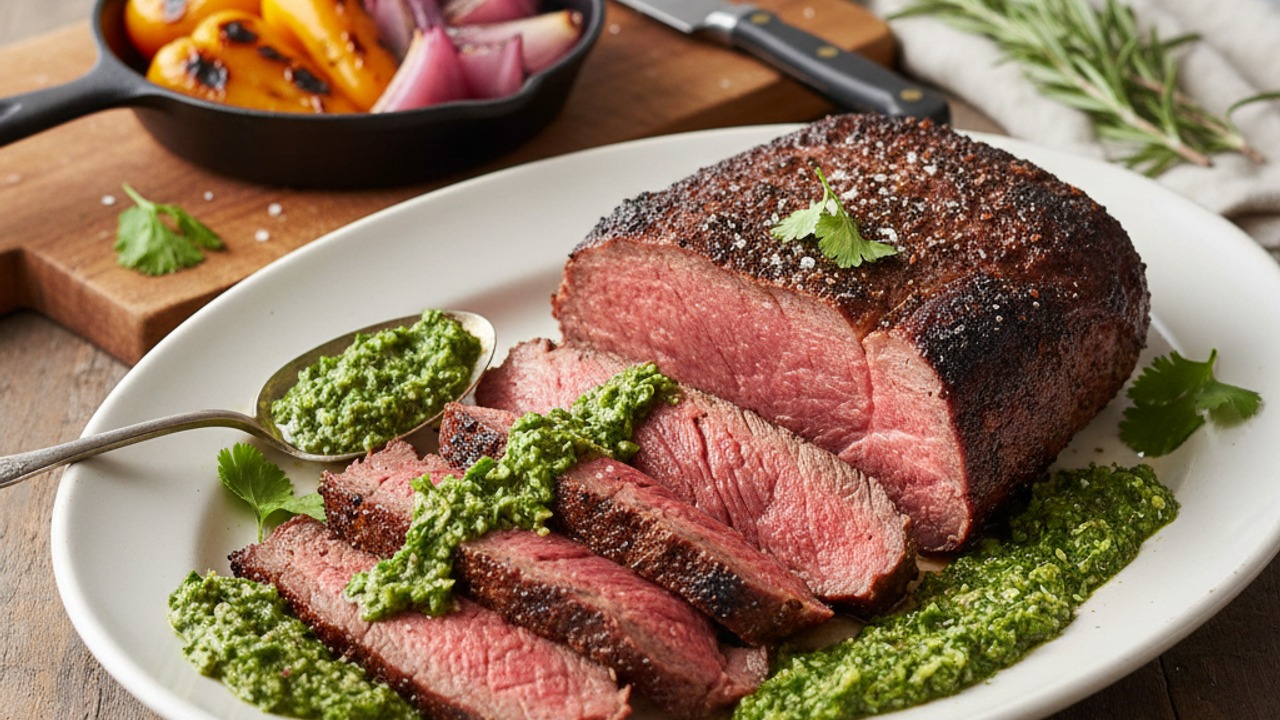
A classic Santa Maria–style tri-tip grilled over two-zone heat with a smoky, slightly sweet dry rub and bright, herb-forward chimichurri. Crisped on the outside and tender-pink inside, it’s a show-stopping roast for backyard gatherings.
Jake Woods's note
"This Santa Maria tri-tip is simple to execute but delivers big, grill-forward flavor—ideal for weekend cookouts and holidays. Home cooks will love the easy two-zone technique and the bright chimichurri that lifts the rich beef."
About This Recipe
Santa Maria tri-tip is an exercise in contrasts: a thin cap of fat and a dark, caramelized crust give way to a tender, lean interior that benefits from quick, hot searing and patient finishing. This version leans into classic California barbecue flavors with smoked paprika and a touch of brown sugar in the rub to deepen the crust and introduce a hint of sweetness that plays nicely against the herbaceous brightness of a parsley-forward chimichurri. The two-zone grill method gives you the best of both worlds — intense Maillard development followed by gentle indirect cooking so the center stays pink and juicy.
What makes this recipe work is small decisions that add up: a brief dry-brine in the refrigerator to firm the surface for a better sear, leaving a thin fat cap for flavor without excess flare-ups, and a simple chimichurri that’s rustic rather than pureed so it acts like a lively condiment rather than a sauce that masks the beef. Slice thinly across the grain at a 45-degree angle, serve the chimichurri on the side for guests to control the herb punch, and you’ve got a relaxed backyard centerpiece that feels elevated without fuss.
Ingredients for Santa Maria Grilled Tri-Tip Roast with Dry Rub and Chimichurri
- 2 1/2 lb Tri-tip roast
- 1 1/2 tbsp Kosher salt
- 1 tsp Freshly ground black pepper
- 1 tsp Garlic powder
- 1 tbsp Smoked paprika
- 1 tbsp Brown sugar (light or dark)
- 3 cloves Fresh garlic cloves
- 1 cup Fresh flat-leaf parsley, packed
- 1/2 cup Extra-virgin olive oil
- 2 tbsp Red wine vinegar
How to Make Santa Maria Grilled Tri-Tip Roast with Dry Rub and Chimichurri
Step 1: Trim and apply dry rub
Trim any excessive fat from the tri-tip, leaving a thin cap for flavor, then pat the roast dry with paper towels. In a small bowl combine kosher salt, black pepper, garlic powder, smoked paprika and brown sugar; rub the mixture all over the roast, pressing it into the meat. Let the seasoned tri-tip rest uncovered in the refrigerator for at least 30 minutes or up to 2 hours to dry the surface and meld flavors; bring to room temperature about 30 minutes before grilling.For this step
- 2 1/2 lbTri-tip roast
- 1 1/2 tbspKosher salt
- 1 tspFreshly ground black pepper
- 1 tspGarlic powder
- 1 tbspSmoked paprika
- 1 tbspBrown sugar (light or dark)
Step 2: Make chimichurri
While the meat rests, mince the fresh garlic and very finely chop the parsley, or pulse briefly in a food processor for a rustic texture. Stir together the garlic, parsley, extra-virgin olive oil and red wine vinegar in a bowl, season to taste with a pinch of salt and extra pepper if desired, and let sit while you heat the grill to let flavors marry.For this step
- 3 clovesFresh garlic cloves
- 1 cupFresh flat-leaf parsley, packed
- 1/2 cupExtra-virgin olive oil
- 2 tbspRed wine vinegar
Step 3: Prepare the grill for two-zone cooking
Light one side of your grill to create a hot direct-heat zone and leave the other side unlit for indirect cooking (aim for 450–550°F / 230–290°C over the hot zone and 300–350°F / 150–175°C over indirect). Clean and oil the grate to prevent sticking, and have an instant-read thermometer on hand to monitor internal temperature.Step 4: Sear over high heat, then finish indirect
Sear the tri-tip fat-side down and then on all sides over the hot direct zone for about 4–6 minutes per side, until a deep brown crust forms. Move the roast to the indirect side and close the lid, cooking until the internal temperature reaches 125–130°F (52–54°C) for medium-rare (expect another 15–25 minutes depending on size).Step 5: Rest and slice
Transfer the tri-tip to a cutting board and tent loosely with foil; rest for 10–15 minutes so juices redistribute and carryover raises the temperature a few degrees. Identify the grain direction and slice thinly across the grain at a 45-degree angle for the most tender bites.Step 6: Serve with chimichurri
Arrange slices on a platter and spoon chimichurri over the meat or serve it on the side for guests to add as they like. This bright salsa pairs beautifully with grilled vegetables, roasted potatoes or a simple salad.


- Trim any excessive fat from the tri-tip, leaving a thin cap for flavor, then pat the roast dry with paper towels. In a small bowl combine kosher salt, black pepper, garlic powder, smoked paprika and brown sugar; rub the mixture all over the roast, pressing it into the meat. Let the seasoned tri-tip rest uncovered in the refrigerator for at least 30 minutes or up to 2 hours to dry the surface and meld flavors; bring to room temperature about 30 minutes before grilling.
- While the meat rests, mince the fresh garlic and very finely chop the parsley, or pulse briefly in a food processor for a rustic texture. Stir together the garlic, parsley, extra-virgin olive oil and red wine vinegar in a bowl, season to taste with a pinch of salt and extra pepper if desired, and let sit while you heat the grill to let flavors marry.
- Light one side of your grill to create a hot direct-heat zone and leave the other side unlit for indirect cooking (aim for 450–550°F / 230–290°C over the hot zone and 300–350°F / 150–175°C over indirect). Clean and oil the grate to prevent sticking, and have an instant-read thermometer on hand to monitor internal temperature.
- Sear the tri-tip fat-side down and then on all sides over the hot direct zone for about 4–6 minutes per side, until a deep brown crust forms. Move the roast to the indirect side and close the lid, cooking until the internal temperature reaches 125–130°F (52–54°C) for medium-rare (expect another 15–25 minutes depending on size).
- Transfer the tri-tip to a cutting board and tent loosely with foil; rest for 10–15 minutes so juices redistribute and carryover raises the temperature a few degrees. Identify the grain direction and slice thinly across the grain at a 45-degree angle for the most tender bites.
- Arrange slices on a platter and spoon chimichurri over the meat or serve it on the side for guests to add as they like. This bright salsa pairs beautifully with grilled vegetables, roasted potatoes or a simple salad.
Santa Maria Grilled Tri-Tip Roast with Dry Rub and Chimichurri Tips
Dry-brine for flavor
Letting the rubbed tri-tip rest uncovered in the fridge concentrates flavor and dries the surface for a better crust when searing.
Trim, but keep fat
Remove excessive fat but leave a thin cap to baste the meat as it cooks; too much fat causes flare-ups and uneven charring.
Use two-zone heat
Sear over direct high heat to build a crust, then move to indirect heat to finish to your target temperature without burning the exterior.
Monitor internal temp
Insert an instant-read thermometer into the thickest part and remove at 125–130°F for medium-rare, accounting for a few degrees of carryover.
Slice across the grain
Locate the muscle grain and cut thin slices at a 45-degree angle to shorten fibers and maximize tenderness in every bite.
Santa Maria Grilled Tri-Tip Roast with Dry Rub and Chimichurri Variations and Substitutions
Citrus chimichurri
Add finely grated lemon and orange zest and a tablespoon of fresh juice to the chimichurri for a brighter, more summery finish that cuts through the beef.
Spicy chimichurri
Stir in 1 finely chopped jalapeño or ½ teaspoon red pepper flakes to the sauce for a peppery kick that complements the smoked paprika rub.
Coffee-smoked rub
Swap the brown sugar for a tablespoon of finely ground dark roast coffee and add a pinch of cumin for a deeply roasted, slightly bitter crust that pairs well with beef.
Oven finish (no grill)
Reverse-sear the tri-tip by searing in a hot cast-iron pan and finishing in a 350°F oven until it reaches 125–130°F, maintaining the same resting and slicing steps.
How to Store and Make Santa Maria Grilled Tri-Tip Roast with Dry Rub and Chimichurri Ahead
Store leftover sliced tri-tip in an airtight container in the refrigerator for up to 3–4 days; keep the chimichurri separate in its own jar to preserve freshness. For make-ahead, the dry-rubbed roast can sit in the fridge overnight uncovered for an intensified crust. Reheat gently in a low oven (250°F) wrapped in foil or quickly in a hot skillet with a splash of oil; avoid microwaving which dries the meat.
What to Serve With Santa Maria Grilled Tri-Tip Roast with Dry Rub and Chimichurri
Serve this tri-tip with classic Santa Maria sides like garlicky roasted potatoes or pinquito beans, and a platter of grilled seasonal vegetables—charred peppers and asparagus are excellent. For drinks, choose a medium-bodied red like Zinfandel or Malbec, or a crisp lager to refresh the palate between herbaceous bites of chimichurri.
Santa Maria Grilled Tri-Tip Roast with Dry Rub and Chimichurri FAQs
Can I cook this on a gas grill?
Yes — set one burner high for direct searing and leave adjacent burners off or low for an indirect zone, monitoring temperatures as you would on charcoal.
How long should I sear the tri-tip?
Sear 4–6 minutes per side to develop a deep crust, but rely on color and an instant-read thermometer rather than exact minutes, since thickness and grill temperature vary.
Can I make the chimichurri ahead of time?
You can make chimichurri a day ahead; the flavors meld well, but if storing longer, add a little extra vinegar or lemon just before serving to brighten it up.
What if my tri-tip is larger or smaller than 2.5 pounds?
Adjust finish time on the indirect side: smaller roasts will reach temperature faster, larger roasts take longer; always base timing on internal temperature rather than clock time.
Should I tie the tri-tip or butterfly it for even cooking?
If your tri-tip is very uneven, a loose truss or butterflying and folding it into a more uniform shape helps it cook more evenly, but many cooks prefer the natural triangle and account for variability by monitoring temp closely.
About the author
Jake WoodsHello, I'm Jake. I started this recipe site with the idea that I hated recipe websites that overwhelm you with long stories and ads just to see plain content that's not helpful. My goal is to provide you with quality recipes, simple ideas and a fun cooking experience. There's lots of fun things to cook, and I think as you browse the site you'll find that TopShelf.Recipes is the place for quality recipes on the web.
See all recipes by Jake Woods →Ratings & Reviews
Did you make this recipe?
Be the first to share your experience.
Nutrition Facts
Per serving: 1 serving
Nutrition values are estimated from USDA ingredient data and may vary based on preparation, brands, and portion sizes. Values are provided for informational purposes only.
Keep Reading
Guides & articles for this recipe

Healthy Eating
Gluten-Free Weeknight Grilling Plan
A 7-day gluten-free weeknight grilling plan with quick, family-friendly recipes, prep-ahead timelines, and a printable shopping list that spotlights late-summer produce and pantry staples. Includes clear cross-contamination safety tips and simple swaps to keep dinners fast and crowd-pleasing.

Cocktails & Drinks
Shakerless Cocktails for Backyard Grilling
Easy, tool-free cocktail recipes designed for backyard grilling and outdoor hangs. Find single-serve and batch formulas, quick portable infusions, improvised gear hacks, and simple cocktail pairings for grilled meats and vegetables.

Healthy Eating
Lean Labor Day Grilling Menu
A Labor Day grilling guide that swaps heavy BBQ classics for lighter, flavorful options—think lean proteins, charred vegetables, and low‑sugar sauces. Includes make-ahead meal prep, portioning tips, and a short shopping checklist for healthy, crowd-pleasing cookouts.
More from Grilling
View all Grilling recipes →
Tandoori Yogurt Marinated Grilled Chicken (Tandoori Style on the Grill)

Labor Day Grilled Lobster Rolls with Charred Scallion Brown Butter & Lemon‑Herb Aioli

Bulgogi Smash Burger

Campfire‑Smoked Potato Salad with Mustard‑Bacon Vinaigrette — A Labor Day Grilling Side for Steak

Hanger Steak with Shallot Sauce
Grilled Pineapple Upside-Down Cake

Spicy Grilled Shrimp Skewers with Garlic Lime Marinade

Honey Garlic Grilled Thin-Sliced Chicken Breasts

Coffee and Porcini Dry-Rub Steaks with RUB PRIME STEAK Finish
Ask me anything about this recipe — substitutions, scaling, techniques, timing.
Powered by AI · 6 questions per 5 minutes, 30 per day