Smoky Pozole Rojo
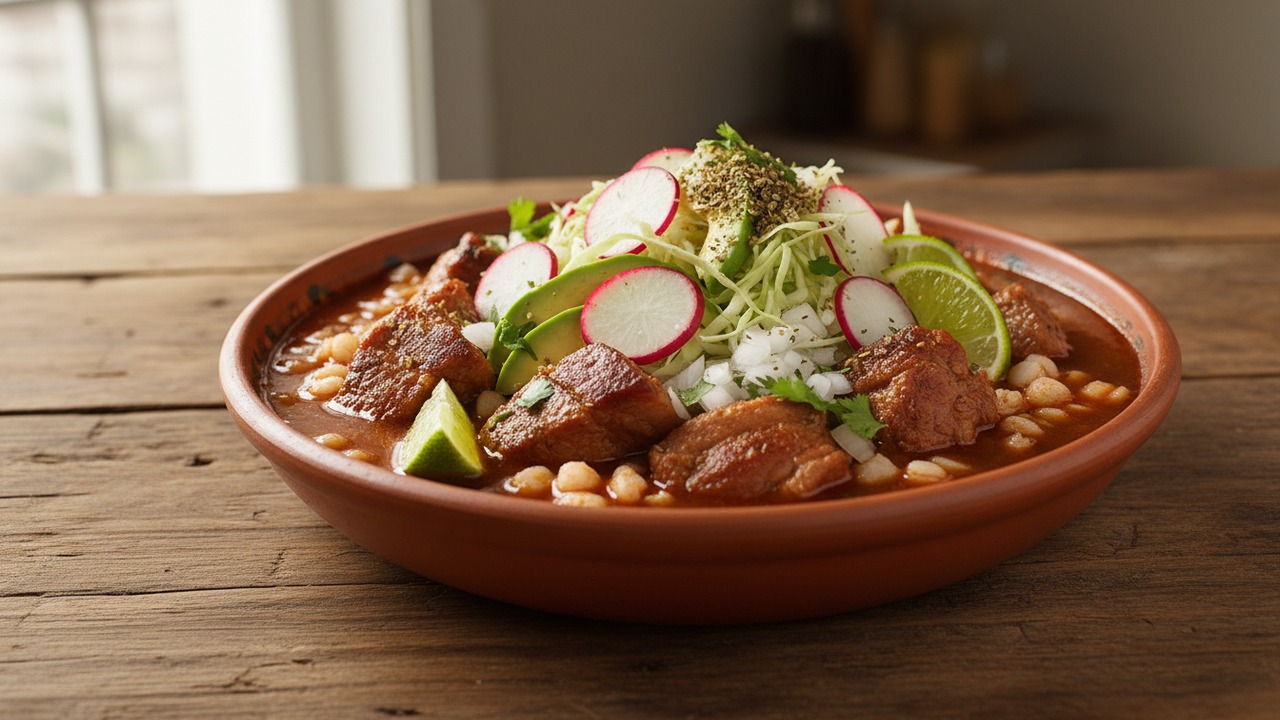
A crowd-ready pork pozole rojo featuring charred guajillo and ancho chiles, hominy, and a kiss of smoked paprika. Make it ahead, then finish on the grill for a bright, smoky Labor Day centerpiece with an interactive garnish station.
Ingredient Spotlight
Dried guajillo chiles, stems and seeds removed
Dried guajillo are the dried form of the mirasol chile, common in Mexican cuisine; they lend a bright, fruity, tangy flavor with mild-to-medium heat and subtle berry/tomato notes. You’ll find them at Latin markets, well-stocked supermarkets, or online; they rehydrate quickly for sauces and moles. If unavailable, substitute with pasilla or a mix of ancho (for sweetness) plus a pinch of smoked paprika to mimic depth and mild heat.
Ingredient Spotlight
Dried ancho chiles, stems and seeds removed
Ancho chiles are dried poblano peppers used extensively in Mexican cooking; they’re mild in heat with rich, sweet, raisin-like, and chocolatey/earthy flavors. They’re sold dried at Hispanic grocery stores, many supermarkets, and online and are a backbone for sauces, adobos, and moles. Good substitutes include mulato or pasilla chiles, or a mild New Mexico chile powder; if using powdered chiles, add a touch of cocoa or smoked paprika to approximate the ancho’s depth.
Ingredient Spotlight
Canned hominy, drained (about 15 oz / 425 g each)
Hominy is whole corn kernels that have been nixtamalized (treated with an alkaline solution), producing large, puffed, slightly chewy kernels with a nutty, corn-forward flavor central to Mexican pozole. Canned hominy is available in the Latin foods aisle, at Hispanic markets, and online; dried hominy (needing long soaking/cooking) is sold as lye-treated dried corn or ‘masa hominy’ too. If you can’t find hominy, frozen or canned large-kernel field corn can be a quick stand-in, or use dried hominy (rehydrated and simmered) for the closest texture and flavor.
Jake Woods's note
"This pozole is built for a crowd: simmered low for fall-apart pork and layered chile flavor, then finished on the grill so every bowl gets a subtle char. Home cooks will love that most of the work is done ahead—finish and serve hot at the cookout with an easy garnish station."
About This Recipe
This smoky pozole rojo is built for the sort of backyard gatherings where people mill around the grill and come back for seconds. Using bone-in texture from a well-marbled pork shoulder, this version leans on charred guajillo and ancho chiles for fruity, raisin-like sweetness and a low, rounded heat; a pinch of smoked paprika amplifies that campfire note without pushing the chile into smokiness territory. Canned hominy keeps the cooking time manageable while contributing that distinctive pop and chew that makes pozole feel substantial and celebratory.
Make-ahead is central to why this recipe works for a holiday cookout: the flavors deepen overnight and the firmness of refrigerated fat makes degreasing simple. On the day, finish the pot on the grill so the broth tightens and picks up charcoal smoke, and for textural contrast shred and sear the pork directly on the grates for crisped edges. Serve it with an interactive garnish station—thin radish, lime, cabbage and oregano—so guests can brighten bowls to taste and the meal stays relaxed but memorable.
Ingredients for Smoky Pozole Rojo
- 4 lb Boneless pork shoulder, cut into 2" chunks
- 6 pieces Dried guajillo chiles, stems and seeds removed
- 2 pieces Dried ancho chiles, stems and seeds removed
- 1 whole Yellow onion (medium), halved
- 6 cloves Garlic cloves
- 2 tsp Smoked paprika
- 3 15 oz cans Canned hominy, drained (about 15 oz / 425 g each)
- 10 cups Chicken stock (or water)
- 2 tbsp Kosher salt
- 2 tbsp Neutral oil (vegetable or canola)
How to Make Smoky Pozole Rojo
Step 1: Char, rehydrate and puree the chiles
Over a gas flame or in a hot dry skillet, briefly char the guajillo and ancho chiles until fragrant and slightly blistered (do not burn). Transfer to a bowl, cover with hot water and soak 15–20 minutes until pliable. In a blender, combine drained chiles, half the onion (reserve the other half for the pot), garlic, smoked paprika and 1/2–1 cup of the soaking liquid; blend to a smooth purée. Strain through a fine sieve if you prefer a silky broth.For this step
- 6 piecesDried guajillo chiles, stems and seeds removed
- 2 piecesDried ancho chiles, stems and seeds removed
- 1 wholeYellow onion (medium), halved
- 6 clovesGarlic cloves
- 2 tspSmoked paprika
Step 2: Brown the pork
Pat pork chunks dry and season with 1 Tbsp of the kosher salt. Heat oil in a large heavy pot or Dutch oven over medium-high heat and brown pork in batches until well caramelized, 3–4 minutes per side; transfer browned pieces to a plate. Reduce heat if the pot begins to smoke.For this step
- 4 lbBoneless pork shoulder, cut into 2" chunks
- 2 tbspNeutral oil (vegetable or canola)
Step 3: Simmer the pozole with hominy
Return all pork to the pot, add the reserved onion half (coarsely chopped), the chile purée, chicken stock and remaining 1 Tbsp salt. Bring to a gentle simmer, skimming any foam, then add drained hominy. Cover and simmer low for 2–2½ hours until pork is fork-tender and broth is richly flavored. Taste and adjust salt and heat (add a pinch of sugar if the chile is too acidic).For this step
- 3 15 oz cansCanned hominy, drained (about 15 oz / 425 g each)
- 10 cupsChicken stock (or water)
Step 4: Make-ahead and cool
Cool slightly, then refrigerate up to 48 hours (flavors deepen) or freeze for longer storage. If refrigerated, the fat will firm—remove excess fat from the surface before reheating for a cleaner broth. Reheat gently on the stovetop before grill finishing.Step 5: Finish on the grill for a smoky cookout finish
For the smoky finishing touch, bring the reheated pozole to the grill in a heavy grill-safe pot or cast-iron Dutch oven over medium-high heat with the lid off. Grill for 10–15 minutes, stirring occasionally, to allow slight reduction and charcoal smoke to infuse the broth. For extra texture, remove pork, shred it, sear the shreds directly on a hot grill for 3–5 minutes until charred at the edges, then return to the pot.Step 6: Garnish station, vegetarian swap and scaling tips
Set up a garnish station with thinly sliced radishes, shredded green cabbage, lime wedges, dried Mexican oregano, finely chopped white onion, sliced avocado and chopped cilantro so guests can top bowls individually. Vegetarian swap: replace pork with 2 lb (900 g) meaty mushrooms (king oyster or cremini) or 2 cans jackfruit—sear and roast them until charred, use vegetable stock, increase to 4 cans hominy for heartiness, and simmer only 30–40 minutes. Scaling tips: to double for a larger crowd, double all ingredients and use two large pots; if you prefer a deeper chile flavor, use +50% chiles or concentrate more purée but balance with extra stock. Adjust salt and acid at the end with lime.


- Over a gas flame or in a hot dry skillet, briefly char the guajillo and ancho chiles until fragrant and slightly blistered (do not burn). Transfer to a bowl, cover with hot water and soak 15–20 minutes until pliable. In a blender, combine drained chiles, half the onion (reserve the other half for the pot), garlic, smoked paprika and 1/2–1 cup of the soaking liquid; blend to a smooth purée. Strain through a fine sieve if you prefer a silky broth.
- Pat pork chunks dry and season with 1 Tbsp of the kosher salt. Heat oil in a large heavy pot or Dutch oven over medium-high heat and brown pork in batches until well caramelized, 3–4 minutes per side; transfer browned pieces to a plate. Reduce heat if the pot begins to smoke.
- Return all pork to the pot, add the reserved onion half (coarsely chopped), the chile purée, chicken stock and remaining 1 Tbsp salt. Bring to a gentle simmer, skimming any foam, then add drained hominy. Cover and simmer low for 2–2½ hours until pork is fork-tender and broth is richly flavored. Taste and adjust salt and heat (add a pinch of sugar if the chile is too acidic).
- Cool slightly, then refrigerate up to 48 hours (flavors deepen) or freeze for longer storage. If refrigerated, the fat will firm—remove excess fat from the surface before reheating for a cleaner broth. Reheat gently on the stovetop before grill finishing.
- For the smoky finishing touch, bring the reheated pozole to the grill in a heavy grill-safe pot or cast-iron Dutch oven over medium-high heat with the lid off. Grill for 10–15 minutes, stirring occasionally, to allow slight reduction and charcoal smoke to infuse the broth. For extra texture, remove pork, shred it, sear the shreds directly on a hot grill for 3–5 minutes until charred at the edges, then return to the pot.
- Set up a garnish station with thinly sliced radishes, shredded green cabbage, lime wedges, dried Mexican oregano, finely chopped white onion, sliced avocado and chopped cilantro so guests can top bowls individually. Vegetarian swap: replace pork with 2 lb (900 g) meaty mushrooms (king oyster or cremini) or 2 cans jackfruit—sear and roast them until charred, use vegetable stock, increase to 4 cans hominy for heartiness, and simmer only 30–40 minutes. Scaling tips: to double for a larger crowd, double all ingredients and use two large pots; if you prefer a deeper chile flavor, use +50% chiles or concentrate more purée but balance with extra stock. Adjust salt and acid at the end with lime.
Smoky Pozole Rojo Tips
Char chiles briefly
Aim for blistering and fragrant skin, not blackened flakes; burnt chile skins turn bitter and will dominate the broth.
Save soaking liquid
Use 1/2–1 cup of the chile soaking water in the blender to help the purée emulsify and preserve flavorful pigments.
Brown pork in batches
Crowding the pot lowers surface temperature and prevents caramelization—work in batches so each piece gets a deep brown crust.
Skim and chill for clean broth
After cooling in the fridge, peel off the solidified fat for a cleaner mouthfeel; reserve a little for finishing if you want richness.
Grill-finish for texture
Reduce the broth uncovered to concentrate flavor, and for contrast shred and char the pork on direct heat to add crisp edges before returning it to the pot.
Smoky Pozole Rojo Variations and Substitutions
Vegetarian pozole
Swap pork for 2 lb charred king oyster mushrooms or canned jackfruit, use vegetable stock, and increase hominy to four cans; simmer just 30–40 minutes so the fungi or jackfruit keep texture.
Chicken pozole
Use 4 lb bone-in chicken thighs and reduce simmer time to 1–1½ hours; remove bones, shred, and briefly sear the meat for the same charred finish.
Spicier profile
Add 1–2 dried árbol chiles to the purée or a finely chopped chipotle in adobo when serving for smoky heat, but taste first and balance with a squeeze of lime.
Quick pressure-cooker version
Brown the pork in the pot, add purée, hominy and stock, then cook 45–50 minutes high pressure and natural release for a faster result; finish with a quick sear on the grill if desired.
How to Store and Make Smoky Pozole Rojo Ahead
Refrigerate cooled pozole in airtight containers for up to 3–4 days, or freeze for up to 3 months. Fat will solidify on top when chilled—remove most before reheating for a cleaner broth, but reserve a tablespoon if you like extra richness. Reheat gently on the stovetop until simmering, then transfer to a grill-safe pot for the recommended grill finish just before serving.
What to Serve With Smoky Pozole Rojo
Serve in wide bowls with a garnish station of thin radishes, shredded green cabbage, lime wedges, chopped white onion, avocado slices and dried Mexican oregano so each guest can customize. Offer warm corn tortillas or charred tostadas on the side and a simple cucumber-and-jicama salad for crunch. For drinks, a bright margarita, an ice-cold Mexican lager or a smoky mezcal spritz complement the dish’s char and chile notes.
Smoky Pozole Rojo FAQs
How can I control the heat level?
Start with the specified guajillo and ancho chiles which are medium-mild; remove the seeds and veins to minimize heat. If you want less spice, use fewer chiles or add a peeled, roasted poblano to the purée for volume without heat.
Can I use dried hominy instead of canned?
Yes—dried nixtamalized hominy (cacahuazintle) must be soaked and simmered much longer until tender, so add it at the start of simmering and increase cooking time by at least an hour.
How do I know the pork is done?
The pork should be fork-tender and easily shred when pierced; the low, gentle simmer for 2–2½ hours should break down the shoulder’s collagen into silky strands.
Is it important to strain the chile purée?
Straining yields a silkier broth and removes any remaining tough skins; leave it unstrained if you prefer a rustic, textured broth and don’t mind tiny flecks.
Can I skip the grill finish?
Yes—the pozole will still be delicious straight from the stovetop, but the grill finish concentrates flavors and adds a smoky char that elevates the cookout experience.
About the author
Jake WoodsHello, I'm Jake. I started this recipe site with the idea that I hated recipe websites that overwhelm you with long stories and ads just to see plain content that's not helpful. My goal is to provide you with quality recipes, simple ideas and a fun cooking experience. There's lots of fun things to cook, and I think as you browse the site you'll find that TopShelf.Recipes is the place for quality recipes on the web.
See all recipes by Jake Woods →Ratings & Reviews
Did you make this recipe?
Be the first to share your experience.
Nutrition Facts
Per serving: 6 oz shoulder
Nutrition values are estimated from USDA ingredient data and may vary based on preparation, brands, and portion sizes. Values are provided for informational purposes only.
Keep Reading
Guides & articles for this recipe

Healthy Eating
Gluten-Free Weeknight Grilling Plan
A 7-day gluten-free weeknight grilling plan with quick, family-friendly recipes, prep-ahead timelines, and a printable shopping list that spotlights late-summer produce and pantry staples. Includes clear cross-contamination safety tips and simple swaps to keep dinners fast and crowd-pleasing.

Healthy Eating
Low-Fat Grill Swaps for Big Flavor
A practical guide to trimming fat from grilled meals without losing juiciness or char. Learn yogurt- and citrus-based marinades, lean protein picks, searing and indirect-heat tricks, plus 5 quick low-fat marinades and a simple weeknight plan.

Recipes
DIY Edible Monster Eyes Candy
Make safe, fun edible monster eyes for cupcakes, cookies, and candy trays. Step-by-step recipes show baking-soda balls, chocolate and fondant eyes, wafer-print options, plus assembly, storage, and kid-friendly safety tips.
More from Mexican
View all Mexican recipes →
Cheesy Enchilada Casserole

Instant Pot Beef Enchiladas

Smoked Pulled Pork Enchiladas

Vegan Black Bean Enchiladas

Chicken Enchiladas Red Sauce

Green Chile Chicken Enchiladas

Skillet Enchilada Dinner

Breakfast Enchilada Casserole

Air Fryer Crispy Enchiladas
Ask me anything about this recipe — substitutions, scaling, techniques, timing.
Powered by AI · 6 questions per 5 minutes, 30 per day