Authentic Italian Tiramisu
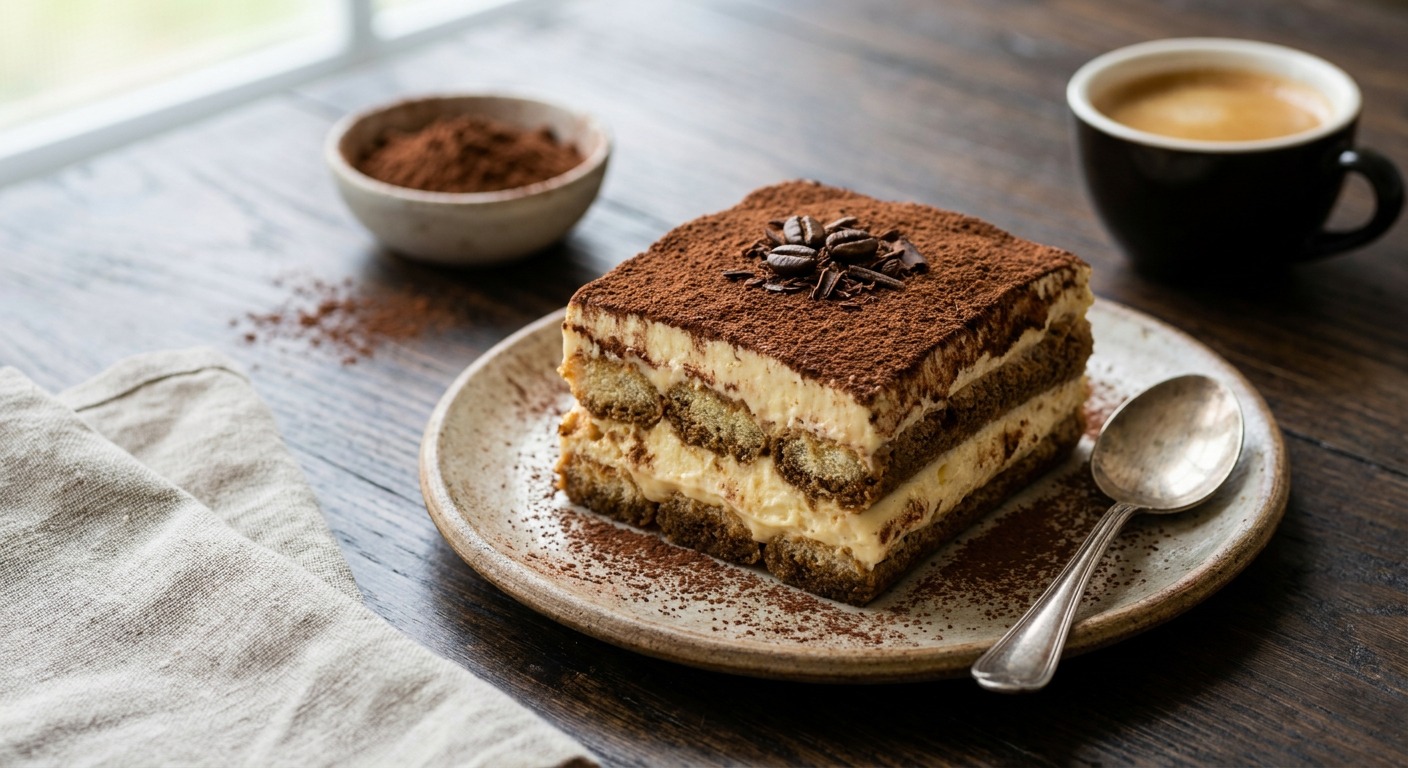
A classic no-bake Italian dessert of layered espresso-soaked ladyfingers and a rich, silky mascarpone and zabaglione cream, finished with a dusting of unsweetened cocoa. Elegant yet approachable, it’s perfect for dinner parties or make-ahead entertaining.
Ingredient Spotlight
Marsala wine (or dark rum/Kahlúa)
A fortified wine from Sicily available in dry and sweet styles, Marsala has rich, nutty, caramel-and-dried-fruit notes and is traditionally used in both savory cooking and desserts like tiramisu. It’s sold at liquor stores and many larger supermarkets (look in the fortified wine or cooking wine section). Good substitutes include dark rum, Madeira, sweet sherry, or a coffee liqueur like Kahlúa when used in desserts, though each will change the flavor profile slightly.
Ingredient Spotlight
Mascarpone cheese
A fresh Italian cream cheese-like cheese from Lombardy, mascarpone is ultra-rich, silky, and mildly sweet with a buttery cream aroma, and it’s the classic creamy component of tiramisu. You’ll find it in the refrigerated dairy or specialty cheese section of supermarkets and at Italian markets. If unavailable, a mixture of full‑fat cream cheese loosened with a little heavy cream (or well‑drained/smooth ricotta blended until silky) makes a workable substitute though the texture and flavor won’t be identical.
Ingredient Spotlight
Ladyfingers (savoiardi)
Light, dry sponge biscuits (savoiardi) from Italian baking, ladyfingers have a crisp exterior and airy interior that soaks up coffee or liqueur without falling apart—perfect for layered desserts. They’re usually sold in the cookie/bakery aisle or the international/Italian section of supermarkets and at specialty stores. If you can’t find them, use thin slices of sponge cake/pan di Spagna or other store-bought sponge fingers as a substitute, though soaking times may vary.
Sara's note
"This is a faithful, traditional tiramisù made with zabaglione (egg yolk custard) and whipped egg whites folded into mascarpone for a light but deeply flavored cream. It’s best when made a day ahead so the flavors meld and the layers set."
About This Recipe
This tiramisù is built on two classic Italian tricks that lift it above the run-of-the-mill fridge dessert: a warm zabaglione folded into silky mascarpone for richness and body, and beaten egg whites folded in at the end to keep the cream light and airy. The result is a custardy, not overly sweet, filling that contrasts with the slightly grainy snap of espresso-soaked savoiardi and the bittersweet finish of unsweetened cocoa. Using a splash of Marsala (or dark rum) in both the zabaglione and espresso deepens the flavor without making the dessert boozy.
It’s a make-ahead showstopper — assemble a day ahead so the flavors marry and the ladyfingers soften just enough for clean slices. This particular method focuses on temperature and timing: heating the yolks to around 160°F stabilizes the zabaglione, while quick coffee dips prevent soggy layers. Serve it straight from the fridge with a warm knife for the cleanest presentation, and expect a texture that’s creamy, cloudlike, and satisfyingly coffee-forward.
Ingredients for Authentic Italian Tiramisu
- 4 count Large eggs, separated (room temperature)
- 3/4 cup Granulated sugar
- 3 tablespoons Marsala wine (or dark rum/Kahlúa)
- 16 oz Mascarpone cheese
- 1 1/2 cups Freshly brewed strong espresso, cooled
- 24 count Ladyfingers (savoiardi)
- 2 tablespoons Unsweetened cocoa powder (for dusting)
How to Make Authentic Italian Tiramisu
Step 1: Make the zabaglione
In a heatproof bowl set over barely simmering water (bain-marie), whisk together the egg yolks and 2/3 of the sugar until pale and slightly thickened. Continue whisking over the heat until the mixture becomes a ribbon and registers about 160°F (70°C), then remove from heat and whisk in 2 tablespoons Marsala; let cool slightly.For this step
- 4 countLarge eggs, separated (room temperature)
- 3 tablespoonsMarsala wine (or dark rum/Kahlúa)
Step 2: Prepare the mascarpone cream and whipped whites
In a separate bowl, gently loosen the mascarpone with a spatula until smooth, then fold in the cooled zabaglione until homogeneous. In a clean bowl, whisk the reserved egg whites with the remaining sugar to stiff glossy peaks, then carefully fold the whites into the mascarpone mixture in two additions to keep the cream light and airy.For this step
- 16 ozMascarpone cheese
Step 3: Dip ladyfingers in coffee
Combine the cooled espresso with the remaining 1 tablespoon Marsala in a shallow dish. Quickly dip each ladyfinger for 1–2 seconds—absorb but don’t sog—then arrange a single layer, close together, in a 9x9 or similar-sized dish to form the first layer.For this step
- 1 1/2 cupsFreshly brewed strong espresso, cooled
- 24 countLadyfingers (savoiardi)
Step 4: Assemble the layers
Spread half of the mascarpone mixture evenly over the first layer of soaked ladyfingers. Repeat with another layer of dipped ladyfingers and top with the remaining mascarpone cream, smoothing the surface with a spatula.Step 5: Chill to set
Cover the tiramisù tightly and refrigerate at least 4 hours, preferably overnight, so the flavors meld and the dessert firms up for cleaner slices when serving.Step 6: Finish and serve
Just before serving, dust the top generously with unsweetened cocoa powder using a fine sieve. Slice with a warm knife and serve chilled.For this step
- 2 tablespoonsUnsweetened cocoa powder (for dusting)


- In a heatproof bowl set over barely simmering water (bain-marie), whisk together the egg yolks and 2/3 of the sugar until pale and slightly thickened. Continue whisking over the heat until the mixture becomes a ribbon and registers about 160°F (70°C), then remove from heat and whisk in 2 tablespoons Marsala; let cool slightly.
- In a separate bowl, gently loosen the mascarpone with a spatula until smooth, then fold in the cooled zabaglione until homogeneous. In a clean bowl, whisk the reserved egg whites with the remaining sugar to stiff glossy peaks, then carefully fold the whites into the mascarpone mixture in two additions to keep the cream light and airy.
- Combine the cooled espresso with the remaining 1 tablespoon Marsala in a shallow dish. Quickly dip each ladyfinger for 1–2 seconds—absorb but don’t sog—then arrange a single layer, close together, in a 9x9 or similar-sized dish to form the first layer.
- Spread half of the mascarpone mixture evenly over the first layer of soaked ladyfingers. Repeat with another layer of dipped ladyfingers and top with the remaining mascarpone cream, smoothing the surface with a spatula.
- Cover the tiramisù tightly and refrigerate at least 4 hours, preferably overnight, so the flavors meld and the dessert firms up for cleaner slices when serving.
- Just before serving, dust the top generously with unsweetened cocoa powder using a fine sieve. Slice with a warm knife and serve chilled.
Authentic Italian Tiramisu Tips
Temperature for safety
Heat the yolk-sugar mixture to about 160°F (70°C) over a bain-marie to gently cook and stabilize the zabaglione without scrambling the eggs.
Room-temperature eggs
Bring whole eggs to room temperature before separating; yolks emulsify more smoothly and whites whip to higher volume when not cold.
Quick coffee dip
Dip ladyfingers no more than 1–2 seconds per side — they should be moist but still hold shape, or the tiramisù will become mushy.
Fold with care
Fold whipped whites into the mascarpone-zabaglione in two gentle additions using a wide spatula to retain air and achieve a light, mousse-like cream.
Use a warm knife
Wipe a knife under hot water and dry it between slices for neat portions and clean edges when serving.
Authentic Italian Tiramisu Variations and Substitutions
Alcohol-free espresso
Omit the Marsala and add 1–2 teaspoons of vanilla extract to the zabaglione, and use espresso mixed with a splash of cold brewed chicory or decaf for an alcohol-free version.
Chocolate-hazelnut twist
Spread a thin layer of chocolate-hazelnut spread on the first layer of ladyfingers before adding cream, or fold 2 tablespoons of cocoa into the zabaglione for a mocha tiramisù.
Gluten-free option
Substitute store-bought gluten-free ladyfingers or lightly toasted gluten-free sponge fingers; the assembly and timing remain the same.
Lighter mascarpone swap
For a fresher, less rich version, replace up to half the mascarpone with full-fat Greek yogurt, then taste and adjust sugar because yogurt adds tang.
How to Store and Make Authentic Italian Tiramisu Ahead
Store tiramisù tightly covered in the refrigerator for up to 3 days; the texture is best on day 1–2 before the ladyfingers become overly soft. Avoid freezing if possible, as freezing changes the cream’s texture and the sponge soaks up too much liquid when thawed. If you must freeze, freeze uncut in an airtight container for up to one month and thaw in the fridge overnight.
What to Serve With Authentic Italian Tiramisu
Serve slices on chilled plates with a final dusting of cocoa and optional dark chocolate shavings for garnish. Pair with a small cup of espresso or an Italian dessert wine like Vin Santo or a late-harvest Marsala for complementary coffee and caramel notes. For a lighter finish, offer fresh berries on the side to cut the richness.
Authentic Italian Tiramisu FAQs
Are the raw eggs safe in this recipe?
The egg yolks are gently cooked to about 160°F in the zabaglione, which pasteurizes them and makes the custard safe; the whites are whipped raw, so if you have concerns use pasteurized egg whites or a trusted pasteurized whole-egg alternative.
Can I use instant coffee instead of espresso?
Yes — a strong instant espresso or concentrated cold-brew works fine; adjust strength so the coffee flavor is vivid but not bitter, and cool completely before dipping the ladyfingers.
How long should I chill tiramisù before serving?
Chill at least 4 hours to let the layers set, but overnight is ideal for flavor melding and firmer slices when serving.
Why did my tiramisù become too soggy?
Over-soaking the ladyfingers is the usual culprit — dip them only briefly (1–2 seconds); also ensure your espresso isn’t too watery and avoid pouring extra liquid into the dish during assembly.
Can I make tiramisù ahead for a party?
Absolutely — assemble the day before and refrigerate uncovered for 15 minutes then cover to prevent condensation; slice and dust with cocoa just before serving for the best texture and presentation.
Ratings & Reviews
Did you make this recipe?
Be the first to share your experience.
Nutrition Facts
Per serving: about ½ cup
Nutrition values are estimated from USDA ingredient data and may vary based on preparation, brands, and portion sizes. Values are provided for informational purposes only.
Keep Reading
Guides & articles for this recipe

Guides
Grilled & Campfire Seasonal Sweets: 12 Crowd‑Favorite Desserts and How to Make Them Year‑Round
A season-by-season guide to 12 grill- and campfire-friendly desserts with flame-safe techniques, make-ahead strategies, vegetarian and gluten-free swaps, plus serving and storage tips so your outdoor sweets shine any time of year.

Guides
Summer Weeknight Grilling Playbook: 4-Week Rotating Meal Plan with Quick Seasonal Recipes, Make‑Ahead Sides & Grill‑First Desserts
A practical, four-week summer grilling playbook built for busy weeknights: 12 fast mains, 8 make‑ahead sides, 4 grill-forward desserts, weekly shopping lists, prep timelines, and smart tips for backyard, tailgate, or campsite cooking. Get the rhythm of easy, seasonal grilling that keeps dinner fresh and fast.

Healthy Eating
Gluten-Free Weeknight Grilling Plan
A 7-day gluten-free weeknight grilling plan with quick, family-friendly recipes, prep-ahead timelines, and a printable shopping list that spotlights late-summer produce and pantry staples. Includes clear cross-contamination safety tips and simple swaps to keep dinners fast and crowd-pleasing.
More from Desserts
View all Desserts recipes →
Easy Peanut Butter Bars

Chocolate Peanut Butter Chex Mix

No-Churn Fresh Berry Ice Cream (No Machine, 5 Ingredients)

Molten Lemon Cake

Boozy Red White Blue Popsicles (Vodka Ice Pops for Adults)

Salted Caramel Stuffed Brownies with Crispy Edges and Sea Salt

Poached Pears with Pistachio

Affogato with Caramel

Canning Peaches Light Syrup
Ask me anything about this recipe — substitutions, scaling, techniques, timing.
Powered by AI · 6 questions per 5 minutes, 30 per day