Baked Feta Pasta
A viral TikTok classic elevated into a reliable, topshelf recipe — blistered cherry tomatoes and a roasted block of feta transform into a silky, turbo-simple pasta sauce. Clear oven and air-fryer methods plus an easy dairy-free swap make this perfect for weeknights, dinner parties, or any time you want big flavor with minimal fuss.
Jake Woods's note
"This version focuses on dependable timing and technique so the tomatoes burst and the feta browns without drying. It’s foolproof for casual dinners and impressive enough for guests, and the dairy-free option keeps it inclusive."
About This Recipe
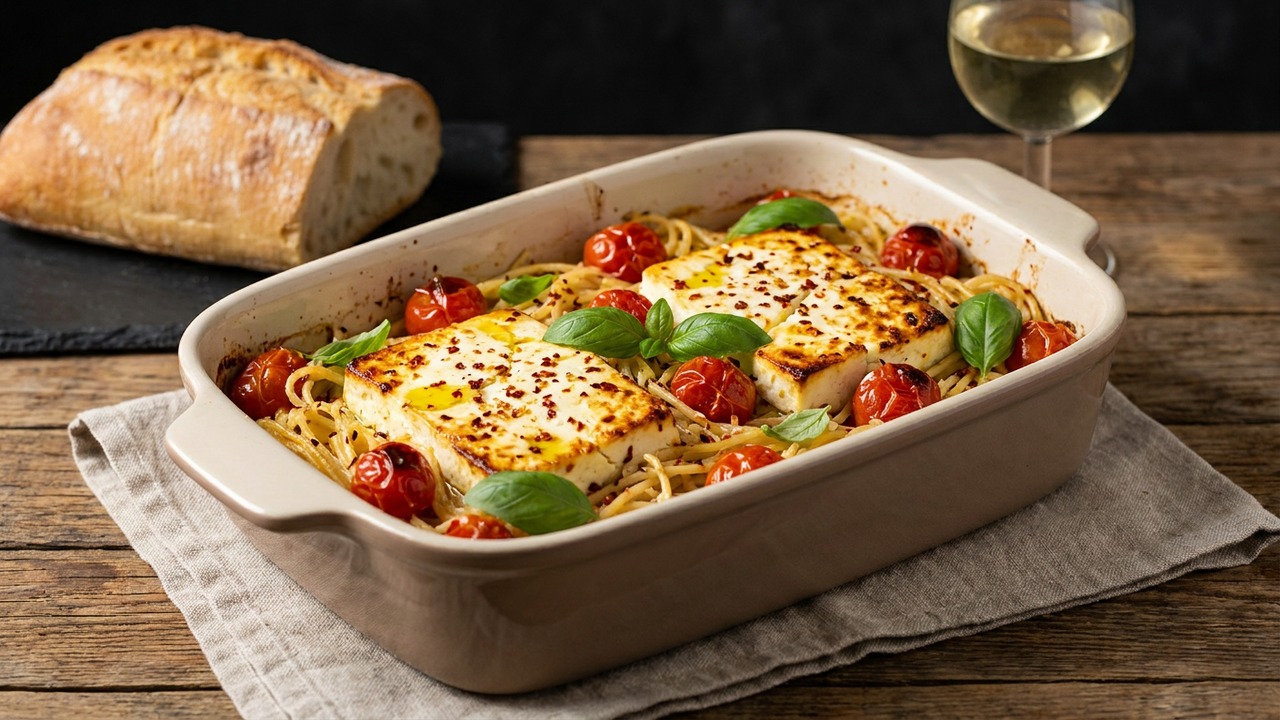
This baked feta pasta takes the viral, thumb-twiddling simplicity of the TikTok original and tightens it into a dependable, topshelf weeknight dish: blistered cherry tomatoes turn jammy and sweet while a roasted block of feta melts into a lusciously tangy pool that the pasta swims through. The charm is in the contrast — syrupy, slightly charred tomatoes, the savory creaminess of feta, flecks of soft garlic and a whisper of heat from red pepper flakes — finished with bright basil and lemon zest so the richness never feels heavy.
What makes this version work is small, intentional adjustments: a touch more salt to coax sweetness from the tomatoes, a measured splash of reserved pasta water to turn curds into a glossy emulsion, and clear timings for both oven and air fryer so the feta softens without collapsing into graininess. It’s forgiving, fast, and scalable — equally suited to solo comfort meals, casual weeknight dinners, or laid-back entertaining where you want maximum flavor with minimal hands-on time. Swap in a store-bought dairy-free feta and a squeeze of lemon and you still get the same bright, saucy satisfaction.
Ingredients for Baked Feta Pasta
- 8 oz Feta cheese (block)
- 3 cups Cherry or grape tomatoes
- 3 tbsp Extra-virgin olive oil
- 3 cloves Garlic, thinly sliced
- 1/2 tsp Red pepper flakes
- 1 1/2 tsp Kosher salt (plus more for pasta water)
- 12 oz Dry pasta (penne, rigatoni, or fusilli)
- 1/2 cup Fresh basil, leaves torn
- 1 tsp Lemon zest (optional, brightens the sauce)
- 8 oz Dairy-free feta (store-bought, optional 1:1 swap)
How to Make Baked Feta Pasta
Step 1: Arrange tomatoes and feta
Preheat the oven to 400°F (200°C) or preheat your air fryer basket to 375°F (190°C). In a medium baking dish (or an oven-safe pan that fits your air fryer), toss the cherry tomatoes with olive oil, sliced garlic, red pepper flakes and 1 tsp of kosher salt; nestle the block of feta in the center and drizzle the feta with a little oil. (If using the dairy-free feta, substitute it here one-to-one; it roasts the same way.)For this step
- 8 ozFeta cheese (block)
- 3 cupsCherry or grape tomatoes
- 3 clovesGarlic, thinly sliced
- 1/2 tspRed pepper flakes
- 1 1/2 tspKosher salt (plus more for pasta water)
- 8 ozDairy-free feta (store-bought, optional 1:1 swap)
Step 2: Roast: oven or air fryer
Oven: roast for 30–35 minutes until tomatoes are burst and syrupy and the feta is softened and just golden at the edges. Air fryer: roast at 375°F (190°C) for 18–22 minutes, checking at 15 minutes — aim for blistered tomatoes and softened, slightly browned feta. Remove when tomatoes are collapsing and garlic is fragrant.Step 3: Cook the pasta
While the tomatoes roast, cook the pasta in a large pot of vigorously boiling, generously salted water until al dente (follow package directions, usually 8–10 minutes). Reserve 1 cup (240 ml) of pasta cooking water before draining — you’ll use this to loosen the sauce.For this step
- 12 ozDry pasta (penne, rigatoni, or fusilli)
Step 4: Make the sauce and combine
When the feta and tomatoes are done, use a fork or spoon to mash and stir them into a chunky sauce right in the baking dish, adding 1/3–1/2 cup (80–120 ml) reserved pasta water to reach a silky consistency. Add the lemon zest and most of the torn basil, then toss in the drained pasta until coated; add more pasta water as needed to make a glossy sauce. Taste and adjust with salt, pepper, or a splash more olive oil.For this step
- 1/2 cupFresh basil, leaves torn
- 1 tspLemon zest (optional, brightens the sauce)
Step 5: Finish and serve
Divide between bowls and garnish with the remaining basil and an extra drizzle of olive oil. Leftovers refrigerate up to 3 days; reheat gently with a splash of water or olive oil to loosen the sauce. For the dairy-free version, the texture will be slightly different but still creamy and bright — a squeeze of lemon helps amplify that savory tang.


- Preheat the oven to 400°F (200°C) or preheat your air fryer basket to 375°F (190°C). In a medium baking dish (or an oven-safe pan that fits your air fryer), toss the cherry tomatoes with olive oil, sliced garlic, red pepper flakes and 1 tsp of kosher salt; nestle the block of feta in the center and drizzle the feta with a little oil. (If using the dairy-free feta, substitute it here one-to-one; it roasts the same way.)
- Oven: roast for 30–35 minutes until tomatoes are burst and syrupy and the feta is softened and just golden at the edges. Air fryer: roast at 375°F (190°C) for 18–22 minutes, checking at 15 minutes — aim for blistered tomatoes and softened, slightly browned feta. Remove when tomatoes are collapsing and garlic is fragrant.
- While the tomatoes roast, cook the pasta in a large pot of vigorously boiling, generously salted water until al dente (follow package directions, usually 8–10 minutes). Reserve 1 cup (240 ml) of pasta cooking water before draining — you’ll use this to loosen the sauce.
- When the feta and tomatoes are done, use a fork or spoon to mash and stir them into a chunky sauce right in the baking dish, adding 1/3–1/2 cup (80–120 ml) reserved pasta water to reach a silky consistency. Add the lemon zest and most of the torn basil, then toss in the drained pasta until coated; add more pasta water as needed to make a glossy sauce. Taste and adjust with salt, pepper, or a splash more olive oil.
- Divide between bowls and garnish with the remaining basil and an extra drizzle of olive oil. Leftovers refrigerate up to 3 days; reheat gently with a splash of water or olive oil to loosen the sauce. For the dairy-free version, the texture will be slightly different but still creamy and bright — a squeeze of lemon helps amplify that savory tang.
Baked Feta Pasta Tips
Choose ripe tomatoes
Smaller, sweet cherry or grape tomatoes blister more evenly and collapse into syrup quicker than larger tomatoes, giving better sauce texture.
Salt the pasta water
Generously salting the boiling water seasons the pasta from the inside and reduces the need for excessive salt in the finished sauce.
Reserve ample pasta water
Keep at least 1 cup before draining; the starchy water is what emulsifies the feta and tomato juices into a silky sauce, so add it gradually to control consistency.
Watch air-fryer timing
Check at 15 minutes because air-fryers run hot and fast; you want blistered tomatoes and softened feta without drying the cheese out.
Finish with acid
A little lemon zest or a squeeze of lemon brightens the dish and balances the feta’s tang, especially important if you use a dairy-free alternative.
Baked Feta Pasta Variations and Substitutions
Make it vegan
Use an 8 oz block of store-bought dairy-free feta and boost umami with 1–2 teaspoons nutritional yeast or a splash of soy sauce; add a lemon squeeze to lift flavors.
Add a protein boost
Fold in pan-seared shrimp or slices of grilled chicken just before serving, or crumble roasted chickpeas into the finished pasta for a vegetarian protein lift.
Smoky roasted peppers
Toss in sliced roasted red peppers or add a tablespoon of smoked paprika for a smoky-sweet counterpoint to the tangy feta and tomatoes.
Greens and texture
Stir in handfuls of baby spinach or arugula at the end so they wilt into the warm sauce, and sprinkle toasted pine nuts or breadcrumbs for crunch.
How to Store and Make Baked Feta Pasta Ahead
Store leftovers in an airtight container in the refrigerator for up to 3 days. Reheat gently in a skillet over low heat with a splash of water or olive oil to loosen the sauce and avoid drying out the feta; you can also microwave briefly in 30-second bursts, stirring between intervals.
What to Serve With Baked Feta Pasta
Serve straight from the baking dish for a rustic presentation, garnished with extra torn basil and a drizzle of good olive oil. Complement this rich pasta with a crisp green salad dressed with lemon vinaigrette, crusty bread to sop up any sauce, and a light white wine like Pinot Grigio or a citrus-forward Vermentino to cut the richness.
Baked Feta Pasta FAQs
Can I use crumbled feta instead of a block?
A block works best because it softens into a creamy center without fully dissolving, but if you only have crumbled feta, pack it into a small dish so it warms evenly and still forms a cohesive sauce.
Why did my sauce turn grainy?
Overcooking the feta or using too much direct heat can cause it to separate; use the suggested oven temperatures and add pasta water gradually to create a smooth emulsion.
Can I make this ahead for a dinner party?
You can roast the tomatoes and feta a few hours ahead and store them at room temperature for short periods, or refrigerate for up to 24 hours; rewarm gently before stirring in pasta so the sauce loosens without drying.
What pasta shape works best?
Short, ridged shapes like penne, rigatoni, or fusilli catch the chunky sauce nicely, but you can use any shape you prefer — just follow al dente timing and reserve cooking water.
Is the dairy-free feta swap reliable?
Most store-bought dairy-free feta blocks roast and soften similarly, though textures vary; add a little lemon or a teaspoon of olive brine to amplify tang if needed.
Can I add onions or other vegetables?
Yes — thinly sliced shallots or red onion can roast with the tomatoes for sweetness, and bite-sized zucchini or eggplant pieces work if you don’t overcrowd the pan and adjust roasting time.
About the author
Jake WoodsHello, I'm Jake. I started this recipe site with the idea that I hated recipe websites that overwhelm you with long stories and ads just to see plain content that's not helpful. My goal is to provide you with quality recipes, simple ideas and a fun cooking experience. There's lots of fun things to cook, and I think as you browse the site you'll find that TopShelf.Recipes is the place for quality recipes on the web.
See all recipes by Jake Woods →Ratings & Reviews
Did you make this recipe?
Be the first to share your experience.
Nutrition Facts
Per serving: 1 serving
Nutrition values are estimated from USDA ingredient data and may vary based on preparation, brands, and portion sizes. Values are provided for informational purposes only.
Keep Reading
Guides & articles for this recipe
Tips & Techniques
Baking Soda and Tenderized Beef
Learn how baking soda can tenderize, boost browning, and improve moisture for ground beef and other meats. This practical guide covers the science, step-by-step techniques, common mistakes, and recipes to try.

Healthy Eating
Gluten-Free Weeknight Grilling Plan
A 7-day gluten-free weeknight grilling plan with quick, family-friendly recipes, prep-ahead timelines, and a printable shopping list that spotlights late-summer produce and pantry staples. Includes clear cross-contamination safety tips and simple swaps to keep dinners fast and crowd-pleasing.

Healthy Eating
Low-Fat Grill Swaps for Big Flavor
A practical guide to trimming fat from grilled meals without losing juiciness or char. Learn yogurt- and citrus-based marinades, lean protein picks, searing and indirect-heat tricks, plus 5 quick low-fat marinades and a simple weeknight plan.
More from Baking
View all Baking recipes →
Juicy Oven-Baked Chicken Breasts (No-Dryness Method)

Gluten-Free Soft Pretzels

Sticky Gochujang Spare Ribs (Oven-Baked Korean-Inspired)

Apple Cider Muffins

Baked Buffalo Chicken Wings with Blue Cheese Dip (Crispy Oven Method)

Gluten-Free Honey Garlic Chicken Thighs with Tamari and Toasted Sesame

Sheet Pan Baked Honey Garlic Chicken Breasts with Roasted Vegetables

Cloud Bread Sandwiches

Honey Mustard Chicken Nuggets
Ask me anything about this recipe — substitutions, scaling, techniques, timing.
Powered by AI · 6 questions per 5 minutes, 30 per day