Gluten-Free Soft Pretzels
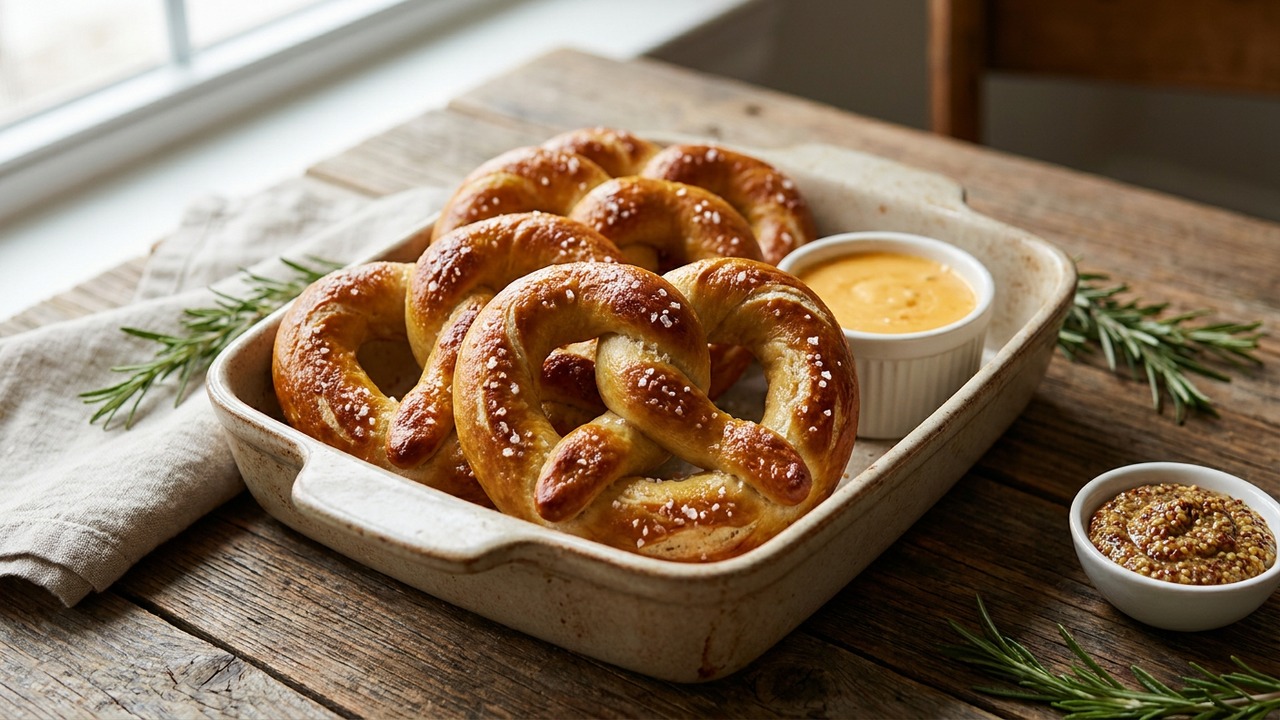
Soft, golden-brown pretzels made with a gluten-free flour blend and a simple baking-soda bath for that classic chewy exterior. These pretzels are perfect for parties, snack time, or a cozy weekend bake when you want a comforting, allergy-friendly treat.
Ingredient Spotlight
Gluten-free all-purpose flour blend (preferably 1:1 with xanthan gum)
A pre-mixed combination of gluten-free flours and starches (rice, tapioca, potato, sometimes sorghum or millet) formulated to replace wheat flour on a 1:1 basis; it was developed for gluten‑free baking rather than tied to a particular culinary tradition. It tastes fairly neutral but yields a different texture (often crumblier or less elastic) than wheat flour; xanthan gum is added to provide binding and chew that gluten normally supplies. You can find these blends in mainstream supermarkets, health‑food stores, and online; if gluten isn’t a concern substitute regular all‑purpose flour, or if your blend doesn’t include xanthan, add about 1/4–1/2 teaspoon xanthan gum per cup of flour as a simple fix.
Jake Woods's note
"This recipe yields soft, slightly chewy pretzels with a deep brown crust from the baking-soda bath — a great make-ahead party food that reheats beautifully. Home bakers will love how forgiving the dough is and how quickly you can shape a batch."
About This Recipe
These gluten-free soft pretzels are meant to deliver the chewy, glossy exterior and tender interior you expect from a classic pretzel without relying on wheat. The recipe leans on a 1:1 gluten-free all-purpose blend with xanthan gum to provide elasticity and structure, while a brief rest hydrates the flours so the dough is easier to shape. A short baking-soda bath recreates that signature deep-brown crust and mild alkaline tang you get from traditional lye baths, and a quick egg wash gives a glossy finish that holds coarse sea salt and any other finishing flavors.
They’re quick enough for a weekend bake or to turn into a party platter—about 45 minutes from start to finish—and forgiving for home bakers who haven’t worked much with gluten-free dough. Olive oil adds a subtle richness and helps with browning, and the method works whether you shape classic pretzels or knots. The result is warm, slightly chewy bites with pleasing contrast between a supple interior and a crisp, slightly blistered exterior that’s ideal with mustard, cheese dip, or a pint of your favorite beer.
Ingredients for Gluten-Free Soft Pretzels
- 1 1/4 cups Warm water (for proofing)
- 2 tbsp Granulated sugar
- 2 1/4 tsp Instant (quick) yeast
- 3 cups Gluten-free all-purpose flour blend (preferably 1:1 with xanthan gum)
- 1 tsp Fine salt (for dough)
- 2 tbsp Olive oil
- 6 cups Hot water (for baking-soda bath)
- 2/3 cup Baking soda (for bath)
- 1 large Large egg (for egg wash)
- 1 tbsp Coarse sea salt (for topping)
How to Make Gluten-Free Soft Pretzels
Step 1: Proof the yeast
Combine the warm water and granulated sugar in a large mixing bowl and stir to dissolve. Sprinkle the instant yeast over the surface, wait 2 minutes, then gently whisk and let sit 5–7 minutes until foamy and fragrant, indicating the yeast is active.For this step
- 1 1/4 cupsWarm water (for proofing)
- 2 tbspGranulated sugar
- 2 1/4 tspInstant (quick) yeast
Step 2: Make the dough
Add the gluten-free flour blend, fine salt, and olive oil to the bowl with the proofed yeast. Mix with a sturdy spoon or paddle attachment until a soft, slightly sticky dough forms; if needed, add a tablespoon of water or flour to adjust consistency. Cover and let rest 10 minutes to hydrate the flour fully.For this step
- 3 cupsGluten-free all-purpose flour blend (preferably 1:1 with xanthan gum)
- 1 tspFine salt (for dough)
- 2 tbspOlive oil
Step 3: Divide and shape
Turn the rested dough onto a lightly floured surface (use a bit of the same gluten-free flour) and divide into 8 equal pieces. Roll each piece into a 18–20 inch rope, then shape into classic pretzels or knots, pressing the ends to seal. Place shaped pretzels on a parchment-lined baking sheet, leaving space between each.Step 4: Prepare bath and top
Preheat the oven to 425°F (220°C). In a wide, shallow pan, bring the hot water and baking soda to a gentle simmer (do not boil vigorously). Working one at a time, submerge each pretzel for about 20–30 seconds, then transfer back to the baking sheet. Beat the egg and brush each pretzel lightly, then sprinkle with coarse sea salt.For this step
- 6 cupsHot water (for baking-soda bath)
- 2/3 cupBaking soda (for bath)
- 1 largeLarge egg (for egg wash)
- 1 tbspCoarse sea salt (for topping)
Step 5: Bake and cool
Bake the pretzels for 12–15 minutes, rotating the pan halfway, until deeply golden brown. Remove to a wire rack and cool 5–10 minutes before serving warm with mustard or cheese dip.


- Combine the warm water and granulated sugar in a large mixing bowl and stir to dissolve. Sprinkle the instant yeast over the surface, wait 2 minutes, then gently whisk and let sit 5–7 minutes until foamy and fragrant, indicating the yeast is active.
- Add the gluten-free flour blend, fine salt, and olive oil to the bowl with the proofed yeast. Mix with a sturdy spoon or paddle attachment until a soft, slightly sticky dough forms; if needed, add a tablespoon of water or flour to adjust consistency. Cover and let rest 10 minutes to hydrate the flour fully.
- Turn the rested dough onto a lightly floured surface (use a bit of the same gluten-free flour) and divide into 8 equal pieces. Roll each piece into a 18–20 inch rope, then shape into classic pretzels or knots, pressing the ends to seal. Place shaped pretzels on a parchment-lined baking sheet, leaving space between each.
- Preheat the oven to 425°F (220°C). In a wide, shallow pan, bring the hot water and baking soda to a gentle simmer (do not boil vigorously). Working one at a time, submerge each pretzel for about 20–30 seconds, then transfer back to the baking sheet. Beat the egg and brush each pretzel lightly, then sprinkle with coarse sea salt.
- Bake the pretzels for 12–15 minutes, rotating the pan halfway, until deeply golden brown. Remove to a wire rack and cool 5–10 minutes before serving warm with mustard or cheese dip.
Gluten-Free Soft Pretzels Tips
Check yeast foam
Warm water should feel like a warm bath (about 100–110°F); if the yeast doesn’t foam in 5–7 minutes, start over with fresh yeast and slightly warmer water.
Hydrate the flour
Letting the mixed dough rest for 10 minutes makes the gluten-free flours fully absorb moisture so the ropes won’t crumble while shaping.
Use a light touch
Roll the dough gently and avoid overworking; too much pressure can compress the air pockets you want for a soft interior.
Bath time matters
Submerge each pretzel 20–30 seconds in a simmering baking-soda bath—any longer and the surface can get too soft to hold shape.
Even browning hack
Rotate the baking sheet halfway through baking and place the sheet on the middle rack for an even, deep brown finish.
Gluten-Free Soft Pretzels Variations and Substitutions
Vegan egg wash
Replace the egg wash with a mix of 1 tablespoon maple syrup and 2 tablespoons non-dairy milk for shine and a touch of sweetness.
Cheese-stuffed pretzels
Press a small piece of firm cheese (cheddar or mozzarella) into the center of each rope before sealing for gooey pockets; freeze briefly before the baking-soda bath to help them hold shape.
Herbed sesame pretzels
Brush with olive oil instead of egg and sprinkle with a mix of toasted sesame, caraway, and dried rosemary for a savory twist.
Whole-grain blend
Substitute up to half the all-purpose blend with a gluten-free oat or buckwheat flour, increasing hydration by 1–2 tablespoons if the dough feels dry.
How to Store and Make Gluten-Free Soft Pretzels Ahead
Store cooled pretzels in an airtight container at room temperature for up to 48 hours; they’ll soften slightly but stay pleasant. For longer storage, freeze wrapped individually for up to 1 month and reheat from frozen in a 350°F oven for 8–10 minutes to restore the crust. Avoid microwaving for more than 20–30 seconds, which makes them gummy rather than chewy.
What to Serve With Gluten-Free Soft Pretzels
Serve warm with a trio of dips—sharp mustard, warm beer-cheese, and a garlicky yogurt dip—to cover savory preferences. For casual entertaining, arrange with pickles, sliced cured meats, and grainy mustards; pair with a crisp lager or a citrusy IPA to cut the richness.
Gluten-Free Soft Pretzels FAQs
My dough feels too sticky to roll—what should I do?
Dust your work surface lightly with the same gluten-free flour and oil your hands rather than adding a lot more flour; you can also chill the dough for 10 minutes to firm it up, then continue shaping.
Why do we use a baking-soda bath instead of lye?
Baking soda (sodium bicarbonate) is much safer for home cooks and provides a similar alkaline environment that browns the crust and develops flavor; lye gives a slightly more pronounced effect but is caustic and unnecessary here.
Can I use active dry yeast instead of instant yeast?
Yes—proof active dry yeast in the warm water with sugar for 8–10 minutes until foamy, and use the same total amount of yeast; active dry may take a touch longer to start bubbling.
My shaped ropes are cracking—how can I prevent that?
Ensure the dough has rested at least 10 minutes so the flours hydrate; if cracks still appear, lightly dampen the surface with a few drops of water and smooth with your fingertips before shaping.
Can I make these ahead or freeze before baking?
You can shape and freeze the unbaked pretzels on a tray, then transfer to a bag; bake from frozen but add a couple of minutes to the baking time and check the bath briefly to ensure they hold shape.
About the author
Jake WoodsHello, I'm Jake. I started this recipe site with the idea that I hated recipe websites that overwhelm you with long stories and ads just to see plain content that's not helpful. My goal is to provide you with quality recipes, simple ideas and a fun cooking experience. There's lots of fun things to cook, and I think as you browse the site you'll find that TopShelf.Recipes is the place for quality recipes on the web.
See all recipes by Jake Woods →Ratings & Reviews
Did you make this recipe?
Be the first to share your experience.
Nutrition Facts
Per serving: 1 serving (approx. 299g)
Nutrition values are estimated from USDA ingredient data and may vary based on preparation, brands, and portion sizes. Values are provided for informational purposes only.
Keep Reading
Guides & articles for this recipe
Tips & Techniques
Baking Soda and Tenderized Beef
Learn how baking soda can tenderize, boost browning, and improve moisture for ground beef and other meats. This practical guide covers the science, step-by-step techniques, common mistakes, and recipes to try.

Healthy Eating
Gluten-Free Weeknight Grilling Plan
A 7-day gluten-free weeknight grilling plan with quick, family-friendly recipes, prep-ahead timelines, and a printable shopping list that spotlights late-summer produce and pantry staples. Includes clear cross-contamination safety tips and simple swaps to keep dinners fast and crowd-pleasing.

Healthy Eating
Low-Fat Grill Swaps for Big Flavor
A practical guide to trimming fat from grilled meals without losing juiciness or char. Learn yogurt- and citrus-based marinades, lean protein picks, searing and indirect-heat tricks, plus 5 quick low-fat marinades and a simple weeknight plan.
More from Baking
View all Baking recipes →
Apple Cider Muffins

Baked Buffalo Chicken Wings with Blue Cheese Dip (Crispy Oven Method)

Gluten-Free Honey Garlic Chicken Thighs with Tamari and Toasted Sesame

Sheet Pan Baked Honey Garlic Chicken Breasts with Roasted Vegetables

Juicy Oven-Baked Chicken Breasts (No-Dryness Method)

Cloud Bread Sandwiches

Honey Mustard Chicken Nuggets

Cheddar Jalapeño Corn Muffins

Basque Burnt Cheesecake
Ask me anything about this recipe — substitutions, scaling, techniques, timing.
Powered by AI · 6 questions per 5 minutes, 30 per day