Basque Burnt Cheesecake
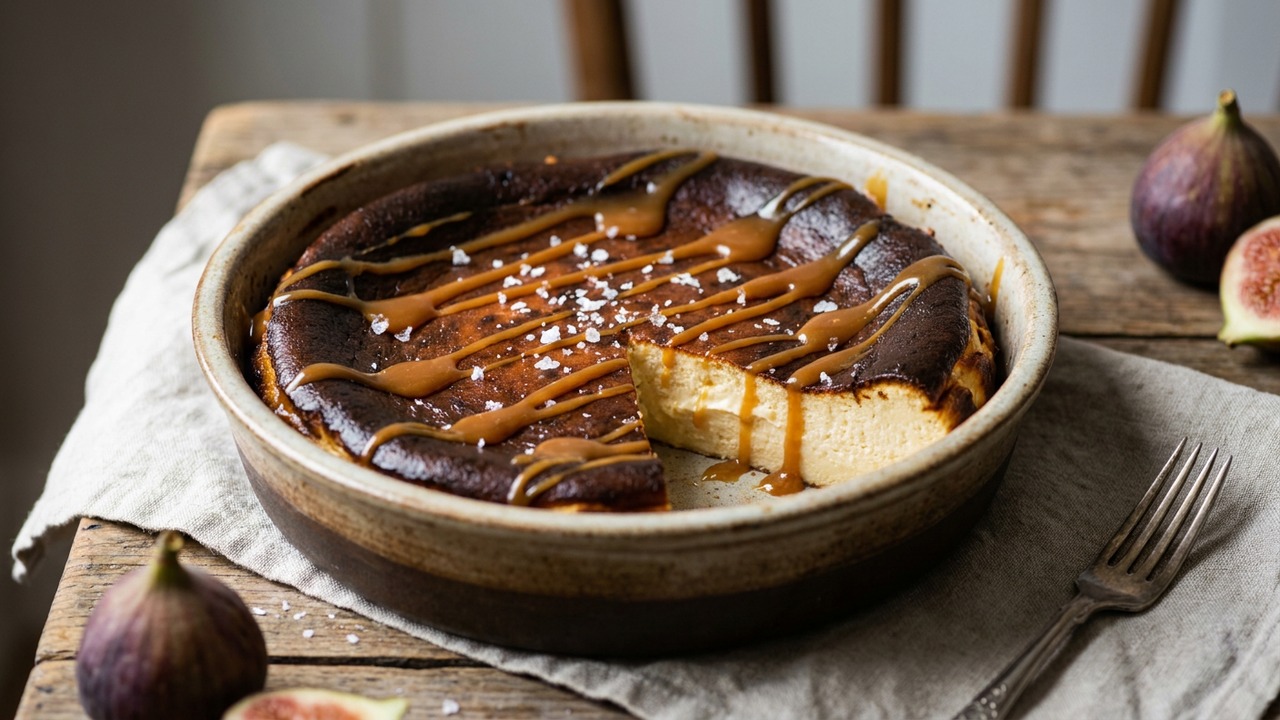
A modern twist on the Basque burnt cheesecake: ultra-creamy interior with a signature deeply caramelized top, finished with a bright, salted caramel drizzle. The contrast of bittersweet char and silky, zesty caramel makes it a showstopping dessert for dinner parties or special occasions.
Jake Woods's note
"This recipe leans into the Basque burnt surface while adding a lively salted caramel to brighten each bite. It’s a forgiving cake — rustic, dramatic, and perfect for celebrating with friends."
About This Recipe
This Basque burnt cheesecake leans into the contrasts that make the style addictive: an almost bitter, deeply caramelized top that reads like espresso crema, and a lusciously creamy, almost custard-like interior that offsets it like velvet. I added a bright, salted caramel drizzle to lift the richness and give the final bites a citrus-bright feel against the bittersweet char. A spoonful of sour cream in the batter keeps the center silkier and gives a whisper of tang that prevents the cake from tasting one-note.
The technique is simple but demands attention to temperature and texture: an intense oven blast creates the signature blackened surface while the center remains wobbly; a tall parchment collar gives the cake its dramatic sides and makes unmolding foolproof. This version is built for dinner-party showoffs and easy weeknight decadence alike — it travels well, slices cleanly when chilled, and rewards a plate garnished with a scattering of flaky salt and a few seasonal berries. Read the tips below to avoid common missteps and make a perfectly burnt-but-silky cake every time.
Ingredients for Basque Burnt Cheesecake
- 24 oz Cream cheese (room temperature)
- 1 cup Granulated sugar (for batter and caramel)
- 4 count Large eggs
- 1 1/2 cups Heavy cream (total — for batter and caramel)
- 1/2 cup Sour cream
- 2 tablespoons All-purpose flour
- 1 teaspoon Vanilla extract
- 2 tablespoons Unsalted butter (for caramel)
- 1 teaspoon Sea salt (fine; includes finishing)
How to Make Basque Burnt Cheesecake
Step 1: Preheat and soften
Preheat the oven to 475°F (245°C). Line an 8- or 9-inch springform or cake pan with a tall sheet of parchment, leaving an overhang to create the cake's rustic high sides; no greasing needed. In a large bowl, beat the room-temperature cream cheese with the granulated sugar until smooth and free of lumps, scraping the bowl well.For this step
- 24 ozCream cheese (room temperature)
- 1 cupGranulated sugar (for batter and caramel)
Step 2: Build the batter
Add the eggs one at a time, mixing until each is incorporated, then fold in heavy cream, sour cream, flour, vanilla, and a pinch of the sea salt. Mix just until the batter is silky and homogenous — a few small air bubbles are fine. Strain the batter through a sieve into a large measuring cup if you want an extra-smooth finish.For this step
- 4 countLarge eggs
- 1 1/2 cupsHeavy cream (total — for batter and caramel)
- 1/2 cupSour cream
- 2 tablespoonsAll-purpose flour
- 1 teaspoonVanilla extract
- 1 teaspoonSea salt (fine; includes finishing)
Step 3: Bake high and brown
Pour the batter into the prepared pan and tap gently to level. Bake at 475°F (245°C) for 45–50 minutes, until the top is deeply browned (nearly black in spots) and the center still has a slight jiggle. The intense heat creates the signature burnt crust while the interior remains creamy.Step 4: Cool briefly
Remove the cake from the oven and let it cool at room temperature for 30–45 minutes; the center will set as it cools. Leave the cake in the pan (with parchment) while you prepare the caramel so the interior finishes stabilizing.Step 5: Make the salted caramel
In a medium saucepan over medium heat, melt the granulated sugar, stirring frequently until it liquefies and turns an amber color. Remove from heat, whisk in the unsalted butter until smooth, then slowly stream in the heavy cream while whisking (mixture will bubble). Stir in a generous pinch of sea salt, cool until slightly thickened, and transfer to a jar.For this step
- 2 tablespoonsUnsalted butter (for caramel)
Step 6: Unmold, finish and serve
When the cake has cooled to warm (or chilled, if preferred), lift it out using the parchment overhang and peel away the sides. Slice into 8 wedges, drizzle each with salted caramel, and finish with a light sprinkle of flaky sea salt if desired. Serve at room temperature for a creamy texture or chilled for a firmer slice.


- Preheat the oven to 475°F (245°C). Line an 8- or 9-inch springform or cake pan with a tall sheet of parchment, leaving an overhang to create the cake's rustic high sides; no greasing needed. In a large bowl, beat the room-temperature cream cheese with the granulated sugar until smooth and free of lumps, scraping the bowl well.
- Add the eggs one at a time, mixing until each is incorporated, then fold in heavy cream, sour cream, flour, vanilla, and a pinch of the sea salt. Mix just until the batter is silky and homogenous — a few small air bubbles are fine. Strain the batter through a sieve into a large measuring cup if you want an extra-smooth finish.
- Pour the batter into the prepared pan and tap gently to level. Bake at 475°F (245°C) for 45–50 minutes, until the top is deeply browned (nearly black in spots) and the center still has a slight jiggle. The intense heat creates the signature burnt crust while the interior remains creamy.
- Remove the cake from the oven and let it cool at room temperature for 30–45 minutes; the center will set as it cools. Leave the cake in the pan (with parchment) while you prepare the caramel so the interior finishes stabilizing.
- In a medium saucepan over medium heat, melt the granulated sugar, stirring frequently until it liquefies and turns an amber color. Remove from heat, whisk in the unsalted butter until smooth, then slowly stream in the heavy cream while whisking (mixture will bubble). Stir in a generous pinch of sea salt, cool until slightly thickened, and transfer to a jar.
- When the cake has cooled to warm (or chilled, if preferred), lift it out using the parchment overhang and peel away the sides. Slice into 8 wedges, drizzle each with salted caramel, and finish with a light sprinkle of flaky sea salt if desired. Serve at room temperature for a creamy texture or chilled for a firmer slice.
Basque Burnt Cheesecake Tips
Room-temperature cream cheese
Bring cream cheese to room temp for at least an hour so it whips smooth without lumps; cold blocks will produce grainy batter and overworking.
Build a parchment collar
Line the pan with a tall parchment collar that extends above the rim — it protects the sides from char and gives the cake its rustic high edges.
Watch color, not clock
Trust the visual cue: aim for deep mahogany to near-black spots on top; oven temps vary so start checking at 40 minutes rather than relying only on time.
Strain for silkiness
If you want a super-satin interior, pour the finished batter through a fine-mesh sieve to remove any remaining curds or air pockets before baking.
Control caramel heat
When making the caramel, take the sugar off the heat at deep amber and whisk in butter before cream; adding cold cream too fast can seize or over-thin the sauce.
Basque Burnt Cheesecake Variations and Substitutions
Citrus-scented caramel
Add 1 teaspoon finely grated orange zest to the hot caramel off the heat for a fragrant brightness that cuts through the richness.
Dark chocolate swirl
Fold 3–4 tablespoons of melted 70% chocolate into a portion of the batter and gently swirl before pouring for a bittersweet marbling that pairs well with salted caramel.
Gluten-free swap
Replace the 2 tablespoons of flour with 2 tablespoons of cornstarch or a 1:1 gluten-free flour blend to maintain structure without gluten.
Boozy berry compote
Top slices with a quick compote of macerated cherries or raspberries finished with a splash of aged rum or brandy for an adult party finish.
How to Store and Make Basque Burnt Cheesecake Ahead
Store leftover cheesecake covered in the fridge for up to 4–5 days; keep the salted caramel in a separate jar refrigerated for up to 2 weeks. For best texture, serve at room temperature by taking slices out 30–60 minutes before serving, or chill and serve cold if you prefer a firmer slice. You can freeze whole or sliced cake (well wrapped) for up to 1 month; thaw overnight in the refrigerator.
What to Serve With Basque Burnt Cheesecake
Serve this cake with bright accompaniments to cut the richness: a spoonful of macerated berries, fresh citrus segments, or a dollop of barely sweetened whipped cream. Beverage pairings include espresso, a small glass of tawny port, or a dry cava to refresh the palate between bites. For plating, warm a knife under hot water and wipe between cuts for clean wedges.
Basque Burnt Cheesecake FAQs
Why is the top supposed to be burnt?
The dark top is intentional — the high heat caramelizes the sugars and proteins, creating the characteristic bittersweet crust that contrasts the creamy interior.
How do I know when it's done?
The top should be deeply browned with some nearly black spots and the center should still have a slight jiggle when you gently shake the pan; it will finish setting as it cools.
My cheesecake cracked — what happened?
Cracking is often from overmixing (which adds too much air) or rapid oven temperature changes; Basque cheesecakes commonly have uneven surfaces, but cracks don’t affect flavor and are hidden by caramel.
Can I substitute sour cream?
Yes — full-fat Greek yogurt works as a substitute and will keep similar tang and creaminess, though it may be a touch less rich than sour cream.
My caramel seized or crystallized — can I fix it?
If the caramel crystallizes, try reheating gently with a tablespoon of water and whisking until smooth, or start over and ensure the sugar melts evenly without stirring during the initial melt.
About the author
Jake WoodsHello, I'm Jake. I started this recipe site with the idea that I hated recipe websites that overwhelm you with long stories and ads just to see plain content that's not helpful. My goal is to provide you with quality recipes, simple ideas and a fun cooking experience. There's lots of fun things to cook, and I think as you browse the site you'll find that TopShelf.Recipes is the place for quality recipes on the web.
See all recipes by Jake Woods →Ratings & Reviews
Did you make this recipe?
Be the first to share your experience.
Nutrition Facts
Per serving: 1 slice (206g)
Nutrition values are estimated from USDA ingredient data and may vary based on preparation, brands, and portion sizes. Values are provided for informational purposes only.
Keep Reading
Guides & articles for this recipe
Tips & Techniques
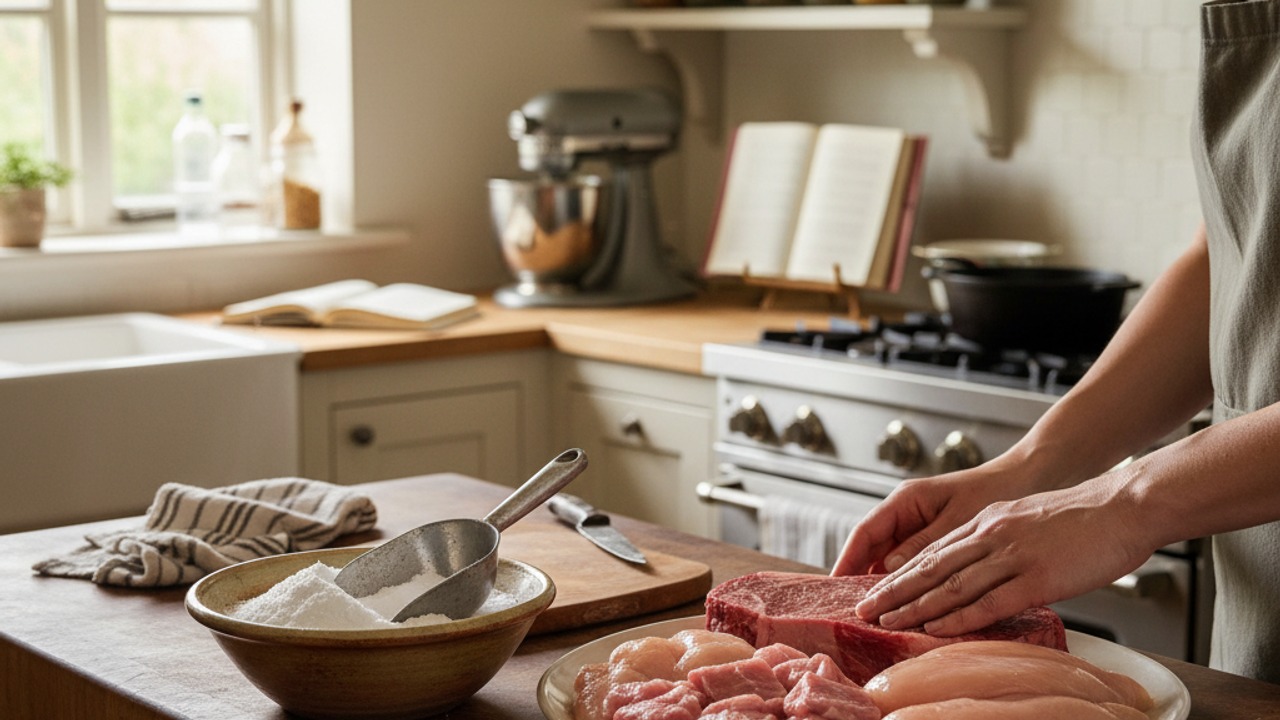
Baking Soda and Tenderized Beef
Learn how baking soda can tenderize, boost browning, and improve moisture for ground beef and other meats. This practical guide covers the science, step-by-step techniques, common mistakes, and recipes to try.

Healthy Eating
Gluten-Free Weeknight Grilling Plan
A 7-day gluten-free weeknight grilling plan with quick, family-friendly recipes, prep-ahead timelines, and a printable shopping list that spotlights late-summer produce and pantry staples. Includes clear cross-contamination safety tips and simple swaps to keep dinners fast and crowd-pleasing.

Healthy Eating
Low-Fat Grill Swaps for Big Flavor
A practical guide to trimming fat from grilled meals without losing juiciness or char. Learn yogurt- and citrus-based marinades, lean protein picks, searing and indirect-heat tricks, plus 5 quick low-fat marinades and a simple weeknight plan.
More from Baking
View all Baking recipes →
Cloud Bread Sandwiches

Honey Mustard Chicken Nuggets

Cheddar Jalapeño Corn Muffins

30-Minute Sticky Baked Honey Garlic Chicken Thighs with Crisp Edges

Lemon Butter Salmon

Spritz Cookies

Brown Butter Vanilla Syrup

Honey Glazed Easter Ham

Mini Meatloaf Muffins for Meal Prep (Baked or Air Fryer)
Ask me anything about this recipe — substitutions, scaling, techniques, timing.
Powered by AI · 6 questions per 5 minutes, 30 per day