Honey Glazed Easter Ham
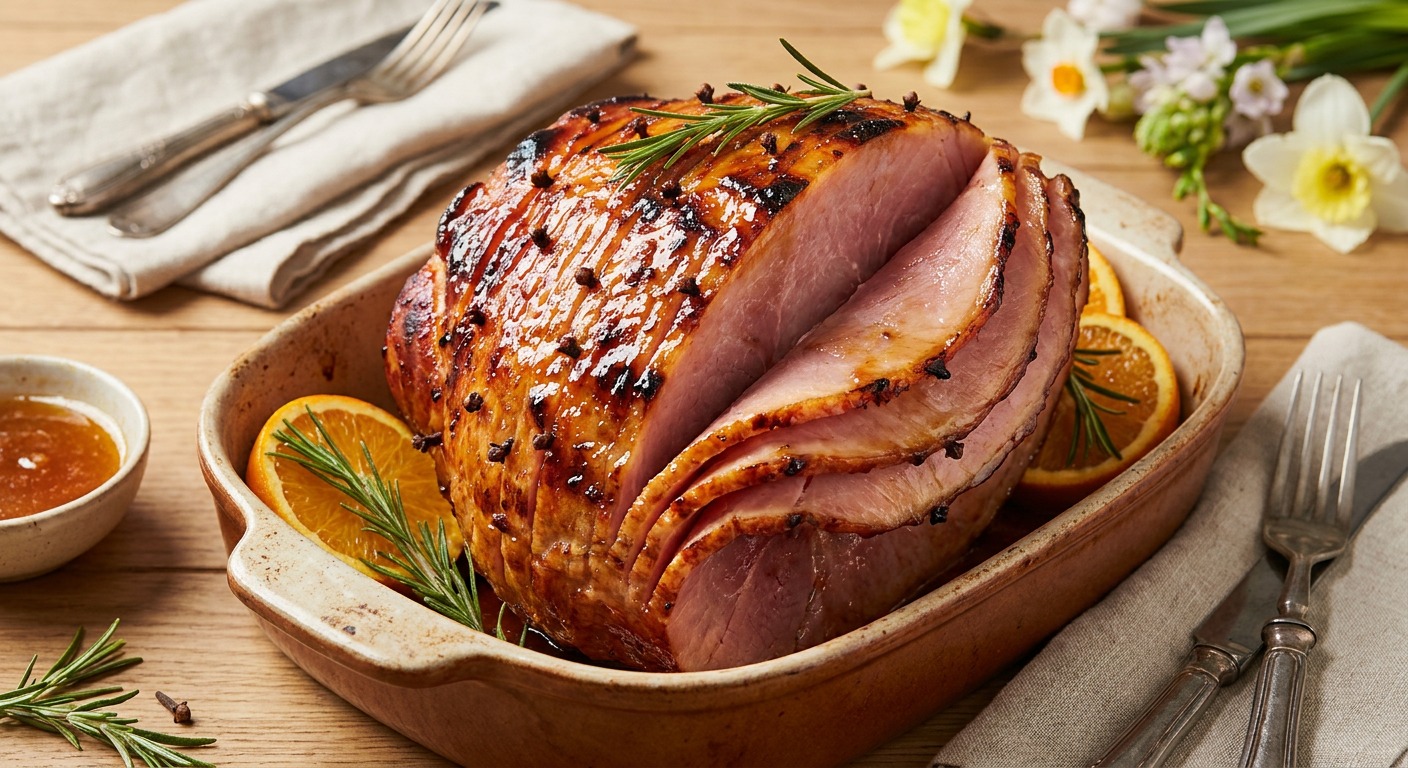
A classic oven-baked honey glazed ham with a sweet, tangy mustard-honey glaze that caramelizes to a shiny finish. This easy method warms a fully cooked spiral ham through while building layers of flavor—perfect for Easter or any holiday dinner.
Jake Woods's note
"This recipe shines on holiday tables when you want a showstopping main with minimal fuss. Home cooks will love how the simple glaze yields a glossy, perfectly caramelized crust while keeping the meat tender."
About This Recipe
This honey-glazed Easter ham is the kind of holiday centerpiece that reads as indulgent but actually relies on balance: sticky honey and brown sugar for that mirror-like shine, bright Dijon and apple cider vinegar to lift the sweetness, and a whisper of cloves and cracked pepper to keep every slice interesting. Using a bone-in, spiral-cut fully cooked ham gives you uniform, elegant slices straight from the pan while the bone contributes subtle savory depth and helps the meat stay juicy as it warms. The butter in the glaze carries the sugar and honey into a silky sheen that clings to the cut edges of each spiral slice.
What makes this version work is technique more than novelty — slow, gentle reheating at 325°F with a splash of water and a foil tent preserves moisture, then glazing in stages lets the sugars caramelize without burning. A brief low broil at the end gives that professional, lacquered finish while a 10–15 minute rest lets juices redistribute so slices don’t slide apart on the platter. This is an approachable option for hosts who want a showy, sliceable centerpiece with minimal fuss, and the leftovers are reliably great in sandwiches, soups, or a quick skillet hash.
Ingredients for Honey Glazed Easter Ham
- 8 lb Bone-in spiral-cut fully cooked ham
- 1/4 cup Unsalted butter
- 1/2 cup Packed brown sugar
- 1/2 cup Honey
- 2 tbsp Dijon mustard
- 2 tbsp Apple cider vinegar
- 1/4 tsp Ground cloves
- 1/2 tsp Freshly ground black pepper
How to Make Honey Glazed Easter Ham
Step 1: Preheat and position the ham
Preheat your oven to 325°F (163°C). Place the spiral-cut ham cut-side down on a rack in a shallow roasting pan and tent loosely with foil; add a splash of water (about 1/2 cup) to the pan to keep drippings from burning while the ham warms. This step gently re-heats the ham without drying it.For this step
- 8 lbBone-in spiral-cut fully cooked ham
Step 2: Make the honey-mustard glaze
In a small saucepan over medium-low heat, combine the butter, brown sugar, honey, Dijon mustard, apple cider vinegar, ground cloves, and black pepper. Stir constantly until the butter melts and the sugar dissolves and the mixture is glossy and slightly thickened, about 3–5 minutes. Remove from heat and keep warm until ready to glaze.For this step
- 1/4 cupUnsalted butter
- 1/2 cupPacked brown sugar
- 1/2 cupHoney
- 2 tbspDijon mustard
- 2 tbspApple cider vinegar
- 1/4 tspGround cloves
- 1/2 tspFreshly ground black pepper
Step 3: Warm the ham in the oven
Place the tented ham in the preheated oven and bake for about 60 minutes, or roughly 10 minutes per pound, until it is heated through. Baste occasionally with pan juices during this stage to keep the exterior moist. Target an internal temperature of 140°F (60°C) when measured with an instant-read thermometer.Step 4: Glaze and caramelize
Remove the foil tent and brush the ham generously with half of the glaze, returning it to the oven uncovered for about 10 minutes. Brush again with more glaze, then bake for a final 10 minutes and, if desired, broil on low for 1–2 minutes to caramelize the surface—watch closely to prevent burning. Repeat glazing once more if you like a thicker, sticky coating.Step 5: Rest, carve, and serve
Remove the ham from the oven and tent loosely with foil; let it rest 10–15 minutes to allow juices to redistribute. Transfer to a carving board and slice between the spiral cuts into serving portions, spooning any reserved pan glaze or juices over the carved slices.


- Preheat your oven to 325°F (163°C). Place the spiral-cut ham cut-side down on a rack in a shallow roasting pan and tent loosely with foil; add a splash of water (about 1/2 cup) to the pan to keep drippings from burning while the ham warms. This step gently re-heats the ham without drying it.
- In a small saucepan over medium-low heat, combine the butter, brown sugar, honey, Dijon mustard, apple cider vinegar, ground cloves, and black pepper. Stir constantly until the butter melts and the sugar dissolves and the mixture is glossy and slightly thickened, about 3–5 minutes. Remove from heat and keep warm until ready to glaze.
- Place the tented ham in the preheated oven and bake for about 60 minutes, or roughly 10 minutes per pound, until it is heated through. Baste occasionally with pan juices during this stage to keep the exterior moist. Target an internal temperature of 140°F (60°C) when measured with an instant-read thermometer.
- Remove the foil tent and brush the ham generously with half of the glaze, returning it to the oven uncovered for about 10 minutes. Brush again with more glaze, then bake for a final 10 minutes and, if desired, broil on low for 1–2 minutes to caramelize the surface—watch closely to prevent burning. Repeat glazing once more if you like a thicker, sticky coating.
- Remove the ham from the oven and tent loosely with foil; let it rest 10–15 minutes to allow juices to redistribute. Transfer to a carving board and slice between the spiral cuts into serving portions, spooning any reserved pan glaze or juices over the carved slices.
Honey Glazed Easter Ham Tips
Warm the Ham Slowly
Heat at 325°F and allow roughly 10 minutes per pound to reheat gently; rapid heating dries the edges and toughens the meat.
Use an Instant Thermometer
Check for a target internal temperature of 140°F (60°C) in the thickest part to ensure safe, even reheating without overcooking.
Glaze in Multiple Layers
Brush the glaze on in two or three thin coats and return to the oven between applications so sugars have time to set and caramelize rather than burn.
Protect with Pan Water
A half-cup of water in the pan keeps drippings from scorching and creates a humid environment that helps the ham retain moisture.
Control the Broiler
If you broil to caramelize, use low and watch closely—one to two minutes is usually enough; sugars can go from glossy to charred very fast.
Reserve Pan Juices
Stir pan drippings with any leftover glaze and spoon over carved slices for extra shine and flavor rather than pouring it away.
Honey Glazed Easter Ham Variations and Substitutions
Maple-Bourbon Twist
Swap half the honey for pure maple syrup and add 1–2 tablespoons bourbon to the glaze for warm, smoky-sweet complexity that pairs beautifully with clove.
Pineapple-Orange Glaze
Replace half the apple cider vinegar with orange juice and stir in 1/2 cup crushed pineapple (drained) for a tropical, tangy glaze that caramelizes into a fruity lacquer.
Mustard-Forward Option
Increase Dijon to 1/4 cup and add 2 tablespoons whole-grain mustard for a tangier, less sweet finish—great if you want stronger savory contrast.
Lower-Sugar Alternative
Cut brown sugar to 1/4 cup and use all-honey or a 1:1 mix of honey and a sugar substitute like monk fruit to reduce sweetness while keeping glaze texture.
Boneless Ham Swap
Use a boneless spiral ham but shorten warm-up time slightly; the glaze and technique remain the same though slices may be less dramatic on a platter.
How to Store and Make Honey Glazed Easter Ham Ahead
Cool leftover ham to room temperature, then refrigerate in an airtight container for up to 3–4 days; reserve a little of the glaze in a separate jar to spoon over slices when serving leftovers. To freeze, wrap in plastic and foil or a vacuum bag for up to 2 months and thaw overnight in the fridge. Reheat slices in a 275°F oven covered with foil and a splash of stock or water until warmed through (about 10–15 minutes), then brush with warmed glaze before serving.
What to Serve With Honey Glazed Easter Ham
Serve the glazed ham on a large platter, slicing between the spiral cuts so each portion has a bit of fat for flavor; spoon a little warmed pan glaze over the top for shine. Classic sides include scalloped potatoes, roasted root vegetables or honey-roasted carrots, and a bright green vegetable like sautéed green beans with almonds; pair with a dry Riesling, a light Champagne, or a crisp hard cider to cut the richness.
Honey Glazed Easter Ham FAQs
Is the ham already fully cooked?
Yes—this recipe assumes a fully cooked, spiral-cut ham that only needs gentle reheating to 140°F (60°C); it is not intended for raw or partially cooked hams.
Can I make the glaze ahead of time?
Absolutely—prepare the glaze up to two days ahead, refrigerate in an airtight container, and gently reheat on low before brushing so the butter and sugar re-emulsify.
What if my glaze starts to burn?
If the sugars begin to scorch, lower the oven temperature or reduce broiling time and remove the ham until the surface cools slightly; scrape off any bitter, burnt bits and reapply fresh glaze.
How do I prevent the ham from drying out?
Keep a foil tent over the ham while it warms, add a splash of water to the pan for humidity, baste occasionally with pan juices, and avoid overheating beyond 140°F.
Can I use a different vinegar or mustard?
Yes—white wine vinegar or sherry vinegar can substitute for apple cider vinegar for a subtler tang, and whole-grain mustard can replace Dijon for texture and a more assertive mustard flavor.
About the author
Jake WoodsHello, I'm Jake. I started this recipe site with the idea that I hated recipe websites that overwhelm you with long stories and ads just to see plain content that's not helpful. My goal is to provide you with quality recipes, simple ideas and a fun cooking experience. There's lots of fun things to cook, and I think as you browse the site you'll find that TopShelf.Recipes is the place for quality recipes on the web.
See all recipes by Jake Woods →Ratings & Reviews
Did you make this recipe?
Be the first to share your experience.
Nutrition Facts
Per serving: 1 serving
Nutrition values are estimated from USDA ingredient data and may vary based on preparation, brands, and portion sizes. Values are provided for informational purposes only.
Keep Reading
Guides & articles for this recipe
Tips & Techniques
Baking Soda and Tenderized Beef
Learn how baking soda can tenderize, boost browning, and improve moisture for ground beef and other meats. This practical guide covers the science, step-by-step techniques, common mistakes, and recipes to try.

Healthy Eating
Gluten-Free Weeknight Grilling Plan
A 7-day gluten-free weeknight grilling plan with quick, family-friendly recipes, prep-ahead timelines, and a printable shopping list that spotlights late-summer produce and pantry staples. Includes clear cross-contamination safety tips and simple swaps to keep dinners fast and crowd-pleasing.

Healthy Eating
Low-Fat Grill Swaps for Big Flavor
A practical guide to trimming fat from grilled meals without losing juiciness or char. Learn yogurt- and citrus-based marinades, lean protein picks, searing and indirect-heat tricks, plus 5 quick low-fat marinades and a simple weeknight plan.
More from Baking
View all Baking recipes →
Cloud Bread Sandwiches

Honey Mustard Chicken Nuggets

Cheddar Jalapeño Corn Muffins

Basque Burnt Cheesecake

30-Minute Sticky Baked Honey Garlic Chicken Thighs with Crisp Edges

Lemon Butter Salmon

Spritz Cookies

Brown Butter Vanilla Syrup

Mini Meatloaf Muffins for Meal Prep (Baked or Air Fryer)
Ask me anything about this recipe — substitutions, scaling, techniques, timing.
Powered by AI · 6 questions per 5 minutes, 30 per day