Baked Peaches Burrata Balsamic
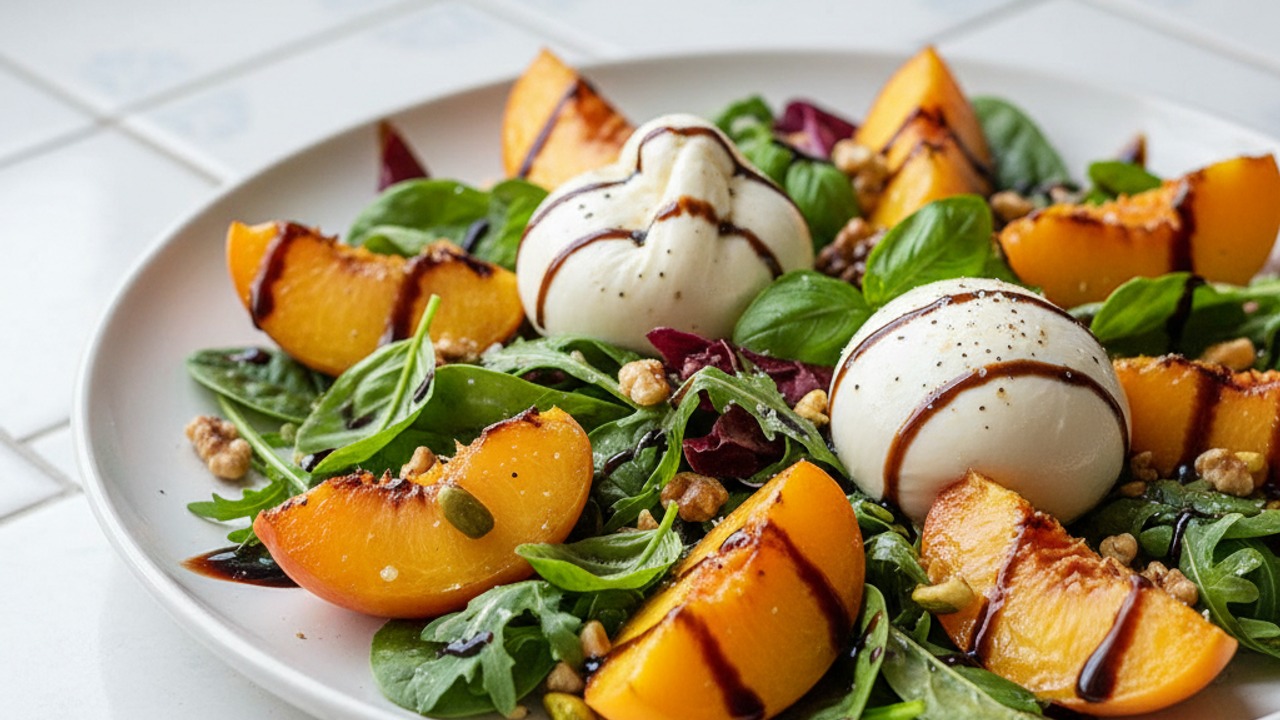
A seasonal, savory salad pairing oven-roasted peaches with creamy burrata, peppery baby greens and toasted nuts, finished with aged balsamic and fresh basil. Bright, elegant and fast to assemble — perfect for summer dinners, brunches or as a showstopping starter.
Ingredient Spotlight
Fresh burrata
Burrata is a fresh Italian cheese (originally from Puglia) consisting of a thin mozzarella shell filled with stracciatella (shredded curd) and cream. The outside is mild and slightly elastic while the interior is lusciously creamy and buttery, with a delicate milky, slightly tangy flavor and aroma. You’ll usually find burrata at specialty cheese counters, Italian markets, or upscale supermarkets and farmers markets. If you can’t find it, a ball of fresh mozzarella served with a spoonful of mascarpone or cream stirred into shredded mozzarella mimics the creamy center.
Ingredient Spotlight
Aged balsamic glaze or reduced balsamic
Aged balsamic glaze is either a syrupy commercial reduction of traditionally aged Italian balsamic vinegar or a homemade reduction concentrated to a sweet-tart syrup; authentic aged balsamic (from Modena/Reggio Emilia) has deep, complex caramelized, woody and fruity notes. It tastes richly sweet with bright acidity and smells intensely sweet-vinegary with molasses-like undertones. Bottled glazes are sold in gourmet and many mainstream grocery stores, and you can make a good substitute by gently simmering a quality balsamic vinegar (and a little sugar or honey, if desired) until it reduces to a syrup.
Jake Woods's note
"This salad leans into the trend of fruit with creamy cheese — roasting the peaches concentrates their sweetness and adds a caramelized note that contrasts beautifully with burrata. It shines at summer gatherings, elegant weeknight meals, or as a light first course."
About This Recipe
This Baked Peaches with Burrata and Balsamic is built on a simple contrast: warm, caramelized stone fruit against cool, pillowy burrata, finished with peppery baby greens, toasted nuts and a bright ribbon of aged balsamic. Roasting concentrates the peaches’ sugars and softens their flesh just enough to hold a spoonful of cheese without collapsing; a brush of olive oil and a drizzle of honey promote even caramelization while a light sprinkle of salt amplifies the fruit’s natural acidity. The aged balsamic provides a calculated sweet‑tart note that pulls the components into a cohesive bite.
What makes this version work is its attention to temperature and texture: warm peaches, creamy cheese, crisp greens and crunchy nuts, each allowed to shine because the dressing is essentially the peach’s own juices and a finishing glaze. It’s fast to assemble, striking on a shared summer table and forgiving for cooks—ideal for hosts who want something that looks elevated but mostly comes together with a quick roast and thoughtful finishing touches.
Ingredients for Baked Peaches Burrata Balsamic
- 4 medium peaches Ripe peaches, halved and pitted
- 2 tbsp Extra-virgin olive oil
- 1 tbsp Honey
- 1/2 tsp Kosher salt
- 2 balls (about 8 oz/225g) Fresh burrata
- 5 oz Mixed baby greens (arugula, baby spinach or mix)
- 3 tbsp Aged balsamic glaze or reduced balsamic
- 1/3 cup chopped Toasted walnuts or pistachios, roughly chopped
- 1/3 cup chiffonade Fresh basil, chiffonade
- 1/4 tsp Freshly ground black pepper
How to Make Baked Peaches Burrata Balsamic
Step 1: Preheat and prepare peaches
Heat the oven to 425°F (220°C). Line a baking sheet with parchment. Brush the cut sides of the peaches with 1 1/2 tablespoons olive oil and drizzle the honey over the cut faces, then sprinkle with half the kosher salt. Arrange peaches cut-side up on the sheet.For this step
- 4 medium peachesRipe peaches, halved and pitted
- 1 tbspHoney
- 1/2 tspKosher salt
Step 2: Roast peaches
Roast peaches in the preheated oven until caramelized and tender, about 12–15 minutes depending on ripeness. Remove from oven and let cool slightly while you finish the other elements.Step 3: Toast the nuts
While peaches roast, warm a small dry skillet over medium heat and toast the chopped walnuts or pistachios, stirring, until fragrant and lightly browned, 3–4 minutes. Transfer to a bowl to cool so they don't continue to cook in the hot pan.For this step
- 1/3 cup choppedToasted walnuts or pistachios, roughly chopped
Step 4: Assemble the salad
Toss the mixed baby greens with the remaining 1/2 tablespoon olive oil and a light pinch of salt. Arrange greens on a platter or individual plates, top with the halved roasted peaches (cut sides up), tear the burrata into rustic pieces and nestle them among the peaches. Scatter the toasted nuts and basil over the top, finish with a generous drizzle of aged balsamic glaze and a few grinds of black pepper.For this step
- 2 balls (about 8 oz/225g)Fresh burrata
- 5 ozMixed baby greens (arugula, baby spinach or mix)
- 3 tbspAged balsamic glaze or reduced balsamic
- 1/3 cup chiffonadeFresh basil, chiffonade
- 1/4 tspFreshly ground black pepper
Step 5: Serve immediately
Serve right away so the burrata is creamy and the peaches are still warm — this contrast is part of what makes the dish special. This recipe serves 4 as a side salad; if serving as a light main, divide into 2 portions.


- Heat the oven to 425°F (220°C). Line a baking sheet with parchment. Brush the cut sides of the peaches with 1 1/2 tablespoons olive oil and drizzle the honey over the cut faces, then sprinkle with half the kosher salt. Arrange peaches cut-side up on the sheet.
- Roast peaches in the preheated oven until caramelized and tender, about 12–15 minutes depending on ripeness. Remove from oven and let cool slightly while you finish the other elements.
- While peaches roast, warm a small dry skillet over medium heat and toast the chopped walnuts or pistachios, stirring, until fragrant and lightly browned, 3–4 minutes. Transfer to a bowl to cool so they don't continue to cook in the hot pan.
- Toss the mixed baby greens with the remaining 1/2 tablespoon olive oil and a light pinch of salt. Arrange greens on a platter or individual plates, top with the halved roasted peaches (cut sides up), tear the burrata into rustic pieces and nestle them among the peaches. Scatter the toasted nuts and basil over the top, finish with a generous drizzle of aged balsamic glaze and a few grinds of black pepper.
- Serve right away so the burrata is creamy and the peaches are still warm — this contrast is part of what makes the dish special. This recipe serves 4 as a side salad; if serving as a light main, divide into 2 portions.
Baked Peaches Burrata Balsamic Tips
Choose slightly firm peaches
Pick fruit that yields a little to gentle pressure; overripe peaches will become mushy when roasted while underripe ones won't caramelize properly.
Brush with oil and honey
Coating the cut faces with oil helps them brown evenly and the honey encourages caramelization without burning; apply honey sparingly to avoid excessive sweetness.
Even halving matters
Cut peaches into equal halves so they roast at the same rate and present uniformly on the plate.
Tear, don’t slice burrata
Tearing creates irregular pieces that cradle the warm peach juices and give a more rustic texture contrast than neat slices.
Cool nuts after toasting
Dump toasted walnuts or pistachios into a cool bowl immediately to stop carryover cooking and keep them crunchy for the salad.
Baked Peaches Burrata Balsamic Variations and Substitutions
Grilled stone fruit
Grill halves over medium heat 2–3 minutes per side for smoky char and a shorter cook time—great when you want grill marks and a more assertive flavor.
Swapped cheeses
Use stracciatella or fresh mozzarella for a similar creaminess, or substitute chèvre for a tangier, slightly firmer contrast that stands up to the balsamic.
Nut-free option
Replace toasted nuts with toasted pumpkin seeds or crisped pancetta for crunch without tree nuts, useful for allergy considerations.
Stone fruit mix
Add halved nectarines or ripe plums alongside peaches for color contrast and a range of sweet-tart flavors in each bite.
How to Store and Make Baked Peaches Burrata Balsamic Ahead
This salad is best enjoyed immediately because burrata loses its creaminess and greens wilt as they sit. Leftover roasted peaches can be refrigerated in an airtight container for 2–3 days and gently reheated in a 350°F (175°C) oven for 5–8 minutes before serving. If you must make elements ahead, keep the burrata whole and the dressed greens separate until plating.
What to Serve With Baked Peaches Burrata Balsamic
Serve this salad with thinly sliced prosciutto or grilled lemon‑herb chicken to make it a heartier main, and offer crusty country bread to sop up any juices. For drinks, a dry rosé, a bright Sauvignon Blanc or a lightly chilled Lambrusco complements the peaches and balsamic without overpowering them. Plate on a shallow platter so the warm peach juices mingle with the greens and cheese for beautiful presentation.
Baked Peaches Burrata Balsamic FAQs
Can I grill the peaches instead of roasting them?
Yes—grilling gives attractive char and a smoky flavor; cook cut-side down over medium heat 2–4 minutes until caramelized, then flip briefly to warm through.
How ripe should the peaches be?
They should give slightly to gentle pressure but not be overly soft; very soft fruit will collapse under heat while underripe peaches won't develop sufficient sweetness.
Can I make this ahead for a party?
You can roast the peaches a few hours ahead and keep them at room temperature; however, assemble just before serving to preserve burrata's creaminess and the greens' texture.
Is there a substitute for aged balsamic glaze?
Yes, reduce a good-quality balsamic vinegar on the stove until syrupy, or use a mix of balsamic vinegar and a touch of honey to mimic the glaze.
Why tear the burrata rather than slice it?
Tearing creates irregular pockets of creamy curd that better soak up warm peach juices and creates a more pleasing, rustic texture on the plate.
About the author
Jake WoodsHello, I'm Jake. I started this recipe site with the idea that I hated recipe websites that overwhelm you with long stories and ads just to see plain content that's not helpful. My goal is to provide you with quality recipes, simple ideas and a fun cooking experience. There's lots of fun things to cook, and I think as you browse the site you'll find that TopShelf.Recipes is the place for quality recipes on the web.
See all recipes by Jake Woods →Ratings & Reviews
Did you make this recipe?
Be the first to share your experience.
Nutrition Facts
Per serving: about 1¼ cups
Nutrition values are estimated from USDA ingredient data and may vary based on preparation, brands, and portion sizes. Values are provided for informational purposes only.
Keep Reading
Guides & articles for this recipe

Healthy Eating
Gluten-Free Weeknight Grilling Plan
A 7-day gluten-free weeknight grilling plan with quick, family-friendly recipes, prep-ahead timelines, and a printable shopping list that spotlights late-summer produce and pantry staples. Includes clear cross-contamination safety tips and simple swaps to keep dinners fast and crowd-pleasing.

Healthy Eating
Low-Fat Grill Swaps for Big Flavor
A practical guide to trimming fat from grilled meals without losing juiciness or char. Learn yogurt- and citrus-based marinades, lean protein picks, searing and indirect-heat tricks, plus 5 quick low-fat marinades and a simple weeknight plan.

Recipes
DIY Edible Monster Eyes Candy
Make safe, fun edible monster eyes for cupcakes, cookies, and candy trays. Step-by-step recipes show baking-soda balls, chocolate and fondant eyes, wafer-print options, plus assembly, storage, and kid-friendly safety tips.
More from Salads
View all Salads recipes →
Korean Gochujang Coleslaw with Sesame and Quick Pickled Scallions

Strawberry Spinach Salad

Campfire‑Smoked Potato Salad with Mustard‑Bacon Vinaigrette — A Labor Day Grilling Side for Steak

Honey Garlic Chicken Thigh Meal-Prep Bowls with Farro, Greens, and Tahini Drizzle

Mango Avocado Tilapia Salad Bowl with Lime Vinaigrette

Miso Glazed Salmon Bowl

Chorizo Black Bean Salad

Classic Make-Ahead Creamy Potato Salad — Labor Day BBQ Side for Steak & Burgers

Classic Warm German Potato Salad with Bacon & Whole-Grain Mustard (Labor Day Steak Side)
Ask me anything about this recipe — substitutions, scaling, techniques, timing.
Powered by AI · 6 questions per 5 minutes, 30 per day