Bratwurst Pretzel Rolls
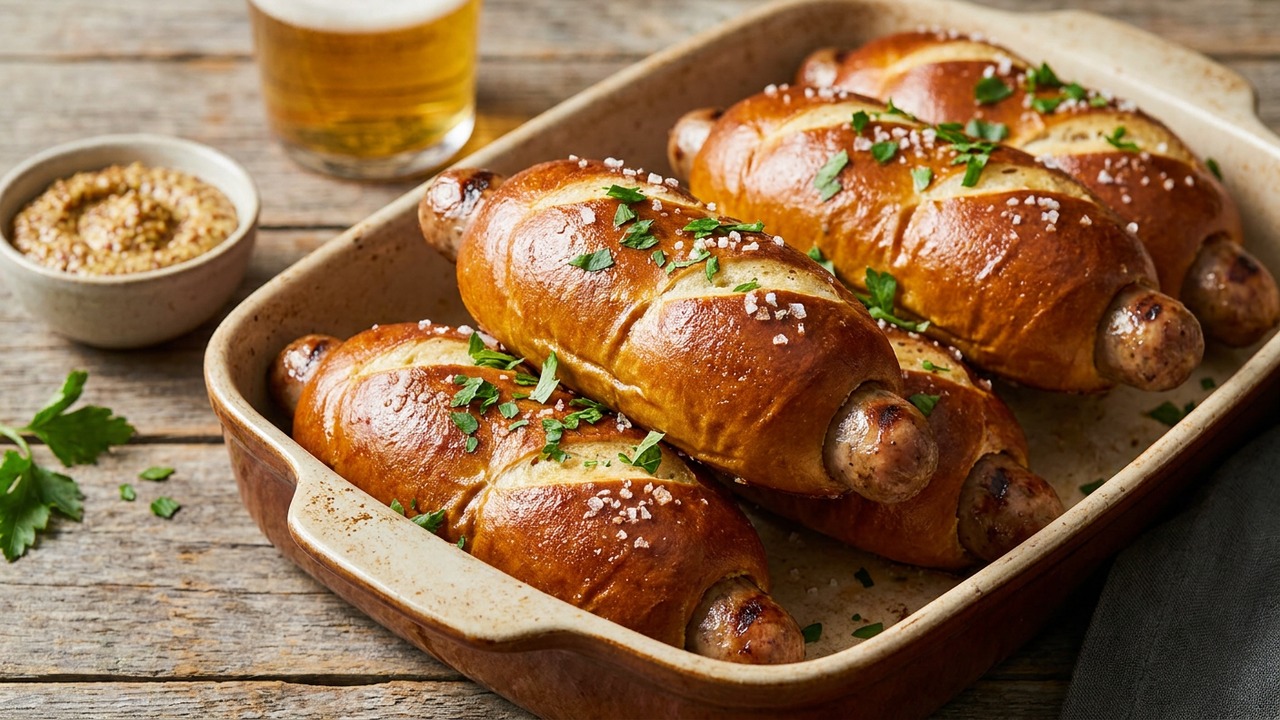
Savory bratwurst wrapped in a classic pretzel-style roll — soft and chewy inside with a glossy, salted crust. These stuffed pretzel rolls are perfect for game-day sandwiches, backyard parties, or an elevated weeknight meal.
Ingredient Spotlight
Bratwurst links
Bratwurst is a fresh German-style sausage typically made from pork, veal or beef with regional seasonings (marjoram, nutmeg, white pepper) giving a savory, slightly herby flavor and a coarse, meaty texture. It originates from Germany and is commonly sold raw in links that must be grilled, pan-fried or simmered before serving; it smells meaty with warm spice notes when cooked. Find bratwurst at most supermarkets, butcher shops, or specialty German markets; good substitutes are mild Italian sausage or fresh pork sausages if you want a similar texture, while smoked kielbasa can stand in if you accept a different, smokier flavor.
Jake Woods's note
"These stuffed pretzel rolls turn ordinary brats into a hand-held showstopper — they travel well and make great party food. Home bakers will love the dramatic pretzel crust and the satisfaction of baking and stuffing the rolls themselves."
About This Recipe
There’s something quietly celebratory about a brat tucked into a warm, salty pretzel roll: the yeasty chew of the bread, the glossy mahogany crust, and that first burst of savory juice cut by a smear of mustard. These Bratwurst Pretzel Rolls concentrate all of that into a handheld sandwich that holds up to big flavors — tangy sauerkraut, grainy mustard, or sharp melted cheese — while still feeling like a made-from-scratch treat. Making the dough yourself gives the interior that characteristic soft yet slightly elastic crumb that commercial rolls can’t match, and the soda bath builds the flavor and color we associate with a true pretzel exterior without the fuss of lye.
This version balances convenience with control: simmering the brats first guarantees they’re cooked through and stay juicy after baking, and a quick sear adds color and caramelized flavor. The technique of sealing seams underneath and keeping the dough slightly tacky results in a neat sandwich with no leaks; finishing the rolls with butter after baking adds shine and keeps the crust tender. It’s ideal for weekend bakers who like hands-on recipes, hosts who want an elevated game-day spread, or anyone who wants to turn a simple sausage into a memorable meal.
Ingredients for Bratwurst Pretzel Rolls
- 1 cup Warm water (for dough)
- 1 packet (2 1/4 tsp) Active dry yeast
- 2 tbsp Granulated sugar
- 3 cups All-purpose flour
- 1 tsp Fine salt
- 2 tbsp Unsalted butter (room temp, for dough and finishing)
- 4 links Bratwurst links
- 3 tbsp Baking soda (for soda bath)
- 1 large Large egg (for egg wash)
- 1 tsp Coarse pretzel or kosher salt (for sprinkling)
How to Make Bratwurst Pretzel Rolls
Step 1: Make and proof the dough
Whisk the warm water, yeast and sugar in a bowl; let sit 5 minutes until foamy. In a large bowl combine flour and salt, add the yeast mixture and softened butter, then knead 6–8 minutes (by stand mixer or by hand) until smooth and slightly tacky. Place dough in a lightly oiled bowl, cover, and let rise in a warm spot until doubled, about 45–60 minutes.For this step
- 1 cupWarm water (for dough)
- 1 packet (2 1/4 tsp)Active dry yeast
- 2 tbspGranulated sugar
- 3 cupsAll-purpose flour
- 1 tspFine salt
- 2 tbspUnsalted butter (room temp, for dough and finishing)
Step 2: Par-cook the bratwurst
While the dough rises, simmer the bratwurst in a pot of water or beer for 6–8 minutes until just cooked through, then optionally sear in a hot skillet 1–2 minutes per side for color. Remove and let cool slightly so they’re easy to handle when wrapping.For this step
- 4 linksBratwurst links
Step 3: Shape rolls and prepare soda bath
Punch the risen dough down, divide into 4 equal pieces and roll each into a log roughly the length of a brat. Wrap each brat with a dough log, sealing seams underneath. Bring a wide pot of water to a simmer and stir in the baking soda; working in batches, carefully dip each wrapped roll into the soda bath 15–30 seconds, then transfer to a parchment-lined baking sheet.For this step
- 3 tbspBaking soda (for soda bath)
Step 4: Egg wash and salt
Whisk the egg with a splash of water and brush each dipped roll evenly to promote deep browning. Sprinkle coarse pretzel or kosher salt over the tops to taste, then let the rolls rest for about 10–15 minutes while the oven preheats to 425°F (220°C).For this step
- 1 largeLarge egg (for egg wash)
- 1 tspCoarse pretzel or kosher salt (for sprinkling)
Step 5: Bake and finish
Bake the rolls on the middle rack for 18–22 minutes until deep mahogany brown. Remove, brush with a little melted butter if desired, let cool 5 minutes, then serve warm with mustard, sauerkraut, or your favorite toppings.


- Whisk the warm water, yeast and sugar in a bowl; let sit 5 minutes until foamy. In a large bowl combine flour and salt, add the yeast mixture and softened butter, then knead 6–8 minutes (by stand mixer or by hand) until smooth and slightly tacky. Place dough in a lightly oiled bowl, cover, and let rise in a warm spot until doubled, about 45–60 minutes.
- While the dough rises, simmer the bratwurst in a pot of water or beer for 6–8 minutes until just cooked through, then optionally sear in a hot skillet 1–2 minutes per side for color. Remove and let cool slightly so they’re easy to handle when wrapping.
- Punch the risen dough down, divide into 4 equal pieces and roll each into a log roughly the length of a brat. Wrap each brat with a dough log, sealing seams underneath. Bring a wide pot of water to a simmer and stir in the baking soda; working in batches, carefully dip each wrapped roll into the soda bath 15–30 seconds, then transfer to a parchment-lined baking sheet.
- Whisk the egg with a splash of water and brush each dipped roll evenly to promote deep browning. Sprinkle coarse pretzel or kosher salt over the tops to taste, then let the rolls rest for about 10–15 minutes while the oven preheats to 425°F (220°C).
- Bake the rolls on the middle rack for 18–22 minutes until deep mahogany brown. Remove, brush with a little melted butter if desired, let cool 5 minutes, then serve warm with mustard, sauerkraut, or your favorite toppings.
Bratwurst Pretzel Rolls Tips
Warm but not hot
Use water around 105–115°F (40–46°C) to proof the yeast; water that’s too hot will kill the yeast and too cool will slow the rise.
Knead for structure
Knead until the dough is smooth and slightly tacky — 6–8 minutes — which develops enough gluten for the chewy interior without becoming tough.
Seal seams underneath
When wrapping the brat, pinch and roll the dough seam-side down to hide the join and prevent it from opening during the soda bath and bake.
Time the soda bath
Dip each roll 15–30 seconds in simmering baking-soda water to darken and flavor the crust; longer can make the crust too alkaline, shorter gives less color.
Finish with butter
Brush melted butter on the hot rolls as soon as they come out to keep the crust glossy and slightly soft rather than brittle.
Bratwurst Pretzel Rolls Variations and Substitutions
Cheesy brat roll
Add a slice of Swiss, sharp cheddar, or Gruyère atop each brat before wrapping for melty, savory fill; tuck thin apple slices for a sweet contrast.
Vegetarian sausage swap
Use firm plant-based bratwurst or smoked tofu sausages in place of bratwurst and follow the same par-cook method to preserve texture and prevent sogginess.
Beer par-cook
Simmer the bratwurst in a pale lager or amber beer instead of water to impart a subtle hop and malt note into the sausage casing.
Mini slider version
Divide the dough into 8–10 smaller pieces and use cocktail-size sausages for party sliders; reduce soda-bath time slightly and watch the bake carefully.
How to Store and Make Bratwurst Pretzel Rolls Ahead
Store cooled rolls in an airtight container at room temperature for up to 48 hours. For longer keeping, freeze individually wrapped rolls for up to 2 months; thaw at room temperature before reheating. Reheat in a 350°F oven for 8–12 minutes (15–20 minutes from frozen) to revive the crust — avoid microwaving if you want to keep the pretzel texture.
What to Serve With Bratwurst Pretzel Rolls
Serve warm with a trio of mustards (Dijon, whole grain, and beer mustard) and a mound of warm sauerkraut or quick pickled red onions. Pair with German-style potato salad or crispy oven fries and an ice-cold lager or a slightly sweet Riesling to balance the salty crust.
Bratwurst Pretzel Rolls FAQs
Can I use instant yeast instead?
Yes — reduce the proofing step by adding instant yeast directly to the flour and cut initial rise time slightly; use about 2¼ teaspoons (one packet) as written but skip the water proofing step.
Why does the recipe use baking soda instead of lye?
Baking soda in a simmering bath creates the Maillard-friendly alkaline surface that gives color and flavor like a lye dip but is food-safe and easy for home cooks.
Can I assemble these ahead of time?
You can par-cook the brats and make the dough up to a day ahead; shaped, dipped rolls can be refrigerated for a few hours before baking, but bring them back to room temperature and allow a short rest so they rise slightly before baking.
My rolls didn’t brown enough — what went wrong?
Insufficient soda-bath time, weak egg wash, or oven temperature that’s too low are common causes; make sure the bath is simmering, brush egg wash evenly, and verify your oven with a thermometer.
Can I add fillings like cheese or onions inside?
Yes — thin cheese slices or caramelized onions work well, but keep fillings reasonably thin so the dough seals properly and cooks through without splitting.
About the author
Jake WoodsHello, I'm Jake. I started this recipe site with the idea that I hated recipe websites that overwhelm you with long stories and ads just to see plain content that's not helpful. My goal is to provide you with quality recipes, simple ideas and a fun cooking experience. There's lots of fun things to cook, and I think as you browse the site you'll find that TopShelf.Recipes is the place for quality recipes on the web.
See all recipes by Jake Woods →Ratings & Reviews
Did you make this recipe?
Be the first to share your experience.
Nutrition Facts
Per serving: 1 roll (306g)
Nutrition values are estimated from USDA ingredient data and may vary based on preparation, brands, and portion sizes. Values are provided for informational purposes only.
Keep Reading
Guides & articles for this recipe

Recipes
DIY Edible Monster Eyes Candy
Make safe, fun edible monster eyes for cupcakes, cookies, and candy trays. Step-by-step recipes show baking-soda balls, chocolate and fondant eyes, wafer-print options, plus assembly, storage, and kid-friendly safety tips.
Tips & Techniques
Baking Soda and Tenderized Beef
Learn how baking soda can tenderize, boost browning, and improve moisture for ground beef and other meats. This practical guide covers the science, step-by-step techniques, common mistakes, and recipes to try.

Healthy Eating
Gluten-Free Weeknight Grilling Plan
A 7-day gluten-free weeknight grilling plan with quick, family-friendly recipes, prep-ahead timelines, and a printable shopping list that spotlights late-summer produce and pantry staples. Includes clear cross-contamination safety tips and simple swaps to keep dinners fast and crowd-pleasing.
More from Baking
View all Baking recipes →
Apple Cider Muffins

Baked Buffalo Chicken Wings with Blue Cheese Dip (Crispy Oven Method)

Gluten-Free Honey Garlic Chicken Thighs with Tamari and Toasted Sesame

Sheet Pan Baked Honey Garlic Chicken Breasts with Roasted Vegetables

Juicy Oven-Baked Chicken Breasts (No-Dryness Method)

Cloud Bread Sandwiches

Honey Mustard Chicken Nuggets

Cheddar Jalapeño Corn Muffins

Basque Burnt Cheesecake
Ask me anything about this recipe — substitutions, scaling, techniques, timing.
Powered by AI · 6 questions per 5 minutes, 30 per day