Crispy Roast Pork Belly Siu Yuk
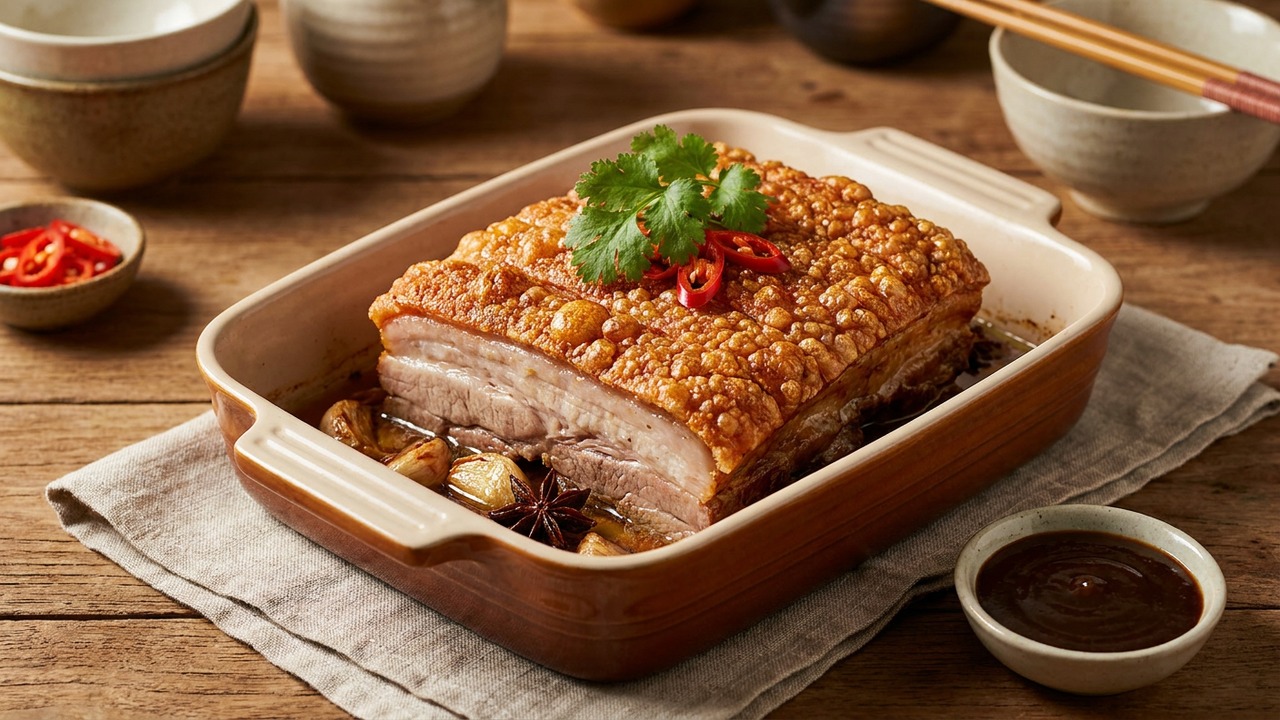
Crispy Roast Pork Belly (Siu Yuk) is a classic Cantonese celebration roast featuring tender seasoned pork and impossibly crackling skin. This reliable home-roasting method yields juicy meat and a blistered, crunchy crackle perfect for Lunar New Year or any festive table.
Ingredient Spotlight
Chinese five-spice powder
A blended spice mix from Chinese cuisine typically containing star anise, cloves, cinnamon (cassia), fennel seed and Sichuan/white pepper. It smells warm and sweet with licorice/anise notes and a mild numbing peppery finish, used to season meats and braises. You can find it in the spice aisle of many supermarkets, Asian grocery stores, or online. If you don’t have it, mix equal parts ground cinnamon, ground star anise (or ground anise/fennel), ground cloves and a pinch of white or ground Sichuan pepper as a rough substitute.
(paid link) — as an Amazon Associate we earn from qualifying purchases.
Ingredient Spotlight
Shaoxing wine (or dry sherry/rice wine)
Shaoxing wine is a Chinese fermented rice wine used in cooking to add depth, umami, and a toasty, slightly nutty sweetness to dishes. It’s a staple in Chinese cuisine and has a more savory, less sweet profile than mirin. Look for it at Asian markets, well-stocked grocery stores, or online; many recipes accept dry sherry as a direct substitute. For a nonalcoholic option, use low-sodium chicken or vegetable stock with a splash of rice vinegar and a pinch of sugar to mimic the acidity and sweetness.
Jake Woods's note
"This siu yuk technique focuses on simple seasonings and a two-stage roast to guarantee crackling every time. It shines at holiday gatherings — make it the centerpiece and prepare to carve at the table."
About This Recipe
Crispy Roast Pork Belly (Siu Yuk) lives at the intersection of two pleasures: the chewy, collagen-rich chew of slow-rendered pork and the high-wire thrill of an impossibly crackling skin. This recipe leans into both by seasoning the meat side with Shaoxing, five-spice, salt and sugar to build savory-sweet depth while treating the skin almost like a separate component — scraped, tightened with boiling water, dried, and dusted with rice vinegar and baking powder so it puffs and blisters in a hot finish. The low-and-slow roast renders out fat without collapsing the slab, and the final blast at very high heat (or under the broiler) gives you that signature, glassy crackle.
It’s an approachable method for a home oven: you don’t need a spit, a commercial roaster, or exotic kit — but you do need patience, good drying time, and attention during the final browning. This version works because the flavors are kept on the meat side while the skin is treated to mechanical and chemical help (vinegar tightens, baking powder promotes blistering). Make it for Lunar New Year, a dinner party, or any time you want a centerpiece that’s both rustic and theatrically crisp.
Ingredients for Crispy Roast Pork Belly Siu Yuk
- 3 1/2 lb pork belly, skin on
- 1 1/2 tsp kosher salt
- 1 tsp granulated sugar
- 1 tsp Chinese five-spice powder
- 1/2 tsp ground white pepper
- 2 tbsp Shaoxing wine (or dry sherry/rice wine)
- 2 tbsp rice vinegar
- 1 tbsp baking powder
- 1 tbsp neutral oil (vegetable or canola) for brushing
🛒 = paid link — as an Amazon Associate we earn from qualifying purchases.
How to Make Crispy Roast Pork Belly Siu Yuk
Step 1: Score and season the meat side
Pat the pork belly thoroughly dry. Turn the belly so the skin is down and lightly score the fat (not the skin) in a shallow crosshatch to help flavors penetrate, then rub the flesh side with Shaoxing wine. Mix kosher salt, sugar, five-spice and white pepper and rub onto the scored flesh, leaving the skin clean and dry; let sit uncovered at room temperature for 30–60 minutes or refrigerate if keeping longer.For this step
- 3 1/2 lbpork belly, skin on
- 1 1/2 tspkosher salt
- 1 tspgranulated sugar
- 1 tspChinese five-spice powder
- 1/2 tspground white pepper
- 2 tbspShaoxing wine (or dry sherry/rice wine)
Step 2: Prepare the skin for crackling
Use the back of a knife or clean cloth to scrape or wipe away any fat residue on the skin, keeping it intact. Bring a kettle to a boil and pour hot water over the skin to tighten pores, then pat completely dry; brush the skin with rice vinegar and sprinkle evenly with baking powder and a light dusting of kosher salt to encourage drying and blistering.For this step
- 2 tbsprice vinegar
- 1 tbspbaking powder
Step 3: Dry the pork uncovered
Place the pork belly skin-side up on a wire rack set over a tray and refrigerate uncovered for a minimum of 4 hours, preferably overnight, to thoroughly dry the skin. Proper drying is the most important step for crisp crackling, so don’t skip or shorten this resting time if possible.Step 4: Roast low then blast high for crackle
Preheat the oven to 325°F (160°C). Roast the pork belly skin-side up on the rack for 60–75 minutes, or until the meat is tender and the fat has rendered (internal temperature around 155–165°F / 68–74°C). Brush a thin layer of neutral oil over the skin and increase oven temperature to 475–500°F (245–260°C) or use the broiler; roast 12–18 minutes, watching closely, until the skin puffs, bubbles and turns golden-brown and crackly.For this step
- 1 tbspneutral oil (vegetable or canola) for brushing
Step 5: Rest and carve
Remove the pork belly from the oven and let it rest for 10–15 minutes to let juices redistribute and the crackle set. Using a sharp chef’s knife, score through the crackled skin and slice into portions; serve warm with steamed rice or hoisin and scallions for a festive presentation.


- Pat the pork belly thoroughly dry. Turn the belly so the skin is down and lightly score the fat (not the skin) in a shallow crosshatch to help flavors penetrate, then rub the flesh side with Shaoxing wine. Mix kosher salt, sugar, five-spice and white pepper and rub onto the scored flesh, leaving the skin clean and dry; let sit uncovered at room temperature for 30–60 minutes or refrigerate if keeping longer.
- Use the back of a knife or clean cloth to scrape or wipe away any fat residue on the skin, keeping it intact. Bring a kettle to a boil and pour hot water over the skin to tighten pores, then pat completely dry; brush the skin with rice vinegar and sprinkle evenly with baking powder and a light dusting of kosher salt to encourage drying and blistering.
- Place the pork belly skin-side up on a wire rack set over a tray and refrigerate uncovered for a minimum of 4 hours, preferably overnight, to thoroughly dry the skin. Proper drying is the most important step for crisp crackling, so don’t skip or shorten this resting time if possible.
- Preheat the oven to 325°F (160°C). Roast the pork belly skin-side up on the rack for 60–75 minutes, or until the meat is tender and the fat has rendered (internal temperature around 155–165°F / 68–74°C). Brush a thin layer of neutral oil over the skin and increase oven temperature to 475–500°F (245–260°C) or use the broiler; roast 12–18 minutes, watching closely, until the skin puffs, bubbles and turns golden-brown and crackly.
- Remove the pork belly from the oven and let it rest for 10–15 minutes to let juices redistribute and the crackle set. Using a sharp chef’s knife, score through the crackled skin and slice into portions; serve warm with steamed rice or hoisin and scallions for a festive presentation.
Crispy Roast Pork Belly Siu Yuk Tips
Score the fat only
When you crosshatch the underside, cut just through the fat layer without piercing the skin so the seasoning penetrates but the skin remains intact to blister.
Dry thoroughly overnight
Refrigerate uncovered skin-side up for at least 4 hours and preferably overnight; moisture is the most common reason crackle fails to form.
Use boiling water carefully
Pour or ladle boiling water over the skin to tighten pores, then pat completely dry—this step helps the vinegar and baking powder cling and accelerate blistering.
Watch the final blast
During the high-heat finish or broil, stay by the oven and rotate the pan often because the skin can go from bubbly to burnt in a minute or two.
Brush oil sparingly
A thin coat of neutral oil before the high-heat stage encourages browning without inhibiting the baking powder’s blistering action.
Let crackle set
Rest the roast 10–15 minutes after roasting so juices redistribute and the crackle hardens, making it easier to slice cleanly.
Crispy Roast Pork Belly Siu Yuk Variations and Substitutions
Sichuan pepper twist
Add 1/2 teaspoon ground Sichuan peppercorns to the five-spice mix for a citrusy numbing finish; serve with a chile-garlic oil for heat.
Honey-soy glaze (after)
Brush a thin honey-soy glaze on the meat side only after the low roast and before the high blast, but apply sparingly to avoid softening the skin.
Sous-vide then crisp
Cook the seasoned belly sous-vide at 165°F (74°C) for 8–10 hours to guarantee tenderness, chill to firm, then follow the vinegar/baking powder prep and finish under a hot broiler for crackle.
Lower-fat option
Trim some of the top fat cap before scoring if you prefer less richness, and increase roasting time slightly to fully render remaining fat.
How to Store and Make Crispy Roast Pork Belly Siu Yuk Ahead
Store leftover slices in an airtight container in the refrigerator for up to 3 days; keep crackling pieces separated from moist sides to avoid sogginess. To reheat and re-crisp, place slices on a wire rack over a baking sheet at 375–400°F (190–200°C) for 8–12 minutes until hot and crackle has revived. Cooked pork belly can be frozen for up to 2 months—thaw overnight in the fridge and re-crisp in the oven as above.
What to Serve With Crispy Roast Pork Belly Siu Yuk
Serve slices with steamed jasmine rice, quick-pickled cucumber and carrot, and a small dish of hoisin or Chinese mustard for cutting through the richness. For a festive spread, add scallion pancakes or gai lan (Chinese broccoli) with oyster sauce, and pair with a dry Riesling or a crisp lager to balance the pork's fattiness. Arrange crackle-side up on a warm platter so each portion keeps its crunch.
Crispy Roast Pork Belly Siu Yuk FAQs
Why do you use baking powder on the skin?
Baking powder raises the skin’s pH and encourages blistering by helping proteins break down and moisture escape, which promotes the puffing and cracking you want; use it sparingly and distribute evenly.
My skin didn’t crackle—what went wrong?
The usual culprits are residual moisture, pierced skin, or insufficient high heat; ensure the skin is bone-dry, avoid scoring it, and give it a powerful, closely watched blast under a hot broiler or at 475–500°F.
Can I use the broiler instead of a high oven temperature?
Yes—the broiler works well for the final blast because it delivers intense direct heat, but keep the pork close to the element for quick blistering and monitor every minute to prevent burning.
What internal temperature should the meat reach?
Aim for about 155–165°F (68–74°C) during the low roast so the fat renders and the meat is tender before you crisp the skin; carryover will raise the temperature slightly during resting.
Can I prepare the pork ahead of time?
Yes—you can dry the skin in the fridge overnight and even season the meat side a day ahead; just bring the pork to room temperature before roasting for more even cooking.
About the author
Jake WoodsHello, I'm Jake. I started this recipe site with the idea that I hated recipe websites that overwhelm you with long stories and ads just to see plain content that's not helpful. My goal is to provide you with quality recipes, simple ideas and a fun cooking experience. There's lots of fun things to cook, and I think as you browse the site you'll find that TopShelf.Recipes is the place for quality recipes on the web.
See all recipes by Jake Woods →Ratings & Reviews
Did you make this recipe?
Be the first to share your experience.
Nutrition Facts
Per serving: 1 serving
Nutrition values are estimated from USDA ingredient data and may vary based on preparation, brands, and portion sizes. Values are provided for informational purposes only.
Keep Reading
Guides & articles for this recipe
Tips & Techniques
Baking Soda and Tenderized Beef
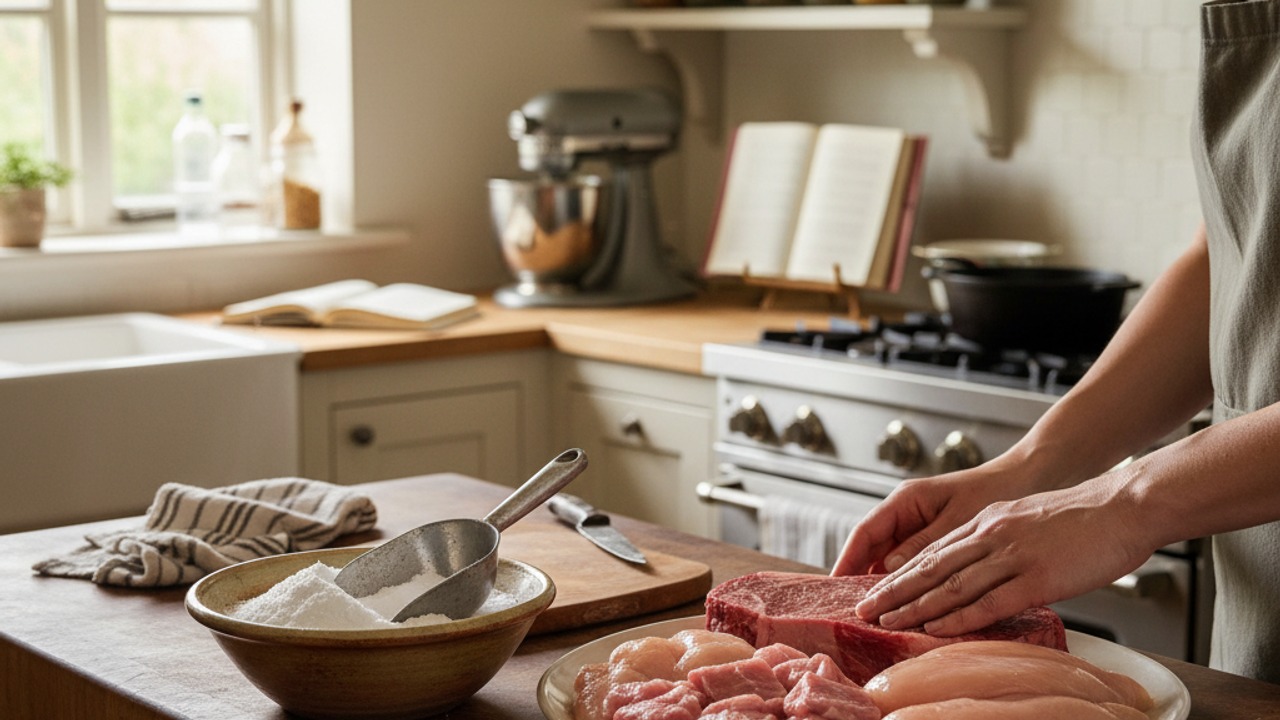
Learn how baking soda can tenderize, boost browning, and improve moisture for ground beef and other meats. This practical guide covers the science, step-by-step techniques, common mistakes, and recipes to try.

Healthy Eating
Gluten-Free Weeknight Grilling Plan
A 7-day gluten-free weeknight grilling plan with quick, family-friendly recipes, prep-ahead timelines, and a printable shopping list that spotlights late-summer produce and pantry staples. Includes clear cross-contamination safety tips and simple swaps to keep dinners fast and crowd-pleasing.

Healthy Eating
Low-Fat Grill Swaps for Big Flavor
A practical guide to trimming fat from grilled meals without losing juiciness or char. Learn yogurt- and citrus-based marinades, lean protein picks, searing and indirect-heat tricks, plus 5 quick low-fat marinades and a simple weeknight plan.
More from Baking
View all Baking recipes →
Cloud Bread Sandwiches

Honey Mustard Chicken Nuggets

Cheddar Jalapeño Corn Muffins

Basque Burnt Cheesecake

30-Minute Sticky Baked Honey Garlic Chicken Thighs with Crisp Edges

Lemon Butter Salmon

Spritz Cookies

Brown Butter Vanilla Syrup

Honey Glazed Easter Ham
Ask me anything about this recipe — substitutions, scaling, techniques, timing.
Powered by AI · 6 questions per 5 minutes, 30 per day