Classic Steakhouse Beer-Battered Onion Rings
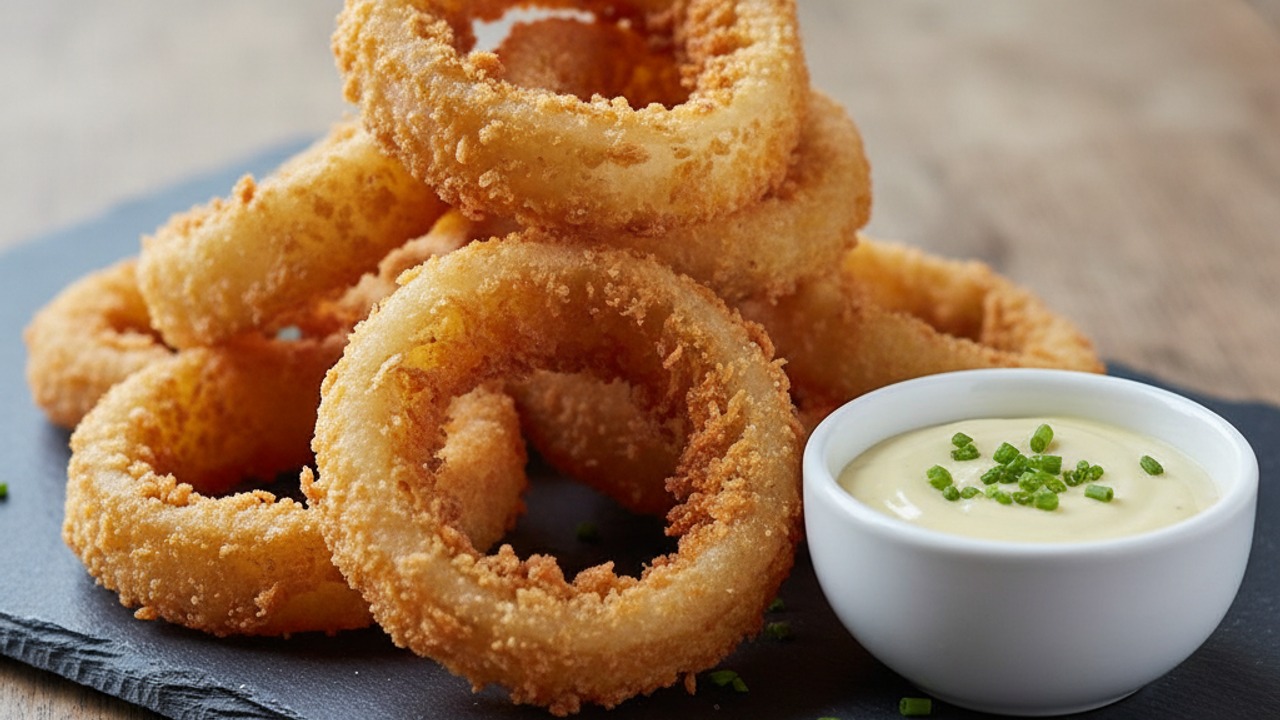
Crispy, golden beer-battered onion rings with a light, crunchy coating — a classic steakhouse side that pairs perfectly with steaks and burgers. This recipe walks through soaking the onions, an extra-crisp batter technique, frying temperature tips, and an easy oven-baked alternative for weeknight dinners.
Jake Woods's note
"These onion rings deliver that steakhouse crunch at home — light, not greasy, and utterly addictive. They shine alongside a grilled steak or stacked with a burger, and the oven option makes weeknights easy without sacrificing texture."
About This Recipe
There’s a reason beer-battered onion rings are a steakhouse staple: the contrast of a shatteringly crisp shell and a sweet, yielding onion is pure comfort food physics. This recipe leans on two small but decisive moves to get that texture at home: very cold beer (for lift) and a bit of cornstarch in the dry mix (for glassy, crackly crunch). Soaking the slices in ice water firms the rings and tames the onion’s bite so each mouthful reads sweet and savory under that golden jacket, and finishing the fried rings on a wire rack keeps them airy instead of soggy.
Beyond technique, the beauty of this version is its flexibility. A quick flour dust before dipping and an optional light double-dip create the sort of crust you expect at a classic steakhouse without an extra batter station; keeping the oil at a steady 360–375°F gives a deep color without overcooking the onion. If you prefer a lighter weeknight approach, the oven-baked method here sacrifices a degree of flash but preserves the flavor and is terrific when you need shorter hands-on time or less oil fuss — great alongside burgers, grilled steaks, or a simple beer and fries night.
Ingredients for Classic Steakhouse Beer-Battered Onion Rings
- 2 large large yellow onions, halved and sliced into 1/2–3/4" (1.2–2 cm) rings
- 2 cups ice water (for soaking)
- 1 1/2 cups all-purpose flour
- 1/4 cup cornstarch
- 1 teaspoon baking powder
- 1 teaspoon kosher salt
- 1/2 teaspoon freshly ground black pepper
- 12 fl oz cold beer (lager or pale ale), well chilled
- 4 cups neutral oil for frying (vegetable, canola, or peanut)
How to Make Classic Steakhouse Beer-Battered Onion Rings
Step 1: Slice and soak the onions
Peel and halve the onions, then slice into 1/2–3/4" (1.2–2 cm) rings and separate into individual rings. Place the rings in a large bowl and cover with ice water for 10–15 minutes to firm the rings and mellow sharpness; drain and pat thoroughly dry on paper towels before battering.For this step
- 2 largelarge yellow onions, halved and sliced into 1/2–3/4" (1.2–2 cm) rings
- 2 cupsice water (for soaking)
Step 2: Make the extra-crisp beer batter
Whisk together the all-purpose flour, cornstarch, baking powder, kosher salt, and black pepper in a large bowl. Gradually whisk in the well-chilled beer until the batter is smooth and just pourable (a few small lumps are fine); the cold beer and cornstarch both create a thinner, light batter that crisps up well. Let the batter rest 10 minutes in the refrigerator—this helps the gluten relax and yields a lighter crunch.For this step
- 1 1/2 cupsall-purpose flour
- 1/4 cupcornstarch
- 1 teaspoonbaking powder
- 1 teaspoonkosher salt
- 1/2 teaspoonfreshly ground black pepper
- 12 fl ozcold beer (lager or pale ale), well chilled
Step 3: Heat oil and test temperature
Pour oil into a deep pot or heavy Dutch oven to a depth of about 2–3" (5–7 cm) and heat over medium-high until it reaches 375°F (190°C) on a thermometer. If you don't have a thermometer, drop a 1/2 teaspoon of batter in: it should sizzle, float, and brown in about 30–45 seconds. Maintain 360–375°F (182–190°C) while frying for the best texture.For this step
- 4 cupsneutral oil for frying (vegetable, canola, or peanut)
Step 4: Dust, batter and (optionally) double-dip for extra crunch
Lightly toss dried onion rings in a small handful of the flour mixture (reserve most for the batter) to help the batter adhere, then dip into the chilled beer batter, letting excess drip off. For an extra-crisp coating, you can quick-dust the battered rings in a few teaspoons of dry flour or panko before frying—this creates a slightly thicker, crunchier crust while keeping the interior tender.Step 5: Fry in batches until golden
Carefully lower rings into the hot oil in small batches to avoid crowding; fry 2–3 minutes or until deep golden and crisp, turning if needed. Use a slotted spoon to transfer rings to a wire rack set over a baking sheet to drain (not paper towels) so air circulates and they stay crisp. Keep cooked rings warm in a 200°F (95°C) oven while you finish remaining batches and serve immediately with your favorite steakhouse sauces.Step 6: Oven-baked alternative for weeknights
For a lighter, no-fry option: preheat the oven to 425°F (220°C). Toss soaked, dried rings in a thin coating of batter, arrange in a single layer on a parchment-lined sheet, brush or spray lightly with oil, and bake 12–15 minutes, flipping once, until golden and crisp. Baking won't exactly match deep-fried texture but gives a satisfying crunch with far less oil—great for quick weeknight sides.


- Peel and halve the onions, then slice into 1/2–3/4" (1.2–2 cm) rings and separate into individual rings. Place the rings in a large bowl and cover with ice water for 10–15 minutes to firm the rings and mellow sharpness; drain and pat thoroughly dry on paper towels before battering.
- Whisk together the all-purpose flour, cornstarch, baking powder, kosher salt, and black pepper in a large bowl. Gradually whisk in the well-chilled beer until the batter is smooth and just pourable (a few small lumps are fine); the cold beer and cornstarch both create a thinner, light batter that crisps up well. Let the batter rest 10 minutes in the refrigerator—this helps the gluten relax and yields a lighter crunch.
- Pour oil into a deep pot or heavy Dutch oven to a depth of about 2–3" (5–7 cm) and heat over medium-high until it reaches 375°F (190°C) on a thermometer. If you don't have a thermometer, drop a 1/2 teaspoon of batter in: it should sizzle, float, and brown in about 30–45 seconds. Maintain 360–375°F (182–190°C) while frying for the best texture.
- Lightly toss dried onion rings in a small handful of the flour mixture (reserve most for the batter) to help the batter adhere, then dip into the chilled beer batter, letting excess drip off. For an extra-crisp coating, you can quick-dust the battered rings in a few teaspoons of dry flour or panko before frying—this creates a slightly thicker, crunchier crust while keeping the interior tender.
- Carefully lower rings into the hot oil in small batches to avoid crowding; fry 2–3 minutes or until deep golden and crisp, turning if needed. Use a slotted spoon to transfer rings to a wire rack set over a baking sheet to drain (not paper towels) so air circulates and they stay crisp. Keep cooked rings warm in a 200°F (95°C) oven while you finish remaining batches and serve immediately with your favorite steakhouse sauces.
- For a lighter, no-fry option: preheat the oven to 425°F (220°C). Toss soaked, dried rings in a thin coating of batter, arrange in a single layer on a parchment-lined sheet, brush or spray lightly with oil, and bake 12–15 minutes, flipping once, until golden and crisp. Baking won't exactly match deep-fried texture but gives a satisfying crunch with far less oil—great for quick weeknight sides.
Classic Steakhouse Beer-Battered Onion Rings Tips
Use ice-cold beer
Chilled beer slows gluten development and traps more bubbles, giving a lighter, crispier batter; keep the beer in the fridge until the last moment.
Pat rings bone-dry
Excess surface moisture causes the batter to slide and the oil to spit — dry every ring thoroughly on paper towels before flouring and dipping.
Maintain oil temperature
Fry in small batches and monitor with a thermometer; if it dips below 360°F rings absorb oil and go greasy, above 380°F they brown too fast and stay raw inside.
Wire rack resting
Drain cooked rings on a wire rack over a baking sheet so air circulates; paper towels trap steam and make the crust soggy.
Reserve flour for dusting
Keeping a little of the dry mix aside to dust the rings before battering helps the batter cling evenly and prevents bald spots.
Classic Steakhouse Beer-Battered Onion Rings Variations and Substitutions
Gluten-free batter
Substitute cup-for-cup gluten-free flour for the all-purpose and use a gluten-free beer or sparkling water; keep the cornstarch for crispness.
Panko double-dip
After the first batter dip, toss rings in fine panko and then quickly re-dip for an ultra-crunchy, flaky crust that stays crisp longer.
Spiced batter
Add 1/2 teaspoon smoked paprika and 1/4 teaspoon cayenne to the dry mix for a subtle smoky heat that pairs well with grilled steaks.
Onion variety swap
Sweet Vidalias make for milder, sweeter rings while red onions offer a sharper flavor and eye-catching color when fried.
How to Store and Make Classic Steakhouse Beer-Battered Onion Rings Ahead
Leftover rings are best eaten the day they’re made; cool completely, then refrigerate in a single layer on a wire rack inside an airtight container for up to 24 hours. Reheat in a 400°F (200°C) oven or air fryer for 4–6 minutes to restore crispness — avoid the microwave, which will make them soggy. Batter and onion slices can be prepared separately (soak and dry the onions, mix dry ingredients) a few hours ahead for quicker frying.
What to Serve With Classic Steakhouse Beer-Battered Onion Rings
Serve these onion rings alongside a peppery ribeye or a charred smash burger for a true steakhouse plate; add a simple lemon-garlic aioli, smoky ketchup, or mustard-mayo for dipping. For drinks, a crisp lager or an IPA with citrus notes will cut through the richness, while a milk stout complements the sweeter onions; arrange rings in a shallow bowl or on a stack of paper-lined baskets so they stay accessible and crisp.
Classic Steakhouse Beer-Battered Onion Rings FAQs
Can I use soda or sparkling water instead of beer?
Yes — sparkling water or club soda works well if you need a non-alcoholic option because the carbonation helps with lift; you’ll miss some malt flavor but keep the batter cold for the same effect.
Why add cornstarch to the flour?
Cornstarch reduces gluten formation and creates a drier, more brittle crust that shatters pleasantly when bitten, which is why it’s common in extra-crisp batters.
My rings turned out greasy — what went wrong?
Most likely the oil was too cool or you overcrowded the pan; let the temperature recover between batches and fry in smaller quantities to maintain 360–375°F.
How do I keep rings from falling apart in the batter?
Dry the onions thoroughly and toss them lightly in the reserved flour before dipping so the batter adheres; avoid thick, gloopy batter that can slip off the rings.
Will the oven method give the same texture?
No — baking yields a lighter, drier crisp but lacks the deep, uniform shatter of frying; use a light oil spray and flip once to get the best possible oven-crisp result.
Can I make the batter ahead?
You can whisk the dry mix and refrigerate the mixed batter for up to an hour, but the beer’s carbonation will dissipate over time, so for maximum lift mix the batter just before frying if possible.
About the author
Jake WoodsHello, I'm Jake. I started this recipe site with the idea that I hated recipe websites that overwhelm you with long stories and ads just to see plain content that's not helpful. My goal is to provide you with quality recipes, simple ideas and a fun cooking experience. There's lots of fun things to cook, and I think as you browse the site you'll find that TopShelf.Recipes is the place for quality recipes on the web.
See all recipes by Jake Woods →Ratings & Reviews
Did you make this recipe?
Be the first to share your experience.
Nutrition Facts
Per serving: 4 onion rings
Nutrition values are estimated from USDA ingredient data and may vary based on preparation, brands, and portion sizes. Values are provided for informational purposes only.
Keep Reading
Guides & articles for this recipe

Guides
Trending Backyard Dinner Parties for 2026: 8 Outdoor Dining Formats, Ready‑Made Menus & Host Workflows
Discover the eight backyard dining formats taking off in 2026, with plug‑and‑play menu templates, grill timing and workflow checklists, decor shortcuts, and social‑media and sustainability tips. This practical guide turns your yard into a seamless, shareable dining experience—whether you're hosting a casual progressive grill or an intimate fireside chef demo.

Guides
Trending Backyard Dinner Parties for 2026: 8 Outdoor Dining Formats, Plug‑and‑Play Menus & Host Workflows
Discover eight backyard dinner-party formats taking off in 2026, each with plug‑and‑play menu templates, step‑by‑step host workflows, grill timing tips, decor shortcuts, and social & sustainable ideas. Turn your yard into a memorable, stress‑free dining experience.

Recipes
DIY Edible Monster Eyes Candy
Make safe, fun edible monster eyes for cupcakes, cookies, and candy trays. Step-by-step recipes show baking-soda balls, chocolate and fondant eyes, wafer-print options, plus assembly, storage, and kid-friendly safety tips.
More from Dinner
View all Dinner recipes →
Low-Carb Lettuce Wrapped Chipotle Lime Chicken Burger with Avocado

Coffee‑Chile Rubbed Flank Steak Tacos with Charred Pineapple Salsa

Chicken Marsala Pasta

Jamaican Jerk Chicken Marinade for Smoking or Grilling

Classic Bacon-Balsamic Brussels Sprouts — Crispy Roast Beef Side

Classic Celeriac Purée (Celery Root Purée) — Silky Steakhouse Side

Stovetop Peach BBQ Chicken

Quick 20-Minute Butter Chicken

Instant Pot Chicken Alfredo Casserole — Creamy Pasta Bake Made Fast
Ask me anything about this recipe — substitutions, scaling, techniques, timing.
Powered by AI · 6 questions per 5 minutes, 30 per day