Cold Lemon Orzo Salad with Peas, Dill, and Feta
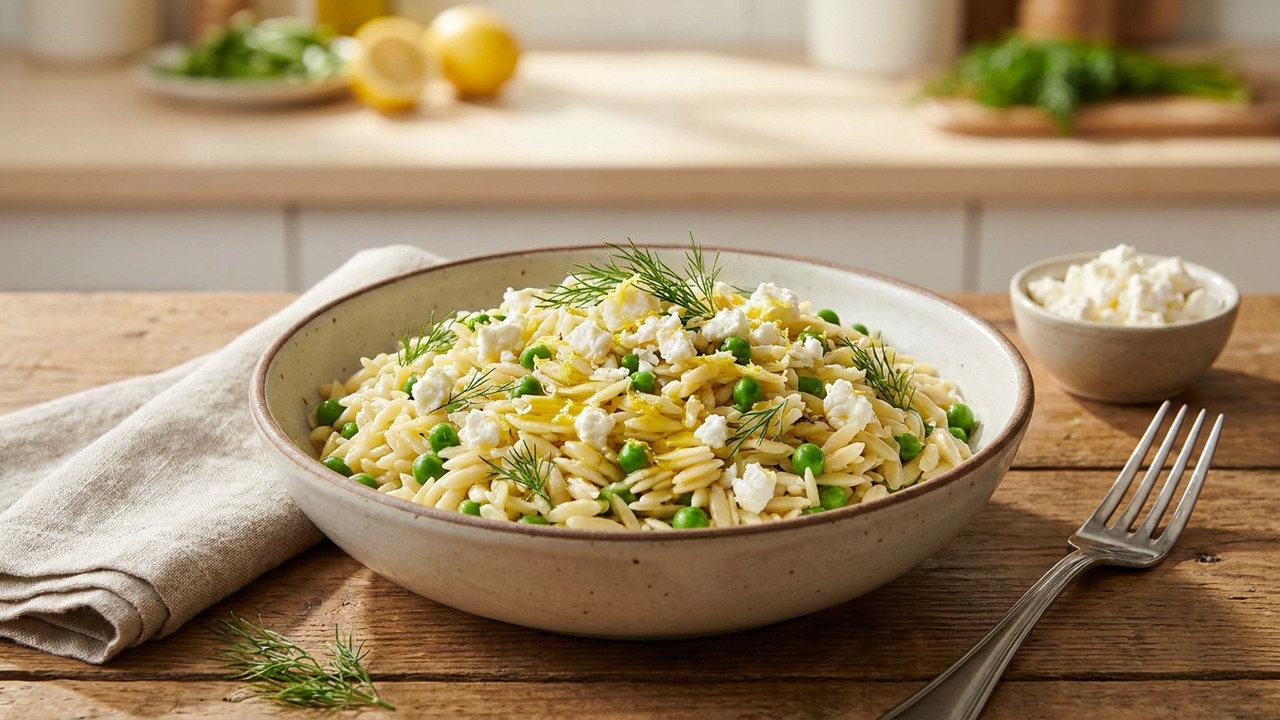
Bright, make-ahead lemon orzo salad with tender orzo, sweet peas, fresh dill, and salty crumbles of feta tossed in a lemony olive oil dressing. Light, refreshing, and perfect for potlucks, packed lunches, or as a cool side on warm days.
About This Recipe
This cold lemon orzo salad is built around a simple idea: bright acid, tender pasta, and contrasting textures. Tiny, pillow-like orzo becomes the canvas for pops of sweet frozen peas, the saline pockets of crumbled feta, and the feathery lift of fresh dill. A straightforward lemon-and-olive-oil dressing keeps the flavors clean and lets the individual ingredients sing — the red onion adds a little bite while the dill and optional zest give the dish a distinctly fresh finish.
What makes this version work is attention to timing and texture. Adding the peas at the very end of cooking and shocking the pasta stops carryover cooking so the orzo stays al dente, and rinsing off some starch prevents clumping when the dressing is added. Folding in the feta in the last step rather than tossing it aggressively preserves those creamy, salty clusters that punctuate each bite. It’s a go-to for potlucks, packed lunches, and weeknight dinners when you want something that travels well, can be scaled up, and holds up in the fridge for a couple of days.
Ingredients for Cold Lemon Orzo Salad with Peas, Dill, and Feta
- 2 cups Dry orzo
- 1 cup Frozen peas
- 1 teaspoon Kosher salt
- 3 tablespoons Extra-virgin olive oil
- 3 tablespoons Fresh lemon juice
- 1/2 teaspoon Freshly ground black pepper
- 1/3 cup Red onion, finely chopped
- 1/3 cup Fresh dill, chopped
- 4 ounces Feta cheese, crumbled
How to Make Cold Lemon Orzo Salad with Peas, Dill, and Feta
Step 1: Cook the orzo and peas
Bring a large pot of generously salted water to a boil. Add the dry orzo and cook until just al dente according to package directions (about 8–10 minutes). Add the frozen peas during the last 1–2 minutes of cooking to heat through. Drain the orzo and peas in a colander and rinse briefly under cold water to stop cooking; shake well to remove excess water and spread on a tray to cool slightly.Step 2: Make the lemon dressing
In a small bowl or jar, whisk together the extra-virgin olive oil and fresh lemon juice until emulsified. Season with the kosher salt and freshly ground black pepper, tasting and adjusting as needed. If desired, stir in a little lemon zest for extra brightness.Step 3: Combine orzo with aromatics
Transfer the cooled orzo and peas to a large mixing bowl. Add the finely chopped red onion and chopped fresh dill. Pour the lemon dressing over the mixture and toss gently until everything is evenly coated, scraping any dressing from the bowl to ensure uniform flavor.Step 4: Fold in the feta and adjust seasoning
Gently fold in the crumbled feta so it forms small clusters throughout the salad. Taste and adjust seasoning with a pinch more salt, additional lemon juice, or a drizzle of olive oil if needed.Step 5: Chill and serve
Cover and chill the salad at least 30 minutes (or up to 24 hours) to let the flavors meld. Before serving, fluff with a fork and garnish with extra dill and a little lemon zest if desired.


- Bring a large pot of generously salted water to a boil. Add the dry orzo and cook until just al dente according to package directions (about 8–10 minutes). Add the frozen peas during the last 1–2 minutes of cooking to heat through. Drain the orzo and peas in a colander and rinse briefly under cold water to stop cooking; shake well to remove excess water and spread on a tray to cool slightly.
- In a small bowl or jar, whisk together the extra-virgin olive oil and fresh lemon juice until emulsified. Season with the kosher salt and freshly ground black pepper, tasting and adjusting as needed. If desired, stir in a little lemon zest for extra brightness.
- Transfer the cooled orzo and peas to a large mixing bowl. Add the finely chopped red onion and chopped fresh dill. Pour the lemon dressing over the mixture and toss gently until everything is evenly coated, scraping any dressing from the bowl to ensure uniform flavor.
- Gently fold in the crumbled feta so it forms small clusters throughout the salad. Taste and adjust seasoning with a pinch more salt, additional lemon juice, or a drizzle of olive oil if needed.
- Cover and chill the salad at least 30 minutes (or up to 24 hours) to let the flavors meld. Before serving, fluff with a fork and garnish with extra dill and a little lemon zest if desired.
Cold Lemon Orzo Salad with Peas, Dill, and Feta Tips
Salt the pasta water
Treat the cooking water like the first seasoning — it should taste noticeably salty so the orzo absorbs flavor from the inside out.
Shock and dry orzo
Rinse the cooked orzo briefly under cold water to stop cooking, then spread it on a tray to cool and lose excess moisture before dressing.
Emulsify the lemon dressing
Whisk or shake the oil and lemon vigorously until slightly thickened so it coats the orzo evenly rather than pooling at the bottom.
Cluster the feta
Fold the feta in gently at the end to form small clumps; this gives salty bursts rather than an even, muted saltiness throughout.
Adjust acidity last
Because feta and the salted cooking water add salt, wait to finish with extra lemon juice so you don’t over-acidify the salad.
Cold Lemon Orzo Salad with Peas, Dill, and Feta Variations and Substitutions
Fresh peas swap
If using fresh peas, blanch them for 1 minute and shock in ice water; they’ll be sweeter and more textural than frozen, but adjust cook time slightly.
Greens and grain mix
Replace orzo with short-grain couscous or cooked barley for a heartier chew, or use gluten-free orzo made from corn or rice for a GF option.
Herb twist
Swap half the dill for chopped mint or parsley and add a teaspoon of Dijon for a different herb-forward profile that pairs well with lamb.
Add a protein
Toss in shredded rotisserie chicken, flaked grilled salmon, or drained chickpeas to make the salad a complete meal for lunches or picnics.
How to Store and Make Cold Lemon Orzo Salad with Peas, Dill, and Feta Ahead
Store leftovers in an airtight container in the refrigerator for up to 3 days; the dressing will continue to be absorbed so the salad firms up over time. Before serving, check for excess liquid and drain or fluff with a fork, and refresh with a squeeze of lemon and a handful of fresh herbs and crumbled feta if needed. Avoid freezing, as the texture of the pasta and cheese will degrade.
What to Serve With Cold Lemon Orzo Salad with Peas, Dill, and Feta
Serve chilled or at cool room temperature in a shallow bowl garnished with extra dill sprigs and lemon wedges for squeezing. Pair with grilled lemon chicken, pan-seared fish, or a platter of roasted vegetables, and offer a crisp white wine like Sauvignon Blanc or a spritzy sparkling water with cucumber to mirror the salad’s bright citrus notes.
Cold Lemon Orzo Salad with Peas, Dill, and Feta FAQs
Can I use fresh peas instead of frozen?
Yes — blanch fresh peas for about 60 seconds and shock them in ice water to preserve color and snap, then stir them into the salad cold. They’ll be sweeter and firmer than frozen peas.
How do I prevent mushy orzo?
Cook the orzo to just al dente and drain quickly; rinse with cold water to stop the cooking and spread it out to cool so it doesn’t continue steaming in a covered pot.
Is it better to dress the salad warm or cold?
Dress the orzo once it has cooled to near room temperature so it absorbs the dressing without wilting the herbs or breaking down the feta, though slightly warm orzo will take up dressing more readily if you plan to serve sooner.
Can I make this ahead of time?
Yes — make the salad up to 24 hours ahead and chill; add a little extra dressing or fresh lemon just before serving to brighten flavors that settle during refrigeration.
How much lemon should I use for balanced flavor?
Start with the 3 tablespoons called for, then add more in ½ teaspoon increments to taste, keeping in mind that the salty feta will temper some acidity so a final brightener just before serving is often beneficial.
About the author
Jake WoodsHello, I'm Jake. I started this recipe site with the idea that I hated recipe websites that overwhelm you with long stories and ads just to see plain content that's not helpful. My goal is to provide you with quality recipes, simple ideas and a fun cooking experience. There's lots of fun things to cook, and I think as you browse the site you'll find that TopShelf.Recipes is the place for quality recipes on the web.
See all recipes by Jake Woods →Ratings & Reviews
Did you make this recipe?
Be the first to share your experience.
Nutrition Facts
Per serving: about 1 cup
Nutrition values are estimated from USDA ingredient data and may vary based on preparation, brands, and portion sizes. Values are provided for informational purposes only.
Keep Reading
Guides & articles for this recipe

Healthy Eating
Gluten-Free Weeknight Grilling Plan
A 7-day gluten-free weeknight grilling plan with quick, family-friendly recipes, prep-ahead timelines, and a printable shopping list that spotlights late-summer produce and pantry staples. Includes clear cross-contamination safety tips and simple swaps to keep dinners fast and crowd-pleasing.

Healthy Eating
Low-Fat Grill Swaps for Big Flavor
A practical guide to trimming fat from grilled meals without losing juiciness or char. Learn yogurt- and citrus-based marinades, lean protein picks, searing and indirect-heat tricks, plus 5 quick low-fat marinades and a simple weeknight plan.

Recipes
DIY Edible Monster Eyes Candy
Make safe, fun edible monster eyes for cupcakes, cookies, and candy trays. Step-by-step recipes show baking-soda balls, chocolate and fondant eyes, wafer-print options, plus assembly, storage, and kid-friendly safety tips.
More from Salads
View all Salads recipes →
Watermelon Feta Mint Salad with Lime and Chili Flakes

Korean Gochujang Coleslaw with Sesame and Quick Pickled Scallions

Strawberry Spinach Salad

Campfire‑Smoked Potato Salad with Mustard‑Bacon Vinaigrette — A Labor Day Grilling Side for Steak

Honey Garlic Chicken Thigh Meal-Prep Bowls with Farro, Greens, and Tahini Drizzle

Mango Avocado Tilapia Salad Bowl with Lime Vinaigrette

Miso Glazed Salmon Bowl

Chorizo Black Bean Salad

Classic Make-Ahead Creamy Potato Salad — Labor Day BBQ Side for Steak & Burgers
Ask me anything about this recipe — substitutions, scaling, techniques, timing.
Powered by AI · 6 questions per 5 minutes, 30 per day