Cottage Cheese Pancakes
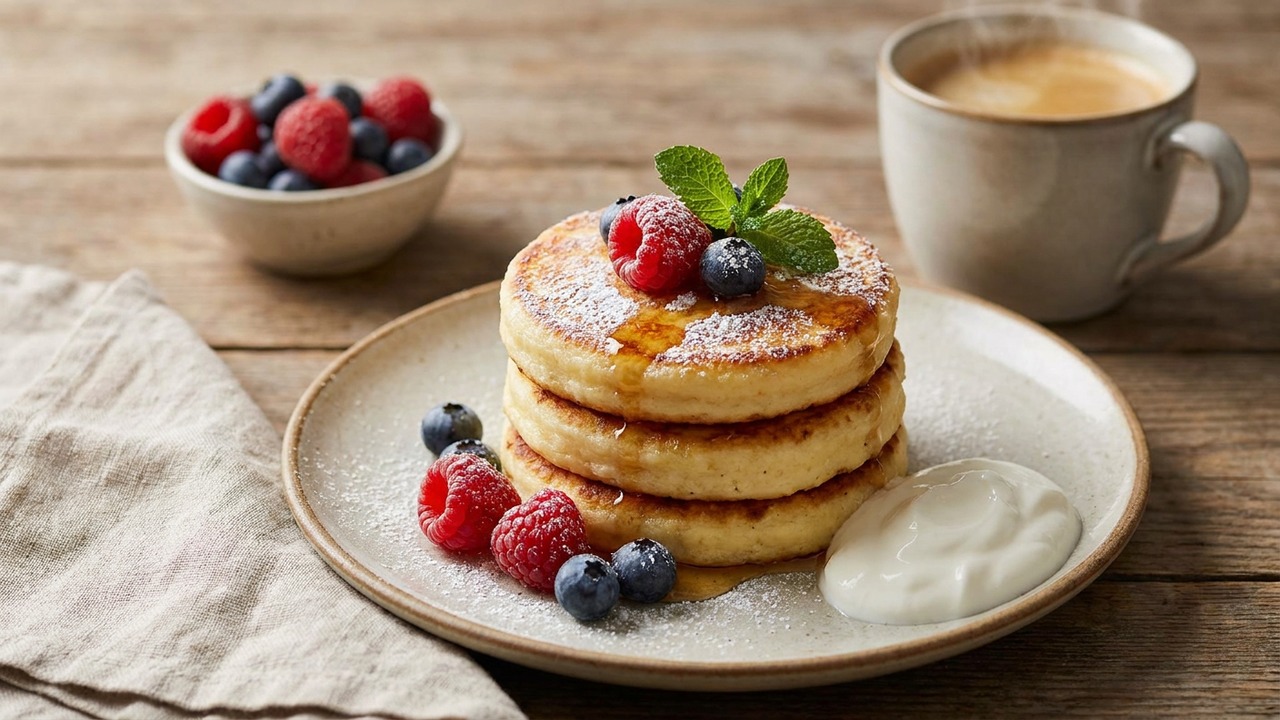
Light, high-protein pancakes that use cottage cheese for tender curds, extra protein, and a pleasantly tangy flavor. Quick to make and forgiving — you can pulse the batter for a smooth stack or leave the curds for a cottage-cheese texture that’s trending on social feeds.
Jake Woods's note
"These pancakes shine for a weekday protein boost or a leisurely weekend brunch. Home cooks will love the cottage-cheese texture hack — pulse briefly for silkier pancakes or leave the curds intact for more bite."
About This Recipe
Cottage cheese pancakes are one of those breakfasts that look simple on the plate but rely on a precise balance of texture and technique. Using small-curd cottage cheese keeps the pancakes tender and moist: the curds trap steam as the batter hits the hot pan, creating little pockets of creaminess and a pleasant tang that cuts through the sweetness of syrup. This recipe leans on a modest amount of flour and a single leavening lift so the pancakes stay light without becoming cakey, and the short rest lets the flour hydrate for an even crumb.
They’re ideal for anyone who wants a higher-protein morning without heavy, stodgy pancakes — athletes, busy parents, or anyone on a time-crunched weekend. The batter is forgiving: pulse briefly for a smooth stack or whisk gently to preserve the curds and the Instagram-friendly texture that’s been trending; just avoid overmixing and cook over medium-low so the centers set without burning the outsides. Because the flavor profile is simple — tangy, lightly sweet, and buttery — these pancakes are a great blank canvas for fruit, savory add-ins, or a sprinkle of flaky salt for contrast.
Ingredients for Cottage Cheese Pancakes
- 1 1/2 cups Cottage cheese (small-curd)
- 2 large Large eggs
- 1 tsp Vanilla extract
- 1 tbsp Granulated sugar
- 1/4 tsp Kosher salt
- 3/4 cup All-purpose flour
- 1 tsp Baking powder
- 2 tbsp Milk (or water, to adjust)
- 1 tbsp Unsalted butter (for cooking)
How to Make Cottage Cheese Pancakes
Step 1: Combine the wet ingredients
In a medium bowl, whisk the cottage cheese, eggs, vanilla, sugar, and salt until mostly combined. For a smoother batter (fewer visible curds), pulse the mixture 3–4 times in a blender or food processor; to keep the lazier, curd-forward texture, simply whisk by hand.For this step
- 1 1/2 cupsCottage cheese (small-curd)
- 2 largeLarge eggs
- 1 tspVanilla extract
- 1 tbspGranulated sugar
- 1/4 tspKosher salt
Step 2: Add dry ingredients and adjust consistency
Sift in the flour and baking powder and fold gently until just combined — don’t overmix. If the batter feels very thick, stir in the milk 1 tablespoon at a time until it holds soft peaks but still pours slowly; the cottage-curd pieces should remain dispersed.For this step
- 3/4 cupAll-purpose flour
- 1 tspBaking powder
- 2 tbspMilk (or water, to adjust)
Step 3: Rest briefly for better texture
Let the batter rest 5–10 minutes so the flour hydrates and the texture evens out; this also helps air bubbles redistribute for lighter pancakes. If you pulsed the batter smooth, 5 minutes is enough; if left chunky, 10 minutes improves binding.Step 4: Cook the pancakes
Heat a nonstick skillet or griddle over medium-low and add half the butter, melting to coat. Spoon 1/4-cup portions of batter onto the pan, cook until edges set and bubbles form on top (about 2–3 minutes), then flip and cook 1–2 minutes more until golden. Work in batches and add more butter as needed.For this step
- 1 tbspUnsalted butter (for cooking)
Step 5: Serve and finish
Stack pancakes and serve warm with maple syrup, fresh fruit, yogurt, or a sprinkle of flaky salt for contrast. These keep well covered for 20–30 minutes; reheat gently in a skillet for best texture.


- In a medium bowl, whisk the cottage cheese, eggs, vanilla, sugar, and salt until mostly combined. For a smoother batter (fewer visible curds), pulse the mixture 3–4 times in a blender or food processor; to keep the lazier, curd-forward texture, simply whisk by hand.
- Sift in the flour and baking powder and fold gently until just combined — don’t overmix. If the batter feels very thick, stir in the milk 1 tablespoon at a time until it holds soft peaks but still pours slowly; the cottage-curd pieces should remain dispersed.
- Let the batter rest 5–10 minutes so the flour hydrates and the texture evens out; this also helps air bubbles redistribute for lighter pancakes. If you pulsed the batter smooth, 5 minutes is enough; if left chunky, 10 minutes improves binding.
- Heat a nonstick skillet or griddle over medium-low and add half the butter, melting to coat. Spoon 1/4-cup portions of batter onto the pan, cook until edges set and bubbles form on top (about 2–3 minutes), then flip and cook 1–2 minutes more until golden. Work in batches and add more butter as needed.
- Stack pancakes and serve warm with maple syrup, fresh fruit, yogurt, or a sprinkle of flaky salt for contrast. These keep well covered for 20–30 minutes; reheat gently in a skillet for best texture.
Cottage Cheese Pancakes Tips
Choose small-curd cottage
Small-curd cottage cheese disperses evenly and gives a delicate texture; if you only have large-curd, pulse briefly or press with a fork to break up the lumps.
Pulse for smooth batter
If you prefer fewer visible curds, 3–4 quick pulses in a blender or food processor are enough — overblending makes the batter too runny.
Don’t overmix the batter
Fold the dry ingredients until just incorporated; excess stirring develops gluten and yields tough pancakes.
Cook over medium-low
A moderate temperature lets the interior set without scorching the exterior — if the pan smokes, it's too hot.
Refresh between batches
Wipe the pan and add a little fresh butter between batches to prevent burnt bits from affecting color and flavor.
Cottage Cheese Pancakes Variations and Substitutions
Gluten-free swap
Use a 1:1 gluten-free all-purpose flour blend and check the batter after resting; you may need an extra tablespoon of milk if the blend absorbs more liquid.
Savory herb pancakes
Omit the sugar and vanilla, stir in chopped chives, dill, or tarragon and a pinch of black pepper, and serve with smoked salmon or a dollop of crème fraîche.
Berry-studded pancakes
Fold in a handful of blueberries or chopped strawberries right before cooking; toss very juicy fruit with a teaspoon of flour to stop them from weighing the batter down.
Ricotta substitute
If you don’t have cottage cheese, full-fat ricotta provides a similar richness though a slightly smoother texture — no other changes needed.
How to Store and Make Cottage Cheese Pancakes Ahead
Store leftover cooked pancakes in an airtight container in the refrigerator for up to 3 days, separating layers with parchment to prevent sticking. Reheat gently in a nonstick skillet over low heat with a pat of butter to restore crisp edges; the microwave works in a pinch but will soften them. You can freeze cooled pancakes in a single layer on a sheet, then transfer to a freezer bag for up to 2 months and reheat from frozen in a toaster oven or skillet.
What to Serve With Cottage Cheese Pancakes
For a classic approach, stack the pancakes with real maple syrup, a smear of butter, and fresh berries. For a brighter contrast, drizzle lemon curd and sprinkle toasted almonds or serve them alongside smoked salmon and peppery arugula for a savory brunch twist. Pair with strong coffee or a citrusy sparkling water to cut through the richness.
Cottage Cheese Pancakes FAQs
Can I use large-curd cottage cheese?
Yes — the recipe will be chunkier with larger curds. Break up the curds with a few pulses in a blender or press them against the bowl with a fork if you prefer a less lumpy texture.
Can I make the batter ahead of time?
You can refrigerate the mixed batter for up to 8–12 hours; the flour will continue to absorb liquid so stir and add a tablespoon of milk if it becomes too thick before cooking.
My pancakes are dense — what went wrong?
Common causes are overmixing, using cold ingredients straight from the fridge, or a pan that’s too hot so the exterior cooks before the center rises; also check that your baking powder is fresh.
How do I prevent the pancakes from sticking?
Use a good nonstick skillet or a well-seasoned griddle, melt butter over medium-low heat and add more between batches, and don’t flip too early — wait until edges are set and bubbles form.
Can I freeze cooked pancakes?
Yes; freeze in a single layer until solid, then stack in a freezer bag for up to two months. Reheat in a toaster oven or skillet to keep the edges crisp.
About the author
Jake WoodsHello, I'm Jake. I started this recipe site with the idea that I hated recipe websites that overwhelm you with long stories and ads just to see plain content that's not helpful. My goal is to provide you with quality recipes, simple ideas and a fun cooking experience. There's lots of fun things to cook, and I think as you browse the site you'll find that TopShelf.Recipes is the place for quality recipes on the web.
See all recipes by Jake Woods →Ratings & Reviews
Did you make this recipe?
Be the first to share your experience.
Nutrition Facts
Per serving: 1 serving
Nutrition values are estimated from USDA ingredient data and may vary based on preparation, brands, and portion sizes. Values are provided for informational purposes only.
Keep Reading
Guides & articles for this recipe

Healthy Eating
Gluten-Free Weeknight Grilling Plan
A 7-day gluten-free weeknight grilling plan with quick, family-friendly recipes, prep-ahead timelines, and a printable shopping list that spotlights late-summer produce and pantry staples. Includes clear cross-contamination safety tips and simple swaps to keep dinners fast and crowd-pleasing.

Healthy Eating
Low-Fat Grill Swaps for Big Flavor
A practical guide to trimming fat from grilled meals without losing juiciness or char. Learn yogurt- and citrus-based marinades, lean protein picks, searing and indirect-heat tricks, plus 5 quick low-fat marinades and a simple weeknight plan.

Recipes
DIY Edible Monster Eyes Candy
Make safe, fun edible monster eyes for cupcakes, cookies, and candy trays. Step-by-step recipes show baking-soda balls, chocolate and fondant eyes, wafer-print options, plus assembly, storage, and kid-friendly safety tips.
More from Breakfast
View all Breakfast recipes →
Pumpkin Oat Muffins

Chocolate Chip Banana Muffins

Pad Krapow Pork

Canning Peaches Light Syrup

Easy Homemade Yogurt Without Special Equipment

Maple Bacon Butter Board with Cracked Pepper and Toastables

Butter Board Lemon Thyme

Open-Faced Grilled Maple‑Mustard Chicken & Peach Breakfast Toast with Fried Egg

Pumpkin Spice Butter Board with Brown Sugar and Toasted Pecans
Ask me anything about this recipe — substitutions, scaling, techniques, timing.
Powered by AI · 6 questions per 5 minutes, 30 per day