Double-Fried French Fries
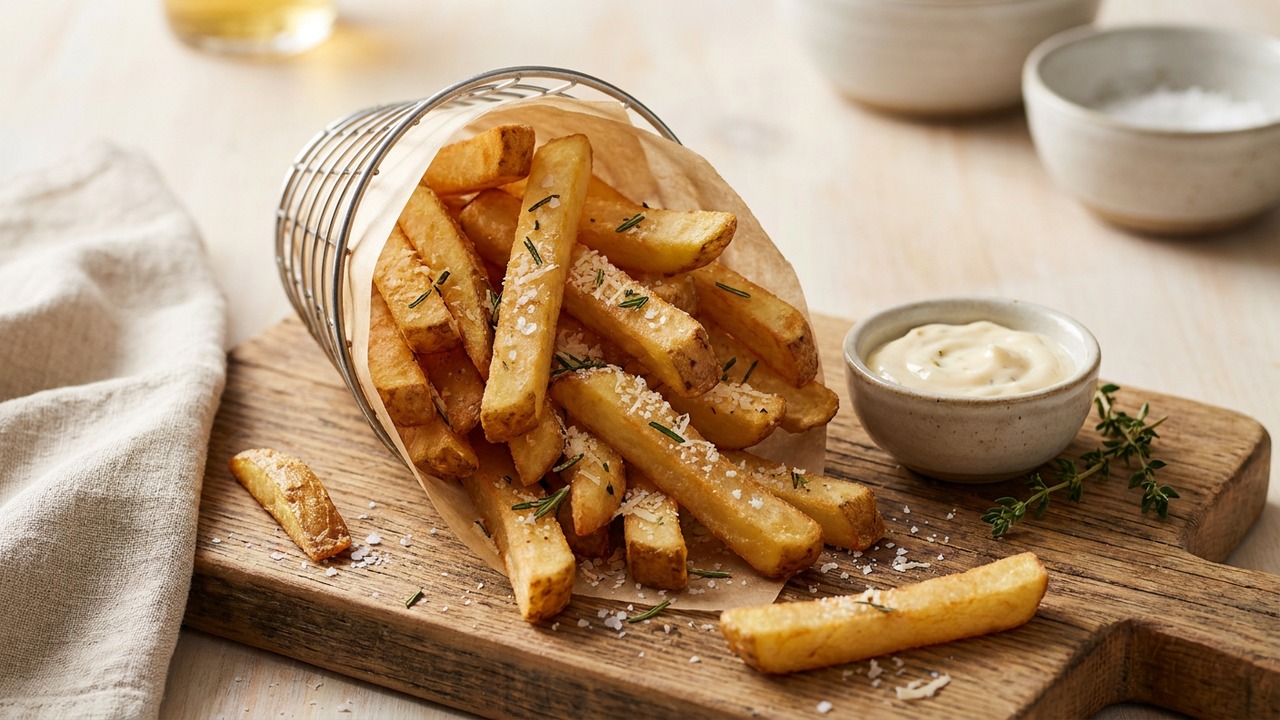
Crisp-on-the-outside, fluffy-on-the-inside classic russet fries made the restaurant way: blanched at low heat, cooled, then fried hot for that golden crunch. Optimized for deep fryers, this double-fry method yields reliably perfect fries every time.
Jake Woods's note
"These fries shine as a crowd-pleasing snack or a side for burgers and sandwiches — make them for game day or a weekend dinner. The double-fry technique is forgiving and gives reliably crisp results even in home deep fryers."
About This Recipe
These double-fried French fries deliver the exact contrast you want: a paper-thin crunchy shell that gives way to a tender, pillowy interior. The method is simple but deliberate — a low-temperature blanch cooks the starches through without browning, a brief cooling period lets steam escape, and a hotter second fry crisps the exterior. Tossing the cooled sticks with a light dusting of cornstarch absorbs residual surface moisture and creates a consistently golden crust that holds up to sauces.
This version is optimized for deep fryers and home cooks who want restaurant-grade results without complicated batter or special equipment. Use high-starch russets, keep the cuts uniform, and don't rush the chill between fries; those minutes are where texture is made. The recipe is great for weeknight burgers, game-day batches, or as the foundation for loaded fries — and it scales well if you're feeding a crowd, provided you mind small, unfettered batches in the oil.
Ingredients for Double-Fried French Fries
- 2 lb Russet potatoes
- 6 cups Cold water (for soaking)
- 1 cup Ice cubes
- 6 cups Neutral frying oil (canola, peanut, or sunflower)
- 1 tablespoon Cornstarch
- 1 1/2 teaspoons Kosher salt
How to Make Double-Fried French Fries
Step 1: Cut and soak the potatoes
Peel (optional) and cut the russets into 1/4–3/8-inch (6–9 mm) sticks. Place the cut fries in a large bowl and cover with very cold water and ice; soak at least 30 minutes (or refrigerate up to 4 hours) to remove excess starch. Drain and rinse briefly in cold water before drying completely with kitchen towels or a salad spinner.For this step
- 2 lbRusset potatoes
- 6 cupsCold water (for soaking)
- 1 cupIce cubes
Step 2: First (low-temperature) fry — blanch
Heat the oil in your deep fryer to 300°F (150°C). Fry the potatoes in small batches so they can move freely, 6–8 minutes per batch, until they are cooked through but pale and not browned. Drain on a wire rack or paper towels and let cool for at least 5–10 minutes (you can refrigerate briefly to speed this).For this step
- 6 cupsNeutral frying oil (canola, peanut, or sunflower)
Step 3: Lightly dust with cornstarch
When the fries are cool and slightly tacky, toss them lightly with the tablespoon of cornstarch — just enough to coat evenly and absorb surface moisture. Shake off any excess cornstarch so there are no clumps.For this step
- 1 tablespoonCornstarch
Step 4: Second (high-temperature) fry and season
Increase the oil temperature to 375°F (190°C). Fry the cornstarch-coated fries in batches 2–4 minutes, until deep golden and crisp. Drain on a wire rack or paper towels and immediately sprinkle evenly with kosher salt; toss gently to coat.For this step
- 1 1/2 teaspoonsKosher salt
Step 5: Serve hot
Serve the fries right away for best texture with ketchup, mayo, or your favorite dipping sauce. Leftovers can be reheated in a 425°F (220°C) oven for 5–8 minutes to re-crisp.


- Peel (optional) and cut the russets into 1/4–3/8-inch (6–9 mm) sticks. Place the cut fries in a large bowl and cover with very cold water and ice; soak at least 30 minutes (or refrigerate up to 4 hours) to remove excess starch. Drain and rinse briefly in cold water before drying completely with kitchen towels or a salad spinner.
- Heat the oil in your deep fryer to 300°F (150°C). Fry the potatoes in small batches so they can move freely, 6–8 minutes per batch, until they are cooked through but pale and not browned. Drain on a wire rack or paper towels and let cool for at least 5–10 minutes (you can refrigerate briefly to speed this).
- When the fries are cool and slightly tacky, toss them lightly with the tablespoon of cornstarch — just enough to coat evenly and absorb surface moisture. Shake off any excess cornstarch so there are no clumps.
- Increase the oil temperature to 375°F (190°C). Fry the cornstarch-coated fries in batches 2–4 minutes, until deep golden and crisp. Drain on a wire rack or paper towels and immediately sprinkle evenly with kosher salt; toss gently to coat.
- Serve the fries right away for best texture with ketchup, mayo, or your favorite dipping sauce. Leftovers can be reheated in a 425°F (220°C) oven for 5–8 minutes to re-crisp.
Double-Fried French Fries Tips
Cut Uniform Sticks
Aim for consistent 6–9 mm cuts so every fry cooks at the same rate; use a mandoline or ruler if you want precision.
Soak In Ice Water
Cold soaking at least 30 minutes removes surface starch and firms the potato so fries separate and crisp instead of clumping.
Dry Completely First
Pat or spin the potatoes thoroughly after soaking — any remaining water causes oil splatter and prevents a crisp crust.
Light Cornstarch Dusting
Toss cooled fries with only a dusting of cornstarch and shake off excess to avoid gummy patches and ensure even browning.
Mind The Batch Size
Don’t overcrowd the fryer; small batches keep the oil temperature steady and allow fries to move freely for even cooking.
Double-Fried French Fries Variations and Substitutions
Sweet Potato Option
Use 100% orange-fleshed sweet potatoes but cut slightly thicker and shorten the blanch to 4–5 minutes; dust with tapioca or arrowroot instead of cornstarch for a better crisp.
Skin-On Fries
Leave the skins for extra texture and flavor — scrub well and proceed the same way, but expect a slightly earthier finish and more surface starch, so extend the soak if needed.
Garlic-Parsley Toss
After frying, toss the hot fries with finely grated garlic browned briefly in oil and chopped parsley for a bright, restaurant-style finish.
Air Fryer Adaptation
Blanch the fries as written, then finish in an air fryer at 400°F for 8–12 minutes in a single layer, shaking halfway; you’ll get good crispness with much less oil.
How to Store and Make Double-Fried French Fries Ahead
Leftover fries will soften as they cool; store in a single layer in an airtight container in the fridge for up to 2 days. To re-crisp, spread on a baking sheet and roast at 425°F (220°C) for 5–8 minutes, flipping once, or heat in an air fryer for 3–5 minutes. You can blanch and freeze the par-cooked fries on a tray, then transfer to a bag — finish-fry from frozen for nearly fresh results.
What to Serve With Double-Fried French Fries
Serve these fries piping hot with a trio of sauces like classic ketchup, garlic aioli, and a spicy curry mayo for variety. They pair beautifully with a charred burger, crispy fried fish, or a simple steak and salad; consider a sprinkle of flaky sea salt and a squeeze of lemon for a bright finish. For presentation, stack in a cone or short metal fry basket and offer ramekins of condiments alongside.
Double-Fried French Fries FAQs
Can I leave the potato skins on?
Yes — skin-on fries add flavor and texture; just scrub thoroughly and consider a slightly longer soak to reduce extra surface starch.
Why do I dust with cornstarch?
Cornstarch soaks up remaining surface moisture and promotes Maillard browning, giving a thinner, more even crisp than oil alone.
How long should I soak the potatoes?
At least 30 minutes in very cold water with ice is recommended; you can refrigerate them in the water up to 4 hours for convenience and better starch removal.
My fries went limp after a while — how can I keep them crispy?
Serve immediately for best texture; if you need to hold them briefly, keep them on a wire rack in a 200°F oven to stay warm and dry, and avoid stacking which traps steam.
Can I reuse the frying oil?
Yes, strain and cool the oil after use and store it in a sealed container; reuse up to 3–4 times for frying savory items, discarding if it smells off or smokes at normal frying temperatures.
About the author
Jake WoodsHello, I'm Jake. I started this recipe site with the idea that I hated recipe websites that overwhelm you with long stories and ads just to see plain content that's not helpful. My goal is to provide you with quality recipes, simple ideas and a fun cooking experience. There's lots of fun things to cook, and I think as you browse the site you'll find that TopShelf.Recipes is the place for quality recipes on the web.
See all recipes by Jake Woods →Ratings & Reviews
Did you make this recipe?
Be the first to share your experience.
Nutrition Facts
Per serving: 1 serving
Nutrition values are estimated from USDA ingredient data and may vary based on preparation, brands, and portion sizes. Values are provided for informational purposes only.
Keep Reading
Guides & articles for this recipe

Healthy Eating
Gluten-Free Weeknight Grilling Plan
A 7-day gluten-free weeknight grilling plan with quick, family-friendly recipes, prep-ahead timelines, and a printable shopping list that spotlights late-summer produce and pantry staples. Includes clear cross-contamination safety tips and simple swaps to keep dinners fast and crowd-pleasing.

Healthy Eating
Low-Fat Grill Swaps for Big Flavor
A practical guide to trimming fat from grilled meals without losing juiciness or char. Learn yogurt- and citrus-based marinades, lean protein picks, searing and indirect-heat tricks, plus 5 quick low-fat marinades and a simple weeknight plan.

Recipes
DIY Edible Monster Eyes Candy
Make safe, fun edible monster eyes for cupcakes, cookies, and candy trays. Step-by-step recipes show baking-soda balls, chocolate and fondant eyes, wafer-print options, plus assembly, storage, and kid-friendly safety tips.
More from Snacks
View all Snacks recipes →
Easy Peanut Butter Bars

Fried Jalapeno Rings

Gluten Free Fried Pickles

Labor Day Grilled Lobster Rolls with Charred Scallion Brown Butter & Lemon‑Herb Aioli

Salt & Vinegar Potato Chips

Holiday Cranberry Maple Chex Mix

Snake River Farms Beef Tallow Crispy Air Fryer Chicken Wings

Strawberry Yogurt Bark

Buffalo Chicken Dip
Ask me anything about this recipe — substitutions, scaling, techniques, timing.
Powered by AI · 6 questions per 5 minutes, 30 per day