High-Fiber Farro Chickpea Salad
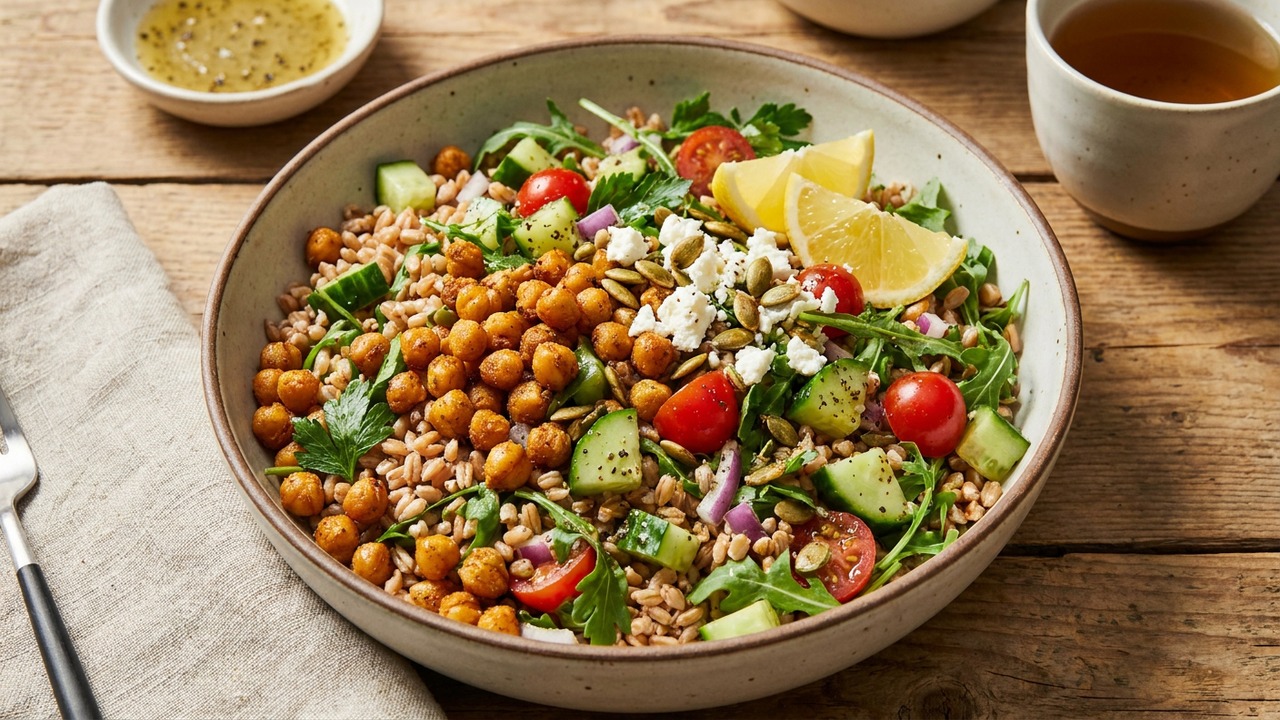
A filling, fiber-forward salad that pairs chewy whole-grain farro and crispy roasted chickpeas with a toasty hojicha twist. Bright lemon and a simple dressing tie the components together for a satisfying make-ahead lunch or weeknight side.
Ingredient Spotlight
Pearled farro (dry)
Pearled farro is an ancient wheat grain (farro) whose outer bran has been partially or fully polished off so it cooks faster; it’s associated with Italy and the Mediterranean. It tastes mildly nutty with a chewy but tender bite that’s less toothy than hulled farro. You’ll find it at health-food stores, Italian markets, bulk bins, and online. Good substitutes are pearled barley or quick-cooking spelt (or hulled farro if you’re willing to increase cooking time).
Ingredient Spotlight
Hojicha powder
Hojicha powder is a finely ground form of hojicha, a Japanese roasted green tea; unlike grassy green teas it delivers warm, toasty, caramel-like and slightly smoky flavors with low bitterness and caffeine. It’s commonly used in drinks and desserts where a mellow roasted-tea note is desired. Look for it at Japanese or other Asian grocery stores, specialty tea shops, or online. If you can’t find it, try genmaicha (roasted rice green tea) for similar roastiness, or use matcha for a greener tea intensity (note matcha is more vegetal), or add a touch of toasted sesame/cocoa nibs for toasty depth depending on the recipe.
Jake Woods's note
"This salad shines as a hearty packed lunch or a robust side for casual dinners — the roasted hojicha note gives a cozy, smoky-tea depth you won't find in ordinary grain salads. It holds up well refrigerated, so flavors develop nicely if made a few hours ahead."
About This Recipe
This High-Fiber Farro Chickpea Salad is built around contrasts: chewy, nutty farro; lemon-bright dressing; toasted, smoky hojicha; and chickpeas that are crisp on the outside and tender inside. Pearled farro gives the base a hearty chew without taking forever to cook, while hojicha powder — a roasted green tea with a cocoa-like warmth — threads through the dressing to add an unexpected toasted note that plays beautifully against bright lemon and a punchy Dijon emulsion. Toasted sliced almonds and roasted chickpeas provide the crunchy counterpoint that keeps every bite interesting, and baby kale brings a sturdy green that won’t collapse under the grain or hold too much dressing once it’s massaged.
This is a practical, make-ahead meal for people who want real satiety from plant-forward food: it holds up well in a lunchbox, scales for weeknight dinners, and adapts easily when you’re short on pantry staples. Letting the salad rest for 10–15 minutes after tossing helps the flavors meld and transforms the texture into something cohesive rather than a pile of separate elements. Small finishing touches — a pinch of flaky salt, an extra dusting of hojicha, or a squeeze more lemon — let you dial it sweeter, greener, or more savory to suit the moment.
Ingredients for High-Fiber Farro Chickpea Salad
- 1 cup Pearled farro (dry)
- 3 tbsp Extra-virgin olive oil
- 2 tbsp Fresh lemon juice
- 1 tsp Dijon mustard
- 2 tsp Hojicha powder
- 1 tsp Kosher salt
- 1 15 oz can, drained Canned chickpeas, drained and rinsed (15 oz)
- 1/3 cup Toasted sliced almonds
- 4 cups packed Baby kale (packed)
- 1 cup Cherry tomatoes, halved
How to Make High-Fiber Farro Chickpea Salad
Step 1: Cook the farro
Rinse the farro under cold water. In a medium saucepan, combine farro with 2 1/2 cups water and a pinch of salt, bring to a boil, then reduce to a simmer and cook uncovered 20–25 minutes until tender but still chewy. Drain any excess water, fluff with a fork and set aside to cool slightly.For this step
- 1 cupPearled farro (dry)
Step 2: Make the hojicha-lemon dressing
Whisk together the olive oil, lemon juice, Dijon mustard, hojicha powder and kosher salt in a small bowl until emulsified and smooth. Taste and adjust acidity or salt to preference — the hojicha should add a warm roasted-tea note that complements the lemon.For this step
- 3 tbspExtra-virgin olive oil
- 2 tbspFresh lemon juice
- 1 tspDijon mustard
- 2 tspHojicha powder
- 1 tspKosher salt
Step 3: Roast the chickpeas
Preheat the oven to 425°F (220°C). Pat the drained chickpeas dry, toss them with about 1 tablespoon of the dressing (reserve the rest) to coat, spread on a baking sheet in a single layer, and roast 20–25 minutes until golden and crisp, shaking the pan once or twice. Remove and let cool slightly — crisp chickpeas add texture and extra fiber.For this step
- 1 15 oz can, drainedCanned chickpeas, drained and rinsed (15 oz)
Step 4: Toast the almonds
While chickpeas roast, toast the sliced almonds in a dry skillet over medium heat, stirring frequently, until fragrant and lightly browned, about 3–4 minutes. Transfer to a small bowl to stop cooking so they don’t burn.For this step
- 1/3 cupToasted sliced almonds
Step 5: Massage kale and combine salad
Place baby kale in a large bowl and add 1–2 teaspoons of the reserved dressing; massage the leaves 30–45 seconds until slightly softened. Add the cooked farro, roasted chickpeas, halved cherry tomatoes and toasted almonds, then drizzle remaining dressing to taste and toss gently to combine.For this step
- 4 cups packedBaby kale (packed)
- 1 cupCherry tomatoes, halved
Step 6: Rest and serve
Let the salad rest 10–15 minutes to allow flavors to meld (it can be served warm, at room temperature, or chilled). Finish with an extra pinch of flaky salt or a light dusting of hojicha if desired, then serve.


- Rinse the farro under cold water. In a medium saucepan, combine farro with 2 1/2 cups water and a pinch of salt, bring to a boil, then reduce to a simmer and cook uncovered 20–25 minutes until tender but still chewy. Drain any excess water, fluff with a fork and set aside to cool slightly.
- Whisk together the olive oil, lemon juice, Dijon mustard, hojicha powder and kosher salt in a small bowl until emulsified and smooth. Taste and adjust acidity or salt to preference — the hojicha should add a warm roasted-tea note that complements the lemon.
- Preheat the oven to 425°F (220°C). Pat the drained chickpeas dry, toss them with about 1 tablespoon of the dressing (reserve the rest) to coat, spread on a baking sheet in a single layer, and roast 20–25 minutes until golden and crisp, shaking the pan once or twice. Remove and let cool slightly — crisp chickpeas add texture and extra fiber.
- While chickpeas roast, toast the sliced almonds in a dry skillet over medium heat, stirring frequently, until fragrant and lightly browned, about 3–4 minutes. Transfer to a small bowl to stop cooking so they don’t burn.
- Place baby kale in a large bowl and add 1–2 teaspoons of the reserved dressing; massage the leaves 30–45 seconds until slightly softened. Add the cooked farro, roasted chickpeas, halved cherry tomatoes and toasted almonds, then drizzle remaining dressing to taste and toss gently to combine.
- Let the salad rest 10–15 minutes to allow flavors to meld (it can be served warm, at room temperature, or chilled). Finish with an extra pinch of flaky salt or a light dusting of hojicha if desired, then serve.
High-Fiber Farro Chickpea Salad Tips
Rinse and drain farro
Rinsing removes surface starch and dusty bits so the farro cooks to a clean, nutty chew; use 2½ cups water per cup farro and check at 20 minutes for al dente texture.
Prevent soggy chickpeas
Pat the drained chickpeas bone-dry and spread them in a single layer so steam can escape; roasting at 425°F and shaking the pan mid-roast yields the crispiest results.
Whisk hojicha first
Combine hojicha powder with lemon and mustard before adding oil to make a smooth paste and avoid clumps in the dressing.
Massage the kale
Use just a teaspoon or two of dressing and rub the leaves 30–45 seconds until softened; this reduces bitterness and helps the greens better accept the grains.
Cool farro before tossing
Let the cooked farro come down toward room temperature so it doesn’t steam-wilt the kale or thin the dressing; warm or room-temp salad holds its texture best.
High-Fiber Farro Chickpea Salad Variations and Substitutions
Swap the grain
Replace pearled farro with quick-cooking barley, farro whole (increase cooking time), or farro-like kamut for different chew and nuttiness; adjust liquid and time accordingly.
Add extra protein
Boost protein with cubed roasted tempeh, grilled chicken, or crumbled feta; if using cheese, add it just before serving to keep textures distinct.
Make it nut-free
Omit almonds and use toasted pumpkin seeds or sunflower seeds for crunch, which keeps the salad allergy-friendly while preserving texture.
Mediterranean hojicha swap
If you can’t find hojicha, swap it for ½–1 tsp smoked paprika and a pinch of ground cumin for a similar warm, roasted character in the dressing.
How to Store and Make High-Fiber Farro Chickpea Salad Ahead
Store leftover salad in an airtight container in the refrigerator for up to 3–4 days. For best texture, keep roasted chickpeas and toasted almonds separate and add them at serving time; re-crisp chickpeas in a 375°F oven or toaster oven for 5–8 minutes. If the salad dries out, refresh with a squeeze of lemon and a drizzle of olive oil before eating.
What to Serve With High-Fiber Farro Chickpea Salad
Serve this salad alongside simply grilled fish or roasted seasonal vegetables for a balanced plate, or stuff it into warmed pita pockets for a portable meal. For drinks, a crisp unoaked white wine or sparkling mineral water with lemon complements the salad’s bright acidity and toasted notes.
High-Fiber Farro Chickpea Salad FAQs
Can I use a different type of farro?
Yes — pearled farro cooks fastest; hulled (whole) farro needs more time and liquid and will be chewier. Quick-cooking or pre-cooked farro can shorten your hands-on time but watch for doneness so it doesn’t turn mushy.
My chickpeas aren’t getting crispy — what am I doing wrong?
The usual culprits are moisture and overcrowding: make sure to pat them thoroughly dry, spread them single-layer on the pan, and roast at high heat. Tossing them with a teaspoon of cornstarch before roasting also helps create an extra-crispy exterior.
I don’t have hojicha — what can I substitute?
Hojicha gives a roasted, almost cocoa-like tea note; a good substitute is ½–1 tsp smoked paprika combined with a tiny pinch of ground coffee or toasted sesame powder for depth, or simply omit and add an extra pinch of toasted sesame seeds.
Can I make this salad ahead for lunches?
Yes — cook the farro and roast the chickpeas ahead. Store components separately (grains, greens, crunchy toppings, and dressing) and assemble or toss the night before for best texture.
How can I increase the fiber even more?
Stir in an extra half-cup of cooked lentils or edamame, or sprinkle 1–2 tablespoons of ground flaxseed when serving; both add fiber and a nutritional boost without changing the salad’s structure.
About the author
Jake WoodsHello, I'm Jake. I started this recipe site with the idea that I hated recipe websites that overwhelm you with long stories and ads just to see plain content that's not helpful. My goal is to provide you with quality recipes, simple ideas and a fun cooking experience. There's lots of fun things to cook, and I think as you browse the site you'll find that TopShelf.Recipes is the place for quality recipes on the web.
See all recipes by Jake Woods →Ratings & Reviews
Did you make this recipe?
Be the first to share your experience.
Nutrition Facts
Per serving: about 1¼ cups
Nutrition values are estimated from USDA ingredient data and may vary based on preparation, brands, and portion sizes. Values are provided for informational purposes only.
Keep Reading
Guides & articles for this recipe

Healthy Eating
Gluten-Free Weeknight Grilling Plan
A 7-day gluten-free weeknight grilling plan with quick, family-friendly recipes, prep-ahead timelines, and a printable shopping list that spotlights late-summer produce and pantry staples. Includes clear cross-contamination safety tips and simple swaps to keep dinners fast and crowd-pleasing.

Healthy Eating
Low-Fat Grill Swaps for Big Flavor
A practical guide to trimming fat from grilled meals without losing juiciness or char. Learn yogurt- and citrus-based marinades, lean protein picks, searing and indirect-heat tricks, plus 5 quick low-fat marinades and a simple weeknight plan.

Recipes
DIY Edible Monster Eyes Candy
Make safe, fun edible monster eyes for cupcakes, cookies, and candy trays. Step-by-step recipes show baking-soda balls, chocolate and fondant eyes, wafer-print options, plus assembly, storage, and kid-friendly safety tips.
More from Salads
View all Salads recipes →
Korean Gochujang Coleslaw with Sesame and Quick Pickled Scallions

Strawberry Spinach Salad

Campfire‑Smoked Potato Salad with Mustard‑Bacon Vinaigrette — A Labor Day Grilling Side for Steak

Honey Garlic Chicken Thigh Meal-Prep Bowls with Farro, Greens, and Tahini Drizzle

Mango Avocado Tilapia Salad Bowl with Lime Vinaigrette

Miso Glazed Salmon Bowl

Chorizo Black Bean Salad

Classic Make-Ahead Creamy Potato Salad — Labor Day BBQ Side for Steak & Burgers

Classic Warm German Potato Salad with Bacon & Whole-Grain Mustard (Labor Day Steak Side)
Ask me anything about this recipe — substitutions, scaling, techniques, timing.
Powered by AI · 6 questions per 5 minutes, 30 per day