Homemade Glazed Donuts
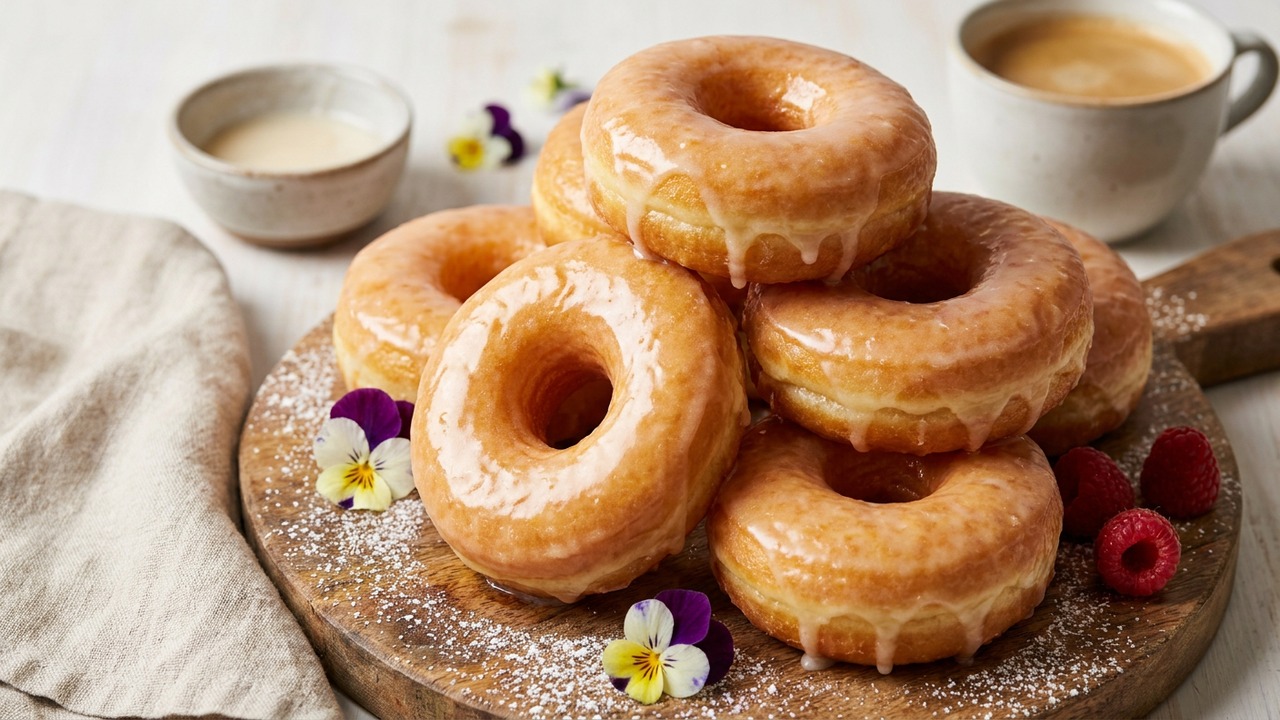
Classic deep-fried glazed donuts with a soft, pillowy interior and a shiny vanilla glaze. This straightforward yeast dough is perfect for home fryers and delivers bakery-style results with minimal fuss.
Jake Woods's note
"These donuts shine on weekend mornings or for special breakfast gatherings — they’re best eaten warm, straight from the glaze. Home cooks will appreciate the forgiving dough and quick, addictive glaze."
About This Recipe
There’s a real comfort to a classic glazed donut: a light, pillowy interior that yields to a thin, glossy shell of vanilla-scented glaze. This recipe keeps the dough simple—milk, egg, a touch of butter and sugar—so the yeast can do most of the work, producing an open, tender crumb without heavy enrichment. Frying at a steady 350°F (175°C) gives the rings a golden exterior in under a minute per side, which keeps them airy instead of greasy, and dipping them warm locks in that sheen and shine you expect from a bakery.
What I like about this version is how forgiving it is: you don’t need a commercial fryer or fancy equipment, just a heavy pot, a thermometer, and patience during the two rises. The glaze is intentionally thin so it sets quickly into a pale, crackly coat rather than a thick shell, making these ideal for breakfast or a casual weekend bake when you want bakery-style donuts without fuss. If you’re someone who loves hands-on morning projects or wants to impress guests with something homemade, these deliver every time.
Ingredients for Homemade Glazed Donuts
- 2 1/4 teaspoons Active dry yeast
- 3/4 cup Whole milk (warmed to 100–110°F / 38–43°C)
- 1/4 cup Granulated sugar (dough)
- 1 large Large egg
- 4 tablespoons Unsalted butter (melted, slightly cooled)
- 3 1/2 cups All-purpose flour
- 1 teaspoon Salt
- 4 cups Neutral frying oil (vegetable or canola)
- 2 cups Powdered (confectioners') sugar
- 1 teaspoon Vanilla extract
How to Make Homemade Glazed Donuts
Step 1: Bloom the yeast
Warm the milk to about 100–110°F (38–43°C) and stir in the granulated sugar until dissolved. Sprinkle the active dry yeast over the milk, let sit 5–10 minutes until foamy — this confirms the yeast is active.For this step
- 2 1/4 teaspoonsActive dry yeast
- 3/4 cupWhole milk (warmed to 100–110°F / 38–43°C)
- 1/4 cupGranulated sugar (dough)
Step 2: Mix the dough
In a large bowl combine the foamy yeast mixture with the egg and melted butter. Add the all-purpose flour and salt, mixing until a shaggy dough forms. Turn the dough onto a lightly floured surface and knead 6–8 minutes (or knead in a stand mixer with a dough hook) until smooth and slightly elastic.For this step
- 1 largeLarge egg
- 4 tablespoonsUnsalted butter (melted, slightly cooled)
- 3 1/2 cupsAll-purpose flour
- 1 teaspoonSalt
Step 3: First rise
Place the kneaded dough in a lightly oiled bowl, cover with plastic wrap or a damp towel, and let rise in a warm, draft-free spot until doubled in size, about 60–75 minutes.Step 4: Shape and second rise
Turn the risen dough onto a lightly floured surface, roll to about 1/2-inch (1.2 cm) thickness, and cut with a donut cutter (or use two round cutters for rings and holes). Transfer cut donuts to a parchment-lined baking sheet, cover loosely, and let rise 30–40 minutes until puffy.Step 5: Fry the donuts
Heat oil in a heavy pot or deep fryer to 350°F (175°C). Fry donuts a few at a time (do not overcrowd), 45–60 seconds per side, until golden brown. Remove with a slotted spoon to drain on paper towels and let cool slightly so the glaze will adhere.For this step
- 4 cupsNeutral frying oil (vegetable or canola)
Step 6: Make the glaze and finish
Whisk the powdered sugar with the vanilla and 2–3 tablespoons of the warmed milk used earlier (add more milk, 1 teaspoon at a time, until smooth and pourable). Dip warm donuts into the glaze, place on a wire rack and let set for a few minutes before serving.For this step
- 2 cupsPowdered (confectioners') sugar
- 1 teaspoonVanilla extract


- Warm the milk to about 100–110°F (38–43°C) and stir in the granulated sugar until dissolved. Sprinkle the active dry yeast over the milk, let sit 5–10 minutes until foamy — this confirms the yeast is active.
- In a large bowl combine the foamy yeast mixture with the egg and melted butter. Add the all-purpose flour and salt, mixing until a shaggy dough forms. Turn the dough onto a lightly floured surface and knead 6–8 minutes (or knead in a stand mixer with a dough hook) until smooth and slightly elastic.
- Place the kneaded dough in a lightly oiled bowl, cover with plastic wrap or a damp towel, and let rise in a warm, draft-free spot until doubled in size, about 60–75 minutes.
- Turn the risen dough onto a lightly floured surface, roll to about 1/2-inch (1.2 cm) thickness, and cut with a donut cutter (or use two round cutters for rings and holes). Transfer cut donuts to a parchment-lined baking sheet, cover loosely, and let rise 30–40 minutes until puffy.
- Heat oil in a heavy pot or deep fryer to 350°F (175°C). Fry donuts a few at a time (do not overcrowd), 45–60 seconds per side, until golden brown. Remove with a slotted spoon to drain on paper towels and let cool slightly so the glaze will adhere.
- Whisk the powdered sugar with the vanilla and 2–3 tablespoons of the warmed milk used earlier (add more milk, 1 teaspoon at a time, until smooth and pourable). Dip warm donuts into the glaze, place on a wire rack and let set for a few minutes before serving.
Homemade Glazed Donuts Tips
Proof Yeast Precisely
Warm the milk to 100–110°F (38–43°C) and wait for a foamy head—if the mixture doesn’t foam in 10 minutes, start over with fresh yeast to avoid a dense dough.
Monitor Oil Temperature
Keep the oil at 350°F (175°C) and adjust the burner as needed; cooler oil soaks up fat, while hotter oil browns the outside before the center cooks.
Don’t Overwork Dough
Knead until smooth and slightly elastic—about 6–8 minutes—then stop; overworking develops too much gluten and yields a tougher donut.
Proof Donuts Gently
Let cut donuts rise covered until puffy but not doubled and handle them carefully to preserve air bubbles that keep interiors soft.
Glaze While Warm
Dip donuts when they’re warm (not hot) so the glaze adheres and sets with a glossy finish; a second dip adds shine but will soften edges.
Homemade Glazed Donuts Variations and Substitutions
Chocolate-Glazed Donuts
Stir 2 tablespoons of cocoa powder into the powdered sugar before adding milk, or melt 3 ounces of semi-sweet chocolate with 1 tablespoon butter for a richer coating.
Filled Donuts
Cut rounds instead of rings, fry as directed, then pipe in pastry cream, jam, or Nutella once cooled slightly using a small tip and squeeze bottle.
Dairy-Free Version
Replace whole milk with unsweetened almond or oat milk warmed to the same temperature and swap the butter for a neutral vegetable shortening or vegan butter.
Citrus-Infused Glaze
Add 1–2 teaspoons of finely grated lemon or orange zest and 1 teaspoon of citrus juice to the glaze for a bright, tangy finish that cuts the sweetness.
How to Store and Make Homemade Glazed Donuts Ahead
Store leftover glazed donuts in a single layer in an airtight container at room temperature for up to 48 hours; stacking can smash the glaze. For longer storage, freeze donuts unglazed on a baking sheet until solid then transfer to a zip-top bag for up to one month, glazing after thawing. Reheat briefly in a 300°F (150°C) oven for 5–8 minutes to refresh texture, or microwave for 10–12 seconds for a quick warm-up before glazing.
What to Serve With Homemade Glazed Donuts
Serve warm glazed donuts on a wire rack with a scattering of flaky sea salt or toasted chopped nuts for contrast, alongside strong coffee or espresso to balance the sweetness. For a brunch spread, pair them with plain Greek yogurt, fresh berries, and crisp bacon or sausage to offer a savory counterpoint.
Homemade Glazed Donuts FAQs
Why is my dough too sticky to handle?
If the dough is tacky after kneading, flour your hands and work surface lightly—avoid adding more than a tablespoon at a time as excess flour will make the donuts dense; you want slightly tacky dough that springs back.
My donuts are greasy — what went wrong?
Greasy donuts usually mean the oil temperature was too low or the donuts were overcrowded; bring oil back to 350°F (175°C) between batches and fry in small batches so temperature remains steady.
How can I tell when donuts are cooked through?
They should be golden brown and spring back slightly when pressed; a properly fried donut will be golden in about 45–60 seconds per side and feel light rather than heavy when picked up.
Why did the glaze become runny or won’t set?
If your glaze is too thin, add more powdered sugar a teaspoon at a time; if it's too thick, thin with tiny amounts of milk. Also, dip once the donuts have cooled slightly—if they’re too hot the glaze will slide off.
Can I bake these instead of frying?
Yes—baked donuts will be less rich and not as crisp on the outside; bake in a donut pan at 350°F (175°C) for 8–10 minutes and then glaze while warm for best results.
About the author
Jake WoodsHello, I'm Jake. I started this recipe site with the idea that I hated recipe websites that overwhelm you with long stories and ads just to see plain content that's not helpful. My goal is to provide you with quality recipes, simple ideas and a fun cooking experience. There's lots of fun things to cook, and I think as you browse the site you'll find that TopShelf.Recipes is the place for quality recipes on the web.
See all recipes by Jake Woods →Ratings & Reviews
Did you make this recipe?
Be the first to share your experience.
Nutrition Facts
Per serving: 1 serving
Nutrition values are estimated from USDA ingredient data and may vary based on preparation, brands, and portion sizes. Values are provided for informational purposes only.
Keep Reading
Guides & articles for this recipe

Healthy Eating
Gluten-Free Weeknight Grilling Plan
A 7-day gluten-free weeknight grilling plan with quick, family-friendly recipes, prep-ahead timelines, and a printable shopping list that spotlights late-summer produce and pantry staples. Includes clear cross-contamination safety tips and simple swaps to keep dinners fast and crowd-pleasing.

Healthy Eating
Low-Fat Grill Swaps for Big Flavor
A practical guide to trimming fat from grilled meals without losing juiciness or char. Learn yogurt- and citrus-based marinades, lean protein picks, searing and indirect-heat tricks, plus 5 quick low-fat marinades and a simple weeknight plan.

Recipes
DIY Edible Monster Eyes Candy
Make safe, fun edible monster eyes for cupcakes, cookies, and candy trays. Step-by-step recipes show baking-soda balls, chocolate and fondant eyes, wafer-print options, plus assembly, storage, and kid-friendly safety tips.
More from Breakfast
View all Breakfast recipes →
Pumpkin Oat Muffins

Chocolate Chip Banana Muffins

Pad Krapow Pork

Canning Peaches Light Syrup

Easy Homemade Yogurt Without Special Equipment

Maple Bacon Butter Board with Cracked Pepper and Toastables

Butter Board Lemon Thyme

Open-Faced Grilled Maple‑Mustard Chicken & Peach Breakfast Toast with Fried Egg

Pumpkin Spice Butter Board with Brown Sugar and Toasted Pecans
Ask me anything about this recipe — substitutions, scaling, techniques, timing.
Powered by AI · 6 questions per 5 minutes, 30 per day