Japanese Souffle Pancakes Cafe Style — Fluffy Stack
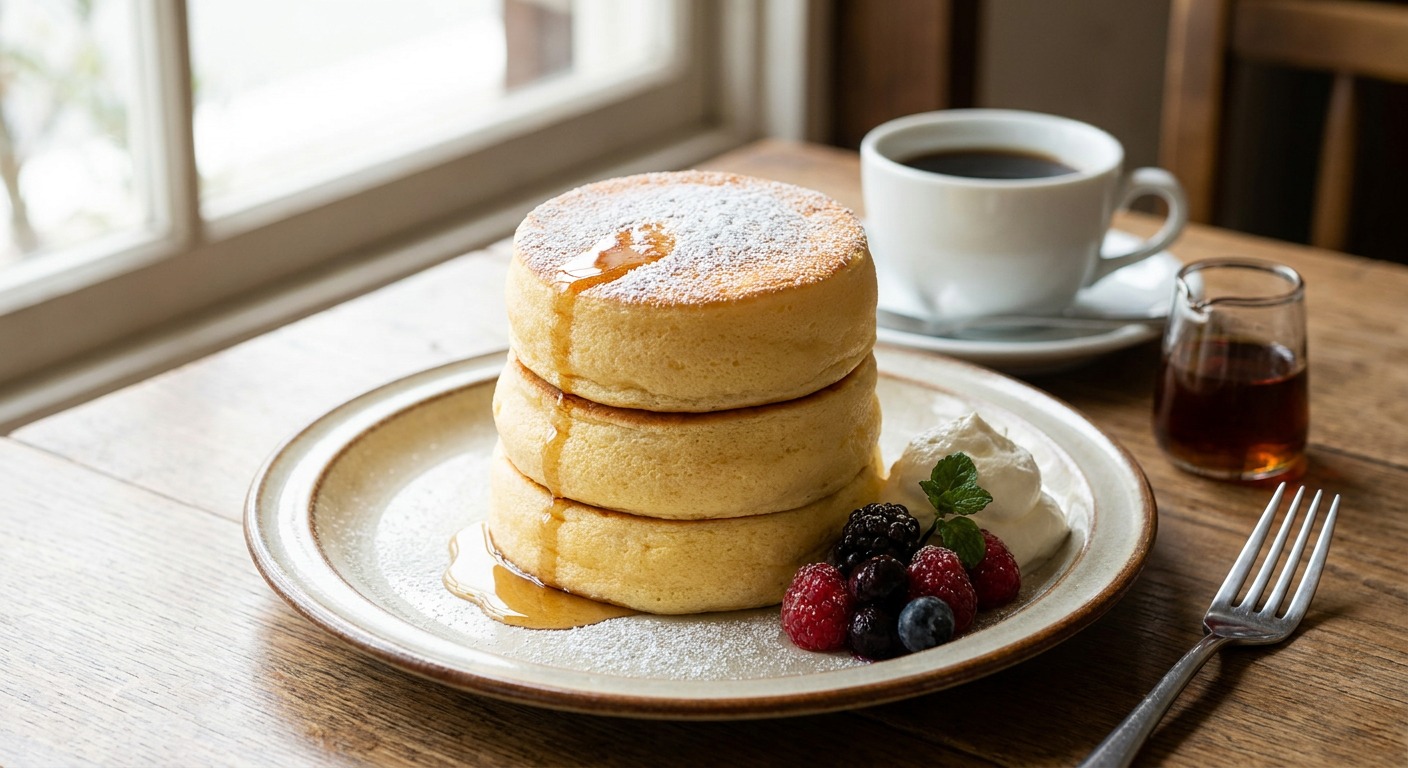
Tall, cloudlike Japanese souffle pancakes with a tender, custardy interior and a lightly crisp exterior — made at home without specialty equipment. This cafe-style method uses a simple whipped meringue and low, covered pan cooking to deliver reliable, Instagram-ready fluffy stacks.
Ingredient Spotlight
Cream of tartar
Cream of tartar (potassium hydrogen tartrate) is an acidic white powder that’s a byproduct of winemaking and is commonly used in baking to stabilize egg whites and prevent sugar crystallization. It has little aroma and a mild, tart acidity rather than a distinct flavor. You’ll find it in the baking aisle of most supermarkets or at specialty stores. If you don’t have it, you can usually substitute a small amount of lemon juice or white vinegar (about 1 teaspoon of acid per 1/2 teaspoon cream of tartar) depending on the recipe.
Jake Woods's note
"These pancakes are perfect for a slow weekend brunch or a special celebration — they look impressive but the technique is approachable. Expect to serve them right away for the best height and texture."
About This Recipe
Japanese souffle pancakes are less about gimmick and more about controlled technique: the tallest, custard-soft pancakes come from a stable whipped meringue folded into a yolk-rich base and gently coaxed into shape over very low heat. This cafe-style approach reproduces that airy lift at home without ring molds or a hot-plate steamer — cream of tartar stabilizes the whites, a slow covered cook lets the center set without burning the exterior, and piping or careful spooning helps you build vertical height. The result is a contrast of textures — a faintly crisp, buttery skin giving way to a pillowy, slightly wobbly interior that tastes like warm vanilla custard.
These pancakes suit a weekend special: party breakfasts, celebratory brunches, or any time you want something showy without professional gear. They’re forgiving if you mind the key moments — separate and temper the eggs, whip whites to true stiff peaks, and fold with broad, patient strokes. Serve immediately for the fullest height and best mouthfeel; the gentle balance of sweetness pairs beautifully with pure maple, tangy fruit compotes, or a dab of whipped cream for an elevated, cafe-ready plate.
Ingredients for Japanese Souffle Pancakes Cafe Style — Fluffy Stack
- 4 large Large eggs, separated
- 6 tbsp Granulated sugar (divided)
- 3/4 cup All-purpose flour
- 1 tsp Baking powder
- 1/2 cup Whole milk
- 1 tsp Vanilla extract
- 1/4 tsp Cream of tartar
- 1 tbsp Unsalted butter (melted), for pan
- 2 tbsp Confectioners' sugar, for dusting
- 4 tbsp Pure maple syrup, for serving
How to Make Japanese Souffle Pancakes Cafe Style — Fluffy Stack
Step 1: Make the batter base
Separate the eggs into yolks and whites, placing whites in a clean, dry bowl. Whisk the yolks with 2 tablespoons of the granulated sugar, the milk, and vanilla until smooth. Sift the flour and baking powder together, then fold into the yolk mixture until just combined and lump-free; the batter should be thick but pourable.For this step
- 4 largeLarge eggs, separated
- 3/4 cupAll-purpose flour
- 1 tspBaking powder
- 1/2 cupWhole milk
- 1 tspVanilla extract
Step 2: Whip the meringue
With a hand or stand mixer, whisk the egg whites and cream of tartar on medium speed until foamy, then increase speed and add the remaining granulated sugar in a slow stream. Continue beating until glossy, stiff peaks form and the sugar is dissolved — the meringue should hold very firm peaks when the whisk is lifted.For this step
- 1/4 tspCream of tartar
Step 3: Fold meringue into batter gently
Fold one-third of the meringue into the yolk batter to loosen it, then carefully fold in the remaining meringue in two additions, using wide strokes to preserve as much air as possible. Transfer the finished batter to a piping bag or a large spoon; for taller stacks, pile batter vertically and avoid overmixing.For this step
- 1 tbspUnsalted butter (melted), for pan
Step 4: Cook low and covered
Heat a nonstick skillet over the lowest flame and brush with a thin layer of melted butter. Pipe or spoon two 3–4 inch rounds (or 3 rounds for smaller pancakes) into the pan, cover with a lid, and cook 4–5 minutes until the bottoms are golden and the edges set. Flip gently with a thin spatula, cover again, and cook 3–4 more minutes until both sides are golden and an inserted toothpick comes out mostly clean.Step 5: Serve immediately
Stack pancakes while still warm, dust with confectioners' sugar, and drizzle with maple syrup. Serve right away — these are best the moment they come off the pan to preserve height and the delicate texture.For this step
- 2 tbspConfectioners' sugar, for dusting
- 4 tbspPure maple syrup, for serving


- Separate the eggs into yolks and whites, placing whites in a clean, dry bowl. Whisk the yolks with 2 tablespoons of the granulated sugar, the milk, and vanilla until smooth. Sift the flour and baking powder together, then fold into the yolk mixture until just combined and lump-free; the batter should be thick but pourable.
- With a hand or stand mixer, whisk the egg whites and cream of tartar on medium speed until foamy, then increase speed and add the remaining granulated sugar in a slow stream. Continue beating until glossy, stiff peaks form and the sugar is dissolved — the meringue should hold very firm peaks when the whisk is lifted.
- Fold one-third of the meringue into the yolk batter to loosen it, then carefully fold in the remaining meringue in two additions, using wide strokes to preserve as much air as possible. Transfer the finished batter to a piping bag or a large spoon; for taller stacks, pile batter vertically and avoid overmixing.
- Heat a nonstick skillet over the lowest flame and brush with a thin layer of melted butter. Pipe or spoon two 3–4 inch rounds (or 3 rounds for smaller pancakes) into the pan, cover with a lid, and cook 4–5 minutes until the bottoms are golden and the edges set. Flip gently with a thin spatula, cover again, and cook 3–4 more minutes until both sides are golden and an inserted toothpick comes out mostly clean.
- Stack pancakes while still warm, dust with confectioners' sugar, and drizzle with maple syrup. Serve right away — these are best the moment they come off the pan to preserve height and the delicate texture.
Japanese Souffle Pancakes Cafe Style — Fluffy Stack Tips
Use room-temperature eggs
Egg whites whip to greater volume when closer to room temperature, and yolks incorporate more smoothly into the batter when not cold.
Beat whites thoroughly
Whip until glossy, true stiff peaks form and the sugar is dissolved — under-whipped whites won’t support the structure and overbeating makes them dry and hard to fold.
Fold with wide strokes
Use a rubber spatula to cut through the center, lift from the bottom, and turn the batter; preserve as many air pockets as possible by folding gently and avoiding circular stirring.
Cook on the lowest heat
Low, steady heat covered gives time for the thick pancakes to set through without charring; a hot pan makes them brown fast but stay raw inside.
Pipe for taller stacks
A piping bag or zip-top with one corner snipped lets you mound batter vertically so the pancakes rise upwards instead of spreading wide.
Japanese Souffle Pancakes Cafe Style — Fluffy Stack Variations and Substitutions
Matcha souffle pancakes
Whisk 1–2 teaspoons sifted culinary matcha into the flour for a grassy, slightly bitter counterpoint to the sweetness; reduce vanilla to let green-tea flavor shine.
Chocolate ripple
Fold 2 tablespoons of melted, cooled dark chocolate into the yolk batter or swirl a teaspoon of cocoa into each round for a marbled chocolate interior.
Vegan aquafaba version
Replace egg whites with aquafaba (chickpea liquid) whipped with cream of tartar to stiff peaks and use a plant-based milk and an egg yolk substitute like mashed banana or silken tofu for the base, noting texture will be slightly denser.
Gluten-free swap
Use a 1:1 gluten-free flour blend (ideally with xanthan gum) in place of all-purpose flour and add an extra tablespoon of milk if the batter feels too stiff.
How to Store and Make Japanese Souffle Pancakes Cafe Style — Fluffy Stack Ahead
These pancakes are best eaten immediately; their height and airy texture collapse as they cool. You can refrigerate leftovers in an airtight container for up to 24 hours, but expect a denser texture. Reheat gently in a low 300°F oven for 5–8 minutes covered or in a nonstick skillet on the lowest flame with a lid; avoid microwaving if you want to preserve any lift.
What to Serve With Japanese Souffle Pancakes Cafe Style — Fluffy Stack
Keep the plating simple so the pancakes can be the star: a scattering of fresh berries, a spoonful of lightly sweetened whipped cream, and a small jug of warm maple syrup for pouring. For savory contrast, serve with smoky bacon or miso-buttered mushrooms, and pair with a matcha latte, milky coffee, or a bright citrusy tea to cut the richness.
Japanese Souffle Pancakes Cafe Style — Fluffy Stack FAQs
Why did my pancakes collapse after flipping?
Most collapses come from over-folding the meringue (deflating air) or under-beaten whites that can’t hold structure; also check that the cook temperature was too high, which can set the exterior before the interior is stable and then cause a slump when jostled.
Can I use ring molds to shape them?
Yes—lightly butter and line molds with parchment, fill them about two-thirds full, cook covered on the lowest heat, and remove the mold only after the pancakes have mostly set; molds help control profile but aren’t necessary if you pipe tall mounds.
Is it okay to make the batter ahead?
You can whisk the yolk-milk-flour base a few hours ahead and refrigerate, but whip the egg whites right before folding for maximum volume and lift.
How do I know when they're cooked through?
The edges should look set and not glossy, the bottoms a light golden brown, and an inserted toothpick will come out mostly clean with a few moist crumbs; the pancakes will still have a slight jiggle but shouldn’t be wet.
Can I freeze these pancakes?
Freezing is possible but textures suffer; separate layers with parchment, freeze flat, and reheat in a moderate oven covered until warmed through, though they won’t regain their original fluffiness.
About the author
Jake WoodsHello, I'm Jake. I started this recipe site with the idea that I hated recipe websites that overwhelm you with long stories and ads just to see plain content that's not helpful. My goal is to provide you with quality recipes, simple ideas and a fun cooking experience. There's lots of fun things to cook, and I think as you browse the site you'll find that TopShelf.Recipes is the place for quality recipes on the web.
See all recipes by Jake Woods →Ratings & Reviews
Did you make this recipe?
Be the first to share your experience.
Nutrition Facts
Per serving: 1 serving
Nutrition values are estimated from USDA ingredient data and may vary based on preparation, brands, and portion sizes. Values are provided for informational purposes only.
Keep Reading
Guides & articles for this recipe

Healthy Eating
Gluten-Free Weeknight Grilling Plan
A 7-day gluten-free weeknight grilling plan with quick, family-friendly recipes, prep-ahead timelines, and a printable shopping list that spotlights late-summer produce and pantry staples. Includes clear cross-contamination safety tips and simple swaps to keep dinners fast and crowd-pleasing.

Healthy Eating
Low-Fat Grill Swaps for Big Flavor
A practical guide to trimming fat from grilled meals without losing juiciness or char. Learn yogurt- and citrus-based marinades, lean protein picks, searing and indirect-heat tricks, plus 5 quick low-fat marinades and a simple weeknight plan.

Recipes
DIY Edible Monster Eyes Candy
Make safe, fun edible monster eyes for cupcakes, cookies, and candy trays. Step-by-step recipes show baking-soda balls, chocolate and fondant eyes, wafer-print options, plus assembly, storage, and kid-friendly safety tips.
More from Breakfast
View all Breakfast recipes →
Pumpkin Oat Muffins

Chocolate Chip Banana Muffins

Pad Krapow Pork

Canning Peaches Light Syrup

Easy Homemade Yogurt Without Special Equipment

Maple Bacon Butter Board with Cracked Pepper and Toastables

Butter Board Lemon Thyme

Open-Faced Grilled Maple‑Mustard Chicken & Peach Breakfast Toast with Fried Egg

Pumpkin Spice Butter Board with Brown Sugar and Toasted Pecans
Ask me anything about this recipe — substitutions, scaling, techniques, timing.
Powered by AI · 6 questions per 5 minutes, 30 per day