Mediterranean Chickpea Salad Jar
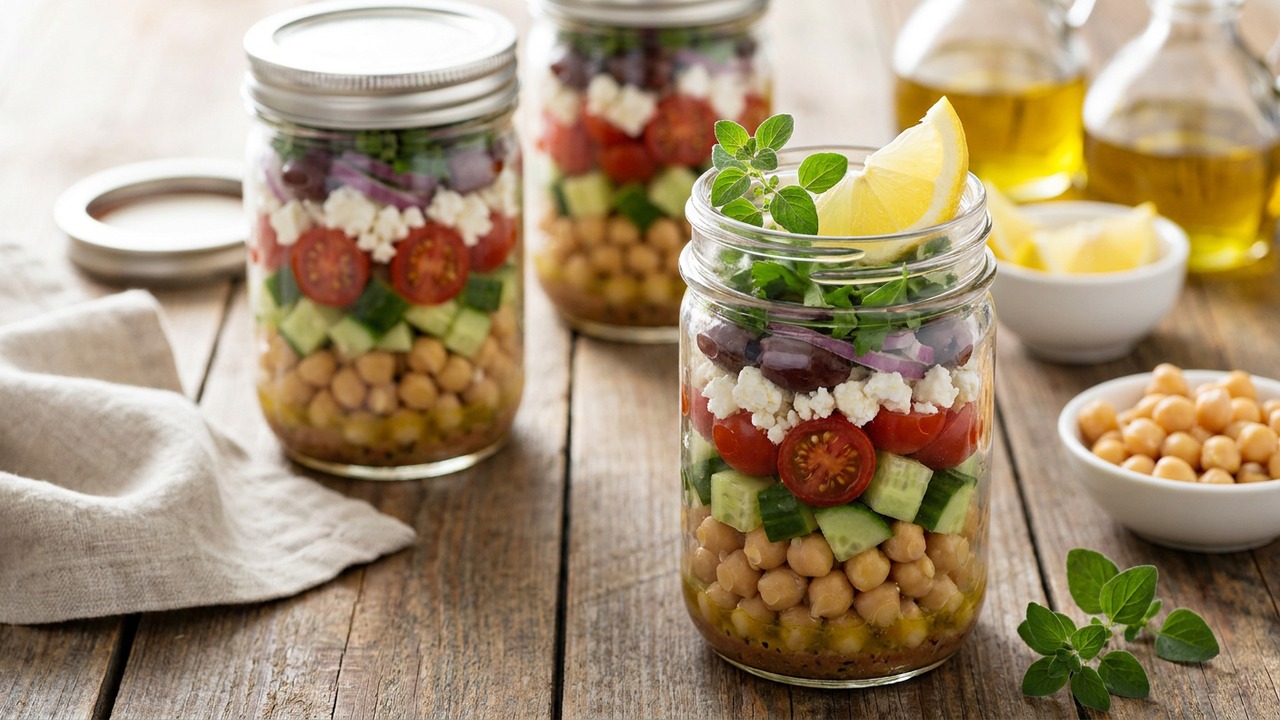
A bright, make-ahead Mediterranean chickpea salad layered in jars for easy grab-and-go lunches. High in fiber and protein, this salad combines hearty chickpeas with juicy tomatoes, crisp cucumber, briny olives and tangy feta for a satisfying midweek meal.
Ingredient Spotlight
Kalamata olives (pitted, halved)
Kalamata olives are dark purple, almond-shaped table olives from the Kalamata region of Greece, typically cured in brine and olive oil. They have a rich, fruity, and slightly tangy-salty flavor with a meaty texture. You can find them jarred in most supermarkets, at olive bars, or in Mediterranean markets. If unavailable, oil-cured black olives or Castelvetrano olives make good substitutes (Castelvetrano are milder and buttery; oil-cured blacks are closer in intensity).
Ingredient Spotlight
Feta cheese (crumbled)
Feta is a crumbly, brined cheese originating in Greece, traditionally made from sheep’s milk or a mixture of sheep and goat milk, with a tangy, salty, and slightly creamy flavor. It’s commonly sold pre-crumbled or in blocks in the deli or cheese aisle and is a staple in Greek and Mediterranean cooking. Good substitutes include ricotta salata, queso fresco (for a milder, less-briny option), or a tangy goat cheese if you want similar tang and creaminess.
Jake Woods's note
"This salad jars beautifully and keeps for several days in the fridge, making it a perfect workweek lunch. Home cooks will love how the flavors deepen after a short chill — just shake and enjoy."
About This Recipe
Bright, crunchy and unapologetically Mediterranean, this chickpea salad jar is designed for real life: busy mornings, long workdays and picnic baskets that need to sing without a lot of last-minute fuss. The base is hearty chickpeas—starchy and satisfying—balanced by juicy cherry tomatoes and cooling cucumber, with red onion for bite, Kalamata olives and feta bringing the essential brine, and parsley for a fresh, green lift. The lemon-and-olive-oil dressing is intentionally simple so each ingredient remains distinct; the key is the texture contrasts that hold up over time rather than turning limp or mushy.
Layering this salad into jars does more than look pretty: it protects the most fragile elements from the dressing and makes portioning and transport effortless. It’s especially suited to anyone who wants a protein-forward vegetarian lunch that doesn’t need reheating—think office commuters, students, or families packing picnics. Small technique choices—patting chickpeas dry, emulsifying the dressing, and crumbling the feta at the end—are what make this version work consistently, delivering bright, balanced flavors with every spoonful.
Ingredients for Mediterranean Chickpea Salad Jar
- 3 cups Cooked chickpeas (drained, rinsed)
- 2 cups Cherry tomatoes (halved)
- 1 1/2 cups English cucumber (diced)
- 1/2 cup Red onion (thinly sliced)
- 3/4 cup Kalamata olives (pitted, halved)
- 3/4 cup Feta cheese (crumbled)
- 1/2 cup Fresh parsley (chopped)
- 1/3 cup Extra-virgin olive oil
- 1/4 cup Fresh lemon juice
- 1 tsp Salt & freshly ground black pepper
How to Make Mediterranean Chickpea Salad Jar
Step 1: Whisk the dressing
In a small bowl or jar, combine the extra-virgin olive oil, fresh lemon juice and salt & pepper. Whisk or shake vigorously until emulsified and set aside so flavors can meld while you prep the rest of the ingredients.For this step
- 1/3 cupExtra-virgin olive oil
- 1/4 cupFresh lemon juice
- 1 tspSalt & freshly ground black pepper
Step 2: Prepare the chickpeas
Drain and rinse the cooked chickpeas thoroughly, then pat them dry with paper towels to remove excess moisture. Place the chickpeas in a large mixing bowl to be combined with the vegetables and dressing.For this step
- 3 cupsCooked chickpeas (drained, rinsed)
Step 3: Chop the vegetables and herbs
Halve the cherry tomatoes, dice the cucumber, thinly slice the red onion, halve the pitted Kalamata olives and chop the parsley. Add all the chopped vegetables and herbs to the bowl with the chickpeas.For this step
- 2 cupsCherry tomatoes (halved)
- 1 1/2 cupsEnglish cucumber (diced)
- 1/2 cupRed onion (thinly sliced)
- 3/4 cupKalamata olives (pitted, halved)
- 1/2 cupFresh parsley (chopped)
Step 4: Toss with feta and dressing
Pour the dressing over the chickpeas and vegetables and toss gently to coat. Crumble the feta over the salad and fold it in just enough to distribute without breaking it up completely.For this step
- 3/4 cupFeta cheese (crumbled)
Step 5: Jar and chill
Divide the salad into four 1-pint jars (or airtight containers), pressing down slightly so the dressing coats evenly. Refrigerate for at least 30 minutes before serving; store up to 4 days and shake the jar before eating.


- In a small bowl or jar, combine the extra-virgin olive oil, fresh lemon juice and salt & pepper. Whisk or shake vigorously until emulsified and set aside so flavors can meld while you prep the rest of the ingredients.
- Drain and rinse the cooked chickpeas thoroughly, then pat them dry with paper towels to remove excess moisture. Place the chickpeas in a large mixing bowl to be combined with the vegetables and dressing.
- Halve the cherry tomatoes, dice the cucumber, thinly slice the red onion, halve the pitted Kalamata olives and chop the parsley. Add all the chopped vegetables and herbs to the bowl with the chickpeas.
- Pour the dressing over the chickpeas and vegetables and toss gently to coat. Crumble the feta over the salad and fold it in just enough to distribute without breaking it up completely.
- Divide the salad into four 1-pint jars (or airtight containers), pressing down slightly so the dressing coats evenly. Refrigerate for at least 30 minutes before serving; store up to 4 days and shake the jar before eating.
Mediterranean Chickpea Salad Jar Tips
Dry your chickpeas
Pat cooked or canned chickpeas thoroughly with paper towels to reduce water that dilutes the dressing and causes sogginess.
Layer jar order
Put dressing in the bottom, then hardy ingredients (chickpeas, onions, olives), and finish with tomatoes, cucumber and feta on top to keep them crisp.
Soften raw onion
Rinse thinly sliced red onion under cold water or soak briefly in lemon juice to tame sharpness without losing flavor.
Emulsify the dressing
Vigorously whisk or shake the oil and lemon with salt so the dressing clings to chickpeas; add a pinch of zest for extra citrus intensity.
Crumble feta last
Add crumbled feta at the end and fold gently to keep larger curds intact and create pleasing pockets of creaminess.
Mediterranean Chickpea Salad Jar Variations and Substitutions
Vegan version
Omit feta and stir in toasted pine nuts or chopped roasted red peppers for richness and texture; add a tablespoon of tahini to the dressing for depth.
Grain bowl upgrade
Layer 1/2 cup cooked quinoa or farro in the jar with the chickpeas to turn this into a heartier lunchable grain bowl.
Spicy Mediterranean twist
Add a teaspoon of smoked paprika or a pinch of Aleppo pepper to the dressing and swap half the olives for chopped pepperoncini for a gentle heat.
White bean swap
Replace chickpeas with cannellini or butter beans for a creamier mouthfeel and a slightly different protein profile.
How to Store and Make Mediterranean Chickpea Salad Jar Ahead
Store assembled jars upright in the refrigerator for up to 4 days, shaking well before eating. Expect tomatoes and cucumbers to release water over time, so for maximum crispness store dressing separately and assemble within 24–48 hours. This salad is best eaten cold or at cool room temperature; do not freeze as the texture of vegetables and cheese will degrade.
What to Serve With Mediterranean Chickpea Salad Jar
Pour a jar into a wide bowl and serve over peppery arugula or baby spinach with warm pita or grilled flatbread on the side. It pairs beautifully with grilled lemon chicken or a flaky white fish, and for drinks choose a dry rosé, a crisp Greek assyrtiko, or iced mint tea to echo the salad's citrus-herb brightness.
Mediterranean Chickpea Salad Jar FAQs
Can I use canned chickpeas?
Yes—drain, rinse and pat them completely dry with towels. If you want extra texture, toss the drained chickpeas with a little oil and roast at 425°F (220°C) for 15–20 minutes before adding to the salad.
Why did my jar get soggy?
Sogginess usually comes from excess water on vegetables or from placing tomatoes and cucumber next to the dressing. Layer dressing on the bottom and keep delicate ingredients on top, and always dry vegetables well after rinsing.
How long should the salad marinate?
About 30 minutes in the fridge lets flavors meld and softens the onion slightly, but you can make it several hours ahead; beyond 24–48 hours texture begins to decline, especially for tomatoes and cucumber.
Can I reduce the calories or fat?
Cut the olive oil to 2 tablespoons and increase lemon juice or add a tablespoon of water to the dressing, and use a reduced-fat or smaller portion of feta to lower the fat and calories while keeping flavor.
Is this recipe gluten-free?
Yes—this salad is naturally gluten-free, but if you add grains or serve with bread, choose certified gluten-free options.
About the author
Jake WoodsHello, I'm Jake. I started this recipe site with the idea that I hated recipe websites that overwhelm you with long stories and ads just to see plain content that's not helpful. My goal is to provide you with quality recipes, simple ideas and a fun cooking experience. There's lots of fun things to cook, and I think as you browse the site you'll find that TopShelf.Recipes is the place for quality recipes on the web.
See all recipes by Jake Woods →Ratings & Reviews
Did you make this recipe?
Be the first to share your experience.
Nutrition Facts
Per serving: about 2½ cups
Nutrition values are estimated from USDA ingredient data and may vary based on preparation, brands, and portion sizes. Values are provided for informational purposes only.
Keep Reading
Guides & articles for this recipe

Healthy Eating
Gluten-Free Weeknight Grilling Plan
A 7-day gluten-free weeknight grilling plan with quick, family-friendly recipes, prep-ahead timelines, and a printable shopping list that spotlights late-summer produce and pantry staples. Includes clear cross-contamination safety tips and simple swaps to keep dinners fast and crowd-pleasing.

Healthy Eating
Low-Fat Grill Swaps for Big Flavor
A practical guide to trimming fat from grilled meals without losing juiciness or char. Learn yogurt- and citrus-based marinades, lean protein picks, searing and indirect-heat tricks, plus 5 quick low-fat marinades and a simple weeknight plan.

Recipes
DIY Edible Monster Eyes Candy
Make safe, fun edible monster eyes for cupcakes, cookies, and candy trays. Step-by-step recipes show baking-soda balls, chocolate and fondant eyes, wafer-print options, plus assembly, storage, and kid-friendly safety tips.
More from Salads
View all Salads recipes →
Korean Gochujang Coleslaw with Sesame and Quick Pickled Scallions

Strawberry Spinach Salad

Campfire‑Smoked Potato Salad with Mustard‑Bacon Vinaigrette — A Labor Day Grilling Side for Steak

Honey Garlic Chicken Thigh Meal-Prep Bowls with Farro, Greens, and Tahini Drizzle

Mango Avocado Tilapia Salad Bowl with Lime Vinaigrette

Miso Glazed Salmon Bowl

Chorizo Black Bean Salad

Classic Make-Ahead Creamy Potato Salad — Labor Day BBQ Side for Steak & Burgers

Classic Warm German Potato Salad with Bacon & Whole-Grain Mustard (Labor Day Steak Side)
Ask me anything about this recipe — substitutions, scaling, techniques, timing.
Powered by AI · 6 questions per 5 minutes, 30 per day