Perfect Creamy Mashed Potatoes
Ultra-creamy mashed potatoes with a rich, buttery mouthfeel—perfect for holiday feasts or simple weeknight dinners. Clear technique tips (steam-dry, warm dairy, gentle mashing) deliver reliably silky results every time.
About This Recipe
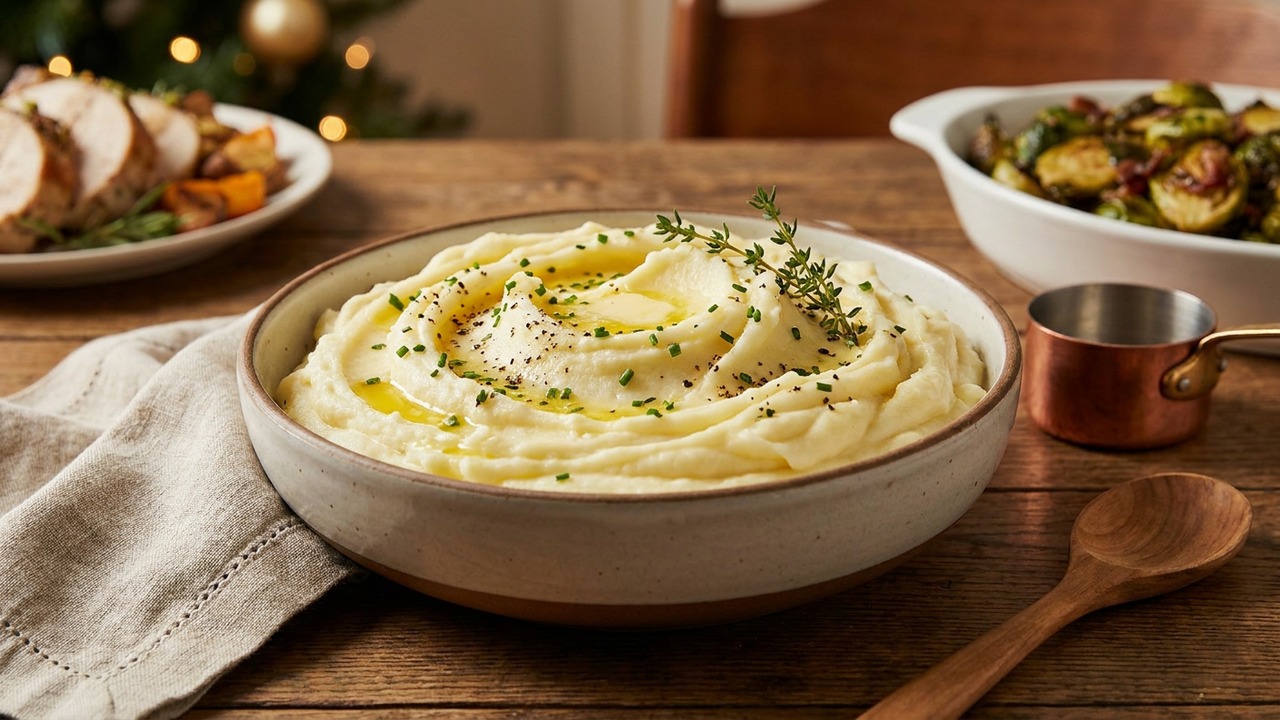
Silky, comforting mashed potatoes are the unsung hero of many dinners — and this version is engineered to deliver that luxurious, buttery mouthfeel without the common pitfalls that make mashed potatoes gummy or flavorless. Using Yukon Golds gives you naturally creamy, moist flesh that needs less dairy to reach a rich texture, while simple technique choices — starting the potatoes in cold salted water, steam-drying them briefly after draining, and folding in warmed milk, cream, and butter — preserve steam and prevent excess starch from turning the mash gluey. A final turn with warm butter helps emulsify the mixture, producing a glossy, spoonable result that holds its shape but melts on the tongue.
This recipe is at home both on holiday platters and on quick weeknight plates: it scales easily, tolerates short holding times, and adapts to flavor tweaks (sour cream for tang, roasted garlic for depth). It’s written for home cooks who want predictable results; follow the order — drain, steam-dry, mash gently, warm dairy — and you’ll get evenly textured, deeply flavored potatoes every time. The garnish of chives is optional but brightens the richness, and a few extra pats of butter on top at service time create an irresistible finishing touch.
Ingredients for Perfect Creamy Mashed Potatoes
- 2 1/2 lb Yukon Gold potatoes, peeled and cut into 1–1.5" chunks
- 2 tsp Kosher salt (for cooking water and seasoning)
- 6 tbsp Unsalted butter, cut into pieces
- 1 cup Whole milk (warmed)
- 1/2 cup Heavy cream (warmed)
- 1/4 cup Sour cream (optional for tang and extra creaminess)
- 1 tsp Freshly ground black pepper
- 2 tbsp Fresh chives, finely chopped (garnish)
How to Make Perfect Creamy Mashed Potatoes
Step 1: Start potatoes in cold salted water
Place peeled, evenly cut potatoes in a large pot and cover with cold water by about 1 inch. Add the listed kosher salt and bring to a gentle boil, then reduce to a simmer and cook until a fork slides through with little resistance, about 15–20 minutes. Starting in cold water ensures even cooking and prevents grainy texture.For this step
- 2 1/2 lbYukon Gold potatoes, peeled and cut into 1–1.5" chunks
- 2 tspKosher salt (for cooking water and seasoning)
Step 2: Drain and steam-dry
Drain potatoes in a colander and immediately return them to the still-warm pot over very low heat for 1–2 minutes to evaporate excess surface moisture. This step is critical—excess water dilutes the dairy and makes potatoes gluey if not evaporated. Remove pot from heat before proceeding.Step 3: Add butter and begin mashing
Add the butter pieces to the hot potatoes and mash using a potato ricer, food mill, or sturdy masher for the smoothest texture; use a ricer for the silkiest result. Mash just until mostly smooth—overworking releases starch and creates a gluey texture, so stop as soon as large lumps are gone.For this step
- 6 tbspUnsalted butter, cut into pieces
Step 4: Warm dairy and fold in gradually
Warm the milk and cream (and sour cream, if using) until steaming but not boiling—adding cold dairy cools the potatoes and makes them gummy. With the pot off the heat, gradually stir in the warmed dairy a little at a time until you reach your desired consistency, finishing with the last pats of warm butter to emulsify for a glossy finish.For this step
- 1 cupWhole milk (warmed)
- 1/2 cupHeavy cream (warmed)
- 1/4 cupSour cream (optional for tang and extra creaminess)
Step 5: Season and adjust texture
Taste and adjust seasoning with additional kosher salt and the freshly ground black pepper, stirring gently to combine. If the potatoes feel too stiff, add a splash more warmed milk; if too loose, return to low heat briefly while stirring to tighten slightly. For extra silkiness, beat briefly with a handheld mixer on low for 10–15 seconds, but avoid high speed.For this step
- 1 tspFreshly ground black pepper
Step 6: Serve warm with garnish
Transfer mashed potatoes to a warmed serving bowl and top with a few extra pats of butter if desired, then scatter the chopped chives over the surface. Serve immediately for the best texture—mashed potatoes can be kept warm in a covered dish over very low heat or held in a low oven, stirring occasionally.For this step
- 2 tbspFresh chives, finely chopped (garnish)


- Place peeled, evenly cut potatoes in a large pot and cover with cold water by about 1 inch. Add the listed kosher salt and bring to a gentle boil, then reduce to a simmer and cook until a fork slides through with little resistance, about 15–20 minutes. Starting in cold water ensures even cooking and prevents grainy texture.
- Drain potatoes in a colander and immediately return them to the still-warm pot over very low heat for 1–2 minutes to evaporate excess surface moisture. This step is critical—excess water dilutes the dairy and makes potatoes gluey if not evaporated. Remove pot from heat before proceeding.
- Add the butter pieces to the hot potatoes and mash using a potato ricer, food mill, or sturdy masher for the smoothest texture; use a ricer for the silkiest result. Mash just until mostly smooth—overworking releases starch and creates a gluey texture, so stop as soon as large lumps are gone.
- Warm the milk and cream (and sour cream, if using) until steaming but not boiling—adding cold dairy cools the potatoes and makes them gummy. With the pot off the heat, gradually stir in the warmed dairy a little at a time until you reach your desired consistency, finishing with the last pats of warm butter to emulsify for a glossy finish.
- Taste and adjust seasoning with additional kosher salt and the freshly ground black pepper, stirring gently to combine. If the potatoes feel too stiff, add a splash more warmed milk; if too loose, return to low heat briefly while stirring to tighten slightly. For extra silkiness, beat briefly with a handheld mixer on low for 10–15 seconds, but avoid high speed.
- Transfer mashed potatoes to a warmed serving bowl and top with a few extra pats of butter if desired, then scatter the chopped chives over the surface. Serve immediately for the best texture—mashed potatoes can be kept warm in a covered dish over very low heat or held in a low oven, stirring occasionally.
Perfect Creamy Mashed Potatoes Tips
Start in Cold Water
Cold water lets the potatoes heat evenly so the centers cook at the same rate as the edges, preventing grainy patches and overcooked exterior starch.
Steam-Dry Briefly
After draining, return potatoes to the hot pot over very low heat for 1–2 minutes to evaporate surface moisture—this concentrates flavor and stops the dairy from being diluted.
Warm Dairy First
Heating the milk, cream, and sour cream to steaming (not boiling) prevents temperature shock that can make the mash gummy and helps them incorporate smoothly.
Choose the Right Tool
Use a ricer or food mill for the silkiest texture; a sturdy masher works fine, but avoid electric beaters on high which develop gummy starch.
Add Butter Last
Fold in the warm butter toward the end so it emulsifies the dairy and potato starch, giving a glossy, cohesive finish.
Perfect Creamy Mashed Potatoes Variations and Substitutions
Garlic-Infused Mash
Simmer whole peeled garlic cloves with the potatoes or roast garlic separately and fold 2–4 tablespoons of roasted garlic into the finished mash for a sweet, mellow lift.
Parmesan and Herb
Stir in 1/2 cup finely grated Parmesan and 2 tablespoons chopped fresh parsley or thyme after mashing for savory umami and herbal brightness.
Vegan Swap
Replace butter with 6 tablespoons olive oil or vegan butter, use unsweetened plant milk warmed to steaming, and omit sour cream or swap with a tablespoon of dairy-free yogurt for tang.
Crispy-Skinned Mash
Save some boiled potato skins, roast them until crisp, and crumble over the top as a crunchy garnish for contrast to the creamy interior.
How to Store and Make Perfect Creamy Mashed Potatoes Ahead
Cool mashed potatoes to room temperature within two hours, then transfer to an airtight container and refrigerate for up to 3–4 days. To reheat, warm gently in a saucepan over low heat with a splash of warmed milk or cream, stirring frequently, or bake covered at 300°F (150°C) until heated through, stirring once; avoid high heat to prevent drying out. For make-ahead service, hold in a covered, shallow pan in a 200°F oven and stir occasionally, adding a little warmed dairy if the surface begins to tighten.
What to Serve With Perfect Creamy Mashed Potatoes
Serve these mashed potatoes alongside roasted meats with pan sauce—think herb-roasted chicken, beef short ribs, or a honey-glazed ham—and spoon some of the gravy directly over the center for contrast. For vegetable companions, choose something with snap or bitter notes like roasted Brussels sprouts or sautéed green beans; a full-bodied Chardonnay or a medium-bodied Pinot Noir pairs nicely depending on the protein and sauce. Finish the bowl with an extra pat of butter and a scattering of fresh chives for color and aroma.
Perfect Creamy Mashed Potatoes FAQs
Why do the instructions call for Yukon Golds?
Yukon Golds have a naturally creamy, medium-starch texture that yields smooth, velvety mash without needing excessive butter or cream, unlike high-starch russets which absorb more liquid and can require extra fat.
Can I use russet potatoes instead?
Yes — russets will work but expect to use a bit more dairy and butter to achieve the same silkiness; also be extra careful not to overwork them, as their higher starch content can become gluey more quickly.
My potatoes turned gluey—how do I fix them?
If they’re already gummy, fold in additional warm liquid (milk or cream) and a little extra butter off the heat to loosen and re-emulsify; avoid vigorous beating, which only releases more starch.
Can I make these ahead for a holiday?
Yes—prepare through step 4, then spread into a shallow pan, cool, and refrigerate; rewarm in a low oven with a dot of butter and splash of warmed milk, stirring gently before serving.
Is the sour cream necessary?
No, it’s optional — sour cream adds a subtle tang and extra silkiness, but you can omit it or replace it with crème fraîche or a neutral-tasting yogurt for similar effect.
About the author
Jake WoodsHello, I'm Jake. I started this recipe site with the idea that I hated recipe websites that overwhelm you with long stories and ads just to see plain content that's not helpful. My goal is to provide you with quality recipes, simple ideas and a fun cooking experience. There's lots of fun things to cook, and I think as you browse the site you'll find that TopShelf.Recipes is the place for quality recipes on the web.
See all recipes by Jake Woods →Ratings & Reviews
Did you make this recipe?
Be the first to share your experience.
Nutrition Facts
Per serving: about ¾ cup
Nutrition values are estimated from USDA ingredient data and may vary based on preparation, brands, and portion sizes. Values are provided for informational purposes only.
Keep Reading
Guides & articles for this recipe

Recipes
Top 10 Halloween Recipes
Ten easy, showy Halloween recipes to feed a crowd or level up trick-or-treat night. From spooky appetizers to eerie desserts and a punch that stains the rim, these picks balance dramatic presentation with home-kitchen simplicity.

Healthy Eating
Gluten-Free Weeknight Grilling Plan
A 7-day gluten-free weeknight grilling plan with quick, family-friendly recipes, prep-ahead timelines, and a printable shopping list that spotlights late-summer produce and pantry staples. Includes clear cross-contamination safety tips and simple swaps to keep dinners fast and crowd-pleasing.

Healthy Eating
Low-Fat Grill Swaps for Big Flavor
A practical guide to trimming fat from grilled meals without losing juiciness or char. Learn yogurt- and citrus-based marinades, lean protein picks, searing and indirect-heat tricks, plus 5 quick low-fat marinades and a simple weeknight plan.
More from Stovetop
View all Stovetop recipes →
Classic Marinara Sauce from Scratch

Frank's Red Hot Buffalo Street Corn Dip

Rotisserie Chicken and Wild Rice Soup

Korean Ground Beef Bowl

Plant-Based Jackfruit Carnitas Tacos with Avocado Crema (Stovetop)

Classic Chicken Noodle Soup from Scratch

Mushroom Garlic Butter Pasta

One-Pot Beef Bolognese

Grilled S'mores Skewers with Spiced Chocolate
Ask me anything about this recipe — substitutions, scaling, techniques, timing.
Powered by AI · 6 questions per 5 minutes, 30 per day