Poke Meal Prep Bowls
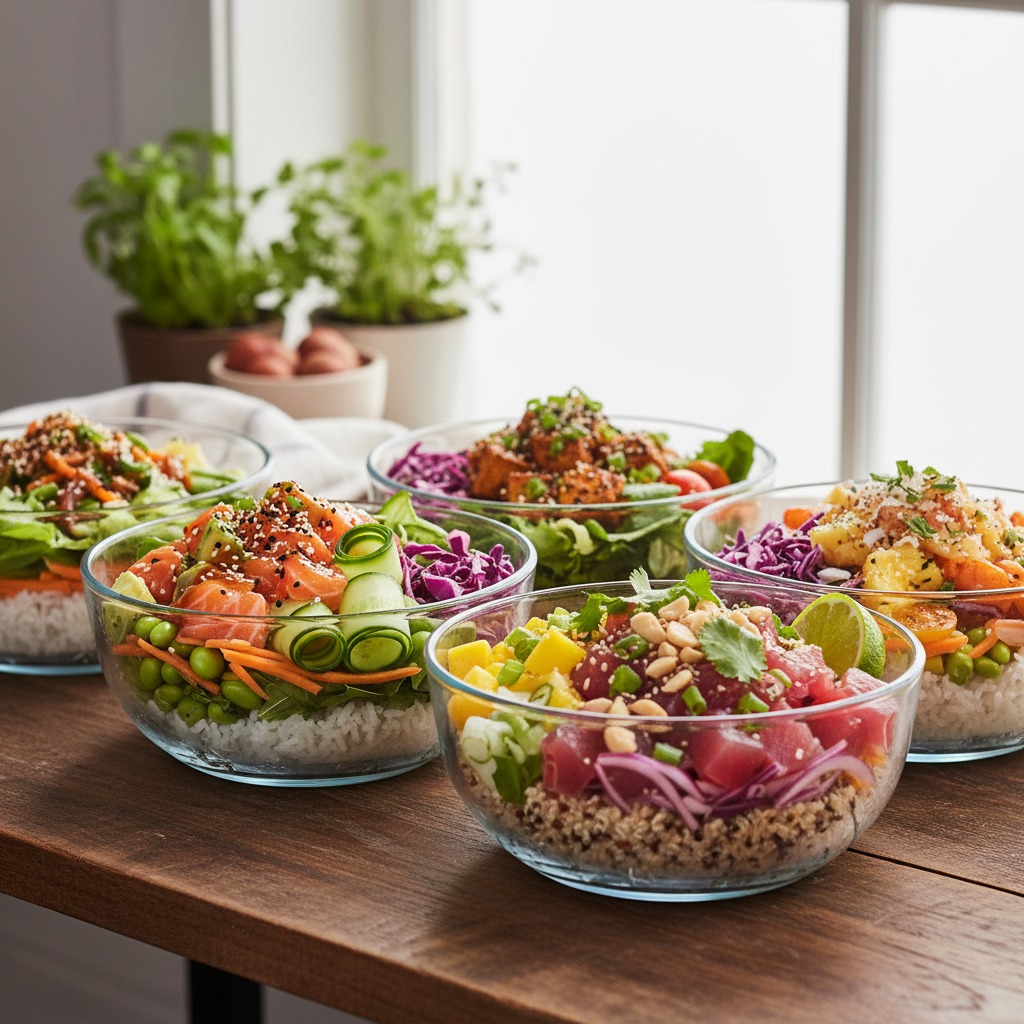
Make-ahead Poke Meal Prep Bowls with sushi-grade tuna, seasoned rice, crisp cucumber and creamy avocado, finished with a quick sriracha-mayo drizzle. Balanced, protein-forward bowls that store well for weekday lunches and come together in about 40 minutes.
Ingredient Spotlight
Sushi (short-grain) rice, uncooked
Short-grain sushi rice (a Japonica variety) is stickier and plumper than long-grain rice; when cooked and seasoned with rice vinegar, sugar, and salt it becomes glossy and slightly sweet, ideal for forming sushi. It originates from Japan and is sold as “sushi rice” or “short-grain rice” in Asian markets and most large supermarkets. If you can’t find true sushi rice, Calrose (short- to medium-grain) is the closest substitute, though texture won’t be identical.
Ingredient Spotlight
Sushi-grade ahi tuna, trimmed
“Sushi-grade” ahi tuna refers to very fresh (often previously frozen to parasite-kill standards) yellowfin or bigeye tuna handled for safe raw consumption; “trimmed” means excess fat and sinew removed. It has a clean, meaty, slightly sweet ocean flavor and a buttery, sashimi-ready texture commonly used in Japanese and Hawaiian dishes. Buy from a reputable fishmonger or supermarket sushi counter; if raw sashimi-quality tuna isn’t available, use sashimi-grade salmon or cook fresh ahi/tuna steaks instead.
Jake Woods's note
"This bowl is built for repeat-week lunches — bright, quick to assemble, and easy to vary. Home cooks will love how the tuna marinates quickly and how components hold up in the fridge for several days."
About This Recipe
Poke Meal Prep Bowls are built on a simple idea: high-quality raw fish, seasoned rice, and a few fresh components that each play a clear role. In this version, sushi-grade ahi is given a short, savory marinade so the pieces stay tender and bright rather than “cooked” through salt, while warm vinegared short-grain rice provides the slightly sticky, umami-rich base that makes each forkful feel like a bite of sushi. Crisp cucumber keeps the mouthfeel lively and avocado brings the creamy contrast, and the sriracha-mayo ties it all together with a familiar, cooling spice.
This bowl is especially useful for people who want a protein-forward weekday lunch that doesn’t feel like leftovers. The techniques here — quick marination, folding vinegar into just-cooked rice, and staging avocado and sauce separately — are designed for make-ahead success: flavorful, not mushy, and easy to assemble. Use the recipe as a template: swap the protein, play with acid in the dressing, or add crunchy toppings for extra texture, but keep the timing and temperature principles the same for best results.
Ingredients for Poke Meal Prep Bowls
- 2 cups Sushi (short-grain) rice, uncooked
- 3 tbsp Rice vinegar
- 1 lb Sushi-grade ahi tuna, trimmed
- 4 tbsp Low-sodium soy sauce
- 2 tsp Sesame oil
- 3 stalks Green onions (scallions), thinly sliced
- 1 medium English cucumber, halved and thinly sliced
- 2 medium Avocado, ripe
- 3 tbsp Mayonnaise
- 1 tbsp Sriracha hot sauce
How to Make Poke Meal Prep Bowls
Step 1: Cook and season the rice
Rinse the sushi rice under cold water until the water runs clear. Cook with 2 1/4 cups water (or according to package directions) until tender, then fluff and fold in the rice vinegar while still warm; let cool to room temperature.For this step
- 2 cupsSushi (short-grain) rice, uncooked
- 3 tbspRice vinegar
Step 2: Prep and marinate the tuna
Cube the sushi-grade tuna into bite-sized pieces. In a bowl combine soy sauce, sesame oil and half the sliced green onions, then toss the tuna gently to coat and let sit 10–15 minutes while other components are prepared.For this step
- 1 lbSushi-grade ahi tuna, trimmed
- 4 tbspLow-sodium soy sauce
- 2 tspSesame oil
- 3 stalksGreen onions (scallions), thinly sliced
Step 3: Prepare the vegetables
Thinly slice the cucumber and dice or slice the avocados. Keep the avocado separate if you plan to store bowls more than a day to minimize browning. Reserve remaining green onions for garnish.For this step
- 1 mediumEnglish cucumber, halved and thinly sliced
- 2 mediumAvocado, ripe
Step 4: Make the sriracha mayo
Whisk together the mayonnaise and sriracha until smooth, adjusting the sriracha to your heat preference. Taste and add a tiny splash of water or lime if you want a thinner drizzle.For this step
- 3 tbspMayonnaise
- 1 tbspSriracha hot sauce
Step 5: Assemble and store
Divide the rice among four meal-prep containers, top with marinated tuna, cucumber and avocado. Drizzle with sriracha mayo and sprinkle reserved green onions. Refrigerate up to 3 days; if packing for later, store sauce separately and add avocado just before eating for best texture.


- Rinse the sushi rice under cold water until the water runs clear. Cook with 2 1/4 cups water (or according to package directions) until tender, then fluff and fold in the rice vinegar while still warm; let cool to room temperature.
- Cube the sushi-grade tuna into bite-sized pieces. In a bowl combine soy sauce, sesame oil and half the sliced green onions, then toss the tuna gently to coat and let sit 10–15 minutes while other components are prepared.
- Thinly slice the cucumber and dice or slice the avocados. Keep the avocado separate if you plan to store bowls more than a day to minimize browning. Reserve remaining green onions for garnish.
- Whisk together the mayonnaise and sriracha until smooth, adjusting the sriracha to your heat preference. Taste and add a tiny splash of water or lime if you want a thinner drizzle.
- Divide the rice among four meal-prep containers, top with marinated tuna, cucumber and avocado. Drizzle with sriracha mayo and sprinkle reserved green onions. Refrigerate up to 3 days; if packing for later, store sauce separately and add avocado just before eating for best texture.
Poke Meal Prep Bowls Tips
Choose sushi-grade tuna
Buy tuna labeled sushi- or sashimi-grade from a reputable vendor and keep it cold; this minimizes risk and ensures the clean flavor expected in poke.
Rinse rice thoroughly
Wash the short-grain rice until the water runs clear to remove excess surface starch; this prevents gummy clumps and keeps the grains distinct after cooling.
Marinate the tuna briefly
Ten to fifteen minutes is enough to impart flavor without denaturing the fish; longer will start to 'cure' the surface and change the texture.
Keep avocado separate
If storing for more than a day, pack avocado in a sealed container with a squeeze of lime and add to bowls right before eating to avoid browning and sogginess.
Adjust mayo consistency
If your sriracha-mayo is too thick to drizzle, whisk in a few drops of water, rice vinegar, or lime juice to reach a pourable texture without diluting flavor.
Poke Meal Prep Bowls Variations and Substitutions
Swap in salmon or tofu
Use sashimi-grade salmon for a richer flavor or firm tofu cubes (pressed and marinated) for a vegetarian, protein-forward alternative.
Use alternate bases
Replace the sushi rice with brown short-grain rice for more fiber or cauliflower rice for a lower-carb bowl; if using cauliflower, skip the rice vinegar step.
Vinegary kimchi twist
Add chopped kimchi or a spoonful of kimchi brine to the marinade for a spicy, fermented kick that pairs beautifully with the creamy avocado.
Lighter sauce option
Swap half the mayonnaise for plain Greek yogurt or use vegan mayo to reduce richness while keeping the tangy, creamy drizzle.
How to Store and Make Poke Meal Prep Bowls Ahead
Store assembled bowls in airtight containers in the refrigerator for up to 3 days, keeping the sriracha-mayo and avocado separate when possible. If the rice firms up, reheat covered in the microwave with a splash of water for 30–60 seconds to restore fluffiness; keep the tuna cold and add it back after reheating to maintain texture and food-safety standards.
What to Serve With Poke Meal Prep Bowls
Serve these bowls with simple sides like steamed edamame, a small seaweed salad, or quick-pickled daikon for extra brightness. For beverages, a cold green tea or a crisp, unoaked white wine such as a Sauvignon Blanc or a dry Riesling complements the dish's clean flavors.
Poke Meal Prep Bowls FAQs
Is it safe to eat raw tuna in meal prep bowls?
Yes, provided you buy sushi- or sashimi-grade tuna from a trusted supplier, keep it properly refrigerated, and consume the bowls within about 48–72 hours; always follow local food-safety guidance and trust your senses—discard if anything smells off.
Can I freeze the tuna or completed bowls?
Avoid freezing assembled bowls: the texture of cucumber and avocado will suffer. You can freeze fresh, uncooked tuna portions, but thaw in the refrigerator and use promptly—do not refreeze.
Why does the recipe call for folding vinegar into warm rice?
Warm rice absorbs the rice vinegar more evenly and helps the seasoning distribute without making the rice soggy, creating the slightly tangy base that balances the rich fish and mayo.
How can I prevent the rice from getting mushy when stored?
Cool rice to room temperature before sealing containers, and use firm, not overcooked, short-grain rice; avoid overdressing the bowl components until serving to keep textures intact.
Can I sear the tuna instead of serving it raw?
Yes—if you prefer a cooked edge, briefly sear the cubes in a hot pan for 15–30 seconds per side and then cool before packing; this creates contrast between seared exterior and rare interior while reducing raw-fish concerns.
About the author
Jake WoodsHello, I'm Jake. I started this recipe site with the idea that I hated recipe websites that overwhelm you with long stories and ads just to see plain content that's not helpful. My goal is to provide you with quality recipes, simple ideas and a fun cooking experience. There's lots of fun things to cook, and I think as you browse the site you'll find that TopShelf.Recipes is the place for quality recipes on the web.
See all recipes by Jake Woods →Ratings & Reviews
Did you make this recipe?
Be the first to share your experience.
Nutrition Facts
Per serving: 1 serving
Nutrition values are estimated from USDA ingredient data and may vary based on preparation, brands, and portion sizes. Values are provided for informational purposes only.
Keep Reading
Guides & articles for this recipe

Healthy Eating
Gluten-Free Weeknight Grilling Plan
A 7-day gluten-free weeknight grilling plan with quick, family-friendly recipes, prep-ahead timelines, and a printable shopping list that spotlights late-summer produce and pantry staples. Includes clear cross-contamination safety tips and simple swaps to keep dinners fast and crowd-pleasing.

Healthy Eating
Low-Fat Grill Swaps for Big Flavor
A practical guide to trimming fat from grilled meals without losing juiciness or char. Learn yogurt- and citrus-based marinades, lean protein picks, searing and indirect-heat tricks, plus 5 quick low-fat marinades and a simple weeknight plan.

Recipes
DIY Edible Monster Eyes Candy
Make safe, fun edible monster eyes for cupcakes, cookies, and candy trays. Step-by-step recipes show baking-soda balls, chocolate and fondant eyes, wafer-print options, plus assembly, storage, and kid-friendly safety tips.
More from Salads
View all Salads recipes →
Korean Gochujang Coleslaw with Sesame and Quick Pickled Scallions

Strawberry Spinach Salad

Campfire‑Smoked Potato Salad with Mustard‑Bacon Vinaigrette — A Labor Day Grilling Side for Steak

Honey Garlic Chicken Thigh Meal-Prep Bowls with Farro, Greens, and Tahini Drizzle

Mango Avocado Tilapia Salad Bowl with Lime Vinaigrette

Miso Glazed Salmon Bowl

Chorizo Black Bean Salad

Classic Make-Ahead Creamy Potato Salad — Labor Day BBQ Side for Steak & Burgers

Classic Warm German Potato Salad with Bacon & Whole-Grain Mustard (Labor Day Steak Side)
Ask me anything about this recipe — substitutions, scaling, techniques, timing.
Powered by AI · 6 questions per 5 minutes, 30 per day