Quinoa Poke Bowl
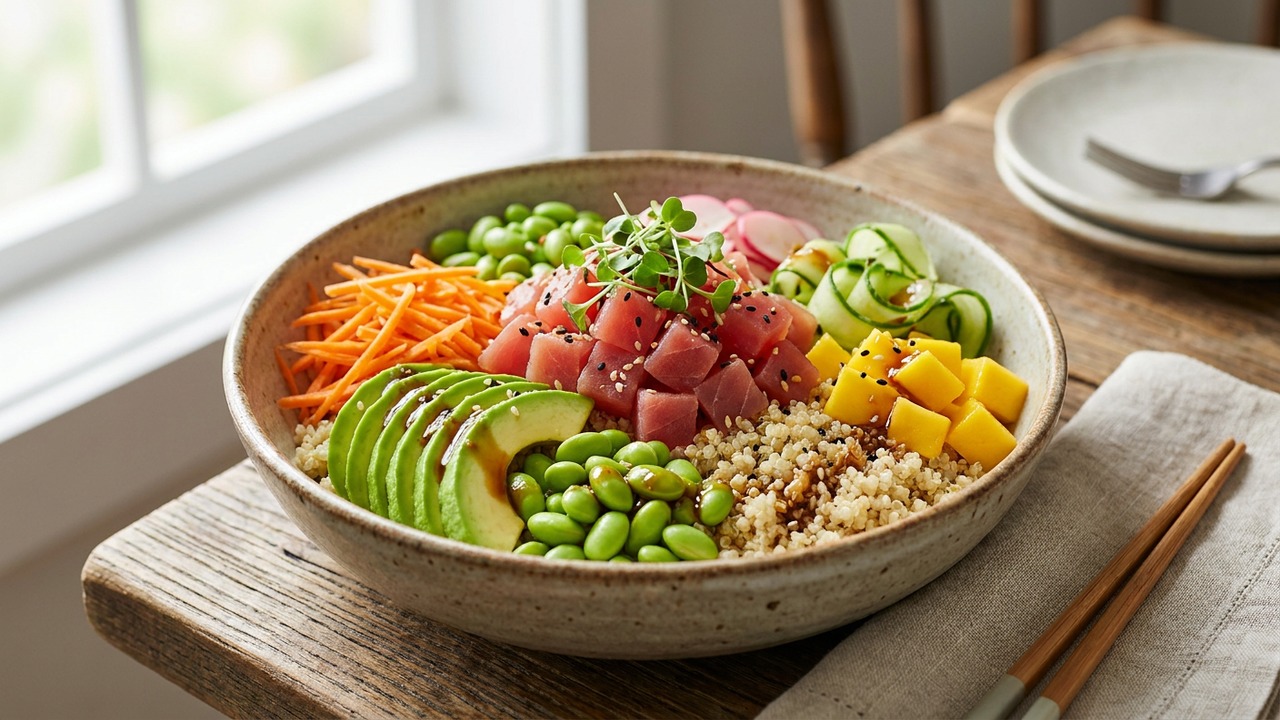
A grain-forward, gluten-free take on the classic poke bowl that swaps rice for fluffy quinoa and layers bright vegetables with sushi-grade ahi for a satisfying, protein-rich meal. Perfect for weeknight dinners or meal prep, it delivers the fresh, savory flavors of poke while keeping the focus on whole grains and balanced nutrition.
Ingredient Spotlight
sushi-grade ahi tuna
Ahi refers to yellowfin (or sometimes bigeye) tuna and “sushi-grade” indicates fish handled and often frozen to standards suitable for raw consumption for sashimi/sushi. It has a clean, meaty, mildly sweet flavor and very firm texture compared with other fish. This term is rooted in Japanese raw-fish cuisine; buy it from a reputable fishmonger, sushi counter, or high-quality grocery and ask about its flash-freezing/handling. If you can’t source sushi-grade ahi, substitute sushi-grade salmon, or use seared tuna steaks cooked to medium-rare for safety and similar texture.
Ingredient Spotlight
coconut aminos
Coconut aminos is a soy-free seasoning sauce made from fermented coconut sap and salt, popular in paleo, gluten-free, and Asian-inspired cooking. It tastes milder and slightly sweeter than soy sauce with a subtle umami note and lower sodium. You’ll find it at natural-foods stores, larger supermarkets, or online. Substitute with low-sodium soy sauce or tamari (optionally diluted and with a touch of sweetener) if you need a close flavor match.
Ingredient Spotlight
dry quinoa
Quinoa is a small seed native to the Andes (Peru/Bolivia) that cooks like a grain; it has a delicate nutty flavor and a slightly chewy, fluffy texture when cooked. It’s prized for being high in protein and gluten-free, used in salads, bowls, and as a rice replacement. It’s widely available in supermarkets and bulk bins; good substitutes are couscous, bulgur, farro, or rice depending on the dish and desired texture.
Jake Woods's note
"This quinoa poke bowl is a great make-ahead lunch or a light dinner that feels special but comes together quickly. Swap the tuna for firm tofu or cooked salmon to suit dietary needs."
About This Recipe
This quinoa poke bowl takes the clean, immediate flavors of Hawaiian-style poke and translates them to a grain-forward, gluten-free plate that feels both substantial and light. Quinoa's delicate nuttiness and slightly springy bite stand up well to silky, sushi-grade ahi, while avocado and edamame introduce creaminess and bright, vegetal contrast. The short marinade of coconut aminos and toasted sesame oil seasons the tuna without cooking it, so you get that sashimi texture but with a more robust, whole-grain base.
It’s a practical dish for weeknights and meal prep alike: quinoa holds up in the fridge and the components assemble quickly, but treat the raw tuna like the luxury ingredient it is—keep it chilled and add it at the last minute if you plan to store bowls. This version works especially well for pescatarians, anyone avoiding gluten, or cooks who want a protein-rich bowl that’s high on texture and low on fuss. Small finishing touches—freshly toasted sesame seeds, a squeeze of citrus, or a scattering of thin scallion—bring everything into balance without stealing the show.
Ingredients for Quinoa Poke Bowl
- 1 cup dry quinoa
- 2 cups water
- 1/2 teaspoon kosher salt
- 8 oz sushi-grade ahi tuna, cubed
- 2 tablespoons coconut aminos
- 1 tablespoon toasted sesame oil
- 1 piece ripe avocado, diced
- 1 piece English cucumber, sliced
- 1 cup shelled edamame (cooked)
- 1 tablespoon toasted sesame seeds
How to Make Quinoa Poke Bowl
Step 1: Cook the quinoa
Rinse the quinoa under cold water in a fine mesh sieve until the water runs clear. Combine rinsed quinoa, water, and 1/2 teaspoon kosher salt in a small saucepan, bring to a boil, then reduce to a simmer, cover, and cook until the water is absorbed (about 15 minutes). Remove from heat and let rest, covered, for 5 minutes, then fluff with a fork.For this step
- 1 cupdry quinoa
- 2 cupswater
- 1/2 teaspoonkosher salt
Step 2: Marinate the tuna
While the quinoa cooks, pat the cubed ahi tuna dry and place in a bowl. Toss gently with coconut aminos and toasted sesame oil and let sit for 5–10 minutes to absorb flavor; do not over-marinate to preserve texture. Keep chilled until assembly.For this step
- 8 ozsushi-grade ahi tuna, cubed
- 2 tablespoonscoconut aminos
- 1 tablespoontoasted sesame oil
Step 3: Prep the vegetables and edamame
Dice the avocado and slice the cucumber into bite-sized pieces. If using frozen edamame, briefly steam or microwave until warmed through and drain. Arrange the prepared vegetables so they're ready to top the bowls.For this step
- 1 pieceripe avocado, diced
- 1 pieceEnglish cucumber, sliced
- 1 cupshelled edamame (cooked)
Step 4: Assemble the bowls
Divide the fluffed quinoa among four bowls as the base. Top each portion with marinated tuna, avocado, cucumber, and edamame, arranging ingredients in sections for a classic poke presentation. Drizzle any remaining marinade from the tuna over the bowls, if desired.For this step
- 1 tablespoontoasted sesame seeds
Step 5: Garnish and serve
Finish each bowl with a sprinkle of toasted sesame seeds and an extra pinch of kosher salt to taste. Serve immediately so the tuna stays fresh and the avocado remains creamy; the bowls also refrigerate well for next-day lunches.


- Rinse the quinoa under cold water in a fine mesh sieve until the water runs clear. Combine rinsed quinoa, water, and 1/2 teaspoon kosher salt in a small saucepan, bring to a boil, then reduce to a simmer, cover, and cook until the water is absorbed (about 15 minutes). Remove from heat and let rest, covered, for 5 minutes, then fluff with a fork.
- While the quinoa cooks, pat the cubed ahi tuna dry and place in a bowl. Toss gently with coconut aminos and toasted sesame oil and let sit for 5–10 minutes to absorb flavor; do not over-marinate to preserve texture. Keep chilled until assembly.
- Dice the avocado and slice the cucumber into bite-sized pieces. If using frozen edamame, briefly steam or microwave until warmed through and drain. Arrange the prepared vegetables so they're ready to top the bowls.
- Divide the fluffed quinoa among four bowls as the base. Top each portion with marinated tuna, avocado, cucumber, and edamame, arranging ingredients in sections for a classic poke presentation. Drizzle any remaining marinade from the tuna over the bowls, if desired.
- Finish each bowl with a sprinkle of toasted sesame seeds and an extra pinch of kosher salt to taste. Serve immediately so the tuna stays fresh and the avocado remains creamy; the bowls also refrigerate well for next-day lunches.
Quinoa Poke Bowl Tips
Rinse quinoa thoroughly
Rinsing removes the natural saponins that can taste bitter; rinse under running cold water until it runs clear to avoid off-flavors.
Short tuna marination
Keep the ahi marinated just 5–10 minutes so the coconut aminos and sesame oil season the surface without softening the interior texture.
Cool quinoa before topping
Let quinoa rest and come to warm or room temperature before assembly so it doesn’t partially cook or warm the tuna when combined.
Prevent avocado browning
Toss diced avocado with a teaspoon of lime or lemon juice if you’re assembling ahead to keep it bright for a few hours.
Toast the sesame seeds
Give the seeds a quick toast in a dry skillet for 1–2 minutes to amplify their nutty aroma and add tempo to each bite.
Quinoa Poke Bowl Variations and Substitutions
Seared Ahi
Quickly sear the tuna for 30–45 seconds per side for a rare crusted edge that adds smoky depth while keeping the center tender.
Vegetarian Protein Swap
Replace the tuna with firm tofu pressed, cubed, and marinated in the same dressing, then pan-fry until golden for a plant-based alternative.
Brown Rice or Farro Base
If you prefer a chewier grain, swap quinoa for cooked short-grain brown rice or farro; increase cooking time according to package instructions.
Spicy Gochujang Twist
Whisk a teaspoon of gochujang with a splash of rice vinegar into the marinade for a sweet-umami heat that plays well with avocado.
How to Store and Make Quinoa Poke Bowl Ahead
Store components separately for best results: keep quinoa and vegetables in airtight containers for up to 3–4 days, and refrigerate raw sushi-grade tuna for no more than 24 hours. If you must store assembled bowls, add the tuna and avocado just before eating to preserve texture and color. Reheat quinoa gently in the microwave or on the stovetop with a splash of water; do not reheat raw tuna.
What to Serve With Quinoa Poke Bowl
Serve these bowls with a simple seaweed salad or lightly miso soup to keep the meal cohesive and coastal. For drinks, bright, citrusy white wines like Sauvignon Blanc or a dry rosé complement the tuna, while cold green tea or a Japanese lager makes for an easy nonalcoholic pairing. Arrange ingredients in neat sections for an attractive bowl and a pleasing mix of textures in every forkful.
Quinoa Poke Bowl FAQs
Is sushi-grade tuna safe to eat raw at home?
Sushi-grade means the fish has been handled and frozen according to guidelines that reduce parasites, but buy from a reputable fishmonger and keep it cold; if you have concerns, searing slightly is a safe alternative.
Can I use frozen tuna?
Yes—if you buy frozen sashimi-grade tuna, thaw it in the refrigerator overnight and use it the same day you thaw it for best texture and safety.
How long can I meal-prep these bowls?
Quinoa and vegetables will keep 3–4 days refrigerated, but keep the tuna separate and add it the day you eat the bowls; assembled bowls with raw tuna are best eaten the same day.
Can I make this spicy?
Absolutely—mix a little sriracha or gochujang into the marinade or drizzle a spicy mayo over the finished bowl to bring heat without changing the core recipe.
My quinoa was gummy; what went wrong?
Gummy quinoa usually means it was over-stirred or cooked at too high a heat; rinse well, use the 1:2 ratio, simmer gently, and let it rest covered before fluffing with a fork.
About the author
Jake WoodsHello, I'm Jake. I started this recipe site with the idea that I hated recipe websites that overwhelm you with long stories and ads just to see plain content that's not helpful. My goal is to provide you with quality recipes, simple ideas and a fun cooking experience. There's lots of fun things to cook, and I think as you browse the site you'll find that TopShelf.Recipes is the place for quality recipes on the web.
See all recipes by Jake Woods →Ratings & Reviews
Did you make this recipe?
Be the first to share your experience.
Nutrition Facts
Per serving: 1 bowl
Nutrition values are estimated from USDA ingredient data and may vary based on preparation, brands, and portion sizes. Values are provided for informational purposes only.
Keep Reading
Guides & articles for this recipe

Healthy Eating
Gluten-Free Weeknight Grilling Plan
A 7-day gluten-free weeknight grilling plan with quick, family-friendly recipes, prep-ahead timelines, and a printable shopping list that spotlights late-summer produce and pantry staples. Includes clear cross-contamination safety tips and simple swaps to keep dinners fast and crowd-pleasing.

Healthy Eating
Low-Fat Grill Swaps for Big Flavor
A practical guide to trimming fat from grilled meals without losing juiciness or char. Learn yogurt- and citrus-based marinades, lean protein picks, searing and indirect-heat tricks, plus 5 quick low-fat marinades and a simple weeknight plan.

Recipes
DIY Edible Monster Eyes Candy
Make safe, fun edible monster eyes for cupcakes, cookies, and candy trays. Step-by-step recipes show baking-soda balls, chocolate and fondant eyes, wafer-print options, plus assembly, storage, and kid-friendly safety tips.
More from Salads
View all Salads recipes →
Watermelon Feta Mint Salad with Lime and Chili Flakes

Korean Gochujang Coleslaw with Sesame and Quick Pickled Scallions

Strawberry Spinach Salad

Campfire‑Smoked Potato Salad with Mustard‑Bacon Vinaigrette — A Labor Day Grilling Side for Steak

Honey Garlic Chicken Thigh Meal-Prep Bowls with Farro, Greens, and Tahini Drizzle

Mango Avocado Tilapia Salad Bowl with Lime Vinaigrette

Miso Glazed Salmon Bowl

Chorizo Black Bean Salad

Classic Make-Ahead Creamy Potato Salad — Labor Day BBQ Side for Steak & Burgers
Ask me anything about this recipe — substitutions, scaling, techniques, timing.
Powered by AI · 6 questions per 5 minutes, 30 per day