Raspberry Vinaigrette
Bright, tangy, and slightly sweet, this raspberry vinaigrette brings fresh berry flavor to greens and grilled proteins. Smooth enough to dress delicate lettuces yet bold enough to stand up to grilled chicken, pork, or salmon.
Jake Woods's note
"This vinaigrette is a go-to when raspberries are in season and shines on mixed greens or as a finishing drizzle for grilled proteins. Home cooks will love how quickly it comes together and how easy it is to adjust sweetness or acidity to taste."
About This Recipe
This raspberry vinaigrette is built to flirt with both fragile butter lettuces and robust grilled proteins — bright fruit, stinging vinegar, and a whisper of shallot create a dressing that’s simultaneously elegant and assertive. Pureed raspberries give the dressing its fragrant, slightly tart backbone while Dijon and honey stabilize the emulsion and round the edges; a splash of lemon keeps the sweetness clean instead of syrupy. Leaving the shallot to rest briefly in the acid softens its bite and lets its savory notes bloom into the berries rather than compete with them.
What makes this version work is the attention to texture and balance: a slow stream of extra-virgin olive oil produces a glossy emulsion that clings to leaves, and optional sieving removes seeds for a silkier mouthfeel that’s especially welcome on delicate salads. It’s for home cooks who want a high-impact dressing with minimal fuss — bring it to a weeknight salad, spoon it over warm grilled salmon, or use it to brighten a composed bowl of roasted beets, fennel, and chèvre.
Ingredients for Raspberry Vinaigrette
- 1 cup Fresh raspberries
- 1/4 cup Red wine vinegar
- 1 tbsp Honey (or maple syrup for vegan)
- 1 tsp Dijon mustard
- 1 small (about 2 tbsp) Shallot, finely minced
- 1 tbsp Fresh lemon juice
- 3/4 cup Extra-virgin olive oil
- 1/2 tsp Kosher salt
- 1/4 tsp Freshly ground black pepper
How to Make Raspberry Vinaigrette
Step 1: Puree raspberries and acids
Place fresh raspberries, red wine vinegar, honey, and Dijon mustard in a blender or food processor. Puree until very smooth, scraping down the sides as needed to make a uniform mixture.For this step
- 1 cupFresh raspberries
- 1/4 cupRed wine vinegar
- 1 tbspHoney (or maple syrup for vegan)
- 1 tspDijon mustard
Step 2: Add shallot and lemon
Stir the finely minced shallot and fresh lemon juice into the raspberry puree, or pulse briefly in the blender to incorporate without overworking. Let the mixture sit for 3–5 minutes to mellow the shallot and allow the flavors to marry.For this step
- 1 small (about 2 tbsp)Shallot, finely minced
- 1 tbspFresh lemon juice
Step 3: Emulsify with olive oil
With the blender running on low (or while whisking vigorously in a bowl), slowly drizzle in the extra-virgin olive oil in a thin, steady stream to form a glossy emulsion. If using a jar, add oil in a steady stream while tightly capping and shaking until fully combined.For this step
- 3/4 cupExtra-virgin olive oil
Step 4: Season and adjust
Taste and season the vinaigrette with kosher salt and freshly ground black pepper, adjusting sweetness or acidity with additional honey or vinegar as desired. Aim for a balanced bright-tart profile that complements greens without overpowering them.For this step
- 1/2 tspKosher salt
- 1/4 tspFreshly ground black pepper
Step 5: Strain and store (optional)
For a silky-smooth dressing, press the vinaigrette through a fine-mesh sieve into a jar, discarding seeds and solids. Refrigerate in a sealed container for up to 1 week; bring to room temperature and shake well before serving.


- Place fresh raspberries, red wine vinegar, honey, and Dijon mustard in a blender or food processor. Puree until very smooth, scraping down the sides as needed to make a uniform mixture.
- Stir the finely minced shallot and fresh lemon juice into the raspberry puree, or pulse briefly in the blender to incorporate without overworking. Let the mixture sit for 3–5 minutes to mellow the shallot and allow the flavors to marry.
- With the blender running on low (or while whisking vigorously in a bowl), slowly drizzle in the extra-virgin olive oil in a thin, steady stream to form a glossy emulsion. If using a jar, add oil in a steady stream while tightly capping and shaking until fully combined.
- Taste and season the vinaigrette with kosher salt and freshly ground black pepper, adjusting sweetness or acidity with additional honey or vinegar as desired. Aim for a balanced bright-tart profile that complements greens without overpowering them.
- For a silky-smooth dressing, press the vinaigrette through a fine-mesh sieve into a jar, discarding seeds and solids. Refrigerate in a sealed container for up to 1 week; bring to room temperature and shake well before serving.
Raspberry Vinaigrette Tips
Warm the raspberries slightly
Gently warming berries for 20–30 seconds in the microwave loosens juices and makes for a smoother puree without cooking them.
Slow oil addition
Drizzle the olive oil in a thin stream while blending or whisking to ensure a stable, glossy emulsion that won’t separate quickly.
Mellow the shallot
Let the minced shallot sit in the raspberry-vinegar mixture for at least 3–5 minutes to soften its bite before adding oil.
Seedless finish
For a silky dressing, press the puree through a fine-mesh sieve using the back of a spoon to remove seeds and solids.
Taste and correct
Adjust by teaspoons—if too tart add honey, if flat add a touch more vinegar or lemon; small changes go a long way.
Raspberry Vinaigrette Variations and Substitutions
Vegan sweetener swap
Replace honey with equal maple syrup or agave for a vegan dressing; maple adds a warm, caramel note that pairs well with roast vegetables.
Creamy raspberry vinaigrette
Whisk in 2–3 tablespoons of plain yogurt, crème fraîche, or soft goat cheese for a tangy, creamy version that clings to heartier greens.
Herb-forward twist
Add 1 tablespoon chopped fresh tarragon or basil for an aromatic lift that complements grilled fish and chicken.
Balsamic raspberry
Substitute half the red wine vinegar with aged balsamic vinegar for a darker, sweeter profile that’s excellent with roasted beets and sharp cheeses.
How to Store and Make Raspberry Vinaigrette Ahead
Store the vinaigrette in an airtight jar in the refrigerator for up to one week; separation is normal, so bring it to room temperature and shake vigorously before use. If you've strained out seeds, the dressing will last slightly longer because there are fewer solids to ferment. Do not freeze, as the emulsion and fresh flavors will break apart and become dull when thawed.
What to Serve With Raspberry Vinaigrette
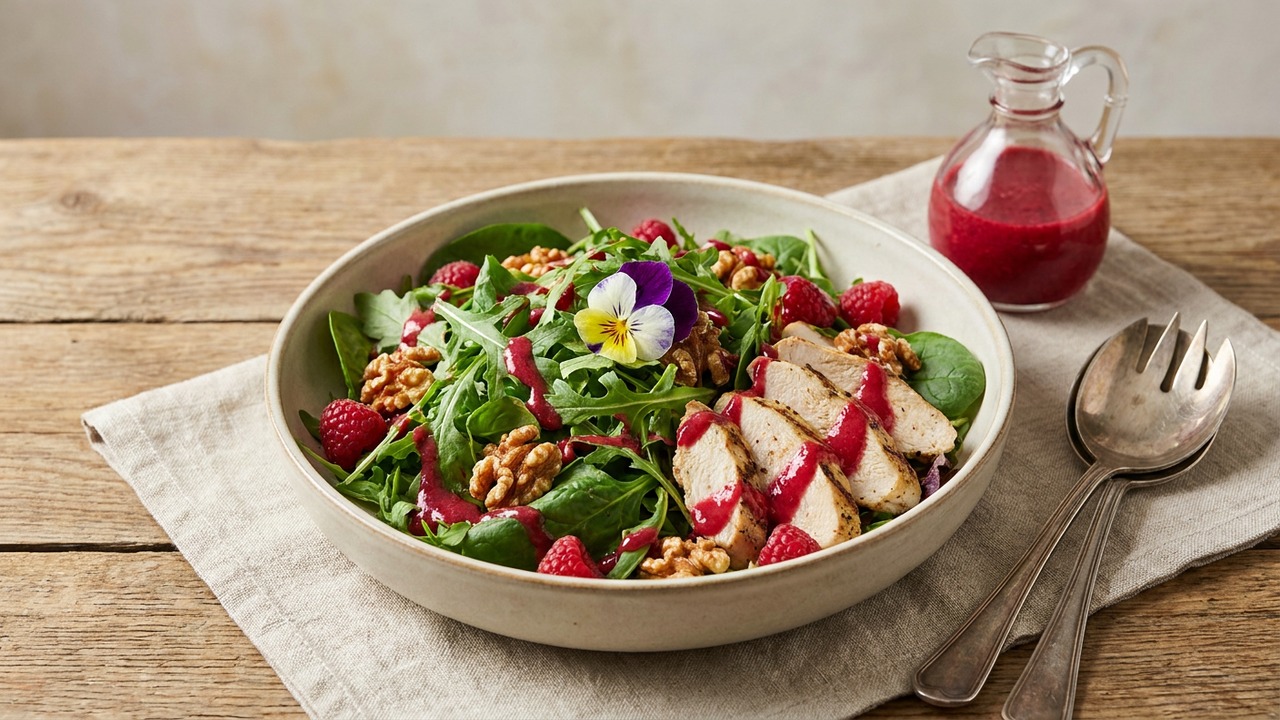
Toss with peppery arugula, baby spinach, or butter lettuce and finish with toasted walnuts and crumbled goat cheese for contrast. It’s also lovely drizzled over grilled salmon or pork chops, or spooned onto a composed salad of roasted beets, fennel, and thinly shaved red onion; serve with a crisp white wine like unoaked Chardonnay or a light rosé.
Raspberry Vinaigrette FAQs
Can I use frozen raspberries?
Yes — thaw and drain them first to avoid excess water; you may want to reduce the vinegar slightly because frozen berries can be sweeter and more diluted.
How can I prevent the vinaigrette from separating?
Emulsify by adding the oil very slowly while blending or whisking vigorously, and include Dijon mustard which acts as an emulsifier; shaking in a jar before each use also helps.
Is it okay to use a different oil?
Yes — use a neutral oil like avocado or grapeseed if you prefer less olive oil fruitiness; extra-virgin olive oil adds desirable peppery depth with robust greens.
Can this be used as a marinade?
You can marinate chicken or pork briefly (30–60 minutes) but avoid long marination because the acid and fruit can begin to break down proteins and make textures mushy.
My dressing is too sweet — how do I fix it?
Add small increments (½ teaspoon) of red wine vinegar or lemon juice and re-taste until the bright-tart balance returns.
How do I make it seedless?
After pureeing, press the mixture through a fine-mesh sieve with the back of a spoon or a rubber spatula to remove seeds and any fibrous bits for a silky result.
About the author
Jake WoodsHello, I'm Jake. I started this recipe site with the idea that I hated recipe websites that overwhelm you with long stories and ads just to see plain content that's not helpful. My goal is to provide you with quality recipes, simple ideas and a fun cooking experience. There's lots of fun things to cook, and I think as you browse the site you'll find that TopShelf.Recipes is the place for quality recipes on the web.
See all recipes by Jake Woods →Ratings & Reviews
Did you make this recipe?
Be the first to share your experience.
Nutrition Facts
Per serving: about 1 cup
Nutrition values are estimated from USDA ingredient data and may vary based on preparation, brands, and portion sizes. Values are provided for informational purposes only.
Keep Reading
Guides & articles for this recipe

Healthy Eating
Gluten-Free Weeknight Grilling Plan
A 7-day gluten-free weeknight grilling plan with quick, family-friendly recipes, prep-ahead timelines, and a printable shopping list that spotlights late-summer produce and pantry staples. Includes clear cross-contamination safety tips and simple swaps to keep dinners fast and crowd-pleasing.

Healthy Eating
Low-Fat Grill Swaps for Big Flavor
A practical guide to trimming fat from grilled meals without losing juiciness or char. Learn yogurt- and citrus-based marinades, lean protein picks, searing and indirect-heat tricks, plus 5 quick low-fat marinades and a simple weeknight plan.

Recipes
DIY Edible Monster Eyes Candy
Make safe, fun edible monster eyes for cupcakes, cookies, and candy trays. Step-by-step recipes show baking-soda balls, chocolate and fondant eyes, wafer-print options, plus assembly, storage, and kid-friendly safety tips.
More from Salads
View all Salads recipes →
Watermelon Feta Mint Salad with Lime and Chili Flakes

Korean Gochujang Coleslaw with Sesame and Quick Pickled Scallions

Strawberry Spinach Salad

Campfire‑Smoked Potato Salad with Mustard‑Bacon Vinaigrette — A Labor Day Grilling Side for Steak

Honey Garlic Chicken Thigh Meal-Prep Bowls with Farro, Greens, and Tahini Drizzle

Mango Avocado Tilapia Salad Bowl with Lime Vinaigrette

Miso Glazed Salmon Bowl

Chorizo Black Bean Salad

Classic Make-Ahead Creamy Potato Salad — Labor Day BBQ Side for Steak & Burgers
Ask me anything about this recipe — substitutions, scaling, techniques, timing.
Powered by AI · 6 questions per 5 minutes, 30 per day