Reverse-Seared Ribeye with Steakhouse Sear and Herb Finishing Butter
A restaurant-quality reverse-seared ribeye that pairs a gentle low-temp roast with a blistering steakhouse sear and a melting herb finishing butter. This technique delivers perfect edge-to-edge medium-rare, a deep brown crust, and a bright, savory butter to finish.
Jake Woods's note
"This recipe shines for special dinners or weekend grilling when you want a true steakhouse result at home. Expect reliably even doneness and a deeply flavored crust you can customize with your favorite herbs."
About This Recipe
This reverse-seared ribeye is the kind of recipe that flips the usual frantic steak-night choreography on its head: a gentle low-temperature roast brings the center to a steady, even medium-rare while a blistering, smoking-hot skillet gives you the deeply browned, Maillard-rich crust that steakhouse diners covet. Bright herb-and-garlic butter finishes each slice with savory lift and glossy richness, turning each bite into a contrast of plush pink interior, crusty exterior and melting, aromatic fat. It’s a reliable method for steaks that are thick enough (about 1–1.25 lb each) to benefit from staged cooking, and it’s forgiving enough for ambitious weeknight cooks and celebratory weekends alike.
What makes this particular version work is the intentional sequencing: a short dry-brine with kosher salt to season through and tighten the surface, a slow oven roast to 110°F (so you avoid an overcooked band of gray), and an immediate, uncompromising sear in a smoking-hot cast-iron pan with high-smoke neutral oil. The finishing butter, simple as it is, cuts through the beefy richness with fresh herb notes and a hint of garlic, while a flake of sea salt at the end provides the bright contrast your palate wants. Bone-in or boneless both shine—just lean into searing the fat cap when present.
Ingredients for Reverse-Seared Ribeye with Steakhouse Sear and Herb Finishing Butter
- 2 steaks Ribeye steaks (bone-in or boneless), 1–1.25 lb each
- 2 teaspoons Kosher salt
- 1 teaspoon Freshly ground black pepper
- 2 tablespoons Neutral high-smoke oil (canola or grapeseed)
- 4 tablespoons Unsalted butter (for herb finishing butter)
- 2 tablespoons Fresh herbs (thyme and rosemary), minced
- 2 cloves Garlic cloves, minced
- 1 teaspoon Flaky sea salt (optional, for finishing)
How to Make Reverse-Seared Ribeye with Steakhouse Sear and Herb Finishing Butter
Step 1: Season and dry-brine the steaks
Pat steaks dry with paper towels and let sit at room temperature for 30–45 minutes while you prepare equipment. Generously season both sides and edges with kosher salt and freshly ground black pepper, pressing the seasoning into the meat; the salt will help start a light dry-brine for deeper flavor and better crust.For this step
- 2 steaksRibeye steaks (bone-in or boneless), 1–1.25 lb each
- 2 teaspoonsKosher salt
- 1 teaspoonFreshly ground black pepper
Step 2: Low-temperature oven roast (reverse sear)
Preheat oven to 225°F (107°C). Place steaks on a wire rack set over a rimmed baking sheet and roast until the internal temperature reaches 110°F (43°C) for medium-rare (about 25–45 minutes depending on thickness). Remove from oven and let rest briefly while you prepare to sear—the goal is an even warm center before the high-heat crust.Step 3: Preheat skillet and sear at high heat
Heat a heavy cast-iron skillet or griddle over high heat until smoking hot. Add the neutral oil and immediately place the steaks in the pan; sear without moving for 45–90 seconds per side until a deep brown crust forms, also searing the fat cap/edges with tongs. Transfer to a cutting board when a rich crust has formed.For this step
- 2 tablespoonsNeutral high-smoke oil (canola or grapeseed)
Step 4: Prepare the herb finishing butter
While the skillet heats or while steaks rest, mash the unsalted butter with the minced herbs and garlic in a small bowl until combined; season lightly with a pinch of the kosher salt and pepper to taste. Shape into a small log or spoon into a bowl—this butter will melt into the meat and lift the flavors.For this step
- 4 tablespoonsUnsalted butter (for herb finishing butter)
- 2 tablespoonsFresh herbs (thyme and rosemary), minced
- 2 clovesGarlic cloves, minced
Step 5: Rest and finish with herb butter
Let the steaks rest for 5–8 minutes to reabsorb juices. Top each steak with a generous pat or slice of the herb finishing butter so it melts over the warm meat, and if desired sprinkle a small pinch of flaky sea salt for texture and brightness.For this step
- 1 teaspoonFlaky sea salt (optional, for finishing)
Step 6: Slice and serve steakhouse-style
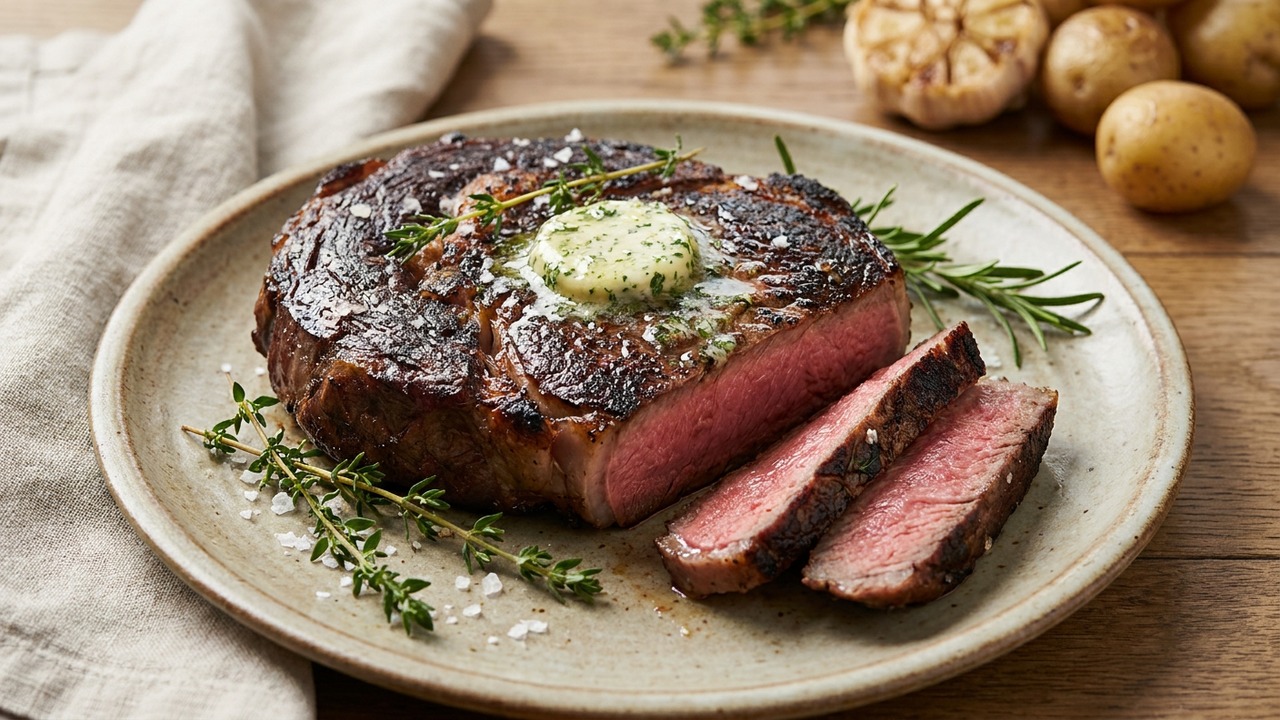
Slice the steaks against the grain into thick slices and serve immediately with your favorite sides. Enjoy the contrast of the even pink interior, the deeply browned crust, and the savory herb butter finish.


- Pat steaks dry with paper towels and let sit at room temperature for 30–45 minutes while you prepare equipment. Generously season both sides and edges with kosher salt and freshly ground black pepper, pressing the seasoning into the meat; the salt will help start a light dry-brine for deeper flavor and better crust.
- Preheat oven to 225°F (107°C). Place steaks on a wire rack set over a rimmed baking sheet and roast until the internal temperature reaches 110°F (43°C) for medium-rare (about 25–45 minutes depending on thickness). Remove from oven and let rest briefly while you prepare to sear—the goal is an even warm center before the high-heat crust.
- Heat a heavy cast-iron skillet or griddle over high heat until smoking hot. Add the neutral oil and immediately place the steaks in the pan; sear without moving for 45–90 seconds per side until a deep brown crust forms, also searing the fat cap/edges with tongs. Transfer to a cutting board when a rich crust has formed.
- While the skillet heats or while steaks rest, mash the unsalted butter with the minced herbs and garlic in a small bowl until combined; season lightly with a pinch of the kosher salt and pepper to taste. Shape into a small log or spoon into a bowl—this butter will melt into the meat and lift the flavors.
- Let the steaks rest for 5–8 minutes to reabsorb juices. Top each steak with a generous pat or slice of the herb finishing butter so it melts over the warm meat, and if desired sprinkle a small pinch of flaky sea salt for texture and brightness.
- Slice the steaks against the grain into thick slices and serve immediately with your favorite sides. Enjoy the contrast of the even pink interior, the deeply browned crust, and the savory herb butter finish.
Reverse-Seared Ribeye with Steakhouse Sear and Herb Finishing Butter Tips
Use an instant-read thermometer
Probe the thickest part to 110°F for medium-rare before searing; it’s the most reliable way to get edge-to-edge doneness and avoid overcooking.
Pat steaks bone-dry
Remove surface moisture with paper towels before seasoning and again before searing to maximize crust formation and reduce steam.
Preheat cast iron thoroughly
Let the skillet smoke lightly hot before adding oil so the pan—rather than the oil—does most of the browning, giving a faster, deeper crust.
Sear fat cap and edges
Use tongs to hold the steak on its side and render the fat for 30–60 seconds; this adds flavor and a caramelized edge.
Make butter ahead
Mix and chill the herb finishing butter early so it can be sliced neat for an attractive pat that melts slowly over resting steak.
Reverse-Seared Ribeye with Steakhouse Sear and Herb Finishing Butter Variations and Substitutions
Garlic-Parmesan Butter
Fold 2 tablespoons grated Parmesan and a small pinch of lemon zest into the butter instead of herbs for a nutty, umami-rich finish.
Smoky Chile Rub
Swap the plain pepper for a combo of smoked paprika, ground ancho chile and a touch of brown sugar before the reverse sear for southwestern notes.
Grill-Finished Reverse Sear
Do the low-temp stage in the oven, then finish over the hottest part of a gas or charcoal grill for the same sear with extra char and smoke.
Herbless, Citrus Finish
If herbs aren’t available, melt butter with a squeeze of lemon and a little Dijon for a bright, buttery sauce that still lifts the steak.
How to Store and Make Reverse-Seared Ribeye with Steakhouse Sear and Herb Finishing Butter Ahead
Cooked ribeye keeps well refrigerated for up to 3 days in an airtight container; store whole or in thick slices to retain juices. Reheat gently in a 250°F oven until warm (about 10–15 minutes for sliced portions) or briefly in a hot skillet with a splash of oil and a pat of butter, taking care not to push the internal temperature much beyond your original doneness.
What to Serve With Reverse-Seared Ribeye with Steakhouse Sear and Herb Finishing Butter
Serve the sliced steak fanned on a warm plate with roasted fingerling potatoes or creamy horseradish mashed potatoes and charred broccolini or sautéed mushrooms. Pair with a full-bodied red like Cabernet Sauvignon or Malbec, and finish plating by spooning any melted herb butter and steak juices over the slices and sprinkling a little flaky sea salt.
Reverse-Seared Ribeye with Steakhouse Sear and Herb Finishing Butter FAQs
Why do you roast to 110°F before searing?
Roasting to 110°F gives an even medium-rare after searing while minimizing the gray band of overcooked meat; the hot sear will add roughly 10–15°F, so the final steak lands in the mid-120s°F which is classic medium-rare.
How long should I sear each side?
Sear 45–90 seconds per side in a smoking-hot skillet for a deep crust; thicker steaks may need slightly longer for the fat cap and edges, but keep the contact time brief to protect the interior.
Can I use olive oil instead of neutral oil?
You can, but use refined olive oil with a higher smoke point; extra-virgin olive oil will smoke and impart a bitter flavor at these temperatures, so a neutral high-smoke oil is preferable.
Do bone-in steaks cook differently?
Bone-in steaks take a bit longer in the oven because the bone absorbs heat, so monitor the internal temperature closely and expect a few extra minutes to reach 110°F.
Can I make the herb butter ahead of time?
Absolutely—form the butter into a log and chill; slice off pats when ready so the butter melts slowly and looks tidy on the finished steak.
About the author
Jake WoodsHello, I'm Jake. I started this recipe site with the idea that I hated recipe websites that overwhelm you with long stories and ads just to see plain content that's not helpful. My goal is to provide you with quality recipes, simple ideas and a fun cooking experience. There's lots of fun things to cook, and I think as you browse the site you'll find that TopShelf.Recipes is the place for quality recipes on the web.
See all recipes by Jake Woods →Ratings & Reviews
Did you make this recipe?
Be the first to share your experience.
Nutrition Facts
Per serving: 1 steak
Nutrition values are estimated from USDA ingredient data and may vary based on preparation, brands, and portion sizes. Values are provided for informational purposes only.
Keep Reading
Guides & articles for this recipe

Healthy Eating
Gluten-Free Weeknight Grilling Plan
A 7-day gluten-free weeknight grilling plan with quick, family-friendly recipes, prep-ahead timelines, and a printable shopping list that spotlights late-summer produce and pantry staples. Includes clear cross-contamination safety tips and simple swaps to keep dinners fast and crowd-pleasing.

Cocktails & Drinks
Shakerless Cocktails for Backyard Grilling
Easy, tool-free cocktail recipes designed for backyard grilling and outdoor hangs. Find single-serve and batch formulas, quick portable infusions, improvised gear hacks, and simple cocktail pairings for grilled meats and vegetables.

Healthy Eating
Lean Labor Day Grilling Menu
A Labor Day grilling guide that swaps heavy BBQ classics for lighter, flavorful options—think lean proteins, charred vegetables, and low‑sugar sauces. Includes make-ahead meal prep, portioning tips, and a short shopping checklist for healthy, crowd-pleasing cookouts.
More from Grilling
View all Grilling recipes →
Quinoa and Black Bean Salad

Perfect Juicy Grilled Chicken Breasts (No Drying, 15 Minute Method)

Maple Mustard Glazed Grilled Chicken Thighs (Sweet Savory Weeknight BBQ)

Small Grill Alternatives to Beer-Can Whole Chicken: Spatchcock and Two-Zone Roast on the Grill

Labor Day Grilled Lobster Rolls with Charred Scallion Brown Butter & Lemon‑Herb Aioli

Spicy Grilled Shrimp Skewers with Garlic Lime Marinade

Bulgogi Smash Burger

Campfire‑Smoked Potato Salad with Mustard‑Bacon Vinaigrette — A Labor Day Grilling Side for Steak

Hanger Steak with Shallot Sauce
Ask me anything about this recipe — substitutions, scaling, techniques, timing.
Powered by AI · 6 questions per 5 minutes, 30 per day