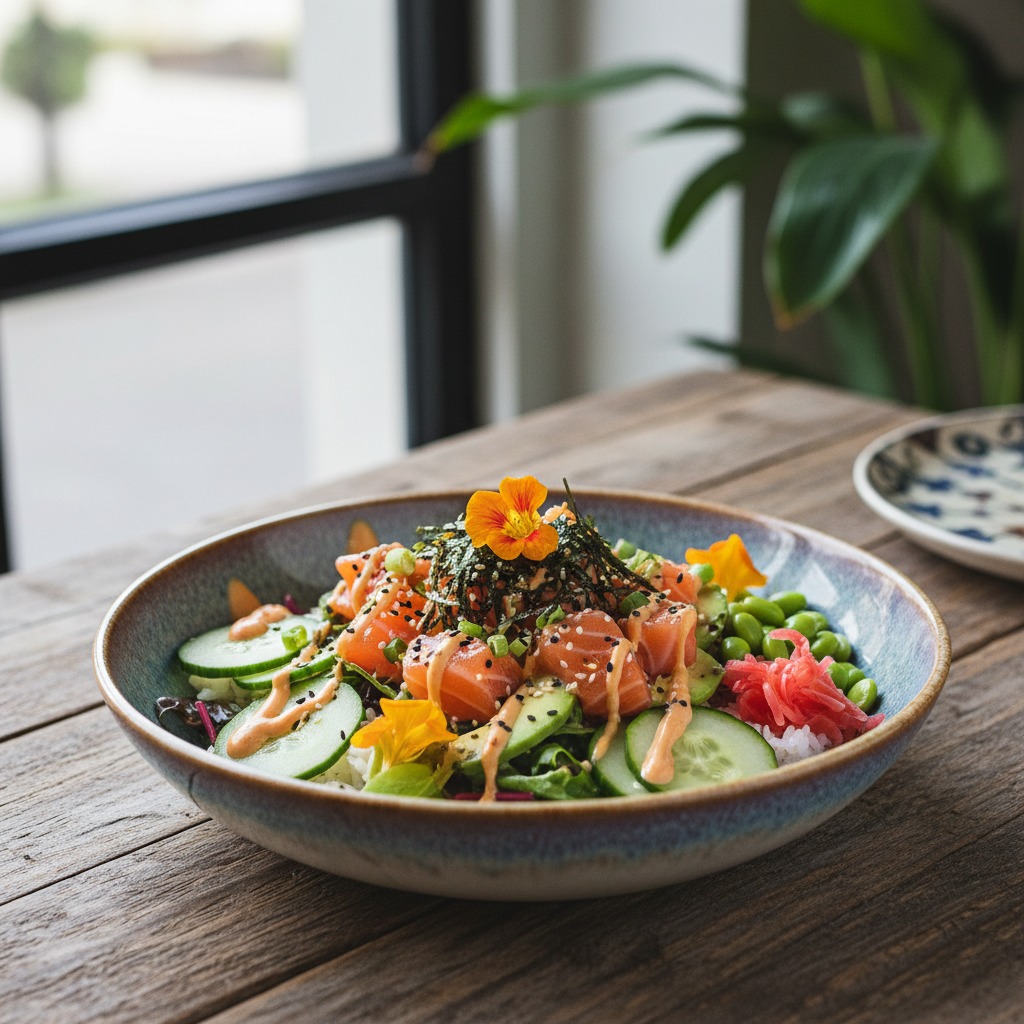
Salmon Poke Bowl
A bright, easy salmon poke bowl that pairs silky sashimi-grade salmon with a citrusy ponzu dressing and toasted sesame for crunch. It’s a fresh weeknight dinner that highlights ponzu as an elegant alternative to traditional poke dressing.
Ingredient Spotlight
Short-grain sushi rice (uncooked)
A Japanese-style short-grain rice that becomes sticky and slightly glossy when cooked, making it ideal for shaping sushi and onigiri. It has a plump, starchy texture and a mild, slightly sweet flavor compared with long-grain rices. Find it at Asian grocery stores or the international aisle of many supermarkets; a common substitute is Calrose or any sushi/short-grain rice, but avoid long-grain varieties which won’t pack or season the same.
Ingredient Spotlight
Sashimi‑grade salmon, skin removed
‘Sashimi-grade’ refers to salmon that has been handled and frozen or sourced to standards considered safe to eat raw, commonly used in Japanese sashimi and sushi preparations. It tastes clean, rich and buttery with a delicate texture and little ‘fishy’ aroma when very fresh. Buy from a reputable fishmonger or supermarket that labels fish as sushi/sashimi-grade or look for wild/frozen-at-sea products; if you don’t want raw fish, use fully cooked salmon or briefly sear the fish as a safer substitute.
Ingredient Spotlight
Ponzu sauce
A Japanese citrus-based condiment made from soy sauce, citrus juice (yuzu or lemon), and often dashi or mirin, offering bright citrus acidity balanced with umami. It smells citrusy and savory and is commonly used as a dipping sauce, dressing, or marinade for seafood and salads. Available at Asian markets and many grocery stores; you can approximate it by mixing soy sauce, rice vinegar or lemon/lime juice, a splash of mirin (or a pinch of sugar), and a little dashi or fish sauce for deeper savory notes.
Jake Woods's note
"This salmon poke bowl is quick to assemble and shines whenever you want a restaurant-quality bowl at home. Home cooks will appreciate how ponzu lifts the fish with bright acidity while sesame oil adds a toasty finish."
About This Recipe
This salmon poke bowl is built around contrast: silky, sashimi-grade salmon dressed in bright, citrusy ponzu sits against slightly warm, vinegared short-grain rice and crisp cucumber for a bowl that reads like a Japanese summer on a plate. Ponzu’s yuzu-laced acidity and umami depth does the heavy lifting here, cutting the fattiness of the fish without drowning it in sugar or mayonnaise; a thread of toasted sesame oil adds the nutty aroma that makes each forkful feel complete. Because the components are simple and high-quality, the few small details — rice temperature, even dice, quick marination — determine whether the result is polished or just thrown together.
This version is designed for weeknights when you want something that feels a little special but takes minimal hands-on time: rice cooks while you chop, and a 10–15 minute rest allows the ponzu to season the salmon without chemically “cooking” it. It’s for home cooks who appreciate clean flavors and textural contrast, and who won’t shy away from handling raw fish as long as it’s sashimi-grade and kept cold. Arrange the toppings separately in the bowl to preserve their color and texture, and finish with toasted sesame seeds and optional chili for heat.
Ingredients for Salmon Poke Bowl
- 1 1/2 cups Short-grain sushi rice (uncooked)
- 3 tbsp Rice vinegar
- 1 lb Sashimi‑grade salmon, skin removed
- 1/4 cup Ponzu sauce
- 1 tbsp Sesame oil
- 1 medium Avocado (medium)
- 1/2 medium English cucumber
- 3 stalks Scallions (green onions)
- 1 tbsp Toasted sesame seeds
How to Make Salmon Poke Bowl
Step 1: Cook and season the rice
Rinse the sushi rice under cold water until the water runs clear, then cook with the appropriate amount of water according to package directions (about 20 minutes total). While the rice is still warm, toss with rice vinegar and gently fold to season; leave uncovered to cool slightly while you prepare the other components.For this step
- 1 1/2 cupsShort-grain sushi rice (uncooked)
- 3 tbspRice vinegar
Step 2: Dice and marinate the salmon
Cut the sashimi‑grade salmon into 1/2-inch cubes and place in a bowl. Toss the salmon with ponzu sauce and sesame oil, then let it sit in the fridge for 10–15 minutes so the flavors infuse while you prep toppings.For this step
- 1 lbSashimi‑grade salmon, skin removed
- 1/4 cupPonzu sauce
- 1 tbspSesame oil
Step 3: Prepare the toppings
Dice the avocado, thinly slice the cucumber (half-moons or matchsticks), and thinly slice the scallions on the bias. Keep the toppings separate so each bowl can be arranged attractively and so avocado remains vibrant until assembly.For this step
- 1 mediumAvocado (medium)
- 1/2 mediumEnglish cucumber
- 3 stalksScallions (green onions)
Step 4: Assemble the bowls
Divide the seasoned rice among four bowls, then arrange marinated salmon, avocado, cucumber, and scallions on top in sections or a central pile. Sprinkle each bowl with toasted sesame seeds and, if desired, an extra splash of ponzu or a drizzle of sesame oil for sheen.For this step
- 1 tbspToasted sesame seeds
Step 5: Finish and serve
Taste and adjust with more ponzu or a pinch of flaky salt if needed; serve immediately so the salmon remains cool and the rice slightly warm. This bowl is excellent with pickled ginger, a side of soy or extra ponzu, and optional chili crisp for heat.


- Rinse the sushi rice under cold water until the water runs clear, then cook with the appropriate amount of water according to package directions (about 20 minutes total). While the rice is still warm, toss with rice vinegar and gently fold to season; leave uncovered to cool slightly while you prepare the other components.
- Cut the sashimi‑grade salmon into 1/2-inch cubes and place in a bowl. Toss the salmon with ponzu sauce and sesame oil, then let it sit in the fridge for 10–15 minutes so the flavors infuse while you prep toppings.
- Dice the avocado, thinly slice the cucumber (half-moons or matchsticks), and thinly slice the scallions on the bias. Keep the toppings separate so each bowl can be arranged attractively and so avocado remains vibrant until assembly.
- Divide the seasoned rice among four bowls, then arrange marinated salmon, avocado, cucumber, and scallions on top in sections or a central pile. Sprinkle each bowl with toasted sesame seeds and, if desired, an extra splash of ponzu or a drizzle of sesame oil for sheen.
- Taste and adjust with more ponzu or a pinch of flaky salt if needed; serve immediately so the salmon remains cool and the rice slightly warm. This bowl is excellent with pickled ginger, a side of soy or extra ponzu, and optional chili crisp for heat.
Salmon Poke Bowl Tips
Dice salmon uniformly
Cut the salmon into consistent 1/2-inch cubes so every bite has the same texture and the ponzu marinates evenly.
Cool rice properly
Toss the rice with vinegar while still warm so it absorbs evenly, then leave it slightly warm rather than piping hot to preserve the salmon’s coolness.
Short marinade time
Limit the salmon’s soak in ponzu to 10–15 minutes to flavor without breaking down the flesh into ceviche-like flakes.
Protect the avocado
Cut the avocado last and keep the pieces separate until assembly; a squeeze of lime or a quick brush of ponzu slows browning.
Toast sesame seeds
Warm sesame seeds in a dry skillet for 1–2 minutes until fragrant to amplify their crunch and aroma.
Keep everything chilled
Hold the marinated salmon and sliced vegetables in the fridge until the last minute so the bowl has a pleasing temperature contrast.
Salmon Poke Bowl Variations and Substitutions
Tuna instead of salmon
Use sashimi-grade ahi tuna in the same 1/2-inch dice and marinade for 10 minutes; tuna’s firmer texture pairs beautifully with ponzu.
Cooked salmon option
For those avoiding raw fish, use skinless, chilled roasted or poached salmon flakes dressed lightly with ponzu and sesame oil.
Brown rice or quinoa
Swap short-grain rice for cooked brown sushi rice or quinoa for more fiber; increase the vinegar slightly to keep the bowl bright.
Spicy mayo finish
Drizzle a mixture of mayonnaise and sriracha (or use chili crisp) for a creamy, spicy contrast that still lets the ponzu sing.
Veg-forward vegan
Replace salmon with marinated cubed tofu or king oyster mushroom 'scallops' tossed in ponzu and seared briefly for a plant-based bowl.
How to Store and Make Salmon Poke Bowl Ahead
Store components separately: keep the marinated salmon in an airtight container in the coldest part of the fridge and consume within 24 hours for optimal safety and texture. Rice can be stored covered for up to 48 hours and is best refreshed by steaming or briefly microwaving with a damp towel to restore moisture. Do not reheat the raw salmon; instead, eat it cold on freshly warmed rice or use cooked salmon if you plan to reheat the whole bowl.
What to Serve With Salmon Poke Bowl
Serve this poke bowl alongside a simple seaweed salad or steamed edamame for a balanced meal, and offer pickled ginger and extra ponzu for guests to customize acidity. For drinks, a crisp, citrusy white wine such as a Riesling or a dry rosé pairs well, while a cold Japanese lager or yuzu soda keeps the flavors bright. Garnish with torn nori strips or a sprinkle of furikake for extra umami and visual contrast.
Salmon Poke Bowl FAQs
Is sashimi-grade salmon safe to eat raw at home?
Sashimi-grade means the fish has been handled and frozen according to guidelines that reduce parasites, but always buy from a reputable fishmonger, keep it cold, and consume within 24 hours; if in doubt, cook the salmon.
Can I use regular ponzu bottled at the store?
Yes—store-bought ponzu works well; taste it first as sodium and acidity vary, and adjust the amount so it doesn’t overpower the fish.
My rice turned out sticky—how can I improve it?
Rinse the rice until the water runs clear to remove surface starch, measure water carefully for your rice cooker or pot, and let it rest covered before seasoning with vinegar while warm.
Can I make this recipe ahead for meal prep?
Prep and store components separately (rice, marinated salmon, and vegetables) but assemble just before eating; assembled poke bowls get soggy and the raw salmon loses freshness quickly.
What if I want more heat?
Offer chili crisp, sriracha, or finely sliced fresh chiles on the side so guests can control the spice without masking the ponzu’s citrus profile.
How can I tell if the salmon has gone bad?
Discard salmon that smells sour, overly fishy, or has a slimy surface; fresh sashimi-grade fish should smell clean and sea-like, with firm, glossy flesh.
About the author
Jake WoodsHello, I'm Jake. I started this recipe site with the idea that I hated recipe websites that overwhelm you with long stories and ads just to see plain content that's not helpful. My goal is to provide you with quality recipes, simple ideas and a fun cooking experience. There's lots of fun things to cook, and I think as you browse the site you'll find that TopShelf.Recipes is the place for quality recipes on the web.
See all recipes by Jake Woods →Ratings & Reviews
Did you make this recipe?
Be the first to share your experience.
Nutrition Facts
Per serving: 1 serving
Nutrition values are estimated from USDA ingredient data and may vary based on preparation, brands, and portion sizes. Values are provided for informational purposes only.
Keep Reading
Guides & articles for this recipe

Healthy Eating
Gluten-Free Weeknight Grilling Plan
A 7-day gluten-free weeknight grilling plan with quick, family-friendly recipes, prep-ahead timelines, and a printable shopping list that spotlights late-summer produce and pantry staples. Includes clear cross-contamination safety tips and simple swaps to keep dinners fast and crowd-pleasing.

Healthy Eating
Low-Fat Grill Swaps for Big Flavor
A practical guide to trimming fat from grilled meals without losing juiciness or char. Learn yogurt- and citrus-based marinades, lean protein picks, searing and indirect-heat tricks, plus 5 quick low-fat marinades and a simple weeknight plan.

Recipes
DIY Edible Monster Eyes Candy
Make safe, fun edible monster eyes for cupcakes, cookies, and candy trays. Step-by-step recipes show baking-soda balls, chocolate and fondant eyes, wafer-print options, plus assembly, storage, and kid-friendly safety tips.
More from Salads
View all Salads recipes →
Korean Gochujang Coleslaw with Sesame and Quick Pickled Scallions

Strawberry Spinach Salad

Campfire‑Smoked Potato Salad with Mustard‑Bacon Vinaigrette — A Labor Day Grilling Side for Steak

Honey Garlic Chicken Thigh Meal-Prep Bowls with Farro, Greens, and Tahini Drizzle

Mango Avocado Tilapia Salad Bowl with Lime Vinaigrette

Miso Glazed Salmon Bowl

Chorizo Black Bean Salad

Classic Make-Ahead Creamy Potato Salad — Labor Day BBQ Side for Steak & Burgers

Classic Warm German Potato Salad with Bacon & Whole-Grain Mustard (Labor Day Steak Side)
Ask me anything about this recipe — substitutions, scaling, techniques, timing.
Powered by AI · 6 questions per 5 minutes, 30 per day