Spicy Tuna Poke Bowl
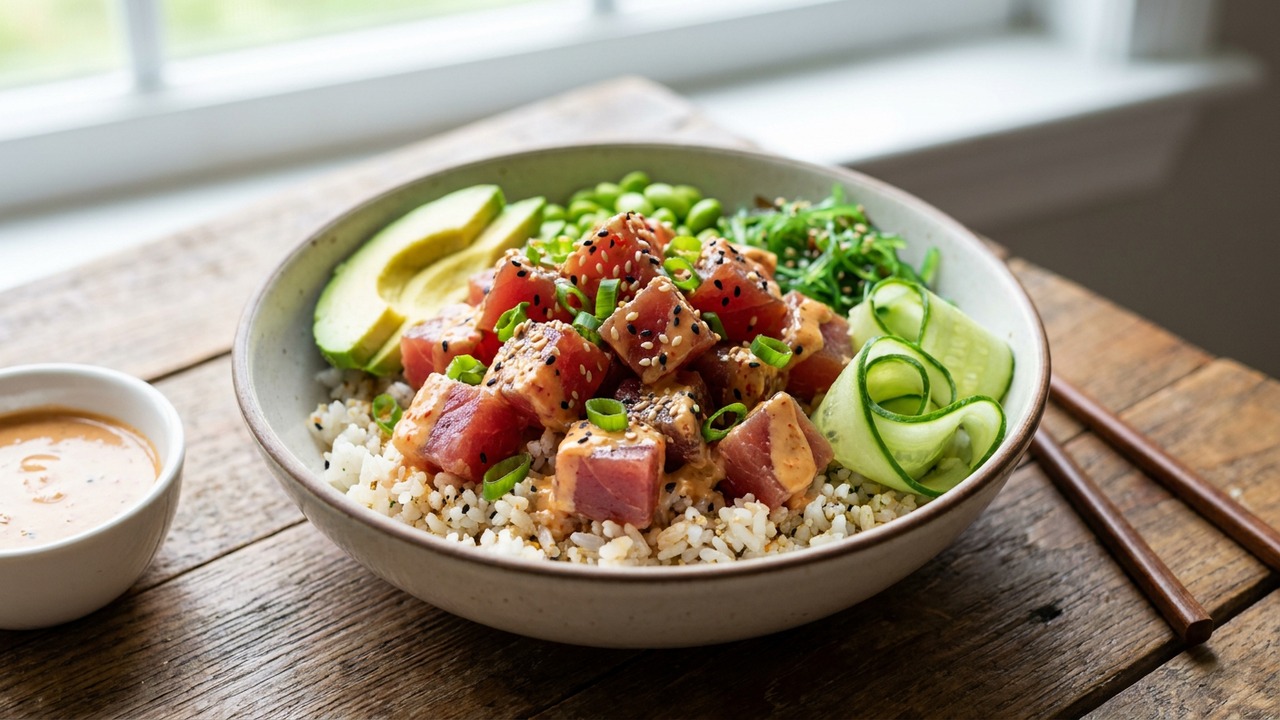
A vibrant, quick-to-assemble spicy tuna poke bowl featuring sashimi-grade tuna tossed in a creamy chili-sesame dressing over seasoned sushi rice. Bright scallions and toasted sesame finish the bowl for contrasting textures and bold, fresh flavors.
Ingredient Spotlight
Cooked short-grain (sushi) rice
Short-grain sushi rice is a Japonica variety commonly used in Japanese cooking; when cooked it becomes sticky and slightly sweet, which helps it hold together in sushi and bowls. Its texture and mild flavor differ from long-grain rices, so it won’t work as a direct substitute in many recipes that need separate, fluffy grains. Find it labeled as “sushi rice” or brands like Nishiki/Calrose at Asian groceries or many supermarkets; if unavailable, use another short- or medium-grain rice (Calrose) rather than long-grain varieties.
Ingredient Spotlight
Ahi (sashimi-grade) tuna, diced
Ahi is a Hawaiian name for yellowfin or bigeye tuna; “sashimi-grade” indicates fish that’s been handled and frozen or kept very fresh for safe raw consumption and has a clean, meaty, mildly sweet flavor with little fishy odor. It’s a specialty item sold at reputable fishmongers, sushi counters, or high-end markets rather than typical grocery counters. If you can’t find sashimi-grade ahi or don’t want raw fish, substitute sushi-grade salmon or hamachi, or use a seared tuna steak cooked briefly on each side.
Ingredient Spotlight
Japanese mayonnaise (or regular mayo)
Japanese mayonnaise (notably Kewpie) is a richer, creamier mayo made with only yolks and often rice or apple cider vinegar, giving it a tangier, slightly sweet, umami-forward taste compared with standard Western mayonnaise. It’s common in Japanese and Korean recipes and is sold in Asian markets or the international aisle of many supermarkets. If you can’t find it, use regular mayo with a splash of rice vinegar and a pinch of sugar (and a little MSG if you want extra umami) as a close substitute.
Jake Woods's note
"This spicy tuna poke bowl is perfect for weeknight dinners or make-ahead lunches — it comes together in under 30 minutes and is easy to customize. Use sashimi-grade tuna and adjust the heat to suit your taste."
About This Recipe
This spicy tuna poke bowl is built to feel immediate—bright, creamy, and textural without any complicated technique. Fatty, sashimi‑grade ahi is kept cold and simply dressed in a glossy emulsion of Japanese mayonnaise, sriracha, soy and a whisper of toasted sesame oil, which amplifies the tuna’s natural sweetness without overpowering it. Underneath, short‑grain rice seasoned with a splash of rice vinegar provides that slightly sticky, comforting base that soaks up the dressing; scallions and toasted sesame seeds add the snap and nuttiness that keep each bite lively.
What makes this version work is restraint: a short ingredient list that focuses on balance rather than bells and whistles, and a build that values temperature and texture—tuna kept chilled, rice served warm, crunchy scallion and sesame topping. It’s perfect for weeknight dinners when you want something restaurant‑level in under 30 minutes, for entertaining when guests can customize bowls, or for cooks who enjoy raw fish and crave a dish that’s both indulgent and fresh. Small additions—avocado, cucumber, pickled ginger—let you nudge the bowl toward creamier, crunchier, or brighter territory without changing the core mechanics.
Ingredients for Spicy Tuna Poke Bowl
- 2 cups Cooked short-grain (sushi) rice
- 2 tbsp Rice vinegar
- 10 oz Ahi (sashimi-grade) tuna, diced
- 3 tbsp Japanese mayonnaise (or regular mayo)
- 1 1/2 tbsp Sriracha (or preferred chili sauce)
- 1 tbsp Soy sauce
- 1 tsp Toasted sesame oil
- 2 stalks Scallions (green onions), thinly sliced
- 1 tsp Toasted sesame seeds
How to Make Spicy Tuna Poke Bowl
Step 1: Season the cooked rice
Warm the cooked short-grain rice briefly if chilled, then transfer to a wide bowl. Drizzle the rice vinegar over the rice and gently fold with a rice paddle or spatula until the vinegar is evenly distributed; set aside to cool slightly.For this step
- 2 cupsCooked short-grain (sushi) rice
- 2 tbspRice vinegar
Step 2: Prepare the spicy tuna mixture
Combine the diced ahi tuna with mayonnaise, sriracha, soy sauce, and toasted sesame oil in a medium bowl. Mix gently until evenly coated, then fold in the thinly sliced scallions; taste and adjust heat or salt as needed.For this step
- 10 ozAhi (sashimi-grade) tuna, diced
- 3 tbspJapanese mayonnaise (or regular mayo)
- 1 1/2 tbspSriracha (or preferred chili sauce)
- 1 tbspSoy sauce
- 1 tspToasted sesame oil
- 2 stalksScallions (green onions), thinly sliced
Step 3: Portion the bowls
Divide the seasoned rice between two serving bowls, pressing it down slightly to create a base. If desired, use a small ring mold for a neat presentation or leave it rustic for a quick meal.Step 4: Assemble and garnish
Spoon the spicy tuna over the rice in even portions and sprinkle each bowl with toasted sesame seeds. Garnish with extra scallion slices, a drizzle of sesame oil or soy, and any optional add-ins like avocado or cucumber if you like.For this step
- 1 tspToasted sesame seeds
Step 5: Serve immediately
Serve the poke bowls right away so the tuna stays chilled and the rice retains its texture. Offer extra sriracha, soy sauce, or pickled ginger on the side for guests to customize.


- Warm the cooked short-grain rice briefly if chilled, then transfer to a wide bowl. Drizzle the rice vinegar over the rice and gently fold with a rice paddle or spatula until the vinegar is evenly distributed; set aside to cool slightly.
- Combine the diced ahi tuna with mayonnaise, sriracha, soy sauce, and toasted sesame oil in a medium bowl. Mix gently until evenly coated, then fold in the thinly sliced scallions; taste and adjust heat or salt as needed.
- Divide the seasoned rice between two serving bowls, pressing it down slightly to create a base. If desired, use a small ring mold for a neat presentation or leave it rustic for a quick meal.
- Spoon the spicy tuna over the rice in even portions and sprinkle each bowl with toasted sesame seeds. Garnish with extra scallion slices, a drizzle of sesame oil or soy, and any optional add-ins like avocado or cucumber if you like.
- Serve the poke bowls right away so the tuna stays chilled and the rice retains its texture. Offer extra sriracha, soy sauce, or pickled ginger on the side for guests to customize.
Spicy Tuna Poke Bowl Tips
Dice Tuna Evenly
Cut the ahi into uniform 1/2‑inch cubes so every bite has the same texture and the dressing coats consistently.
Keep Fish Well Chilled
Mix the tuna cold and return it to the refrigerator until serving to maintain freshness and a clean mouthfeel.
Warm, Then Season Rice
If your rice is chilled, gently warm it for a minute and fold in the rice vinegar while it’s still pliable so the grains absorb flavor without becoming mushy.
Emulsify the Dressing
Whisk the mayonnaise, sriracha and soy first, then stir in sesame oil; this creates a silkier coating that clings to the tuna.
Textural Garnish Matters
Toast sesame seeds and add scallions last to preserve their crunch and bright flavor against the soft tuna and rice.
Spicy Tuna Poke Bowl Variations and Substitutions
Vegan/Vegetarian Swap
Replace ahi with firm tofu or pressed, marinated tempeh cut into cubes and use vegan mayo; add a splash of rice wine vinegar to the dressing for brightness.
Citrus‑Bright Tuna
Stir in 1 teaspoon yuzu juice or lime zest to the dressing for a fresher, fruitier lift that pairs beautifully with avocado.
Korean‑Style Twist
Swap sriracha for gochujang and add toasted nori strips and kimchi on the side for a spicier, fermented edge.
Cooked Seafood Option
Use quickly seared tuna steaks, shrimp, or poached salmon if you prefer cooked fish—toss with the same dressing just before serving.
How to Store and Make Spicy Tuna Poke Bowl Ahead
This dish is best eaten the day it’s made. Store components separately: keep the dressed tuna chilled in an airtight container for up to 24 hours and refrigerate rice for up to 48 hours; never freeze the dressed raw tuna. To revive refrigerated rice, sprinkle a little water over it and microwave in short bursts until steamy, then fold to loosen grains before serving.
What to Serve With Spicy Tuna Poke Bowl
Serve alongside a simple cucumber sunomono or a bowl of miso soup to add temperature contrast and palate cleansing acidity. Edamame or a seaweed salad bring extra texture, while a crisp lager, dry riesling, or chilled junmai sake pairs well; non‑alcoholic options include cold hojicha or jasmine tea. For plating, press the rice into a ring mold for a tidy presentation and scatter sesame and scallion on top, finishing with a lime wedge or pickled ginger.
Spicy Tuna Poke Bowl FAQs
How do I know if tuna is sashimi‑grade?
“Sashimi‑grade” isn’t a regulated label everywhere, so buy from a reputable fishmonger and ask specifically for tuna meant to be eaten raw; it should smell clean, have a firm texture, and a translucent, ruby color.
Can I use frozen tuna?
Yes—thaw frozen sushi‑grade tuna in the refrigerator overnight and pat it very dry before dicing; freezing is often used to reduce parasite risk, but sourcing matters most.
How spicy will this be?
Heat is driven by the sriracha; start with 1 tablespoon if you’re sensitive and add more to taste since the mayo dilutes some of the heat.
Can I make this ahead of time?
Prepare the rice and dressing in advance, but keep the tuna undressed until just before serving for optimal texture and safety; assemble bowls within a few hours of dressing the fish.
Is there a low‑sodium option?
Use low‑sodium soy sauce or coconut aminos and taste the dressing before adding more salt; the rice vinegar and sesame oil provide flavor without extra sodium.
About the author
Jake WoodsHello, I'm Jake. I started this recipe site with the idea that I hated recipe websites that overwhelm you with long stories and ads just to see plain content that's not helpful. My goal is to provide you with quality recipes, simple ideas and a fun cooking experience. There's lots of fun things to cook, and I think as you browse the site you'll find that TopShelf.Recipes is the place for quality recipes on the web.
See all recipes by Jake Woods →Ratings & Reviews
Did you make this recipe?
Be the first to share your experience.
Nutrition Facts
Per serving: 1 bowl
Nutrition values are estimated from USDA ingredient data and may vary based on preparation, brands, and portion sizes. Values are provided for informational purposes only.
Keep Reading
Guides & articles for this recipe

Healthy Eating
Gluten-Free Weeknight Grilling Plan
A 7-day gluten-free weeknight grilling plan with quick, family-friendly recipes, prep-ahead timelines, and a printable shopping list that spotlights late-summer produce and pantry staples. Includes clear cross-contamination safety tips and simple swaps to keep dinners fast and crowd-pleasing.

Healthy Eating
Low-Fat Grill Swaps for Big Flavor
A practical guide to trimming fat from grilled meals without losing juiciness or char. Learn yogurt- and citrus-based marinades, lean protein picks, searing and indirect-heat tricks, plus 5 quick low-fat marinades and a simple weeknight plan.

Recipes
DIY Edible Monster Eyes Candy
Make safe, fun edible monster eyes for cupcakes, cookies, and candy trays. Step-by-step recipes show baking-soda balls, chocolate and fondant eyes, wafer-print options, plus assembly, storage, and kid-friendly safety tips.
More from Salads
View all Salads recipes →
Watermelon Feta Mint Salad with Lime and Chili Flakes

Korean Gochujang Coleslaw with Sesame and Quick Pickled Scallions

Strawberry Spinach Salad

Campfire‑Smoked Potato Salad with Mustard‑Bacon Vinaigrette — A Labor Day Grilling Side for Steak

Honey Garlic Chicken Thigh Meal-Prep Bowls with Farro, Greens, and Tahini Drizzle

Mango Avocado Tilapia Salad Bowl with Lime Vinaigrette

Miso Glazed Salmon Bowl

Chorizo Black Bean Salad

Classic Make-Ahead Creamy Potato Salad — Labor Day BBQ Side for Steak & Burgers
Ask me anything about this recipe — substitutions, scaling, techniques, timing.
Powered by AI · 6 questions per 5 minutes, 30 per day