Yakisoba Stir-Fry Noodles
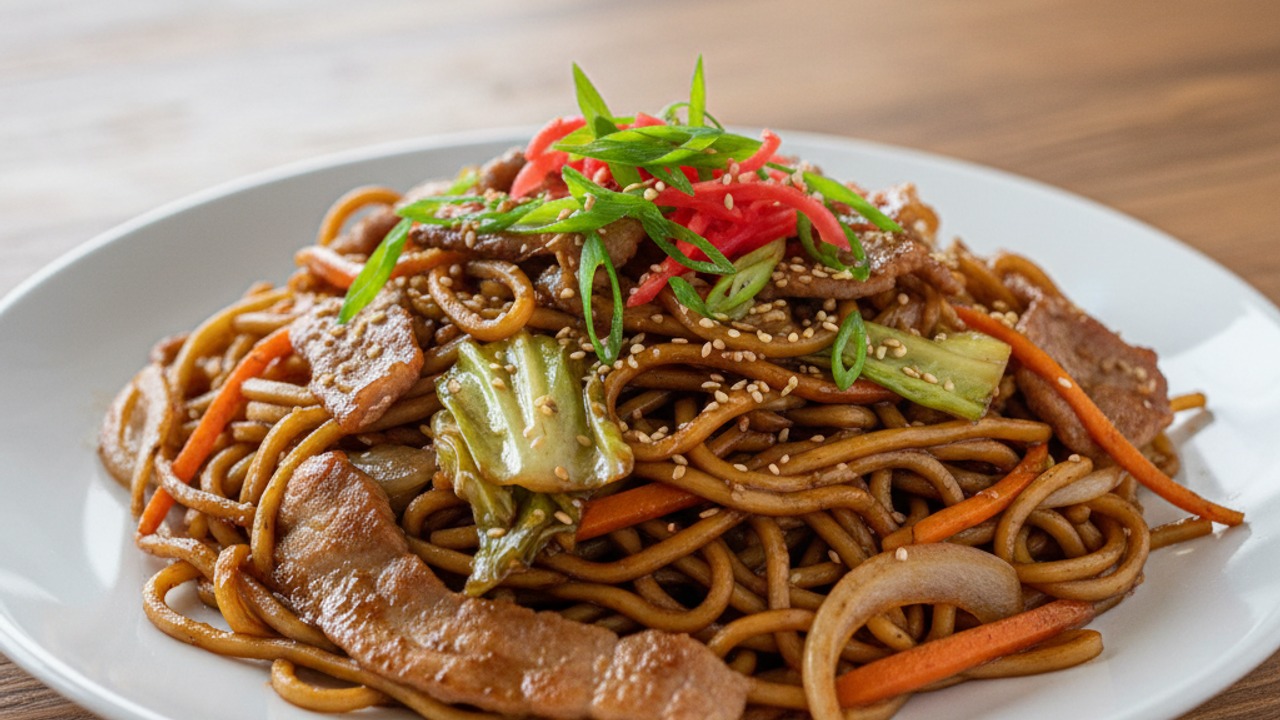
Festival-style yakisoba: quick, savory stir-fried noodles with tender pork and crisp vegetables tossed in a tangy-sweet sauce. A perfect one-pan stovetop meal that comes together in about 25 minutes — great for weeknights or when you crave Japanese street food at home.
Kenji Tanaka's note
"Konnichiwa — this is my easy, authentic approach to festival-style yakisoba that fits a busy weekday. You’ll love the charred edges from high heat and the balance of sweet, salty, and tangy flavors that make yakisoba such a comforting treat."
About This Recipe
This yakisoba is a festival-ready stir-fry that translates street-food energy into a 25-minute weeknight dinner. Fresh, pre-steamed yakisoba noodles give the dish that springy, slightly chewy bite you want, while quick searing on high heat builds small pockets of caramelized char that deepen the sauce's tangy-sweet profile. Thinly sliced pork browns fast and stays tender because it's cooked briefly at high heat alongside crisp-tender cabbage, carrot, and onion; the contrast between crisp vegetables and slightly toasty noodle edges is what keeps each forkful interesting.
What makes this version work is its balance and simplicity: a straightforward sauce of Worcestershire, ketchup, soy and oyster rounds umami and acidity without overshadowing the aromatics, and finishing garnishes — beni shoga, scallions and aonori — add brightness, oniony lift and that classic festival aroma. It’s ideal for cooks who want the tactile pleasure of tossing noodles in a hot wok, people who like to riff on proteins and veg, and anyone looking to replicate Japanese yatai flavor at home without hunting down specialty bottles.
Ingredients for Yakisoba Stir-Fry Noodles
- 28 oz Fresh yakisoba-style noodles (pre-steamed)
- 2 tbsp Vegetable oil
- 8 oz Pork (thinly sliced loin or shoulder)
- 2 cups Green cabbage, thinly sliced
- 1 medium Carrot, julienned
- 1 small Onion, thinly sliced
- 5 tbsp Yakisoba sauce (mix Worcestershire, ketchup, soy sauce, oyster sauce, sugar)
- 2 stalks Scallions (green onions), thinly sliced
- 2 tbsp Pickled red ginger (beni shoga)
- 1 tsp Aonori (dried seaweed) or toasted sesame seeds for garnish
How to Make Yakisoba Stir-Fry Noodles
Step 1: Make the yakisoba sauce and prep noodles
Combine the yakisoba-sauce components (about 3 tbsp Worcestershire, 2 tbsp ketchup, 1 tbsp soy, 1 tbsp oyster sauce and 1 tsp sugar — or use a pre-made yakisoba sauce) in a small bowl and whisk until smooth. If your fresh noodles are stuck together, gently loosen them by hand or briefly warm in the microwave for 20–30 seconds to separate.For this step
- 5 tbspYakisoba sauce (mix Worcestershire, ketchup, soy sauce, oyster sauce, sugar)
Step 2: Sear the pork and soften the aromatics
Heat a large heavy skillet or wok over high heat until very hot, then add the vegetable oil and swirl. Add the sliced pork in a single layer and stir-fry until it starts to brown, about 1–2 minutes. Toss in the onion, carrot, and cabbage and continue stir-frying until the vegetables are bright and just tender, about 2–3 minutes — keep the pan hot so you get a little char for flavor.For this step
- 2 tbspVegetable oil
- 8 ozPork (thinly sliced loin or shoulder)
- 2 cupsGreen cabbage, thinly sliced
- 1 mediumCarrot, julienned
- 1 smallOnion, thinly sliced
Step 3: Add noodles and sauce, toss to combine
Add the loosened yakisoba noodles to the pan, breaking apart any larger clumps with tongs or a spatula. Pour the sauce evenly over the noodles and toss vigorously, pressing the noodles against the pan to get light char and help the sauce caramelize, about 2–3 minutes. If the mixture looks dry, splash 1–2 tablespoons water to help the sauce coat everything.For this step
- 28 ozFresh yakisoba-style noodles (pre-steamed)
Step 4: Finish and garnish
Taste and adjust seasoning with a little extra soy or Worcestershire if desired. Turn off the heat and transfer the yakisoba to plates, then finish with sliced scallions, pickled red ginger and a sprinkle of aonori or toasted sesame for that authentic festival touch — I always add a little beni shoga for brightness.For this step
- 2 stalksScallions (green onions), thinly sliced
- 2 tbspPickled red ginger (beni shoga)
- 1 tspAonori (dried seaweed) or toasted sesame seeds for garnish
Step 5: Serve immediately
Serve hot straight from the pan while the edges are slightly crisp — yakisoba is best enjoyed immediately for texture. As a tip from my kitchens: cook on high heat and keep moving the noodles so you get quick caramelization without overcooking the vegetables.


- Combine the yakisoba-sauce components (about 3 tbsp Worcestershire, 2 tbsp ketchup, 1 tbsp soy, 1 tbsp oyster sauce and 1 tsp sugar — or use a pre-made yakisoba sauce) in a small bowl and whisk until smooth. If your fresh noodles are stuck together, gently loosen them by hand or briefly warm in the microwave for 20–30 seconds to separate.
- Heat a large heavy skillet or wok over high heat until very hot, then add the vegetable oil and swirl. Add the sliced pork in a single layer and stir-fry until it starts to brown, about 1–2 minutes. Toss in the onion, carrot, and cabbage and continue stir-frying until the vegetables are bright and just tender, about 2–3 minutes — keep the pan hot so you get a little char for flavor.
- Add the loosened yakisoba noodles to the pan, breaking apart any larger clumps with tongs or a spatula. Pour the sauce evenly over the noodles and toss vigorously, pressing the noodles against the pan to get light char and help the sauce caramelize, about 2–3 minutes. If the mixture looks dry, splash 1–2 tablespoons water to help the sauce coat everything.
- Taste and adjust seasoning with a little extra soy or Worcestershire if desired. Turn off the heat and transfer the yakisoba to plates, then finish with sliced scallions, pickled red ginger and a sprinkle of aonori or toasted sesame for that authentic festival touch — I always add a little beni shoga for brightness.
- Serve hot straight from the pan while the edges are slightly crisp — yakisoba is best enjoyed immediately for texture. As a tip from my kitchens: cook on high heat and keep moving the noodles so you get quick caramelization without overcooking the vegetables.
Yakisoba Stir-Fry Noodles Tips
Loosen Noodles First
Heat or gently pull apart fresh yakisoba noodles before they hit the pan so they separate easily and don’t clump during stir-frying.
Keep the Pan Hot
Use a heavy skillet or wok and maintain high heat so ingredients sear quickly; this prevents soggy vegetables and encourages light caramelization on the noodles.
Thin-Slice Meat Thinly
Slice pork against the grain into very thin pieces so it cooks through in 1–2 minutes and stays tender instead of toughening up.
Press for Caramelization
After adding sauce, press noodles briefly against the pan with a spatula to encourage contact browning and concentrated flavor without overcooking the veggies.
Adjust Sauce Gradually
Taste before serving and add small splashes of soy or Worcestershire to tweak saltiness or tang rather than dumping the whole bottle in at the end.
Yakisoba Stir-Fry Noodles Variations and Substitutions
Chicken or Tofu Swap
Replace pork with thinly sliced boneless chicken thigh for extra succulence or firm tofu (pressed and pan-fried) for a vegetarian option that soaks up the sauce.
Seafood Yakisoba
Use peeled shrimp or scallops tucked in at the end of stir-frying so they cook through quickly without becoming rubbery; finish with a squeeze of lemon for brightness.
Gluten-Free Version
Choose gluten-free tamari and gluten-free Worcestershire (or reduce Worcestershire and add a touch of apple cider vinegar plus molasses) and swap in rice noodles if needed for strict gluten-free diets.
Spicy Kick
Stir in a teaspoon of Sriracha or add shichimi togarashi at the end for heat, or lightly toss with chili oil while plating for layered spiciness.
How to Store and Make Yakisoba Stir-Fry Noodles Ahead
Leftover yakisoba keeps in an airtight container in the refrigerator for 2–3 days; expect the noodles to soften and lose some of their crisp edges. Reheat in a hot skillet with a tablespoon of oil or a splash of water to revive texture, stirring constantly; microwaves work in a pinch but will make the noodles softer. Avoid freezing as the vegetables and noodles become mushy on thawing.
What to Serve With Yakisoba Stir-Fry Noodles
Serve directly from the pan so the slightly crisp edges are still warm and tempting — individual bowls with a scattering of scallions and beni shoga look festive. Pair with a light cucumber sunomono or a simple miso soup to balance richness, and offer cold beer or chilled green tea; a citrusy highball also cuts through the savory sauce nicely.
Yakisoba Stir-Fry Noodles FAQs
Can I use dried or instant noodles instead?
You can, but texture will differ; boil dried noodles a minute less than package directions so they remain firm, drain well, and toss with a little oil to prevent sticking before stir-frying.
My noodles fell apart — what went wrong?
Overcooking or stirring too aggressively on lower heat can break fresh noodles; use high heat, handle them gently to separate, and avoid prolonged simmering after adding sauce to preserve integrity.
How can I make the sauce more authentic?
Using a bottled yakisoba sauce or tonkatsu sauce gives an instantly authentic balance; otherwise increase Worcestershire slightly and add a pinch of MSG-free dashi powder for an extra umami lift.
Is there a way to make this less oily?
Use less vegetable oil and wipe the pan briefly between cooking pork and vegetables if there's excess fat, then add just enough oil to coat before the final toss to keep the dish flavorful but not greasy.
Can I prep parts ahead?
Slice the pork, julienne the carrot, and prepare the sauce up to a day ahead; keep noodles refrigerated and separate, then stir-fry everything quickly on the day of serving for best texture.
About the author
Kenji TanakaKonnichiwa! I'm Chef Kenji Tanaka. After over 30 years in professional Japanese kitchens, I've added to my true passion: writing! I love making authentic, delicious Japanese meals accessible to everyone. My philosophy is simple: great food doesn't have to be complicated. I curate recipes that focus on quality ingredients, traditional techniques made easy, and minimal preparation time. My goal is to guide you in creating quick, comforting, and absolutely authentic Japanese dishes at home, so you can bring a taste of Japan to your table, everyday.
See all recipes by Kenji Tanaka →Ratings & Reviews
Did you make this recipe?
Be the first to share your experience.
Nutrition Facts
Per serving: about 2 cups
Nutrition values are estimated from USDA ingredient data and may vary based on preparation, brands, and portion sizes. Values are provided for informational purposes only.
Keep Reading
Guides & articles for this recipe

Recipes
DIY Edible Monster Eyes Candy
Make safe, fun edible monster eyes for cupcakes, cookies, and candy trays. Step-by-step recipes show baking-soda balls, chocolate and fondant eyes, wafer-print options, plus assembly, storage, and kid-friendly safety tips.

Recipes
No-Bake Funny Halloween Treats: 15 Quick Recipes
15 no-bake, funny Halloween treats that busy hosts can assemble in minutes — kid-friendly sweets, savory bites, and easy cocktails that don’t need an oven. Built for last-minute parties, with pantry-staple shortcuts and quick decoration ideas.

Guides
Nutrition for Youth Athletes
Practical, age- and sport-specific nutrition guidance for kids and teens who play sports. Covers calories, macronutrients, hydration, male/female differences, and easy meals and snacks.
More from Stovetop
View all Stovetop recipes →
South Chicago Packing 100% Pure Tallow Popcorn with Browned Butter and Chili

Beef Ragu One-Pot

Truffle Mac and Cheese

Spaghetti Carbonara (Classic, 20-Minute)

Coffee‑Chile Rubbed Flank Steak Tacos with Charred Pineapple Salsa

Baja Fish Tacos

Low-Sugar Honey Garlic Chicken Breast (Honey-Reduced, High Flavor)

Grilled Ras el Hanout Chicken Thighs with Charred Apricot-Chickpea Tagine

Classic Bacon-Balsamic Brussels Sprouts — Crispy Roast Beef Side
Ask me anything about this recipe — substitutions, scaling, techniques, timing.
Powered by AI · 6 questions per 5 minutes, 30 per day