Asparagus Gruyere Tart
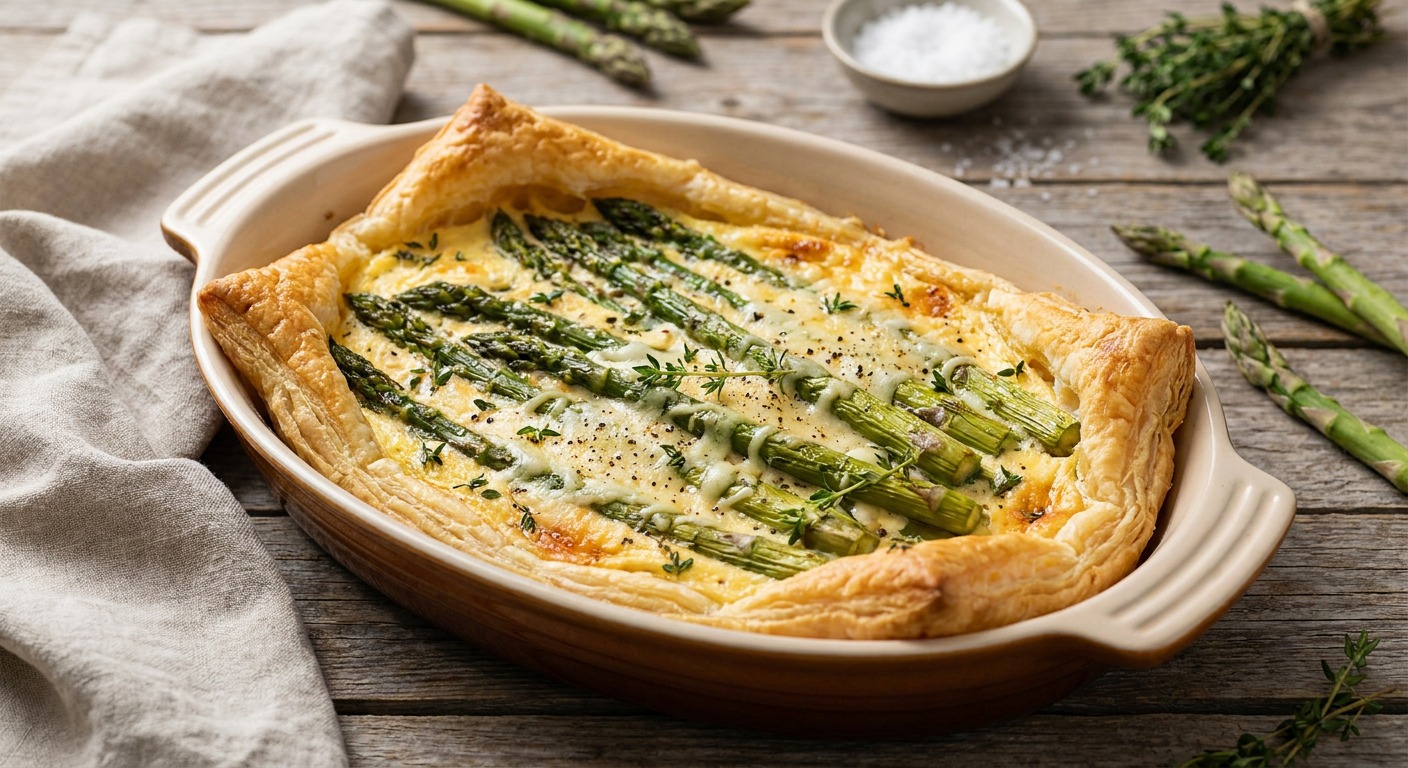
A crisp puff pastry tart topped with tender roasted asparagus and a creamy Gruyère custard — bright, savory, and perfect for spring menus. It makes an elegant make-ahead side or centerpiece for Easter brunch and serves beautifully warm or at room temperature.
Ingredient Spotlight
Puff pastry sheet (thawed if frozen)
A laminated dough made from layers of butter and flour that puffs into many flaky layers when baked; a classic French pastry technique. It has a rich, buttery aroma and a crisp, light texture rather than a strong flavor. Find it frozen in the supermarket freezer or at specialty bakeries; good substitutes are store-bought or homemade rough puff pastry, or stacked phyllo sheets brushed with butter (texture and rise will differ).
Ingredient Spotlight
Gruyère cheese, grated
A hard, aged cow’s‑milk cheese from the Gruyères region of Switzerland known for its excellent melting properties. It tastes nutty, slightly sweet and savory with a pronounced, clean finish. Available at grocery cheese counters and specialty shops; reasonable substitutes include Emmental, Comté, Jarlsberg, or a mild sharp white cheddar or Fontina if you need similar melting and flavor characteristics.
Jake Woods's note
"This tart shines as an elegant, make-ahead side for holiday brunches or a light dinner; the combination of roasted asparagus and nutty Gruyère is reliably crowd-pleasing. Prepare it earlier in the day and rewarm briefly before serving for effortless entertaining."
About This Recipe
This Asparagus Gruyère Tart lives at the intersection of elegant and easy: a rim of golden, flaky puff pastry contains a silkily set Gruyère custard, its savory richness brightened by a thin smear of Dijon and the fresh green snap of roasted asparagus. Texturally it’s a simple joy — buttery, crunchy edges give way to a tender, slightly custardy center studded with spears that have been quickly roasted to retain color and a gentle bite. The mustard underlayer keeps the custard from tasting one-note and adds a subtle lift that plays beautifully with the nutty, slightly sweet profile of Gruyère.
What makes this version work is attention to timing and contrast: roast the asparagus just long enough to concentrate flavor without collapsing it, chill the pastry briefly so the border puffs independently, and divide the cheese between the custard and the top for both creaminess and an attractive browned finish. It’s a great showpiece for spring brunches, a vegetarian centerpiece for holiday meals, or a make-ahead option for entertaining — approachable enough for a home cook who wants an impressive tart without fussing over laminated dough or complicated fillings.
Ingredients for Asparagus Gruyere Tart
- 1 sheet Puff pastry sheet (thawed if frozen)
- 1 lb Asparagus spears, trimmed
- 6 oz Gruyère cheese, grated
- 2 large Large eggs
- 1/2 cup Heavy cream
- 1 tbsp Dijon mustard
- 1 tbsp Olive oil
- 1 tsp Kosher salt
- 1/2 tsp Freshly ground black pepper
How to Make Asparagus Gruyere Tart
Step 1: Roast the asparagus
Preheat the oven to 400°F (200°C). Trim the woody ends from the asparagus and toss the spears with olive oil, half the salt and half the pepper on a rimmed baking sheet. Roast for 8–10 minutes until bright green and just tender, then transfer to a plate to cool slightly.For this step
- 1 lbAsparagus spears, trimmed
- 1 tbspOlive oil
- 1 tspKosher salt
Step 2: Prepare the puff pastry and mustard base
Unfold or roll the puff pastry on a parchment-lined baking sheet and score a 1-inch border around the edges without cutting through the dough; prick the interior lightly with a fork. Spread the Dijon mustard thinly over the pastry interior and chill in the refrigerator for 5 minutes to keep the edges crisp while you make the custard.For this step
- 1 sheetPuff pastry sheet (thawed if frozen)
- 1 tbspDijon mustard
Step 3: Make the Gruyère custard
Whisk together the eggs and heavy cream in a bowl until smooth, then stir in about three-quarters of the grated Gruyère and a pinch of salt. Taste and adjust seasoning; the mixture should be creamy and pourable but not overly thin.For this step
- 6 ozGruyère cheese, grated
- 2 largeLarge eggs
- 1/2 cupHeavy cream
Step 4: Assemble the tart
Pour the custard into the mustard-coated pastry interior, spreading it evenly but keeping inside the scored border. Arrange the roasted asparagus spears in a single layer across the custard and sprinkle the remaining Gruyère evenly over the top.Step 5: Bake until golden and set
Bake the tart at 400°F (200°C) for 25–30 minutes, rotating once, until the custard is set and the pastry is puffed and golden. If the edges brown too quickly, tent loosely with foil for the last 5–10 minutes.Step 6: Rest, finish, and serve
Let the tart cool on a rack for 8–10 minutes to finish setting, then sprinkle with a little extra kosher salt and the remaining pinch of pepper. Slice into 6 wedges and serve warm or at room temperature; the tart can be made ahead and reheated gently before serving.


- Preheat the oven to 400°F (200°C). Trim the woody ends from the asparagus and toss the spears with olive oil, half the salt and half the pepper on a rimmed baking sheet. Roast for 8–10 minutes until bright green and just tender, then transfer to a plate to cool slightly.
- Unfold or roll the puff pastry on a parchment-lined baking sheet and score a 1-inch border around the edges without cutting through the dough; prick the interior lightly with a fork. Spread the Dijon mustard thinly over the pastry interior and chill in the refrigerator for 5 minutes to keep the edges crisp while you make the custard.
- Whisk together the eggs and heavy cream in a bowl until smooth, then stir in about three-quarters of the grated Gruyère and a pinch of salt. Taste and adjust seasoning; the mixture should be creamy and pourable but not overly thin.
- Pour the custard into the mustard-coated pastry interior, spreading it evenly but keeping inside the scored border. Arrange the roasted asparagus spears in a single layer across the custard and sprinkle the remaining Gruyère evenly over the top.
- Bake the tart at 400°F (200°C) for 25–30 minutes, rotating once, until the custard is set and the pastry is puffed and golden. If the edges brown too quickly, tent loosely with foil for the last 5–10 minutes.
- Let the tart cool on a rack for 8–10 minutes to finish setting, then sprinkle with a little extra kosher salt and the remaining pinch of pepper. Slice into 6 wedges and serve warm or at room temperature; the tart can be made ahead and reheated gently before serving.
Asparagus Gruyere Tart Tips
Trim to uniform thickness
Sort asparagus by thickness and trim accordingly so all spears roast in the same time; shave thicker stalks lengthwise if needed for even cooking.
Chill the pastry
After scoring and spreading mustard, chill the sheet for 5–10 minutes to keep the border cold so it puffs up crisply in the oven.
Dock the interior
Pricking the interior lightly with a fork releases steam so the center sets with the custard rather than bubbling into a soggy pocket.
Grate Gruyère fresh
Freshly grated Gruyère melts more uniformly into the custard; reserve the coarser grate for the topping to create little golden islands of flavor.
Check custard doneness
The filling is ready when it’s set at the edges and slightly wobbly in the center—an instant-read thermometer should read about 165°F if you want precision.
Asparagus Gruyere Tart Variations and Substitutions
Lemon-Herb Twist
Stir a teaspoon of lemon zest and a tablespoon of chopped chives or tarragon into the custard for a brighter, herbaceous note that complements asparagus.
Prosciutto and Egg Add-in
Lay paper-thin prosciutto under the asparagus or top each slice with a quickly fried or soft-boiled egg for a heartier brunch version.
Cheese Swaps
Swap Gruyère for Comté or aged cheddar for a sharper edge, or mix in 2–3 tablespoons of ricotta for a lighter, creamier filling.
Vegan Cashew Custard
Blend soaked cashews with a little plant milk, lemon juice, and nutritional yeast as a custard substitute and use vegan puff pastry to make this dairy-free.
How to Store and Make Asparagus Gruyere Tart Ahead
Store leftover tart covered in the refrigerator for up to 3 days; keep slices layered with parchment to avoid sogginess. Re-crisp and reheat in a 350°F (175°C) oven for 8–12 minutes or in a toaster oven until warmed through; avoid microwaving if you want to preserve the pastry texture. You can freeze fully baked, cooled tart wrapped tightly for up to one month and reheat from frozen at low temperature until hot.
What to Serve With Asparagus Gruyere Tart
Serve with a simple salad of peppery arugula dressed in lemon vinaigrette or a bowl of spring peas tossed with mint to echo the season. For drinks, pair with a crisp Sauvignon Blanc, a dry rosé, or a light, yeasty sparkling wine; for brunch, add mimosas or a coffee with a bright citrus twist. Garnish with a sprinkle of flaky salt and a few curls of lemon zest for contrast before slicing.
Asparagus Gruyere Tart FAQs
Can I use frozen puff pastry?
Yes—thaw it according to package instructions in the refrigerator overnight or on the counter for about 30–60 minutes until pliable, keeping it cold so the butter layers remain intact for a flaky rise.
How do I prevent a soggy bottom?
Chill the dough before baking, dock the interior so steam escapes, and avoid an overly thin custard; you can also briefly blind-bake the scored sheet for 6–8 minutes if you’ve had persistent sogginess.
Can I assemble this ahead of time?
You can roast the asparagus and grate the cheese a day ahead, assemble the tart and keep it covered in the fridge for a few hours before baking, or fully bake and reheat gently on the day of service.
How can I tell when the custard is set?
The edges should be visibly set and the center only slightly wobbly when you gently shake the pan; an internal temperature around 165°F indicates the eggs are safely cooked and the custard is set.
Will thin asparagus work?
Yes — thin spears roast faster and will retain a nice snap, but watch the oven closely and reduce roasting time if necessary to avoid overcooking.
About the author
Jake WoodsHello, I'm Jake. I started this recipe site with the idea that I hated recipe websites that overwhelm you with long stories and ads just to see plain content that's not helpful. My goal is to provide you with quality recipes, simple ideas and a fun cooking experience. There's lots of fun things to cook, and I think as you browse the site you'll find that TopShelf.Recipes is the place for quality recipes on the web.
See all recipes by Jake Woods →Ratings & Reviews
Did you make this recipe?
Be the first to share your experience.
Nutrition Facts
Per serving: 1 serving
Nutrition values are estimated from USDA ingredient data and may vary based on preparation, brands, and portion sizes. Values are provided for informational purposes only.
Keep Reading
Guides & articles for this recipe
Tips & Techniques
Baking Soda and Tenderized Beef
Learn how baking soda can tenderize, boost browning, and improve moisture for ground beef and other meats. This practical guide covers the science, step-by-step techniques, common mistakes, and recipes to try.

Healthy Eating
Gluten-Free Weeknight Grilling Plan
A 7-day gluten-free weeknight grilling plan with quick, family-friendly recipes, prep-ahead timelines, and a printable shopping list that spotlights late-summer produce and pantry staples. Includes clear cross-contamination safety tips and simple swaps to keep dinners fast and crowd-pleasing.

Healthy Eating
Low-Fat Grill Swaps for Big Flavor
A practical guide to trimming fat from grilled meals without losing juiciness or char. Learn yogurt- and citrus-based marinades, lean protein picks, searing and indirect-heat tricks, plus 5 quick low-fat marinades and a simple weeknight plan.
More from Baking
View all Baking recipes →
Cloud Bread Sandwiches

Honey Mustard Chicken Nuggets

Cheddar Jalapeño Corn Muffins

Basque Burnt Cheesecake

30-Minute Sticky Baked Honey Garlic Chicken Thighs with Crisp Edges

Lemon Butter Salmon

Spritz Cookies

Brown Butter Vanilla Syrup

Honey Glazed Easter Ham
Ask me anything about this recipe — substitutions, scaling, techniques, timing.
Powered by AI · 6 questions per 5 minutes, 30 per day