Authentic Pad Thai
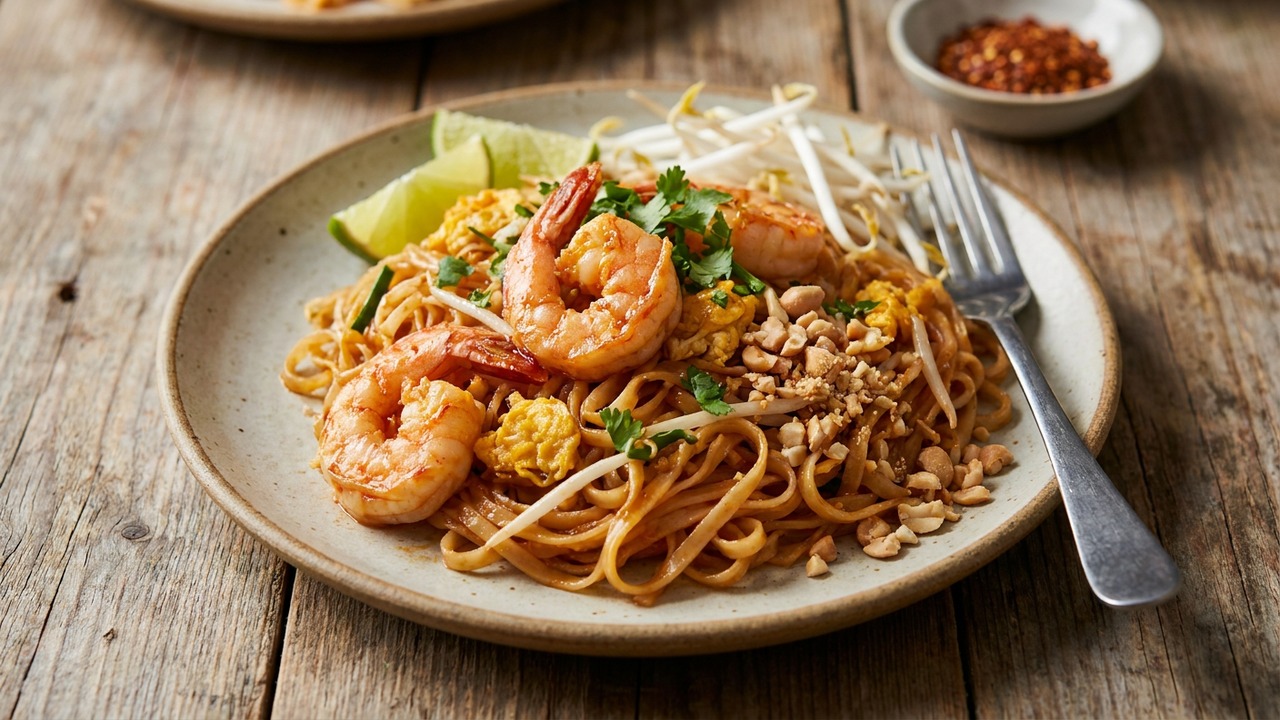
A classic, restaurant-style Pad Thai made on the stovetop with a simple homemade tamarind sauce. Bright, sweet-tangy flavors coat soft rice noodles and tender shrimp for an authentic street-food experience you can make at home.
Ingredient Spotlight
Dried flat rice noodles (sen yai)
Sen yai are wide, flat rice noodles from Thailand used in dishes like pad see ew and boat noodles; they have a neutral, slightly sweet rice flavor and a chewy, slippery texture when rehydrated. You’ll find them at Thai or larger Asian grocery stores and online, sold dried or fresh. If unavailable, substitute other wide rice noodles (ho fun/kuay teow) or, as a texture-only fallback, wide wheat noodles such as fettuccine.
Ingredient Spotlight
Tamarind paste
Tamarind paste is a concentrated puree of the tamarind fruit common in South and Southeast Asian (and Latin American) cuisines; it provides a bright, fruity sourness with subtle sweet and earthy notes and a distinctive tangy aroma. It’s sold in jars, tubes, or blocks at Asian, Indian, or Latin markets and online. Good substitutes include a mix of lime or lemon juice plus a little brown sugar (to mimic the sweet-tart balance) or commercial tamarind concentrate; rice vinegar plus sugar can work in a pinch but will taste different.
Ingredient Spotlight
Palm sugar (or light brown sugar)
Palm sugar is made from the sap of palm trees and is widely used in Southeast Asian cooking; it has a deep, caramel/toffee-like sweetness with a slightly smoky, less sharp profile than white sugar. It’s sold as blocks, disks, or granulated form in Asian groceries and online. Common substitutes are light or dark brown sugar, coconut sugar, or granulated sugar with a bit of molasses; for liquid recipes, maple syrup or honey can be used with quantity adjustments.
(paid link) — as an Amazon Associate we earn from qualifying purchases.
Jake Woods's note
"This version focuses on the core flavors — real tamarind, palm sugar and fish sauce — so the result tastes like what you’d get from a good Thai stall. It’s great for a weeknight dinner when you want something bright, fast, and special."
About This Recipe
Pad Thai is one of those deceptively simple dishes that rewards attention to timing and balance: soft, glossy rice noodles are the canvas for a sauce that should be simultaneously tangy, sweet and savory, punctuated by crunchy peanuts, bright lime and pop-in-your-mouth shrimp. This version leans on a compact homemade tamarind sauce — just tamarind paste, fish sauce and palm sugar — so you can taste the signature sweet‑sour backbone without a laundry list of pantry extras. The trick is texture: slightly under‑soaked noodles finish cooking in the wok, shrimp are seared quickly and removed so they don’t overcook, and bean sprouts are tossed in at the end to keep their snap.
What makes this recipe work at home is the sequence and small saves like reserving a bit of soaking water to loosen the sauce and scrambling the eggs directly against the hot pan so they pick up a light caramelization. It’s approachable for a medium‑skill cook who wants authentic street‑food flavor — you’ll be able to riff with proteins or heat, but keep the tamarind:fresco‑salt:sweet ratio in mind and you’ll consistently land a glossy, balanced plate in about 35 minutes.
Ingredients for Authentic Pad Thai
- 8 oz Dried flat rice noodles (sen yai), 8 oz
- 2 tbsp Tamarind paste
- 3 tbsp Fish sauce
- 2 tbsp Palm sugar (or light brown sugar)
- 2 tbsp Vegetable oil
- 12 pieces Large shrimp, peeled and deveined (~12)
- 2 large Large eggs
- 2 cups Bean sprouts
- 1/3 cup Roasted unsalted peanuts, coarsely chopped
- 2 pieces Lime wedges (for serving)
🛒 = paid link — as an Amazon Associate we earn from qualifying purchases.
How to Make Authentic Pad Thai
Step 1: Soak the rice noodles
Place the dried rice noodles in a large bowl and cover with warm (not boiling) water. Soak 20–25 minutes until pliable but slightly firm in the center, then drain and set aside, reserving about 1/4 cup of the soaking liquid in case you need to loosen the sauce later.For this step
- 8 ozDried flat rice noodles (sen yai)
Step 2: Make the tamarind sauce
In a small bowl whisk together the tamarind paste, fish sauce and palm sugar with 1–2 tablespoons of warm water until the sugar dissolves and the mixture is smooth. Taste for balance: it should be noticeably tangy with a rounded sweetness; adjust a little fish sauce or sugar if needed.For this step
- 2 tbspTamarind paste
- 3 tbspFish sauce
- 2 tbspPalm sugar (or light brown sugar)
Step 3: Cook the shrimp
Heat a large wok or heavy skillet over medium-high heat and add the vegetable oil. When shimmering, add the shrimp and stir-fry 1–2 minutes per side until just pink and opaque; remove the shrimp and set aside, leaving any flavorful oil in the pan.For this step
- 2 tbspVegetable oil
- 12 piecesLarge shrimp, peeled and deveined (~12)
Step 4: Toss noodles with sauce and eggs
Add the drained noodles to the hot wok along with the tamarind sauce and toss continuously to coat; if the pan looks dry, add a tablespoon or two of the reserved soaking liquid. Move the noodles to the side, crack in the eggs and gently scramble until just set, then combine the eggs with the noodles and stir-fry 1–2 minutes until noodles are tender and the sauce clings evenly.For this step
- 2 largeLarge eggs
Step 5: Finish with sprouts and shrimp
Return the cooked shrimp to the wok and add the bean sprouts, tossing briefly just until the sprouts are warmed and still crisp-tender. Remove the pan from the heat to avoid overcooking the shrimp and sprouts.For this step
- 2 cupsBean sprouts
Step 6: Plate and garnish
Divide the Pad Thai among plates and sprinkle each serving with the chopped roasted peanuts and a generous squeeze of lime. Serve immediately so the noodles stay glossy and the texture remains contrasted between soft noodles, crunchy peanuts and crisp sprouts.For this step
- 1/3 cupRoasted unsalted peanuts, coarsely chopped
- 2 piecesLime wedges (for serving)


- Place the dried rice noodles in a large bowl and cover with warm (not boiling) water. Soak 20–25 minutes until pliable but slightly firm in the center, then drain and set aside, reserving about 1/4 cup of the soaking liquid in case you need to loosen the sauce later.
- In a small bowl whisk together the tamarind paste, fish sauce and palm sugar with 1–2 tablespoons of warm water until the sugar dissolves and the mixture is smooth. Taste for balance: it should be noticeably tangy with a rounded sweetness; adjust a little fish sauce or sugar if needed.
- Heat a large wok or heavy skillet over medium-high heat and add the vegetable oil. When shimmering, add the shrimp and stir-fry 1–2 minutes per side until just pink and opaque; remove the shrimp and set aside, leaving any flavorful oil in the pan.
- Add the drained noodles to the hot wok along with the tamarind sauce and toss continuously to coat; if the pan looks dry, add a tablespoon or two of the reserved soaking liquid. Move the noodles to the side, crack in the eggs and gently scramble until just set, then combine the eggs with the noodles and stir-fry 1–2 minutes until noodles are tender and the sauce clings evenly.
- Return the cooked shrimp to the wok and add the bean sprouts, tossing briefly just until the sprouts are warmed and still crisp-tender. Remove the pan from the heat to avoid overcooking the shrimp and sprouts.
- Divide the Pad Thai among plates and sprinkle each serving with the chopped roasted peanuts and a generous squeeze of lime. Serve immediately so the noodles stay glossy and the texture remains contrasted between soft noodles, crunchy peanuts and crisp sprouts.
Authentic Pad Thai Tips
Soak, don’t boil
Soak the rice noodles in warm (not boiling) water until just pliable; they should still be slightly firm in the center because they’ll finish cooking in the hot wok.
Reserve soaking liquid
Save about 1/4 cup of the noodle soaking water to loosen the sauce while stir‑frying; its starch helps the sauce cling to the noodles.
High heat, fast toss
Work on a hot wok or heavy skillet and keep the food moving so sauce reduces quickly and noodles get glossy without steaming.
Don’t overcook shrimp
Sear shrimp briefly until pink and opaque then remove them; add back at the end to prevent rubbery texture.
Taste for balance
Adjust the tamarind, fish sauce and palm sugar after whisking the sauce; it should be tangy first, with a rounded sweetness and pronounced umami.
Authentic Pad Thai Variations and Substitutions
Vegetarian Pad Thai
Swap shrimp for firm tofu, press and pan‑sear cubes until golden, and replace fish sauce with 1–2 tablespoons of tamari plus a splash of mushroom soy or a vegetarian fish sauce alternative.
Chicken or Pork
Thinly slice chicken breast or pork loin, marinate briefly with a teaspoon of fish sauce, and stir‑fry until just cooked before following the recipe steps for noodles and eggs.
Spicy variation
Add finely chopped Thai bird chiles or 1–2 teaspoons of Sriracha to the sauce mixture for heat, and offer extra crushed chilies at the table.
Tamarind substitute option
If you don’t have tamarind paste, use 1½ tablespoons fresh lime juice plus 1 tablespoon rice vinegar and a touch more palm sugar, then adjust to taste for acidity and sweetness.
How to Store and Make Authentic Pad Thai Ahead
Store leftovers in an airtight container in the refrigerator for up to 2 days; keep chopped peanuts separate to preserve their crunch. To reheat, warm gently in a skillet over medium-low with a splash of water or oil to loosen the sauce — avoid prolonged reheating since shrimp can become rubbery and noodles can dry out.
What to Serve With Authentic Pad Thai
Serve with extra lime wedges, chopped cilantro and thinly sliced scallions for brightness, and bowls of crushed chilies in fish sauce for guests who want heat. Pair with a cold Thai iced tea, a crisp lager, or an off‑dry Riesling to complement the dish’s sweet‑tangy profile.
Authentic Pad Thai FAQs
Can I use fresh rice noodles instead of dried?
Yes — fresh flat rice noodles cut the soaking step; separate any clumped pieces and toss directly into the hot wok to warm and coat with sauce, but be very gentle as they tear easily.
How will I know when the noodles are done?
They should be tender through but not mushy and still slightly springy; test one while stir‑frying and stop once the sauce clings and the center has lost its raw bite.
Can I make the sauce ahead of time?
Absolutely — the tamarind sauce keeps in the fridge for several days; whisk it again before using and taste to adjust since cold sugar can firm up and mute flavors.
What can I use instead of palm sugar?
Light brown sugar is an acceptable substitute; if you want the deeper caramel notes of palm sugar, use brown sugar and a teaspoon of molasses to mimic that flavor.
My noodles stuck together — how do I prevent that?
Separate them thoroughly after soaking, work quickly on high heat with enough oil, and add reserved soaking water as needed to keep them loose while you toss.
About the author
Jake WoodsHello, I'm Jake. I started this recipe site with the idea that I hated recipe websites that overwhelm you with long stories and ads just to see plain content that's not helpful. My goal is to provide you with quality recipes, simple ideas and a fun cooking experience. There's lots of fun things to cook, and I think as you browse the site you'll find that TopShelf.Recipes is the place for quality recipes on the web.
See all recipes by Jake Woods →Ratings & Reviews
Did you make this recipe?
Be the first to share your experience.
Nutrition Facts
Per serving: 1 serving
Nutrition values are estimated from USDA ingredient data and may vary based on preparation, brands, and portion sizes. Values are provided for informational purposes only.
Keep Reading
Guides & articles for this recipe

Healthy Eating
Gluten-Free Weeknight Grilling Plan
A 7-day gluten-free weeknight grilling plan with quick, family-friendly recipes, prep-ahead timelines, and a printable shopping list that spotlights late-summer produce and pantry staples. Includes clear cross-contamination safety tips and simple swaps to keep dinners fast and crowd-pleasing.

Healthy Eating
Low-Fat Grill Swaps for Big Flavor
A practical guide to trimming fat from grilled meals without losing juiciness or char. Learn yogurt- and citrus-based marinades, lean protein picks, searing and indirect-heat tricks, plus 5 quick low-fat marinades and a simple weeknight plan.

Recipes
DIY Edible Monster Eyes Candy
Make safe, fun edible monster eyes for cupcakes, cookies, and candy trays. Step-by-step recipes show baking-soda balls, chocolate and fondant eyes, wafer-print options, plus assembly, storage, and kid-friendly safety tips.
More from Thai
View all Thai recipes →


Ask me anything about this recipe — substitutions, scaling, techniques, timing.
Powered by AI · 6 questions per 5 minutes, 30 per day