Pad Kra Pao Thai Basil Stir-Fry
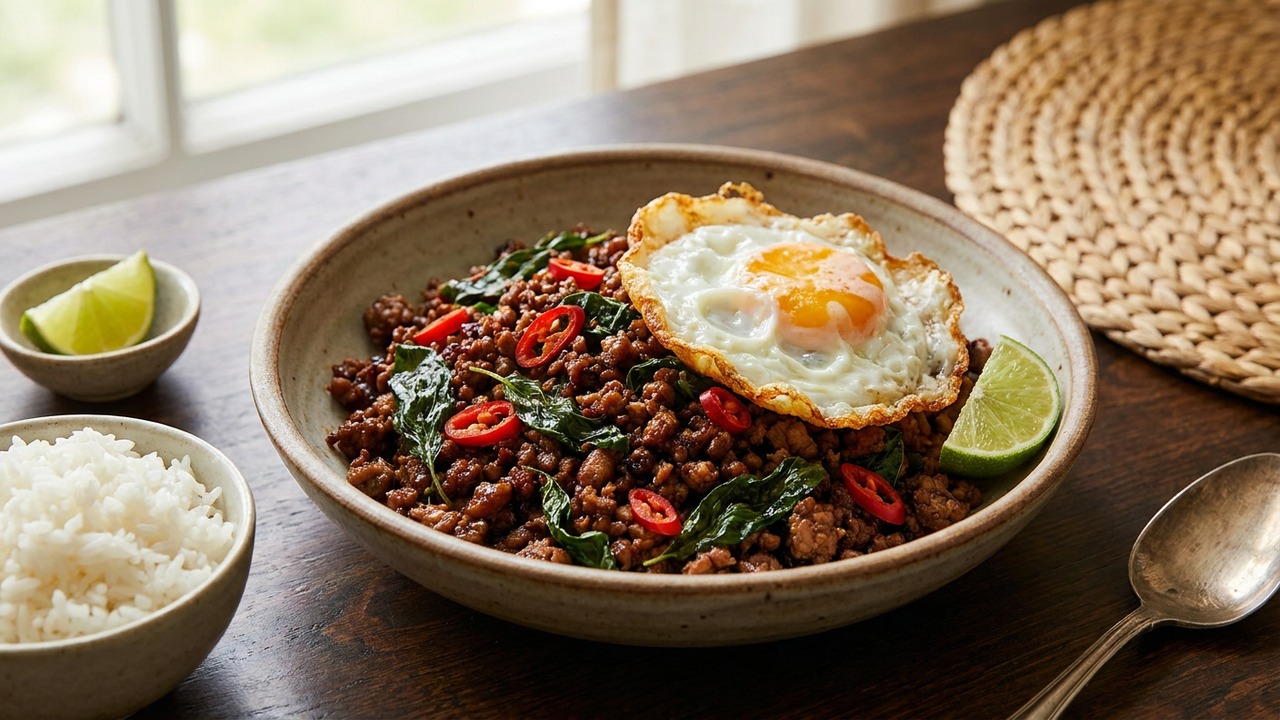
A fast, fiery stovetop version of Pad Kra Pao (Thai basil stir-fry) that delivers big restaurant flavor in under 30 minutes. This recipe focuses on holy basil and simple heat control so the leaves stay bright and the meat stays juicy for an authentic weeknight favorite.
Ingredient Spotlight
Thai bird's eye chilies, sliced (adjust to taste)
Small, very hot chilies common in Southeast Asian cuisines (especially Thai and Vietnamese) with a sharp, immediate heat and a bright, slightly fruity note. They’re sold fresh at Asian markets, some supermarkets, or can be substituted with dried Thai chiles or sambal oelek in a pinch. For a milder substitute use serrano or jalapeño, and adjust quantity for heat.
Ingredient Spotlight
palm sugar (or light brown sugar)
A sweetener made from the sap of various palm trees used widely in Southeast Asian cooking; it has a caramel-caramelized, slightly fruity flavor and often comes in blocks or cakes. You’ll find it at Asian grocery stores or online; light brown sugar is the common swap (as the recipe notes), while coconut sugar or muscovado also give similar caramel notes if you want a closer match.
Ingredient Spotlight
fresh holy basil leaves (Bai Kra Pao) or Thai basil if unavailable
Holy basil (Bai Kra Pao) is a Thai herb distinct from sweet Thai basil, with a peppery, clove-like, slightly spicy aroma that’s essential to dishes like Pad Kra Pao. It’s typically sold at Asian markets or specialty grocers; if you can’t find it, Thai basil is an acceptable substitute though sweeter and less peppery—consider adding a touch of chopped cilantro or a few crushed peppercorns to better mimic holy basil’s pungency.
Jake Woods's note
"This is the quick, no-fuss Pad Kra Pao that home cooks turn to when craving something spicy and satisfying. It shines with a crisp fried egg on top and is forgiving on busy weeknights."
About This Recipe
Pad Kra Pao is the kind of meal that reads like a love letter to speed and intensity — hot wok, fragrant basil, and a sticky, savory sauce that clings to browned meat. This version leans into what separates restaurant-quality kra pao from a rushed weeknight fry-up: blistering heat to develop quick browning, a short pan-sauce reduction to coat the protein, and a deliberate finish that preserves the holy basil’s peppery bite. The contrast of crisp-edged, runny eggs against juicy, salty pork and a bed of steaming jasmine rice is what makes this dish so addictive.
What makes this recipe work on a weeknight is the sequencing: aromatics first to bloom, fast browning to lock juices, sauces added only after the meat has color, and basil tossed off the heat so it stays bright. I write it for cooks who want authentic flavor without complex prep — swap proteins easily, dial the chilies up or down, and keep a running pan of steamed rice ready. The result is an immediate, satisfying plate that tastes like you spent longer than you did.
Ingredients for Pad Kra Pao Thai Basil Stir-Fry
- 2 tbsp neutral oil (vegetable or canola)
- 6 cloves garlic, smashed and roughly chopped
- 6 whole Thai bird's eye chilies, sliced (adjust to taste)
- 1 lb ground pork (or ground chicken/tofu for vegetarian)
- 2 tbsp fish sauce
- 1 tbsp light soy sauce
- 1 tbsp oyster sauce
- 1 tsp palm sugar (or light brown sugar)
- 2 cups fresh holy basil leaves (Bai Kra Pao) or Thai basil if unavailable, packed
- 4 large large eggs (for frying and serving)
How to Make Pad Kra Pao Thai Basil Stir-Fry
Step 1: Prepare aromatics and basil
Smash and roughly chop the garlic; thinly slice the Thai chilies (remove seeds for less heat). Strip holy basil leaves from stems and pack them into a measuring cup. Measure sauces and sugar so everything is ready to go before you start cooking.Step 2: Heat the wok and bloom aromatics
Heat a wok or large skillet over medium-high to high heat until very hot, then add the oil and swirl. Add the garlic and chilies and stir continuously for 30–45 seconds until fragrant and the garlic is just beginning to color — don't let it burn. High heat here releases aroma and builds flavor quickly.For this step
- 2 tbspneutral oil (vegetable or canola)
- 6 clovesgarlic, smashed and roughly chopped
- 6 wholeThai bird's eye chilies, sliced (adjust to taste)
Step 3: Cook the meat and build the sauce
Add the ground pork and break it up with a spatula; spread it out so it browns on contact. Cook 3–4 minutes until mostly cooked, then push the meat to the side and add fish sauce, light soy, oyster sauce, and palm sugar; stir everything together and continue cooking on high for 1–2 minutes until the liquid reduces and coats the meat. Taste and adjust salt or sugar — remember fish sauce is salty, so add sparingly.For this step
- 1 lbground pork (or ground chicken/tofu for vegetarian)
- 2 tbspfish sauce
- 1 tbsplight soy sauce
- 1 tbspoyster sauce
- 1 tsppalm sugar (or light brown sugar)
Step 4: Toss in holy basil and finish
Turn off the heat or reduce to medium-low and immediately add the holy basil leaves, stirring for 20–30 seconds until just wilted and bright green. The basil should be tender but not overcooked — quick stir-frying preserves its peppery aroma. If using Thai basil, expect a slightly sweeter finish.For this step
- 2 cupsfresh holy basil leaves (Bai Kra Pao) or Thai basil if unavailable, packed
Step 5: Fry eggs and plate
In a separate small skillet, heat a little oil over medium-high and fry eggs sunny-side up, cooking until edges are crisp but yolks are still runny (or to your preference). Serve the stir-fry over steamed rice, top each plate with a fried egg, and spoon any pan juices over the top. Adjust chilies for extra heat if desired.For this step
- 4 largelarge eggs (for frying and serving)


- Smash and roughly chop the garlic; thinly slice the Thai chilies (remove seeds for less heat). Strip holy basil leaves from stems and pack them into a measuring cup. Measure sauces and sugar so everything is ready to go before you start cooking.
- Heat a wok or large skillet over medium-high to high heat until very hot, then add the oil and swirl. Add the garlic and chilies and stir continuously for 30–45 seconds until fragrant and the garlic is just beginning to color — don't let it burn. High heat here releases aroma and builds flavor quickly.
- Add the ground pork and break it up with a spatula; spread it out so it browns on contact. Cook 3–4 minutes until mostly cooked, then push the meat to the side and add fish sauce, light soy, oyster sauce, and palm sugar; stir everything together and continue cooking on high for 1–2 minutes until the liquid reduces and coats the meat. Taste and adjust salt or sugar — remember fish sauce is salty, so add sparingly.
- Turn off the heat or reduce to medium-low and immediately add the holy basil leaves, stirring for 20–30 seconds until just wilted and bright green. The basil should be tender but not overcooked — quick stir-frying preserves its peppery aroma. If using Thai basil, expect a slightly sweeter finish.
- In a separate small skillet, heat a little oil over medium-high and fry eggs sunny-side up, cooking until edges are crisp but yolks are still runny (or to your preference). Serve the stir-fry over steamed rice, top each plate with a fried egg, and spoon any pan juices over the top. Adjust chilies for extra heat if desired.
Pad Kra Pao Thai Basil Stir-Fry Tips
Pre-measure Everything
Have your sauces, sugar, garlic, and chilies measured and within reach before you heat the wok — the stir-fry moves faster than you think.
Get the Wok Smoking
Heat the wok until it’s very hot and the oil shimmers; a hot surface creates quick contact browning and better texture on the ground meat.
Don’t Crowd the Pan
Spread the ground pork thin so it can brown rather than steam; if your pan is small, brown in two batches and return to combine.
Add Basil Off-Heat
Turn off the burner or lower to medium-low before adding holy basil so the leaves wilt quickly but retain bright color and volatile aroma.
Crisp Edges on Eggs
Use a little extra oil and medium-high heat for the fried eggs so the edges get lacy and crunchy while the yolk stays runny.
Pad Kra Pao Thai Basil Stir-Fry Variations and Substitutions
Vegetarian Tofu Kra Pao
Press extra-firm tofu, crumble it with your hands, then pan-fry until golden and follow the same sauce steps; use vegetarian oyster sauce or mushroom soy for umami.
Lean Poultry Option
Substitute ground chicken or turkey for pork and add a splash more oil when frying to prevent dryness, finishing with the same sauce so it stays juicy.
Thai Basil Substitute
If holy basil isn’t available, Thai basil is the next best choice for its anise-like notes; sweet basil will work but add a squeeze of lime to lift the flavors.
Saucier, Serve-Over Style
If you prefer more gravy, whisk 1 tsp cornstarch with 2 tbsp water and stir into the sauce after adding the soy to thicken slightly while keeping the meat moist.
How to Store and Make Pad Kra Pao Thai Basil Stir-Fry Ahead
Store leftovers in an airtight container refrigerated for up to 3 days; the basil will darken and lose texture, so consider storing the stir-fry separate from any fresh herbs. Reheat gently in a skillet over medium heat with a splash of water to rehydrate the sauce and avoid microwave rubberiness. Fried eggs are best made fresh, but if you must refrigerate them, reheat briefly in a nonstick pan to restore some crispness.
What to Serve With Pad Kra Pao Thai Basil Stir-Fry
Serve over hot jasmine rice and spoon pan juices over the top so every bite is saucy; garnish with extra raw sliced chilies or a wedge of lime for brightness. A simple cucumber salad or quick pickled shallots adds a cooling contrast, and pair with an ice-cold lager, light Gewürztraminer, or unsweetened iced tea to tame the heat.
Pad Kra Pao Thai Basil Stir-Fry FAQs
Can I use regular basil if I can’t find holy basil?
Yes — Thai basil is the closest substitute with a spicy-anise character; common sweet basil will be milder and sweeter, so add a squeeze of lime or an extra chilies to compensate.
How can I make this less spicy for kids?
Remove the seeds from the bird’s eye chilies or halve the chili count, and consider stirring in sliced bell pepper for volume and sweetness instead of heat.
Why does my ground meat dry out?
Overcooking at too-low a temperature causes drying; keep the pan hot, brown the meat quickly without stirring constantly, and add the sauce as soon as it’s mostly cooked to keep it moist.
Can I make the meat mixture ahead of time?
Yes — cook the pork up to the point before adding basil, cool, and refrigerate for up to 2 days; reheat in a hot pan and toss in fresh basil just before serving for best flavor.
Is oyster sauce necessary?
Oyster sauce adds a rounded umami and subtle sweetness, but you can substitute mushroom-based vegetarian oyster sauce or a mix of dark soy and a pinch more sugar if needed.
About the author
Jake WoodsHello, I'm Jake. I started this recipe site with the idea that I hated recipe websites that overwhelm you with long stories and ads just to see plain content that's not helpful. My goal is to provide you with quality recipes, simple ideas and a fun cooking experience. There's lots of fun things to cook, and I think as you browse the site you'll find that TopShelf.Recipes is the place for quality recipes on the web.
See all recipes by Jake Woods →Ratings & Reviews
Did you make this recipe?
Be the first to share your experience.
Nutrition Facts
Per serving: 1 serving
Nutrition values are estimated from USDA ingredient data and may vary based on preparation, brands, and portion sizes. Values are provided for informational purposes only.
Keep Reading
Guides & articles for this recipe

Healthy Eating
Gluten-Free Weeknight Grilling Plan
A 7-day gluten-free weeknight grilling plan with quick, family-friendly recipes, prep-ahead timelines, and a printable shopping list that spotlights late-summer produce and pantry staples. Includes clear cross-contamination safety tips and simple swaps to keep dinners fast and crowd-pleasing.

Healthy Eating
Low-Fat Grill Swaps for Big Flavor
A practical guide to trimming fat from grilled meals without losing juiciness or char. Learn yogurt- and citrus-based marinades, lean protein picks, searing and indirect-heat tricks, plus 5 quick low-fat marinades and a simple weeknight plan.

Recipes
DIY Edible Monster Eyes Candy
Make safe, fun edible monster eyes for cupcakes, cookies, and candy trays. Step-by-step recipes show baking-soda balls, chocolate and fondant eyes, wafer-print options, plus assembly, storage, and kid-friendly safety tips.
More from Thai
View all Thai recipes →


Ask me anything about this recipe — substitutions, scaling, techniques, timing.
Powered by AI · 6 questions per 5 minutes, 30 per day