Thai Green Curry
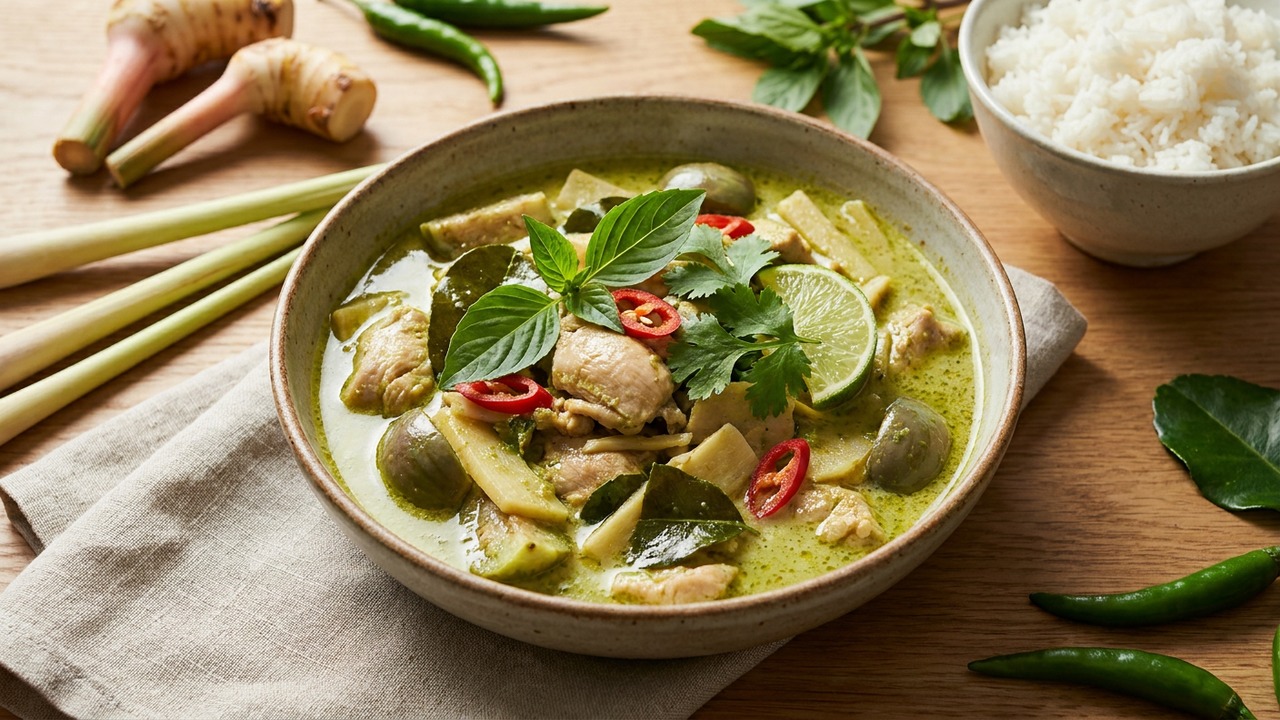
A fragrant, vibrant Thai green curry made from scratch — including a quick homemade green curry paste — and simmered on the stovetop until tender. Bright herbs, creamy coconut milk and tender chicken make this an easy weeknight showstopper.
Ingredient Spotlight
Shrimp paste (kapi)
A pungent fermented paste made from ground, salted shrimp—widely used in Southeast Asian cuisines (Thailand, Malaysia, Indonesia). It has a very strong, salty‑umami aroma and deep savory flavor that mellows when cooked. Find it at Asian/Thai grocery stores or online; if you can’t get it, substitute a combination of fish sauce and a small amount of anchovy paste or miso to add similar umami, or omit and increase fish sauce slightly.
Ingredient Spotlight
Lemongrass (white part)
The lower, pale stalk of a tall citrusy grass common in Thai, Vietnamese and other Southeast Asian cuisines; it smells bright and lemony with a grassy, slightly ginger-like undertone. It’s used bruised, sliced, or minced to infuse curries and soups and is sold fresh at Asian markets and many supermarkets, or as frozen/paste forms. If unavailable, substitute ~1 tsp fresh lime zest plus 1/2–1 tsp grated ginger per stalk, or use 1–2 tsp lemongrass paste.
Ingredient Spotlight
Thai eggplant
Small, round, green (or sometimes purple) eggplants common in Thai curries—firmer and slightly bitterer than globe/Italian eggplant, with a spongy interior that soaks up curry sauces. They’re sold at Southeast Asian markets and some well‑stocked grocery stores; if you can’t find them, use cubed regular eggplant, bell pepper (as noted), or small Italian/plum eggplants as the closest substitutes.
Jake Woods's note
"Making the green curry paste at home brings a fresher, brighter flavor than store-bought jars; this recipe is ideal for a cozy dinner that still feels a little special. You can easily swap protein or vegetables to suit what you have on hand."
About This Recipe
This Thai green curry is the kind of weeknight dish that looks like you spent hours on it but really comes together in under an hour. The quick homemade green curry paste — bright chilies, garlic, shallot, lemongrass and cilantro stems — gives the sauce immediate aromatic depth that jarred pastes rarely match. Toasting the paste briefly in the thick coconut cream concentrates those flavors and releases a sheen of fragrant oil that carries the curry’s perfume through every bite. Chicken thighs hold up to the simmering without drying out, and Thai eggplant (or bell pepper) soaks up the sauce, adding a tender, juicy counterpoint to the silky coconut milk.
What makes this version work is the balance between vivid herbaceousness and rich creaminess: cilantro stems contribute green, rooty notes, lemongrass brings citrus brightness, and a touch of shrimp paste (optional) adds umami backbone. The recipe is forgiving — you can swap vegetables, dial the heat, or make the paste a day ahead — yet the core technique (blooming the paste in coconut cream and simmering gently) is what lifts it from good to memorable. Serve it with steaming jasmine rice and fresh Thai basil to sharpen the finish.
Ingredients for Thai Green Curry
- 6 pcs Thai green chilies (or serrano), stemmed
- 2 small Shallots, peeled
- 4 cloves Garlic cloves, peeled
- 1 stalk Lemongrass (white part), sliced thin
- 1/2 cup (packed stems) Cilantro stems (packed)
- 1 tsp Shrimp paste (kapi), optional but traditional
- 2 cans (13.5 oz) Coconut milk
- 1 lb Boneless, skinless chicken thighs, cut into bite-size pieces
- 2 tbsp Fish sauce
- 1 cup (halved) Thai eggplant (or bell pepper), halved or sliced
How to Make Thai Green Curry
Step 1: Make the green curry paste
Roughly chop the green chilies, shallots, garlic, lemongrass and cilantro stems. Pound in a mortar and pestle or blitz briefly in a small food processor with the shrimp paste until you have a coarse but well combined paste; scrape down the sides once or twice. The aroma should be bright and pungent — taste cautiously for heat.For this step
- 6 pcsThai green chilies (or serrano), stemmed
- 2 smallShallots, peeled
- 4 clovesGarlic cloves, peeled
- 1 stalkLemongrass (white part), sliced thin
- 1/2 cup (packed stems)Cilantro stems (packed)
- 1 tspShrimp paste (kapi), optional but traditional
Step 2: Toast and bloom the paste in coconut cream
Shake the coconut milk cans and pour into a medium deep skillet or saucepan; bring to a gentle simmer over medium heat and spoon off about 1/3 cup of the thicker coconut cream that rises. Add the paste to the hot cream and cook, stirring, for 1–2 minutes until fragrant and the oil begins to separate. This step blooms the aromatics and deepens the flavor.Step 3: Add chicken and remaining coconut milk
Add the chicken pieces to the pan and toss to coat in the paste, cooking for 2–3 minutes to seal. Pour in the remaining coconut milk, stir to combine, and bring to a gentle simmer. Skim any excess oil if you prefer a lighter curry.For this step
- 1 lbBoneless, skinless chicken thighs, cut into bite-size pieces
Step 4: Simmer with vegetables until tender
Add the Thai eggplant (or swap in bell pepper or zucchini) and simmer uncovered for 10–12 minutes, or until the chicken is cooked through and the vegetables are tender. Maintain a gentle simmer; reduce heat if the curry is boiling too vigorously.For this step
- 1 cup (halved)Thai eggplant (or bell pepper), halved or sliced
Step 5: Season and balance
Stir in the fish sauce and taste; add additional fish sauce for saltiness or a pinch of sugar if you want more balance. Adjust heat by adding sliced fresh chilies or a splash of lime juice (optional) to brighten the flavors.For this step
- 2 tbspFish sauce
Step 6: Finish and serve
Turn off the heat and let the curry rest for a minute to meld. Serve over steamed jasmine rice and finish with chopped cilantro leaves, Thai basil and lime wedges if available; these garnishes add fresh contrast to the rich coconut sauce.


- Roughly chop the green chilies, shallots, garlic, lemongrass and cilantro stems. Pound in a mortar and pestle or blitz briefly in a small food processor with the shrimp paste until you have a coarse but well combined paste; scrape down the sides once or twice. The aroma should be bright and pungent — taste cautiously for heat.
- Shake the coconut milk cans and pour into a medium deep skillet or saucepan; bring to a gentle simmer over medium heat and spoon off about 1/3 cup of the thicker coconut cream that rises. Add the paste to the hot cream and cook, stirring, for 1–2 minutes until fragrant and the oil begins to separate. This step blooms the aromatics and deepens the flavor.
- Add the chicken pieces to the pan and toss to coat in the paste, cooking for 2–3 minutes to seal. Pour in the remaining coconut milk, stir to combine, and bring to a gentle simmer. Skim any excess oil if you prefer a lighter curry.
- Add the Thai eggplant (or swap in bell pepper or zucchini) and simmer uncovered for 10–12 minutes, or until the chicken is cooked through and the vegetables are tender. Maintain a gentle simmer; reduce heat if the curry is boiling too vigorously.
- Stir in the fish sauce and taste; add additional fish sauce for saltiness or a pinch of sugar if you want more balance. Adjust heat by adding sliced fresh chilies or a splash of lime juice (optional) to brighten the flavors.
- Turn off the heat and let the curry rest for a minute to meld. Serve over steamed jasmine rice and finish with chopped cilantro leaves, Thai basil and lime wedges if available; these garnishes add fresh contrast to the rich coconut sauce.
Thai Green Curry Tips
Use cilantro stems
Cilantro stems carry more flavor than the leaves and help the paste emulsify; pack them tightly and chop roughly before pounding or pulsing.
Control curry heat
Taste the raw paste cautiously — chilies register stronger when cooked — and remove seeds or halve the number of chilies if you prefer milder spice.
Bloom in coconut cream
Spooning off and frying the paste in the thicker coconut cream concentrates aromatics and releases oil, which intensifies the curry’s flavor and improves mouthfeel.
Check chicken doneness
Cut a piece to ensure it’s cooked through; thighs remain juicy at 165°F, and simmer gently to avoid toughening the meat.
Adjust consistency last
If the sauce is too thick, thin with a splash of chicken stock or coconut milk rather than water to preserve flavor.
Thai Green Curry Variations and Substitutions
Vegetarian tofu and veg
Replace chicken with firm tofu and add more vegetables like cauliflower and sugar snap peas; pan-fry the tofu first so it keeps its shape in the curry.
Seafood green curry
Swap in shrimp or firm white fish in the last 4–6 minutes of cooking to avoid overcooking; omit shrimp paste if using delicate seafood.
Milder, family-friendly
Use 2–3 milder chilies or serranos, and increase lime juice and sugar slightly to make the curry more approachable for kids.
Shortcut with jarred paste
If short on time, use 3–4 tablespoons of a good-quality store-bought green curry paste and still bloom it in the coconut cream to deepen the flavor.
How to Store and Make Thai Green Curry Ahead
Store leftovers in an airtight container in the refrigerator for up to 3 days; note the coconut milk may thicken or separate when chilled. Reheat gently over low heat, adding a splash of water or coconut milk to restore a silky consistency, and avoid boiling which can cause the coconut to break. You can freeze the curry for up to one month, but texture of the coconut milk and eggplant may be slightly altered after thawing.
What to Serve With Thai Green Curry
Serve over steaming jasmine rice or coconut rice and present in shallow bowls so each spoonful gets rice and sauce together; finish with torn Thai basil, cilantro leaves, and lime wedges for brightness. Offer crunchy sides like quick pickled shallots or a cucumber salad to cut the richness, and pair with a dry Riesling or a crisp lager to offset the curry's heat and creaminess.
Thai Green Curry FAQs
Can I make the green curry paste ahead of time?
Yes — store the paste in an airtight container in the refrigerator for up to 3 days, or freeze in tablespoon portions for up to 3 months to have ready-made flavor on hand.
What can I use instead of shrimp paste?
Substitute a teaspoon of miso or anchovy paste for umami, or omit it entirely; the curry will be lighter but still flavorful thanks to the aromatics and fish sauce.
Is there a leaner way to make this curry?
Use light coconut milk or reduce the total amount by half and add low-sodium chicken stock to thin the sauce; remember the flavor will be less rich, so taste and adjust seasoning.
How spicy is this curry with six green chilies?
Six Thai green chilies will create a lively heat for most palates; use fewer chilies or remove seeds to soften the spice, and add sliced fresh chilies at the table for those who want more.
Can I use chicken breast instead of thighs?
Yes — but reduce simmering time and watch carefully so the breast doesn’t dry out; add breast pieces later and simmer just until cooked through.
About the author
Jake WoodsHello, I'm Jake. I started this recipe site with the idea that I hated recipe websites that overwhelm you with long stories and ads just to see plain content that's not helpful. My goal is to provide you with quality recipes, simple ideas and a fun cooking experience. There's lots of fun things to cook, and I think as you browse the site you'll find that TopShelf.Recipes is the place for quality recipes on the web.
See all recipes by Jake Woods →Ratings & Reviews
Did you make this recipe?
Be the first to share your experience.
Nutrition Facts
Per serving: 1 serving
Nutrition values are estimated from USDA ingredient data and may vary based on preparation, brands, and portion sizes. Values are provided for informational purposes only.
Keep Reading
Guides & articles for this recipe

Healthy Eating
Gluten-Free Weeknight Grilling Plan
A 7-day gluten-free weeknight grilling plan with quick, family-friendly recipes, prep-ahead timelines, and a printable shopping list that spotlights late-summer produce and pantry staples. Includes clear cross-contamination safety tips and simple swaps to keep dinners fast and crowd-pleasing.

Healthy Eating
Low-Fat Grill Swaps for Big Flavor
A practical guide to trimming fat from grilled meals without losing juiciness or char. Learn yogurt- and citrus-based marinades, lean protein picks, searing and indirect-heat tricks, plus 5 quick low-fat marinades and a simple weeknight plan.

Recipes
DIY Edible Monster Eyes Candy
Make safe, fun edible monster eyes for cupcakes, cookies, and candy trays. Step-by-step recipes show baking-soda balls, chocolate and fondant eyes, wafer-print options, plus assembly, storage, and kid-friendly safety tips.
More from Thai
View all Thai recipes →


Ask me anything about this recipe — substitutions, scaling, techniques, timing.
Powered by AI · 6 questions per 5 minutes, 30 per day