Mango Sticky Rice
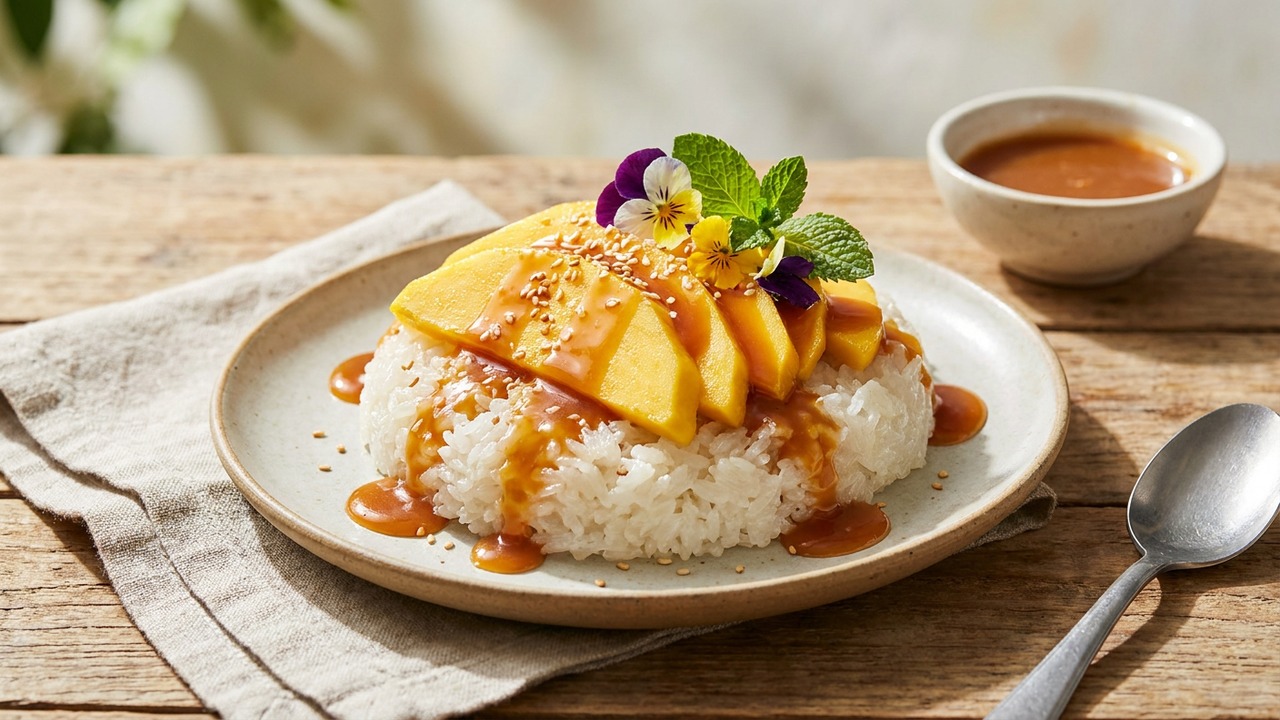
Mango Sticky Rice is a classic Thai dessert featuring tender, coconut-infused glutinous rice paired with ripe mango and a glossy coconut–palm caramel. This precise recipe includes exact ratios and a foolproof coconut caramel to deliver reliably authentic results at home.
Ingredient Spotlight
Glutinous (sweet) rice
Also called sticky rice or sweet rice, this short-grain rice variety is grown and used throughout East and Southeast Asia (e.g., Thailand, Laos, Japan). It is high in amylopectin, so it becomes very sticky and chewy when cooked and has a mildly sweet, neutral flavor rather than being glutenous. Find it at Asian grocery stores, many supermarkets, or online; a workable substitute is short-grain sushi rice (or Japanese mochigome) though texture will differ and it won’t be identical to true glutinous rice.
Ingredient Spotlight
Palm sugar (or light brown sugar)
Palm sugar is made from the sap of various palm trees (common in Thai, Indonesian and other Southeast Asian cuisines) and has a caramel-like, slightly smoky sweetness with floral notes. It often comes in blocks, discs, or granulated form and is used in desserts and savory sauces; it’s available at Asian markets and online. If unavailable, light brown sugar or coconut sugar can be used as a substitute, though the flavor profile will be somewhat different.
(paid link) — as an Amazon Associate we earn from qualifying purchases.
Ingredient Spotlight
Toasted split mung beans or toasted sesame seeds (garnish)
Toasted split mung beans (hulled, split mung peas) are a crunchy, mildly nutty garnish used in Southeast and South Asian sweets and snacks; when toasted they add texture without strong flavor. They’re sold at Asian groceries as whole or split mung (moong) and can be toasted briefly at home; if you can’t find them, toasted sesame seeds (also suggested), crushed roasted peanuts, or fried mung dal are common substitutes that provide similar crunch and nutty notes.
Jake Woods's note
"This recipe balances traditional technique with clear, precise measurements — ideal for making mango sticky rice that consistently turns out silky and rich. It shines at summer dinners, tropical-themed gatherings, or whenever you want an impressive, comforting dessert."
About This Recipe
Mango sticky rice is deceptively simple: a short list of ingredients transforms into a dessert of extreme texture contrast — glossy, coconut-scented glutinous rice against the sweet, floral flesh of ripe mango — and this recipe focuses on the small technical choices that make that contrast sing. The precise coconut-to-rice ratio, a patient soak and steam, and a small portion of reserved coconut sauce produce rice that is both tender and cohesively sticky without becoming gluey. The coconut–palm caramel here is deliberately stabilized with a cornstarch slurry so it pours glossy and sets lightly on the rice rather than immediately running off.
This version is tailored for home cooks who want reliably authentic results without guesswork: soak the rice long enough for even hydration, steam rather than simmer, and keep the components warm and separate until plating so textures remain distinct. Toasted split mung beans (or sesame) add the essential crunch that commercial Thai vendors achieve with a deep-frying step, and using palm sugar gives the caramel that rounded, almost molasses-like depth that clean brown sugar can’t fully replicate. Serve immediately for the best balance of warm rice and cool mango.
Ingredients for Mango Sticky Rice
- 2 cups Glutinous (sweet) rice
- 2 cups Warm water (for soaking)
- 1 1/4 cups Full-fat coconut milk
- 1/3 cup Granulated sugar
- 1/2 tsp Fine sea salt
- 1/2 cup Palm sugar (or light brown sugar)
- 1/3 cup Coconut cream (or extra full-fat coconut milk)
- 1 tsp Cornstarch (or tapioca starch)
- 2 large Ripe mangoes
- 2 tbsp Toasted split mung beans or toasted sesame seeds (garnish)
🛒 = paid link — as an Amazon Associate we earn from qualifying purchases.
How to Make Mango Sticky Rice
Step 1: Soak the glutinous rice
Rinse 2 cups glutinous rice under cold water until the rinse water runs nearly clear, then place in a bowl and cover with 2 cups warm water. Soak at room temperature for 4 hours (or overnight in the fridge) so the grains hydrate evenly. After soaking, drain thoroughly in a fine-mesh sieve and set aside to steam.For this step
- 2 cupsGlutinous (sweet) rice
- 2 cupsWarm water (for soaking)
Step 2: Prepare the coconut rice sauce
Combine 1 1/4 cups full-fat coconut milk, 1/3 cup granulated sugar, and 1/2 teaspoon fine sea salt in a small saucepan and warm over low heat until the sugar dissolves—do not boil. Remove from heat and reserve; this mixture will be divided: most will be mixed into the hot steamed rice and a small portion kept for serving (see step 6). Keep warm.For this step
- 1 1/4 cupsFull-fat coconut milk
- 1/3 cupGranulated sugar
- 1/2 tspFine sea salt
Step 3: Steam the soaked rice
Line a bamboo steamer or a fine-mesh steamer basket with cheesecloth or a thin clean towel, add the drained rice and steam over simmering water for 20–25 minutes until the grains are translucent and tender. Transfer the hot steamed rice to a heatproof bowl, pour about 1 cup of the warm coconut sauce over it, gently fold to combine, then cover and let the rice absorb the coconut for 15–20 minutes until glossy and sticky.Step 4: Make the coconut–palm caramel
In a small saucepan, combine 1/2 cup palm sugar and 1/3 cup coconut cream with 2 tablespoons water and simmer over medium-low heat until the sugar dissolves and the mixture reduces to a syrupy consistency, about 6–8 minutes. Mix 1 teaspoon cornstarch with 1 tablespoon cold water to form a slurry, whisk into the simmering syrup and cook 1–2 minutes until slightly thickened; remove from heat and cool slightly to a pourable but viscous sauce.For this step
- 1/2 cupPalm sugar (or light brown sugar)
- 1/3 cupCoconut cream (or extra full-fat coconut milk)
- 1 tspCornstarch (or tapioca starch)
Step 5: Prepare mangoes and garnish
Peel and slice 2 ripe mangoes into thin, even slices or cubes. Lightly toast 2 tablespoons split mung beans or sesame seeds in a dry skillet over medium heat until fragrant and golden, then set aside to cool for garnish.For this step
- 2 largeRipe mangoes
- 2 tbspToasted split mung beans or toasted sesame seeds (garnish)
Step 6: Assemble and serve
Spoon warm coconut sticky rice onto plates or banana leaves, arrange mango slices alongside, and drizzle generously with the palm–coconut caramel and the reserved coconut sauce. Finish with toasted mung beans or sesame seeds and serve immediately while the rice is warm for the best contrast of textures and flavors.


- Rinse 2 cups glutinous rice under cold water until the rinse water runs nearly clear, then place in a bowl and cover with 2 cups warm water. Soak at room temperature for 4 hours (or overnight in the fridge) so the grains hydrate evenly. After soaking, drain thoroughly in a fine-mesh sieve and set aside to steam.
- Combine 1 1/4 cups full-fat coconut milk, 1/3 cup granulated sugar, and 1/2 teaspoon fine sea salt in a small saucepan and warm over low heat until the sugar dissolves—do not boil. Remove from heat and reserve; this mixture will be divided: most will be mixed into the hot steamed rice and a small portion kept for serving (see step 6). Keep warm.
- Line a bamboo steamer or a fine-mesh steamer basket with cheesecloth or a thin clean towel, add the drained rice and steam over simmering water for 20–25 minutes until the grains are translucent and tender. Transfer the hot steamed rice to a heatproof bowl, pour about 1 cup of the warm coconut sauce over it, gently fold to combine, then cover and let the rice absorb the coconut for 15–20 minutes until glossy and sticky.
- In a small saucepan, combine 1/2 cup palm sugar and 1/3 cup coconut cream with 2 tablespoons water and simmer over medium-low heat until the sugar dissolves and the mixture reduces to a syrupy consistency, about 6–8 minutes. Mix 1 teaspoon cornstarch with 1 tablespoon cold water to form a slurry, whisk into the simmering syrup and cook 1–2 minutes until slightly thickened; remove from heat and cool slightly to a pourable but viscous sauce.
- Peel and slice 2 ripe mangoes into thin, even slices or cubes. Lightly toast 2 tablespoons split mung beans or sesame seeds in a dry skillet over medium heat until fragrant and golden, then set aside to cool for garnish.
- Spoon warm coconut sticky rice onto plates or banana leaves, arrange mango slices alongside, and drizzle generously with the palm–coconut caramel and the reserved coconut sauce. Finish with toasted mung beans or sesame seeds and serve immediately while the rice is warm for the best contrast of textures and flavors.
Mango Sticky Rice Tips
Soak for Even Hydration
Soak the glutinous rice at least 4 hours (or overnight) so grains steam evenly; under-soaked rice will be chalky in the center even after steaming.
Steam, Don't Boil Rice
Use a bamboo or fine-mesh steamer lined with cheesecloth and keep a gentle simmer below; direct boiling will break grains and create a gummy texture.
Coconut Ratio Is Crucial
Measure the 1 1/4 cups coconut milk precisely and fold most of it into the hot rice so the grains absorb coconut flavor without becoming soupy.
Keep Rice Warm, Serve
Cover the rice after mixing with coconut sauce and serve while warm; cold rice becomes firmer and loses the luscious mouthfeel that contrasts best with chilled mango.
Nail the Caramel Texture
Whisk the cornstarch slurry into the simmering palm sugar slowly and cook just until slightly thickened so the sauce stays pourable but glossy once cooled.
Mango Sticky Rice Variations and Substitutions
Black Sticky Rice Twist
Swap half or all of the white glutinous rice for black (forbidden) sticky rice and increase soaking/steaming time; it yields a nuttier flavor and striking purple-black color.
Citrus-Kaffir Lime Boost
Add 1/2 teaspoon grated lime zest or a bruised kaffir lime leaf to the coconut sauce as it warms for an aromatic lift that cuts the sweetness.
Lower-Sugar Option
Reduce the granulated sugar by up to one-third in the coconut milk and use light brown sugar for the palm syrup substitute to keep sweetness balanced without losing body.
Rice Cooker Shortcut
After draining, cook the soaked glutinous rice in a rice cooker on the sticky/glutinous setting with a splash less water than usual, then finish by folding in the warm coconut sauce.
How to Store and Make Mango Sticky Rice Ahead
Store leftover rice, caramel, and mango separately in airtight containers in the refrigerator for up to 2 days; assembled sticky rice will become firmer and lose contrast. To reheat rice, steam gently or microwave with a tablespoon of coconut milk and a damp paper towel over the bowl to restore softness; do not freeze mango slices, they will turn mushy when thawed.
What to Serve With Mango Sticky Rice
Serve mango sticky rice on banana leaves or a shallow plate so the sauce pools prettily; a small scoop of coconut or pandan ice cream complements the warm rice. Pair with Thai iced tea or a lightly floral jasmine tea to cut richness, and present toasted mung beans or sesame on the side so guests can sprinkle to taste.
Mango Sticky Rice FAQs
Can I use regular jasmine rice instead?
No — regular jasmine or long-grain rice lacks the amylopectin that makes glutinous rice sticky; the texture will be wrong. Use true glutinous (sweet) rice labeled for sticky rice.
How do I know the rice is done steaming?
The grains should look translucent and hold together when pressed gently; if a chalky white dot remains in the center, steam another 5–10 minutes and check again.
My caramel became grainy — what happened?
Graininess usually means the sugar crystallized; avoid stirring vigorously once the syrup begins to boil, and make sure the palm sugar is fully dissolved before the cornstarch slurry is added.
How ripe should the mangoes be?
Choose mangoes that give slightly to gentle pressure and smell sweet at the stem; underripe mangoes are fibrous and lack perfume, while overripe ones can be mealy.
Can I make this ahead for a dinner party?
Yes — you can steam the rice and keep it wrapped and warm for a few hours, and make the caramel a day ahead and rewarm gently. Slice mangoes just before serving for the best appearance and texture.
What can I use instead of palm sugar?
Light brown sugar or dark muscovado will work in a pinch and will produce a similar molasses note, though palm sugar gives a more complex, slightly smoky sweetness.
About the author
Jake WoodsHello, I'm Jake. I started this recipe site with the idea that I hated recipe websites that overwhelm you with long stories and ads just to see plain content that's not helpful. My goal is to provide you with quality recipes, simple ideas and a fun cooking experience. There's lots of fun things to cook, and I think as you browse the site you'll find that TopShelf.Recipes is the place for quality recipes on the web.
See all recipes by Jake Woods →Ratings & Reviews
Did you make this recipe?
Be the first to share your experience.
Nutrition Facts
Per serving: 1 serving
Nutrition values are estimated from USDA ingredient data and may vary based on preparation, brands, and portion sizes. Values are provided for informational purposes only.
Keep Reading
Guides & articles for this recipe

Healthy Eating
Gluten-Free Weeknight Grilling Plan
A 7-day gluten-free weeknight grilling plan with quick, family-friendly recipes, prep-ahead timelines, and a printable shopping list that spotlights late-summer produce and pantry staples. Includes clear cross-contamination safety tips and simple swaps to keep dinners fast and crowd-pleasing.

Healthy Eating
Low-Fat Grill Swaps for Big Flavor
A practical guide to trimming fat from grilled meals without losing juiciness or char. Learn yogurt- and citrus-based marinades, lean protein picks, searing and indirect-heat tricks, plus 5 quick low-fat marinades and a simple weeknight plan.

Recipes
DIY Edible Monster Eyes Candy
Make safe, fun edible monster eyes for cupcakes, cookies, and candy trays. Step-by-step recipes show baking-soda balls, chocolate and fondant eyes, wafer-print options, plus assembly, storage, and kid-friendly safety tips.
More from Thai
View all Thai recipes →


Ask me anything about this recipe — substitutions, scaling, techniques, timing.
Powered by AI · 6 questions per 5 minutes, 30 per day