Baked Miso-Glazed Tofu
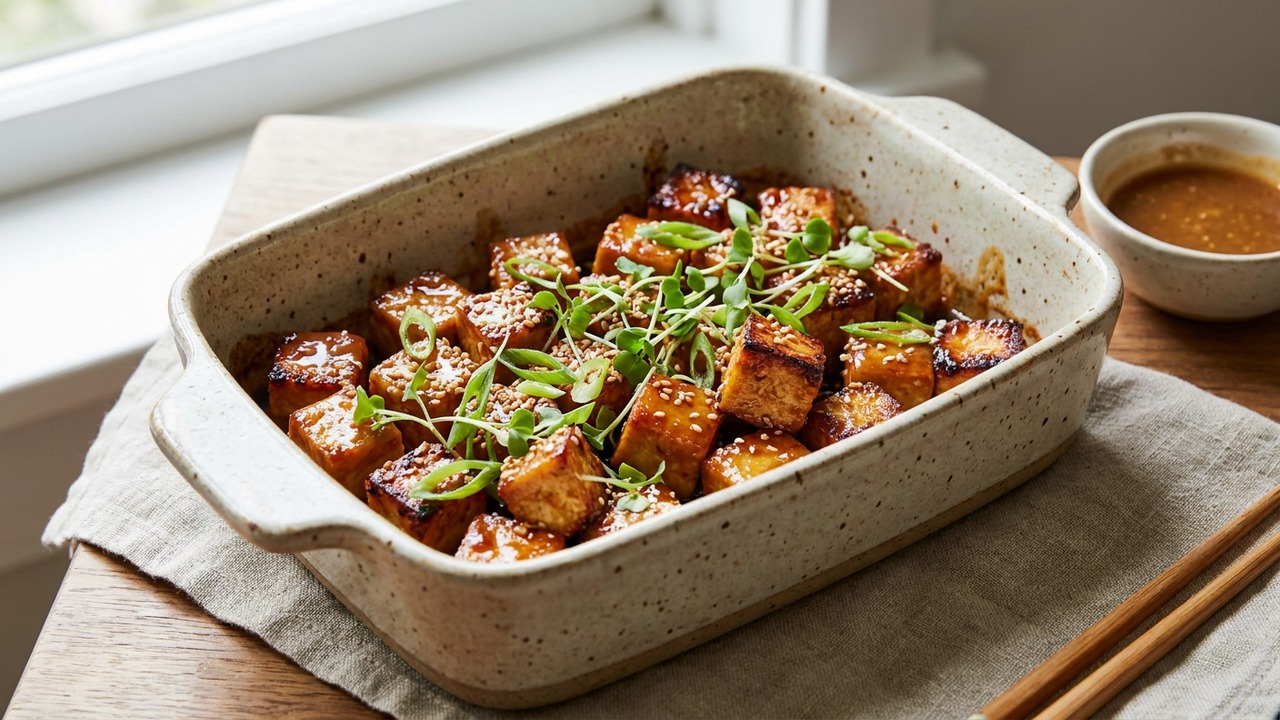
Crisp-edged, tender-baked tofu finished with a glossy miso glaze that adds deep savory-sweet umami to weeknight dinners. Fast to assemble and forgiving to cook, this dish is equally at home in a bowl, on rice, or tucked into a sandwich.
Ingredient Spotlight
White (shiro) miso paste
A pale, mildly sweet fermented soybean paste from Japan with a shorter fermentation than red miso; it delivers gentle umami and a subtle salty-sweet flavor without the deep funk of darker misos. It’s commonly used in soups, dressings, marinades, and glazes. Find it in the refrigerated or Asian foods section of supermarkets or at Asian markets; a darker miso (awase or red) can be used as a substitute but will be stronger and saltier, so reduce quantity or add a little sweetener to balance.
(paid link) — as an Amazon Associate we earn from qualifying purchases.
Ingredient Spotlight
Mirin
A sweet Japanese rice wine used in cooking that adds glossy sweetness and a mild tangy-syrupy umami to sauces and glazes. It smells subtly of rice and caramel and helps round and balance salty flavors in Japanese dishes. You can find mirin in the Asian foods aisle or at specialty/Asian markets; in a pinch substitute a dry sake with a teaspoon of sugar or a low-alcohol sweet cooking wine, or use a mild sweet white wine plus a little sugar.
Ingredient Spotlight
Soy sauce or tamari
Tamari is a Japanese soy-based seasoning similar to soy sauce but typically made with little or no wheat, yielding a thicker, richer, and often less salty umami flavor; it’s a common gluten-free alternative to regular soy sauce. Tamari tastes darker and smoother than many light soy sauces and is used interchangeably in marinades, stir-fries, and dipping sauces. Find tamari in the Asian foods aisle or natural foods stores; substitute regular soy sauce for tamari (or coconut aminos for a soy-free option), but adjust saltiness to taste.
Jake Woods's note
"This recipe elevates humble baked tofu into something restaurant-worthy with a simple miso glaze — perfect for busy weeknights or meal-prep bowls. Look for a light caramelization when you finish under the broiler for the best flavor and texture."
About This Recipe
Crisp-edged, tender-baked tofu finished with a glossy miso glaze is a small lesson in how texture and umami can transform an everyday ingredient. In this recipe white (shiro) miso provides a sweet, mellow backbone that caramelizes cleanly, while mirin and maple syrup build a lacquered finish that reads richer than the sum of its parts. Tossing pressed tofu in a little cornstarch and neutral oil gives you the satisfying contrast of a thin, almost fried crust and a silky interior—an effect you can get in the oven with far less fuss and mess than pan-frying.
This version is deliberately forgiving: bake, flip, brush, and return to the oven or the broiler for a minute to deepen color; no single step needs to be perfect for a great result. It works as the centerpiece for grain bowls, tucked into sandwiches with quick pickles, cubed in salads, or packed into bento boxes. If you’re looking for an easy weeknight protein that travels well and takes on other flavors, this miso-glazed tofu is an excellent template to riff on.
Ingredients for Baked Miso-Glazed Tofu
- 14 oz Extra-firm tofu (one 14 oz / 400 g block), pressed
- 2 tbsp Cornstarch
- 1 tbsp Neutral oil (vegetable or avocado) — plus extra for sheet
- 2 tbsp White (shiro) miso paste
- 1 tbsp Mirin
- 1 tbsp Soy sauce or tamari
- 1 tbsp Maple syrup (or honey)
- 1 tsp Rice vinegar
- 1 tsp Sesame seeds (toasted) for garnish
- 2 stalks Scallions (thinly sliced) for garnish
🛒 = paid link — as an Amazon Associate we earn from qualifying purchases.
How to Make Baked Miso-Glazed Tofu
Step 1: Press, preheat, and slice the tofu
Preheat the oven to 400°F (200°C). Press the tofu for at least 10–15 minutes to remove excess moisture (wrap in paper towels and set a weight on top), then slice into 8–12 slabs or 3/4-inch cubes depending on preference. Arrange a parchment-lined baking sheet and lightly oil the surface so the tofu won’t stick.For this step
- 14 ozExtra-firm tofu (one 14 oz / 400 g block), pressed
Step 2: Coat tofu for a crisp exterior
Toss the drained tofu pieces in a shallow bowl with cornstarch and the neutral oil until evenly coated—this creates a thin crust when baked. Arrange pieces in a single layer on the prepared sheet, leaving space between pieces for airflow, and season lightly with salt if desired.For this step
- 2 tbspCornstarch
- 1 tbspNeutral oil (vegetable or avocado) — plus extra for sheet
Step 3: Bake and whisk the miso glaze
Bake the tofu for 12–15 minutes, then flip pieces and bake another 5 minutes until edges start to turn golden. While the tofu bakes, whisk together white miso, mirin, soy sauce, maple syrup, and rice vinegar in a small bowl until smooth and glossy; taste and adjust sweetness or saltiness as needed.For this step
- 2 tbspWhite (shiro) miso paste
- 1 tbspMirin
- 1 tbspSoy sauce or tamari
- 1 tbspMaple syrup (or honey)
- 1 tspRice vinegar
Step 4: Glaze, finish, and garnish
Brush the miso glaze generously over the tofu and return to the oven for 6–8 minutes to set the glaze, then optionally broil 1–2 minutes to caramelize (watch closely to avoid burning). Remove from the oven, sprinkle with toasted sesame seeds and sliced scallions, and serve hot over rice, noodles, or in salads.For this step
- 1 tspSesame seeds (toasted) for garnish
- 2 stalksScallions (thinly sliced) for garnish


- Preheat the oven to 400°F (200°C). Press the tofu for at least 10–15 minutes to remove excess moisture (wrap in paper towels and set a weight on top), then slice into 8–12 slabs or 3/4-inch cubes depending on preference. Arrange a parchment-lined baking sheet and lightly oil the surface so the tofu won’t stick.
- Toss the drained tofu pieces in a shallow bowl with cornstarch and the neutral oil until evenly coated—this creates a thin crust when baked. Arrange pieces in a single layer on the prepared sheet, leaving space between pieces for airflow, and season lightly with salt if desired.
- Bake the tofu for 12–15 minutes, then flip pieces and bake another 5 minutes until edges start to turn golden. While the tofu bakes, whisk together white miso, mirin, soy sauce, maple syrup, and rice vinegar in a small bowl until smooth and glossy; taste and adjust sweetness or saltiness as needed.
- Brush the miso glaze generously over the tofu and return to the oven for 6–8 minutes to set the glaze, then optionally broil 1–2 minutes to caramelize (watch closely to avoid burning). Remove from the oven, sprinkle with toasted sesame seeds and sliced scallions, and serve hot over rice, noodles, or in salads.
Baked Miso-Glazed Tofu Tips
Press longer for firmness
Press tofu 20–30 minutes when you want a very firm bite; shorter (10–15 minutes) works if you’re in a rush, but more pressing gives better texture and absorption.
Even cornstarch coating
Toss pieces gently so cornstarch clings evenly and shake off any excess—too much cornstarch creates a powdery patch instead of a crisp crust.
Use a hot, oiled sheet
Lightly oil the parchment or baking sheet and preheat the oven so the tofu hits a warm surface, which helps create immediate crust and reduces sticking.
Adjust glaze mouthfeel
If the glaze is too thick, whisk in a teaspoon of warm water or mirin; if too thin, simmer briefly to concentrate it so it sticks and caramelizes.
Broil with attention
Broil only 1–2 minutes to caramelize the glaze and watch closely—miso sugars can go from glossy to burnt very quickly.
Baked Miso-Glazed Tofu Variations and Substitutions
Spicy gochujang glaze
Swap half the miso for gochujang and reduce the maple to 2 teaspoons for a bright, spicy-sweet Korean-style glaze that pairs well with sesame and scallions.
Sesame-ginger twist
Add 1 teaspoon grated fresh ginger and 1/2 teaspoon toasted sesame oil to the glaze, and finish with furikake or extra toasted sesame seeds for a nutty aroma.
Gluten-free swap
Use tamari or coconut aminos in place of soy sauce and ensure your mirin is gluten-free; the technique and timing remain the same.
Air-fryer shortcut
Air-fry the coated tofu at 380°F (190°C) for 10–12 minutes, flip once, then brush with glaze and air-fry 2–3 more minutes to set.
How to Store and Make Baked Miso-Glazed Tofu Ahead
Store leftovers in an airtight container in the refrigerator for up to 3–4 days. For best texture, keep the tofu unglazed if you plan to re-crisp later; reheat in a hot oven or skillet for a few minutes to restore the crust rather than using a microwave, which will soften it.
What to Serve With Baked Miso-Glazed Tofu
Serve over warm short-grain rice with quick-pickled cucumbers, steamed bok choy, and a drizzle of any remaining glaze for a balanced bowl. For sandwiches, layer slabs with crunchy cabbage, kimchi or pickles, and a smear of mayo or vegan mayo; pair with a crisp lager, cold green tea, or a dry riesling.
Baked Miso-Glazed Tofu FAQs
How long should I press the tofu?
Pressing 20–30 minutes yields the firmest texture and best glaze absorption, but 10–15 minutes is sufficient if you’re short on time. The goal is to remove surface moisture so the cornstarch can adhere and the interior stays silky.
Can I use red miso instead of white miso?
Yes, red (aka aka) miso is saltier and more pungent, so reduce the soy sauce or maple syrup slightly and taste as you go to avoid an overly intense glaze.
Why is my tofu not crispy?
Common causes are insufficient pressing, too much cornstarch left on the surface, crowded pieces on the sheet, or a cold baking surface; press longer, shake off excess cornstarch, space the pieces, and start on a warm sheet for better results.
Can I glaze the tofu in advance?
You can glaze and store it, but the glaze will soften the crust over time; for the best contrast retain some unglazed pieces or re-glaze and briefly reheat in the oven to re-crisp before serving.
How do I prevent the glaze from burning under the broiler?
Broil at a distance from the element for only 60–90 seconds while watching closely; if your oven is uneven, use the oven’s top rack but leave a small gap between the tofu and the element, and reduce time accordingly.
About the author
Jake WoodsHello, I'm Jake. I started this recipe site with the idea that I hated recipe websites that overwhelm you with long stories and ads just to see plain content that's not helpful. My goal is to provide you with quality recipes, simple ideas and a fun cooking experience. There's lots of fun things to cook, and I think as you browse the site you'll find that TopShelf.Recipes is the place for quality recipes on the web.
See all recipes by Jake Woods →Ratings & Reviews
Did you make this recipe?
Be the first to share your experience.
Nutrition Facts
Per serving: 2 tbsp
Nutrition values are estimated from USDA ingredient data and may vary based on preparation, brands, and portion sizes. Values are provided for informational purposes only.
Keep Reading
Guides & articles for this recipe

Tips & Techniques
Baking Soda and Tenderized Beef
Learn how baking soda can tenderize, boost browning, and improve moisture for ground beef and other meats. This practical guide covers the science, step-by-step techniques, common mistakes, and recipes to try.

Healthy Eating
Gluten-Free Weeknight Grilling Plan
A 7-day gluten-free weeknight grilling plan with quick, family-friendly recipes, prep-ahead timelines, and a printable shopping list that spotlights late-summer produce and pantry staples. Includes clear cross-contamination safety tips and simple swaps to keep dinners fast and crowd-pleasing.

Healthy Eating
Low-Fat Grill Swaps for Big Flavor
A practical guide to trimming fat from grilled meals without losing juiciness or char. Learn yogurt- and citrus-based marinades, lean protein picks, searing and indirect-heat tricks, plus 5 quick low-fat marinades and a simple weeknight plan.
More from Baking
View all Baking recipes →
Cloud Bread Sandwiches

Honey Mustard Chicken Nuggets

Cheddar Jalapeño Corn Muffins

Basque Burnt Cheesecake

30-Minute Sticky Baked Honey Garlic Chicken Thighs with Crisp Edges

Lemon Butter Salmon

Spritz Cookies

Brown Butter Vanilla Syrup

Honey Glazed Easter Ham
Ask me anything about this recipe — substitutions, scaling, techniques, timing.
Powered by AI · 6 questions per 5 minutes, 30 per day