Basic Homemade Pizza Dough and Margherita Pizza
A reliable, hands-on recipe for basic homemade pizza dough and a classic Margherita topping. Learn a simple dough technique for airy crusts and how to build a fresh margherita with tomatoes, mozzarella, and basil.
About This Recipe
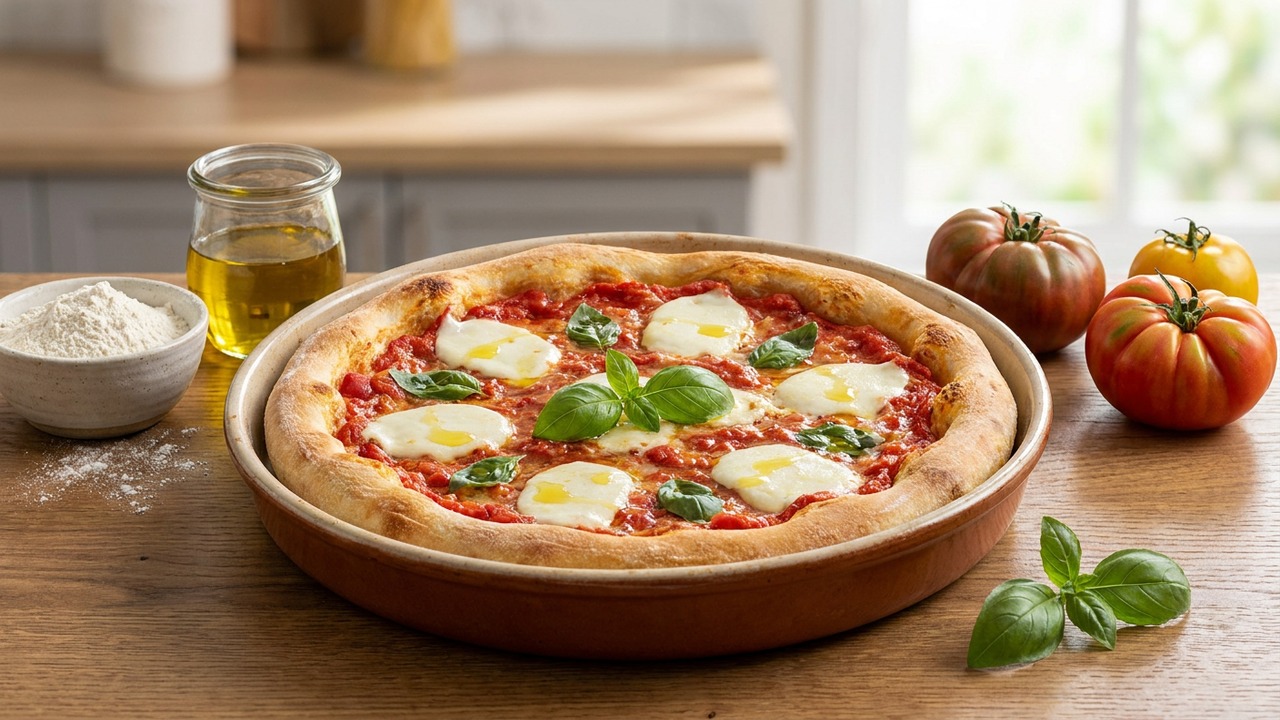
This Margherita is built around a simple, reliably hydrated dough that produces an airy, slightly chewy crust without being fussy. Using 4 cups of all-purpose flour and about 1.33 cups of warm water gives you roughly a 63% hydration—enough to create a pliable, extensible dough that still holds shape when stretched. A single packet of instant yeast, a touch of sugar to wake it up, and a short one-hour rise deliver good lift for same-day pizzas; if you have time, a cold retard in the fridge develops deeper flavor and a prettier crumb.
The topping stays true to the spirit of the original: lightly seasoned crushed tomatoes, torn fresh mozzarella, and bright basil leaves finished with a drizzle of olive oil. Keep the sauce rustic and a little chunky, and make sure to drain or pat the mozzarella so the crust doesn’t go soggy. Bake on a preheated pizza stone or inverted sheet at the hottest temperature your oven allows for 8–12 minutes to get those leopard-like char spots and a blistered, tender rim—this balance of blistered crust, creamy cheese, and perfumed basil is what makes this version sing for weeknight dinners and small gatherings alike.
Ingredients for Basic Homemade Pizza Dough and Margherita Pizza
- 4 cups All-purpose flour
- 1 1/3 cups Warm water (about 105–115°F / 40–46°C)
- 2 1/4 tsp Instant dry yeast
- 1 tsp Granulated sugar
- 2 tsp Fine sea salt
- 2 tbsp Olive oil
- 1 can Canned crushed tomatoes (or whole plum tomatoes, crushed)
- 8 oz Fresh mozzarella
- 1 cup Fresh basil leaves
How to Make Basic Homemade Pizza Dough and Margherita Pizza
Step 1: Mix the dough
Combine warm water, instant yeast and sugar in a large bowl and let sit 2–3 minutes until slightly foamy. Add the flour and salt, then olive oil; stir with a wooden spoon or dough whisk until a shaggy dough forms. Turn the dough onto a lightly floured surface and bring it together for the next step.For this step
- 4 cupsAll-purpose flour
- 1 1/3 cupsWarm water (about 105–115°F / 40–46°C)
- 2 1/4 tspInstant dry yeast
- 1 tspGranulated sugar
- 2 tspFine sea salt
- 2 tbspOlive oil
Step 2: Knead and first rise
Knead the dough for 8–10 minutes by hand (or 6–7 minutes in a stand mixer with a dough hook) until smooth, elastic and slightly tacky. Lightly oil a clean bowl, place the dough ball seam-side down, cover with plastic wrap or a towel, and let rise in a warm spot until doubled, about 60 minutes.Step 3: Divide, rest and shape
Gently punch down the risen dough and divide it into 4 equal portions for personal pizzas. Shape each portion into a tight ball, place on a lightly floured tray, cover and rest 15–30 minutes so the gluten relaxes, which makes stretching easier. When ready, gently press and stretch each ball into a 9–11" round on a floured surface or use your knuckles for a thin edge.Step 4: Prepare the tomato topping
While the dough rests, lightly season the crushed tomatoes with 1/2 teaspoon salt and 1 tablespoon olive oil; mash by hand or pulse briefly in a blender for a rustic sauce. Taste and adjust salt; keep the sauce slightly textured—Margherita is best with a fresh, unsweetened tomato topping. If your tomatoes are watery, drain briefly or simmer 2–3 minutes to thicken.For this step
- 1 canCanned crushed tomatoes (or whole plum tomatoes, crushed)
Step 5: Assemble the pizzas
Preheat your oven as hot as it goes (500–550°F / 260–290°C) and place a pizza stone or inverted baking sheet inside to heat for at least 30 minutes. On each stretched crust, spread a thin layer of tomato sauce, tear fresh mozzarella into pieces and distribute evenly, and tuck a few basil leaves on top. Drizzle a little olive oil over each pie and dust the peel or tray with semolina or flour to prevent sticking.For this step
- 8 ozFresh mozzarella
- 1 cupFresh basil leaves
Step 6: Bake and finish
Slide pizzas onto the preheated stone or sheet and bake 8–12 minutes, rotating halfway, until the crust is puffed and golden with occasional charred spots and the cheese is bubbling. Remove from the oven, add a few fresh basil leaves and a final drizzle of olive oil, then let rest 1–2 minutes before slicing. Serve hot for best texture and flavor.


- Combine warm water, instant yeast and sugar in a large bowl and let sit 2–3 minutes until slightly foamy. Add the flour and salt, then olive oil; stir with a wooden spoon or dough whisk until a shaggy dough forms. Turn the dough onto a lightly floured surface and bring it together for the next step.
- Knead the dough for 8–10 minutes by hand (or 6–7 minutes in a stand mixer with a dough hook) until smooth, elastic and slightly tacky. Lightly oil a clean bowl, place the dough ball seam-side down, cover with plastic wrap or a towel, and let rise in a warm spot until doubled, about 60 minutes.
- Gently punch down the risen dough and divide it into 4 equal portions for personal pizzas. Shape each portion into a tight ball, place on a lightly floured tray, cover and rest 15–30 minutes so the gluten relaxes, which makes stretching easier. When ready, gently press and stretch each ball into a 9–11" round on a floured surface or use your knuckles for a thin edge.
- While the dough rests, lightly season the crushed tomatoes with 1/2 teaspoon salt and 1 tablespoon olive oil; mash by hand or pulse briefly in a blender for a rustic sauce. Taste and adjust salt; keep the sauce slightly textured—Margherita is best with a fresh, unsweetened tomato topping. If your tomatoes are watery, drain briefly or simmer 2–3 minutes to thicken.
- Preheat your oven as hot as it goes (500–550°F / 260–290°C) and place a pizza stone or inverted baking sheet inside to heat for at least 30 minutes. On each stretched crust, spread a thin layer of tomato sauce, tear fresh mozzarella into pieces and distribute evenly, and tuck a few basil leaves on top. Drizzle a little olive oil over each pie and dust the peel or tray with semolina or flour to prevent sticking.
- Slide pizzas onto the preheated stone or sheet and bake 8–12 minutes, rotating halfway, until the crust is puffed and golden with occasional charred spots and the cheese is bubbling. Remove from the oven, add a few fresh basil leaves and a final drizzle of olive oil, then let rest 1–2 minutes before slicing. Serve hot for best texture and flavor.
Basic Homemade Pizza Dough and Margherita Pizza Tips
Measure by weight
If possible, weigh flour and water for consistency; 4 cups of AP flour is roughly 480–500g and the water amount is about 314g for a ~63% hydration.
Check dough readiness
Use the windowpane test—stretch a small piece until it’s thin and translucent without tearing—to know when kneading is complete and gluten is well-developed.
Dry your mozzarella
Slice and drain fresh mozzarella on paper towels for 15–20 minutes or blot it to remove excess moisture so the pie won’t become soggy.
Stretch, don’t roll
Avoid a rolling pin; use your knuckles and gravity to stretch the dough so the rim stays airy and the center doesn’t get compressed.
Preheat stone or sheet
Give your stone or inverted baking sheet at least 30 minutes at top oven temperature so the bottom of the crust crisps quickly on contact.
Control sauce moisture
If canned tomatoes are watery, drain or simmer them 2–3 minutes to concentrate flavor and prevent a wet center.
Basic Homemade Pizza Dough and Margherita Pizza Variations and Substitutions
Cold-fermented dough
After kneading, refrigerate the dough for 24–72 hours to develop more complex flavors and a chewier crumb; bring to room temperature before shaping.
Use low-moisture cheese
Substitute part or all of the fresh mozzarella with low-moisture, whole-milk mozzarella for less water release and more even browning.
Olive oil–garlic base
Brush the stretched crust with garlic-infused olive oil instead of tomato sauce for a white pizza version topped with mozzarella and basil.
Gluten-free option
Use a tested gluten-free pizza flour blend and follow its hydration instructions rather than this dough recipe, since gluten-free dough behaves differently.
How to Store and Make Basic Homemade Pizza Dough and Margherita Pizza Ahead
Leftover pizza keeps best refrigerated in an airtight container or wrapped tightly for up to 3 days; avoid stacking slices directly to prevent sogginess. Reheat in a 400°F oven or in a cast-iron skillet over medium heat with a lid for 5–8 minutes to revive crispness. Dough can be made ahead and refrigerated for up to 72 hours or frozen for up to one month—thaw overnight in the refrigerator and bring to room temperature before shaping.
What to Serve With Basic Homemade Pizza Dough and Margherita Pizza
Serve with a simple peppery arugula salad tossed with lemon, olive oil, and shaved Parmesan to cut the richness of the cheese. Pair the pizza with a bright, medium-bodied red like Sangiovese or a crisp pilsner; finish with extra virgin olive oil and crushed red pepper on the side for guests to customize.
Basic Homemade Pizza Dough and Margherita Pizza FAQs
Can I use active dry yeast instead of instant?
Yes—proof active dry yeast in the warm water with sugar for 5–10 minutes until foamy, then proceed; you may need a minute or two more kneading.
How do I prevent a soggy center?
Use a slightly thinner layer of sauce, drain or thicken watery tomatoes, pat dry the mozzarella, and bake on a very hot preheated stone or sheet so the base crisps quickly.
What indicates the dough has doubled?
A doubled dough should look visibly expanded, feel aerated, and when you poke it lightly the indentation should slowly spring back; if it snaps back immediately, it needs more time.
Why tear the mozzarella instead of slicing?
Tearing creates irregular pieces that melt into pockets, leaving small exposed tomato areas that char nicely and produce better texture than uniform slices.
My oven doesn’t go above 500°F—what now?
Set it to the highest temperature available, use a preheated stone or inverted steel if possible, and expect slightly longer bake times; you can also broil for the last minute to encourage charring.
Can I make larger family-style pies?
Yes—combine dough balls into larger portions and stretch into a larger round, but remember thicker pies will need a slightly longer bake and may not blister as much as smaller personal pies.
About the author
Jake WoodsHello, I'm Jake. I started this recipe site with the idea that I hated recipe websites that overwhelm you with long stories and ads just to see plain content that's not helpful. My goal is to provide you with quality recipes, simple ideas and a fun cooking experience. There's lots of fun things to cook, and I think as you browse the site you'll find that TopShelf.Recipes is the place for quality recipes on the web.
See all recipes by Jake Woods →Ratings & Reviews
Did you make this recipe?
Be the first to share your experience.
Nutrition Facts
Per serving: about 1½ cups
Nutrition values are estimated from USDA ingredient data and may vary based on preparation, brands, and portion sizes. Values are provided for informational purposes only.
Keep Reading
Guides & articles for this recipe

Recipes
Best Halloween Recipes For Parties
A practical guide to Halloween recipes that literally have “Halloween” in the name—party-ready snacks, kid-friendly treats, mains, drinks, and make-ahead desserts. Pick recipes, plan timing, and scale a spooky menu with straightforward shopping and prep advice.
Tips & Techniques
Baking Soda and Tenderized Beef
Learn how baking soda can tenderize, boost browning, and improve moisture for ground beef and other meats. This practical guide covers the science, step-by-step techniques, common mistakes, and recipes to try.

Healthy Eating
Gluten-Free Weeknight Grilling Plan
A 7-day gluten-free weeknight grilling plan with quick, family-friendly recipes, prep-ahead timelines, and a printable shopping list that spotlights late-summer produce and pantry staples. Includes clear cross-contamination safety tips and simple swaps to keep dinners fast and crowd-pleasing.
More from Baking
View all Baking recipes →
Cloud Bread Sandwiches

Honey Mustard Chicken Nuggets

Cheddar Jalapeño Corn Muffins

Basque Burnt Cheesecake

30-Minute Sticky Baked Honey Garlic Chicken Thighs with Crisp Edges

Lemon Butter Salmon

Spritz Cookies

Brown Butter Vanilla Syrup

Honey Glazed Easter Ham
Ask me anything about this recipe — substitutions, scaling, techniques, timing.
Powered by AI · 6 questions per 5 minutes, 30 per day