Chewy Banana Oatmeal Cookies
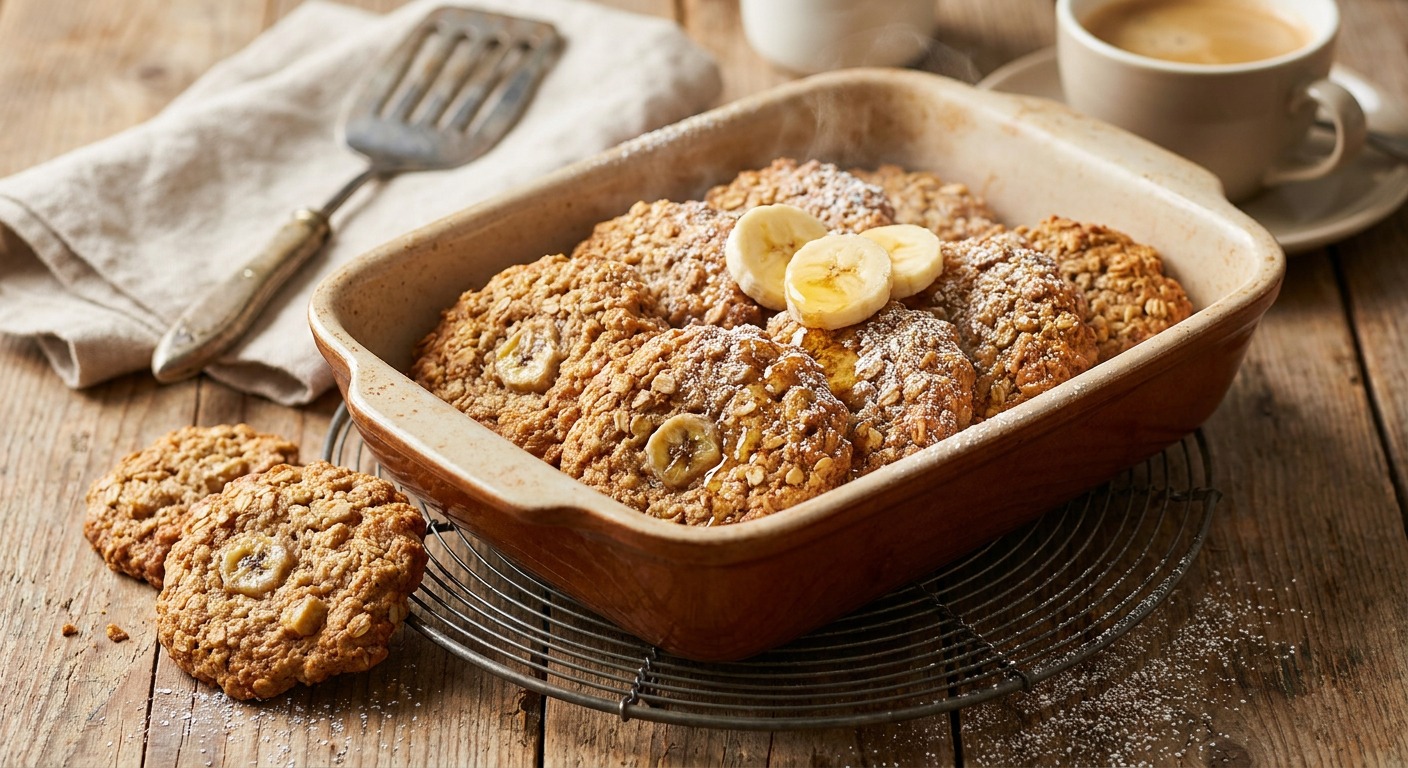
Soft, chewy banana oatmeal cookies made with ripe bananas, brown sugar and old‑fashioned oats for a naturally sweet, portable treat. These oven‑baked cookies are quick to mix and deliver a tender center with slightly crisp edges—great for snack time or a light dessert.
Sara's note
"This recipe shines when you have very ripe bananas and want a quick, wholesome baked treat. Home cooks will love how little hands-on time these take and how reliably they stay soft in the center."
About This Recipe
These Chewy Banana Oatmeal Cookies are the kind of humble, reliable bake that earns a permanent spot in your rotation: quick to mix, forgiving with ingredient swaps, and intensely comforting. Ripe bananas provide the primary sweetness and moisture while light brown sugar and melted butter deepen flavor and encourage a tender, slightly caramelized edge. Using old‑fashioned rolled oats gives chew and body—unlike instant oats, they hold little pockets of texture rather than turning to mush—while a touch of baking soda lifts the centers so the cookies stay soft instead of collapsing flat.
This version is built for busy home bakers and lunch‑box providers who want a portable snack that doesn’t rely on frostings or candies. The dough comes together in one bowl and benefits from a brief rest to let the oats hydrate, which is why a 10–12 minute bake leaves you with crisply edged, pillowy middles. Treat them warm with nut butter or cool them for packing; either way they travel well and make friendly canvas for nuts, chocolate, or dried fruit if you want to riff on the basic formula.
Ingredients for Chewy Banana Oatmeal Cookies
- 2 medium Ripe bananas (medium)
- 1/4 cup Unsalted butter, melted
- 1/3 cup Light brown sugar, packed
- 1 large Large egg
- 1 tsp Vanilla extract
- 1 1/2 cups Old‑fashioned rolled oats
- 3/4 cup All‑purpose flour
- 1/2 tsp Baking soda
- 1/4 tsp Fine salt
- 1/2 tsp Ground cinnamon
How to Make Chewy Banana Oatmeal Cookies
Step 1: Preheat and combine wet ingredients
Preheat the oven to 350°F (175°C). In a large mixing bowl, mash the ripe bananas until mostly smooth, then whisk in the melted butter, brown sugar, egg and vanilla until well combined and glossy.For this step
- 2 mediumRipe bananas (medium)
- 1/4 cupUnsalted butter, melted
- 1/3 cupLight brown sugar, packed
- 1 largeLarge egg
- 1 tspVanilla extract
Step 2: Mix dry ingredients
In a separate bowl combine the rolled oats, all‑purpose flour, baking soda, salt and ground cinnamon. Whisk briefly to evenly distribute the leavening and spices so each cookie bakes uniformly.For this step
- 1 1/2 cupsOld‑fashioned rolled oats
- 3/4 cupAll‑purpose flour
- 1/2 tspBaking soda
- 1/4 tspFine salt
- 1/2 tspGround cinnamon
Step 3: Combine wet and dry to form dough
Fold the dry mixture into the wet banana mixture using a spatula until just combined—do not overmix. The batter should be thick and slightly sticky; if too loose, let it rest 5 minutes to allow the oats to absorb moisture.Step 4: Scoop onto baking sheet
Line a baking sheet with parchment paper and use a 2‑tbsp scoop or spoon to drop mounds spaced about 2 inches apart. Lightly flatten each mound with the back of a spoon for even baking and a tidy cookie shape.Step 5: Bake and cool
Bake in the preheated oven for 10–12 minutes, until edges are set and tops look just firm but centers still soft for a chewy texture. Allow cookies to cool on the sheet for 5 minutes, then transfer to a wire rack to finish cooling before serving.


- Preheat the oven to 350°F (175°C). In a large mixing bowl, mash the ripe bananas until mostly smooth, then whisk in the melted butter, brown sugar, egg and vanilla until well combined and glossy.
- In a separate bowl combine the rolled oats, all‑purpose flour, baking soda, salt and ground cinnamon. Whisk briefly to evenly distribute the leavening and spices so each cookie bakes uniformly.
- Fold the dry mixture into the wet banana mixture using a spatula until just combined—do not overmix. The batter should be thick and slightly sticky; if too loose, let it rest 5 minutes to allow the oats to absorb moisture.
- Line a baking sheet with parchment paper and use a 2‑tbsp scoop or spoon to drop mounds spaced about 2 inches apart. Lightly flatten each mound with the back of a spoon for even baking and a tidy cookie shape.
- Bake in the preheated oven for 10–12 minutes, until edges are set and tops look just firm but centers still soft for a chewy texture. Allow cookies to cool on the sheet for 5 minutes, then transfer to a wire rack to finish cooling before serving.
Chewy Banana Oatmeal Cookies Tips
Choose very ripe bananas
Dark‑spotted bananas mash more easily and contribute more sugar and banana flavor, which reduces the need for extra sweetener.
Weigh oats and flour
Measuring by weight (about 150g oats, 95g flour) prevents a dense cookie from too‑much flour and ensures consistent texture.
Let dough rest
A 5–10 minute rest lets the oats absorb moisture so the dough firms up and the cookies bake without spreading too thin.
Avoid overmixing
Fold dry into wet just until combined to keep the cookies tender; overworking develops gluten and chews up the texture.
Flatten before baking
Lightly press each scoop so the top is even—this ensures uniform baking and the signature soft center with crisp edge.
Check doneness early
Remove when edges are set but centers still look slightly underbaked; they firm as they cool to maintain chewiness.
Chewy Banana Oatmeal Cookies Variations and Substitutions
Gluten‑free swap
Replace all‑purpose flour with an equal weight (not volume) gluten‑free baking blend and ensure the blend contains xanthan gum for structure.
Add chocolate & nuts
Fold in 1/3 cup dark chocolate chips and 1/3 cup toasted chopped walnuts for a richer, more textural cookie without changing baking time.
Dairy‑free option
Use melted coconut oil in place of butter for a dairy‑free cookie; the flavor shifts slightly but the texture remains chewy.
Make them vegan
Substitute the egg with a flax egg (1 tbsp flaxseed meal + 3 tbsp water, chilled) and use melted coconut oil to keep the cookies egg‑ and dairy‑free.
How to Store and Make Chewy Banana Oatmeal Cookies Ahead
Store cooled cookies in an airtight container at room temperature for up to 3 days; placing a slice of apple or a damp paper towel (sealed separately) helps maintain moisture. For longer storage, freeze in a single layer on a tray until firm, then transfer to a freezer bag for up to 3 months; thaw overnight at room temperature. Reheat individual cookies in a 300°F oven or toaster oven for 4–6 minutes or microwave for 10–15 seconds to restore that freshly‑baked softness.
What to Serve With Chewy Banana Oatmeal Cookies
These cookies pair beautifully with a strong coffee or chai for an afternoon pick‑me‑up, and they're kid‑friendly with a glass of cold milk. For a simple dessert, serve slightly warm with a spoonful of Greek yogurt or a smear of almond butter, or top with a small scoop of vanilla ice cream for an indulgent finish.
Chewy Banana Oatmeal Cookies FAQs
Can I use quick oats instead of rolled oats?
Yes, but quick oats will produce a softer, less chewy cookie because they absorb liquid faster and break down more in the batter; reduce resting time slightly to avoid a gummy texture.
My cookies spread too much—what went wrong?
Over‑ripe banana, too much melted butter, or a warm dough can cause excess spread; chill the scooped dough for 10–15 minutes and ensure your flour and oats are measured accurately by weight.
How can I make these less sweet?
Use slightly less brown sugar (reduce by 2–3 tablespoons) and rely on the natural sweetness of very ripe bananas; you can also add a pinch more salt to balance perceived sweetness.
Why are my cookies dry or crumbly?
Under‑ripe bananas, too much flour, or overbaking are common causes; use fully ripe bananas, measure flour properly, and remove cookies when centers are just set so they finish firming on the baking sheet.
Can I make these into bars instead of cookies?
Yes—press the dough into an 8x8‑inch pan lined with parchment and bake at 350°F for about 18–22 minutes until just set; cool completely before cutting to keep the bars intact.
Ratings & Reviews
Did you make this recipe?
Be the first to share your experience.
Nutrition Facts
Per serving: 1 serving
Nutrition values are estimated from USDA ingredient data and may vary based on preparation, brands, and portion sizes. Values are provided for informational purposes only.
Keep Reading
Guides & articles for this recipe
Tips & Techniques
Baking Soda and Tenderized Beef
Learn how baking soda can tenderize, boost browning, and improve moisture for ground beef and other meats. This practical guide covers the science, step-by-step techniques, common mistakes, and recipes to try.

Healthy Eating
Gluten-Free Weeknight Grilling Plan
A 7-day gluten-free weeknight grilling plan with quick, family-friendly recipes, prep-ahead timelines, and a printable shopping list that spotlights late-summer produce and pantry staples. Includes clear cross-contamination safety tips and simple swaps to keep dinners fast and crowd-pleasing.

Healthy Eating
Low-Fat Grill Swaps for Big Flavor
A practical guide to trimming fat from grilled meals without losing juiciness or char. Learn yogurt- and citrus-based marinades, lean protein picks, searing and indirect-heat tricks, plus 5 quick low-fat marinades and a simple weeknight plan.
More from Baking
View all Baking recipes →
Cloud Bread Sandwiches

Honey Mustard Chicken Nuggets

Cheddar Jalapeño Corn Muffins

Basque Burnt Cheesecake

30-Minute Sticky Baked Honey Garlic Chicken Thighs with Crisp Edges

Lemon Butter Salmon

Spritz Cookies

Brown Butter Vanilla Syrup

Honey Glazed Easter Ham
Ask me anything about this recipe — substitutions, scaling, techniques, timing.
Powered by AI · 6 questions per 5 minutes, 30 per day