Chickpea Pizza Crust
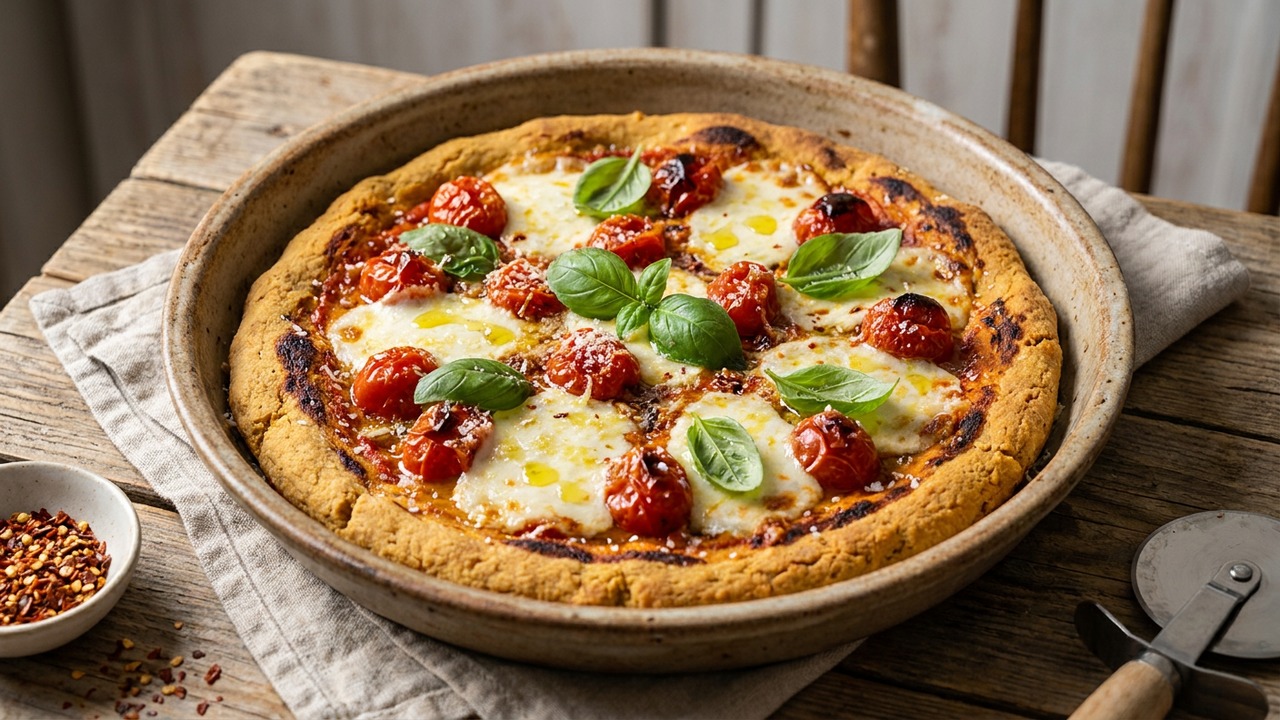
A simple, protein-forward gluten-free pizza crust made from chickpea (besan) flour. It bakes up crisp at the edges with a tender, savory interior that holds toppings beautifully for quick weeknight pizzas or casual entertaining.
Ingredient Spotlight
Chickpea (besan) flour
Chickpea (besan) flour is finely ground dried chickpeas (also called besan or gram flour) used across Indian, Pakistani and Mediterranean cuisines for batters, flatbreads and fritters; it’s naturally gluten-free. It has a nutty, slightly earthy, legume-like aroma and contributes a dense, tender crumb and savory nuttiness to recipes. Find it at Indian or international markets, the gluten-free aisle of many supermarkets, or online; if you can’t get it, all-purpose flour will work (if gluten is acceptable) or a rice flour + tapioca starch blend for a gluten-free but texturally different substitute.
Ingredient Spotlight
Fine cornmeal or polenta (for dusting pan)
Fine cornmeal (often sold as polenta when ground very fine) is ground dried corn used to dust pans and add a light crunchy corn crust; it has a mild sweet corn flavor and a sandy texture. Polenta is Italian in origin and comes in fine-to-coarse grinds—the fine version gives a delicate crisp rather than big gritty pieces. You’ll find it in the baking or ethnic aisle of supermarkets and at Italian markets; good substitutes for dusting include semolina or fine breadcrumbs, and masa harina if you want a similar corn flavor.
Jake Woods's note
"This chickpea crust is a reliable, everyday gluten-free base that crisps in a hot oven and stands up to hearty toppings. Home cooks will love how fast it comes together and how much protein it adds without gluten."
About This Recipe
This chickpea (besan) pizza crust is a straightforward, protein-forward take on thin-crust pizza that leans savory and sturdy rather than doughy. Made with nothing more than chickpea flour, water, a little olive oil, and a few seasonings, it bakes up with crisp, nutty edges and a tender, almost custardy interior that holds sauce and toppings without becoming floppy. The formula is essentially a pan-socca adapted to pizza proportions: a thin batter that benefits from high heat and a short par-bake so the surface sets before you add toppings.
What makes this version work is attention to texture and timing — a proper batter thickness (think heavy cream), a 15-minute hydration rest, and placement on the upper third of a very hot oven so the rim browns while the center firms. Cornmeal under the crust gives that extra crunch and prevents sticking, and a light hand with toppings keeps the final pizza crisp. It’s an ideal weeknight solution for gluten-free eaters, anyone wanting more plant protein, or cooks who want a quick, versatile base that finishes in 20 minutes after par-baking.
Ingredients for Chickpea Pizza Crust
- 2 cups Chickpea (besan) flour
- 1 1/4 cups Water (room temperature)
- 3 tbsp Extra-virgin olive oil (total)
- 1 tsp Baking powder
- 3/4 tsp Salt
- 1 tsp Dried oregano
- 1/2 tsp Freshly ground black pepper
- 1 tbsp Fine cornmeal or polenta (for dusting pan)
How to Make Chickpea Pizza Crust
Step 1: Preheat oven and prepare pan
Place a rack in the upper third of the oven and preheat to 450°F (230°C). Lightly brush a 12-inch pizza pan or a rimmed baking sheet with 1 tablespoon of the olive oil and sprinkle the cornmeal evenly to prevent sticking and add a bit of crunch.For this step
- 1 tbspFine cornmeal or polenta (for dusting pan)
Step 2: Whisk the chickpea batter
In a medium bowl, whisk together the chickpea flour, baking powder, salt, dried oregano, and black pepper. Gradually add the water and the remaining 2 tablespoons of olive oil, whisking until smooth and pourable; the batter should be the thickness of heavy cream. Let the batter rest for 15 minutes at room temperature to hydrate.For this step
- 2 cupsChickpea (besan) flour
- 1 1/4 cupsWater (room temperature)
- 1 tspBaking powder
- 3/4 tspSalt
- 1 tspDried oregano
- 1/2 tspFreshly ground black pepper
Step 3: Spread and par-bake the crust
Pour the rested batter onto the prepared pan and tilt or use a spatula to spread it into an even, thin round about 10–12 inches across (thinner yields crisper results). Bake for 10–12 minutes until the edges are set and begin to brown and the top is mostly dry.Step 4: Top and finish baking
Remove the par-baked crust, add sauce and desired toppings (keep them reasonably light to prevent sogginess), and return to the oven. Bake 8–12 more minutes until toppings are heated through and any cheese is melted and golden.Step 5: Rest, slice, and serve
Let the pizza rest for 5 minutes on a rack so the crust firms up and crisps slightly. Slice into quarters or eighths and serve warm; leftovers keep well refrigerated and can be crisped in a hot skillet or oven.


- Place a rack in the upper third of the oven and preheat to 450°F (230°C). Lightly brush a 12-inch pizza pan or a rimmed baking sheet with 1 tablespoon of the olive oil and sprinkle the cornmeal evenly to prevent sticking and add a bit of crunch.
- In a medium bowl, whisk together the chickpea flour, baking powder, salt, dried oregano, and black pepper. Gradually add the water and the remaining 2 tablespoons of olive oil, whisking until smooth and pourable; the batter should be the thickness of heavy cream. Let the batter rest for 15 minutes at room temperature to hydrate.
- Pour the rested batter onto the prepared pan and tilt or use a spatula to spread it into an even, thin round about 10–12 inches across (thinner yields crisper results). Bake for 10–12 minutes until the edges are set and begin to brown and the top is mostly dry.
- Remove the par-baked crust, add sauce and desired toppings (keep them reasonably light to prevent sogginess), and return to the oven. Bake 8–12 more minutes until toppings are heated through and any cheese is melted and golden.
- Let the pizza rest for 5 minutes on a rack so the crust firms up and crisps slightly. Slice into quarters or eighths and serve warm; leftovers keep well refrigerated and can be crisped in a hot skillet or oven.
Chickpea Pizza Crust Tips
Check batter consistency
Aim for the thickness of heavy cream — too thin and the crust spreads too much, too thick and it won’t level evenly; adjust with a tablespoon of water or flour if needed.
Rest to hydrate
Letting the batter sit 15 minutes allows the chickpea flour to fully absorb water, yielding a tender interior and reducing the beany raw taste.
Par-bake until dry
Bake until the edges are browned and the top is mostly dry; if the center still looks wet, give it an extra 1–2 minutes to avoid a gummy result after toppings.
Spread thin for crispness
Aim for a 10–12-inch round and as even a thickness as possible — thinner results in crispier edges and a better bite under toppings.
Use light toppings
Avoid soggy or very watery toppings and don’t overload the pizza; pre-roasting mushrooms or squeezing excess moisture from fresh tomatoes keeps the crust from getting soft.
Chickpea Pizza Crust Variations and Substitutions
Herbed garlic crust
Stir in 1 teaspoon of garlic powder and a tablespoon of finely chopped rosemary or thyme into the batter for a fragrant base that needs minimal sauce.
Cheesy besan crust
Fold 1/3 to 1/2 cup grated Parmesan or Pecorino into the dry ingredients for extra savory depth and a slightly firmer, golden rim.
Egg-enriched (softer)
Add one beaten large egg to the batter to create a richer, slightly more cohesive crumb — useful if you plan hearty toppings or prefer a less fragile slice.
Thin-crust mix
For a crisper, lighter texture, replace up to 25% of the chickpea flour with superfine rice flour or tapioca starch; don’t exceed this ratio or you’ll lose the protein-forward character.
How to Store and Make Chickpea Pizza Crust Ahead
Store leftover pizza in an airtight container in the refrigerator for up to 3 days. To reheat, warm slices in a hot skillet for 3–4 minutes or in a 400°F oven for 6–8 minutes to recrisp the crust; frozen par-baked crusts can be wrapped tightly and frozen for up to 1 month, then topped and baked from frozen with an extra 3–5 minutes.
What to Serve With Chickpea Pizza Crust
Serve slices with a bright salad of arugula, lemon, and shaved fennel to cut the crust's richness, or alongside quick roasted vegetables like broccolini or fennel. For drinks, choose a crisp white like Vermentino or a citrusy IPA; for nonalcoholic pairings, a sparkling water with a squeeze of lemon complements the chickpea’s nutty flavor.
Chickpea Pizza Crust FAQs
Why does the batter need to rest?
Resting gives the chickpea flour time to fully hydrate, which improves texture and reduces raw, chalky flavors; it also helps the batter thicken slightly so it spreads more evenly.
My crust turns out gummy — how can I fix it?
Usually that means it needed more oven time or a thinner spread; par-bake until the top is dry and the edges brown, place the pan higher in the oven, and avoid heavy, wet toppings that steam the crust.
Can I use regular chickpea flour from the grocery store?
Yes — besan or chickpea flour labeled for baking works well; if your flour is very coarse, sift it or briefly blitz it in a spice grinder for a finer texture and less graininess.
Is this crust suitable for meal prep?
Absolutely — you can par-bake several crusts, cool completely, stack with parchment, and refrigerate for 2–3 days or freeze for up to a month; top and finish baking when ready to serve.
Can I make this with whole cooked chickpeas instead of flour?
You can blend cooked chickpeas into a batter-like paste, but you’ll need to thin with water and accept a denser, more textured crust; chickpea flour gives the lightest, most reliable thin-crust result.
About the author
Jake WoodsHello, I'm Jake. I started this recipe site with the idea that I hated recipe websites that overwhelm you with long stories and ads just to see plain content that's not helpful. My goal is to provide you with quality recipes, simple ideas and a fun cooking experience. There's lots of fun things to cook, and I think as you browse the site you'll find that TopShelf.Recipes is the place for quality recipes on the web.
See all recipes by Jake Woods →Ratings & Reviews
Did you make this recipe?
Be the first to share your experience.
Nutrition Facts
Per serving: about ¾ cup
Nutrition values are estimated from USDA ingredient data and may vary based on preparation, brands, and portion sizes. Values are provided for informational purposes only.
Keep Reading
Guides & articles for this recipe
Tips & Techniques
Baking Soda and Tenderized Beef
Learn how baking soda can tenderize, boost browning, and improve moisture for ground beef and other meats. This practical guide covers the science, step-by-step techniques, common mistakes, and recipes to try.

Healthy Eating
Gluten-Free Weeknight Grilling Plan
A 7-day gluten-free weeknight grilling plan with quick, family-friendly recipes, prep-ahead timelines, and a printable shopping list that spotlights late-summer produce and pantry staples. Includes clear cross-contamination safety tips and simple swaps to keep dinners fast and crowd-pleasing.

Healthy Eating
Low-Fat Grill Swaps for Big Flavor
A practical guide to trimming fat from grilled meals without losing juiciness or char. Learn yogurt- and citrus-based marinades, lean protein picks, searing and indirect-heat tricks, plus 5 quick low-fat marinades and a simple weeknight plan.
More from Baking
View all Baking recipes →
Cloud Bread Sandwiches

Honey Mustard Chicken Nuggets

Cheddar Jalapeño Corn Muffins

Basque Burnt Cheesecake

30-Minute Sticky Baked Honey Garlic Chicken Thighs with Crisp Edges

Lemon Butter Salmon

Spritz Cookies

Brown Butter Vanilla Syrup

Honey Glazed Easter Ham
Ask me anything about this recipe — substitutions, scaling, techniques, timing.
Powered by AI · 6 questions per 5 minutes, 30 per day