Almond Biscotti
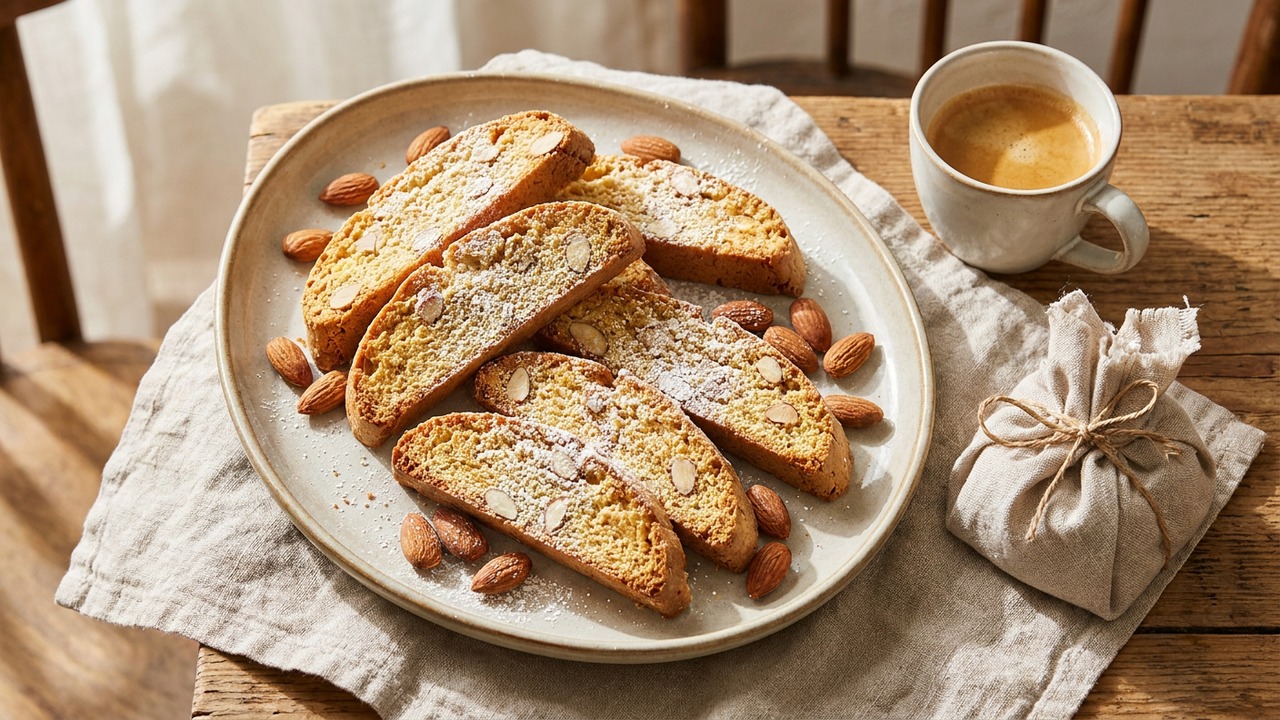
A crisp, twice-baked Italian almond biscotti perfect for dunking in coffee or wrapping as a thoughtful homemade gift. These crunchy, lightly sweet cookies feature toasted whole almonds and a tender almond-scented crumb.
Jake Woods's note
"This classic twice-baked almond biscotti is ideal for coffee mornings, holiday gifting, or keeping on hand for a crunchy snack. Home bakers will love the easy shaping and the satisfying crisp that develops after the second bake."
About This Recipe
These almond biscotti are a study in contrasts: crisp, twice-baked slices with a tender, almond-scented crumb at their core. Toasting whole almonds before they meet the dough deepens their flavor and gives each bite a satisfying crunch that stands up to dunking without turning mushy. The recipe keeps sweetness moderate so the nutty, buttery notes sing, and the diagonal slicing produces the classic elongated coins that brown beautifully on their edges.
What makes this version work is its balance of simple technique and dependable results — melted-and-cooled butter for a richer mouthfeel, baking powder to give a little lift, and a slightly stiff dough that’s easy to shape into uniform logs. It’s a great project for anyone who likes hands-on baking: not fussy, but rewarding. Make a double batch for gift boxes, pack a few in a picnic, or keep a jar on the counter for coffee guests; these hold up well and only improve with a light re-toast before serving.
Ingredients for Almond Biscotti
- 2 1/4 cups All-purpose flour
- 2/3 cup Granulated sugar
- 1 1/2 tsp Baking powder
- 1/2 tsp Fine salt
- 1 cup Whole almonds (raw)
- 2 large Large eggs
- 1 tsp Vanilla extract
- 1/4 cup Unsalted butter, melted and cooled
How to Make Almond Biscotti
Step 1: Preheat and prepare
Preheat the oven to 350°F (175°C). Line a baking sheet with parchment paper or a silicone mat and set aside. (No ingredients are combined in this step.)Step 2: Combine dry ingredients
In a large bowl, whisk together the all-purpose flour, granulated sugar, baking powder, and fine salt until evenly distributed. Set the dry mixture aside while you prepare the almonds and wet ingredients.For this step
- 2 1/4 cupsAll-purpose flour
- 2/3 cupGranulated sugar
- 1 1/2 tspBaking powder
- 1/2 tspFine salt
Step 3: Toast the almonds
Spread the whole almonds in a single layer on the prepared baking sheet and toast in the preheated oven for 8–10 minutes, stirring once, until fragrant and lightly golden. Remove from the oven and let cool; coarsely chop if you prefer smaller pieces before adding to the dough.For this step
- 1 cupWhole almonds (raw)
Step 4: Make the dough
In a medium bowl, whisk together the eggs, vanilla extract and melted, cooled butter until combined. Add the egg mixture to the dry ingredients and stir with a wooden spoon until a stiff, slightly sticky dough forms. Fold in the toasted almonds until evenly distributed.For this step
- 2 largeLarge eggs
- 1 tspVanilla extract
- 1/4 cupUnsalted butter, melted and cooled
Step 5: Shape and first bake
Divide the dough in half and shape each piece into a log approximately 10–12 inches long and 2 inches wide on the prepared sheet, spacing them at least 2 inches apart. Bake at 350°F (175°C) for 20–25 minutes, until the logs are set and lightly golden; remove from the oven and let cool 15–20 minutes until firm but still warm.Step 6: Slice, second bake and finish
Reduce oven temperature to 325°F (160°C). Using a serrated knife, slice each log diagonally into 1/2-inch thick slices. Arrange cut side up on the baking sheet and bake for 10–14 minutes more, flipping once at midtime, until crisp and dry. Cool completely on a rack; store airtight at room temperature up to 2 weeks or freeze up to 3 months. To refresh crispness, warm in a 300°F (150°C) oven for 5 minutes before serving.


- Preheat the oven to 350°F (175°C). Line a baking sheet with parchment paper or a silicone mat and set aside. (No ingredients are combined in this step.)
- In a large bowl, whisk together the all-purpose flour, granulated sugar, baking powder, and fine salt until evenly distributed. Set the dry mixture aside while you prepare the almonds and wet ingredients.
- Spread the whole almonds in a single layer on the prepared baking sheet and toast in the preheated oven for 8–10 minutes, stirring once, until fragrant and lightly golden. Remove from the oven and let cool; coarsely chop if you prefer smaller pieces before adding to the dough.
- In a medium bowl, whisk together the eggs, vanilla extract and melted, cooled butter until combined. Add the egg mixture to the dry ingredients and stir with a wooden spoon until a stiff, slightly sticky dough forms. Fold in the toasted almonds until evenly distributed.
- Divide the dough in half and shape each piece into a log approximately 10–12 inches long and 2 inches wide on the prepared sheet, spacing them at least 2 inches apart. Bake at 350°F (175°C) for 20–25 minutes, until the logs are set and lightly golden; remove from the oven and let cool 15–20 minutes until firm but still warm.
- Reduce oven temperature to 325°F (160°C). Using a serrated knife, slice each log diagonally into 1/2-inch thick slices. Arrange cut side up on the baking sheet and bake for 10–14 minutes more, flipping once at midtime, until crisp and dry. Cool completely on a rack; store airtight at room temperature up to 2 weeks or freeze up to 3 months. To refresh crispness, warm in a 300°F (150°C) oven for 5 minutes before serving.
Almond Biscotti Tips
Toast almonds first
Briefly toasting whole almonds (8–10 minutes) develops a nutty aroma and prevents them from tasting raw in the finished biscotti.
Cool butter and eggs
Make sure the melted butter is cooled before adding to the eggs to avoid cooking them and to keep the dough smooth and cohesive.
Keep dough slightly stiff
Aim for a firm, slightly sticky dough—if it’s too wet your logs will spread; if too dry, add a teaspoon of water or an extra beaten egg white.
Shape even logs
Roll each log to an even thickness (about 2 inches) and press the top slightly flat so slices bake uniformly during the second bake.
Use a serrated knife
Slice warm logs with a long serrated knife using a gentle sawing motion and keep slices about 1/2 inch thick for the best texture.
Watch oven temperature
Ovens vary—check for light golden color rather than relying only on time, and lower temp for the second bake if edges brown too quickly.
Almond Biscotti Variations and Substitutions
Almond-orange biscotti
Add 1–2 teaspoons of finely grated orange zest to the dough and finish with a thin orange glaze for a bright citrus lift that complements the almonds.
Chocolate-dipped almonds
Fold in 1/2 cup chopped dark chocolate or dip cooled biscotti in melted chocolate for half of each cookie; refrigerate briefly to set.
Hazelnut swap
Replace whole almonds with toasted hazelnuts and add 1/2 teaspoon of cinnamon for a toasty, Nutella-like flavor profile.
Gluten-free option
Use a 1:1 gluten-free all-purpose flour blend that includes xanthan gum and reduce liquid slightly if dough feels too loose; texture will be slightly more tender.
How to Store and Make Almond Biscotti Ahead
Store cooled biscotti in an airtight container at room temperature for up to two weeks; they’re intentionally dry so they keep well. For longer storage, freeze in a sealed bag for up to three months and thaw at room temperature. To revive any softened pieces, re-crisp in a 300°F (150°C) oven for 3–5 minutes before serving.
What to Serve With Almond Biscotti
These biscotti are classic with a cup of espresso, strong drip coffee, or a small glass of Vin Santo for an Italian pairing. For a light dessert plate, serve with mascarpone or ricotta sweetened with a touch of honey and a scattering of toasted almonds. Wrap a stack in parchment and tie with twine for an elegant homemade gift.
Almond Biscotti FAQs
My logs cracked while baking — why?
Small surface cracks are normal and give biscotti their rustic look; major splits usually mean the logs were too dry or shaped unevenly. Keep the dough slightly moist and press the logs gently to smooth the tops before the first bake.
How do I stop biscotti from becoming too hard?
If you prefer a less rock-hard biscotti, shorten the second bake by a few minutes or slice a touch thicker (around 3/4 inch) so they retain a slight chew while still drying through.
Can I make the dough ahead of time?
Yes — shape the logs, wrap tightly, and refrigerate up to 24 hours before the first bake, or freeze unbaked logs for up to one month and bake from slightly thawed.
Why use whole almonds instead of almond meal?
Whole toasted almonds add distinct crunch and toasty flavor; almond meal will produce a denser, more uniformly nutty crumb but won’t give the same bite or texture contrast.
My slices are browning unevenly — any fixes?
Rotate the baking sheet halfway through both bakes and try to arrange slices cut side up with even spacing; if your oven has hot spots, use the middle rack or a different sheet for more even heat.
About the author
Jake WoodsHello, I'm Jake. I started this recipe site with the idea that I hated recipe websites that overwhelm you with long stories and ads just to see plain content that's not helpful. My goal is to provide you with quality recipes, simple ideas and a fun cooking experience. There's lots of fun things to cook, and I think as you browse the site you'll find that TopShelf.Recipes is the place for quality recipes on the web.
See all recipes by Jake Woods →Ratings & Reviews
Did you make this recipe?
Be the first to share your experience.
Nutrition Facts
Per serving: about ¾ cup
Nutrition values are estimated from USDA ingredient data and may vary based on preparation, brands, and portion sizes. Values are provided for informational purposes only.
Keep Reading
Guides & articles for this recipe

Tips & Techniques
Baking Soda and Tenderized Beef
Learn how baking soda can tenderize, boost browning, and improve moisture for ground beef and other meats. This practical guide covers the science, step-by-step techniques, common mistakes, and recipes to try.

Healthy Eating
Gluten-Free Weeknight Grilling Plan
A 7-day gluten-free weeknight grilling plan with quick, family-friendly recipes, prep-ahead timelines, and a printable shopping list that spotlights late-summer produce and pantry staples. Includes clear cross-contamination safety tips and simple swaps to keep dinners fast and crowd-pleasing.

Healthy Eating
Low-Fat Grill Swaps for Big Flavor
A practical guide to trimming fat from grilled meals without losing juiciness or char. Learn yogurt- and citrus-based marinades, lean protein picks, searing and indirect-heat tricks, plus 5 quick low-fat marinades and a simple weeknight plan.
More from Baking
View all Baking recipes →
Gluten-Free Soft Pretzels

Sticky Gochujang Spare Ribs (Oven-Baked Korean-Inspired)

Apple Cider Muffins

Baked Buffalo Chicken Wings with Blue Cheese Dip (Crispy Oven Method)

Gluten-Free Honey Garlic Chicken Thighs with Tamari and Toasted Sesame

Sheet Pan Baked Honey Garlic Chicken Breasts with Roasted Vegetables

Juicy Oven-Baked Chicken Breasts (No-Dryness Method)

Cloud Bread Sandwiches

Honey Mustard Chicken Nuggets
Ask me anything about this recipe — substitutions, scaling, techniques, timing.
Powered by AI · 6 questions per 5 minutes, 30 per day