Classic Creamy Horseradish Mashed Potatoes — Perfect Roast Beef Side
Velvety, buttery Yukon Gold mashed potatoes brightened with sharp prepared horseradish and fresh chives—an ideal classic side for roast beef or steak. This version keeps the creamy base of perfect mashed potatoes while adding a lively horseradish kick and step-by-step technique for ultra-fluffy texture.
Ingredient Spotlight
Yukon Gold potatoes, peeled and cut into 1–1.5" chunks
Yukon Gold is a yellow-fleshed potato variety developed in Canada and now common in North America; it has a naturally buttery flavor and a moist, creamy texture that makes it ideal for mashing, roasting, or frying. Its starch level is medium—less fluffy than a russet but creamier than a waxy red—so it holds shape while still yielding smooth mashed potatoes. You can usually find them labeled as “Yukon Gold” in most U.S. supermarkets; good substitutes are other yellow/gold potatoes (e.g., Charlotte or gold potatoes) for similar creaminess, or russets/Idahos if you want a lighter, fluffier mash.
Ingredient Spotlight
Prepared horseradish (adjust to taste)
Prepared horseradish is grated horseradish root mixed with vinegar and sometimes salt and sugar, commonly used in European and Jewish cooking for a sharp, sinus‑clearing heat and pungent, peppery aroma. Unlike chili heat, the heat from horseradish is volatile and hits the nose quickly but dissipates; flavor intensity varies by brand and how long it’s been opened. Find it in the condiment aisle near mustards and cocktail sauces, or substitute freshly grated horseradish root for brighter flavor, wasabi paste for a similar nose‑clearing kick (different taste), or rehydrated horseradish powder if fresh/prepared isn’t available.
Jake Woods's note
"This mashed-potato variation is small-party friendly yet elegant enough for a roast-beef dinner. Home cooks will love the foolproof steps for ultra-fluffy texture and the make-ahead tips that make entertaining low-stress."
About This Recipe
These Classic Creamy Horseradish Mashed Potatoes are built on the kind of technique that turns ordinary spuds into a memorable steakhouse side. Yukon Golds give a naturally buttery, silky foundation so you can use less added fat without sacrificing mouthfeel; the method—starting potatoes in cold salted water, steam-drying, and passing them through a ricer or food mill—keeps the texture airy rather than gluey. Prepared horseradish folded into warmed cream and milk brightens the rich base with a clean, sinus-tingling bite that complements roast beef's savory weight without stealing the show.
This version is aimed at home cooks who want reliable results for Sunday roast or a holiday centerpiece: it’s easy to scale, forgiving on timing, and built to reheat well. Small techniques—warming the dairy so it blends smoothly, tasting for horseradish strength, and finishing with chives and a few extra knobs of butter—turn a simple mash into a composed side that reads elevated but is utterly uncomplicated to make.
Ingredients for Classic Creamy Horseradish Mashed Potatoes — Perfect Roast Beef Side
- 6 tbsp Unsalted butter, cut into pieces
- 2 1/2 lb Yukon Gold potatoes, peeled and cut into 1–1.5" chunks
- 1 tsp Freshly ground black pepper
- 1 cup Whole milk, warmed
- 2 tbsp Fresh chives, finely chopped (for garnish)
- 2 tsp Kosher salt (for cooking water and seasoning)
- 1/2 cup Heavy cream, warmed
- 2 tbsp Prepared horseradish (adjust to taste)
- 1/4 cup Sour cream (optional, for tang and extra creaminess)
How to Make Classic Creamy Horseradish Mashed Potatoes — Perfect Roast Beef Side
Step 1: Start potatoes in cold salted water
Place peeled, evenly sized Yukon Gold chunks in a large pot and cover with cold water by about 1 inch. Add 2 tsp kosher salt and bring to a gentle boil over medium-high heat, then reduce to a simmer and cook until potatoes are tender when pierced with a fork, about 12–15 minutes. Starting them in cold water ensures even cooking and prevents a gluey exterior.For this step
- 2 1/2 lbYukon Gold potatoes, peeled and cut into 1–1.5" chunks
- 2 tspKosher salt (for cooking water and seasoning)
Step 2: Drain and steam-dry, then add butter
Drain potatoes in a colander and return them to the still-warm pot off the heat; set the pot over the empty burner for 30–60 seconds to let excess steam evaporate—this 'steam-dry' step removes extra water for fluffier mash. Add the butter pieces while the potatoes are hot; using a ricer or food mill produces the lightest texture. If you don't have those, use a sturdy potato masher and press gently—avoid overworking to prevent gummy potatoes.For this step
- 6 tbspUnsalted butter, cut into pieces
Step 3: Warm dairy and fold in with horseradish and sour cream
Warm the milk and heavy cream together until just hot (not boiling) and stir in the prepared horseradish and sour cream if using. Gradually fold the warm dairy mixture into the mashed potatoes a little at a time until you reach the desired creaminess; warming the dairy prevents cooling and helps it incorporate smoothly. Taste as you go—horseradish strength varies, so add more or less to suit your preference.For this step
- 1 cupWhole milk, warmed
- 1/2 cupHeavy cream, warmed
- 2 tbspPrepared horseradish (adjust to taste)
- 1/4 cupSour cream (optional, for tang and extra creaminess)
Step 4: Season, adjust texture, and finish
Season with freshly ground black pepper and additional kosher salt to taste (remember the cooking water added salt earlier). If the mash is too stiff, thin with a splash more warm milk or cream; if too loose, fold in a little extra mashed potato or chill briefly to firm. Transfer to a warmed serving bowl, finish with a few extra knobs of butter if desired, and sprinkle with finely chopped chives for color and freshness.For this step
- 1 tspFreshly ground black pepper
- 2 tbspFresh chives, finely chopped (for garnish)
Step 5: Make-ahead and reheat instructions
To make ahead: cool the potatoes to room temperature, cover tightly, and refrigerate up to 2 days. Reheat gently: transfer to an ovenproof dish, dot with butter, add 2–4 tbsp warm cream or milk, cover with foil and bake at 325°F (160°C) for 20–25 minutes, stirring once until piping hot. For stove or microwave reheating, warm slowly over low heat with extra cream and stir frequently to restore creaminess; for serving to a crowd, keep in a slow cooker on low with a little added cream and stir occasionally.


- Place peeled, evenly sized Yukon Gold chunks in a large pot and cover with cold water by about 1 inch. Add 2 tsp kosher salt and bring to a gentle boil over medium-high heat, then reduce to a simmer and cook until potatoes are tender when pierced with a fork, about 12–15 minutes. Starting them in cold water ensures even cooking and prevents a gluey exterior.
- Drain potatoes in a colander and return them to the still-warm pot off the heat; set the pot over the empty burner for 30–60 seconds to let excess steam evaporate—this 'steam-dry' step removes extra water for fluffier mash. Add the butter pieces while the potatoes are hot; using a ricer or food mill produces the lightest texture. If you don't have those, use a sturdy potato masher and press gently—avoid overworking to prevent gummy potatoes.
- Warm the milk and heavy cream together until just hot (not boiling) and stir in the prepared horseradish and sour cream if using. Gradually fold the warm dairy mixture into the mashed potatoes a little at a time until you reach the desired creaminess; warming the dairy prevents cooling and helps it incorporate smoothly. Taste as you go—horseradish strength varies, so add more or less to suit your preference.
- Season with freshly ground black pepper and additional kosher salt to taste (remember the cooking water added salt earlier). If the mash is too stiff, thin with a splash more warm milk or cream; if too loose, fold in a little extra mashed potato or chill briefly to firm. Transfer to a warmed serving bowl, finish with a few extra knobs of butter if desired, and sprinkle with finely chopped chives for color and freshness.
- To make ahead: cool the potatoes to room temperature, cover tightly, and refrigerate up to 2 days. Reheat gently: transfer to an ovenproof dish, dot with butter, add 2–4 tbsp warm cream or milk, cover with foil and bake at 325°F (160°C) for 20–25 minutes, stirring once until piping hot. For stove or microwave reheating, warm slowly over low heat with extra cream and stir frequently to restore creaminess; for serving to a crowd, keep in a slow cooker on low with a little added cream and stir occasionally.
Classic Creamy Horseradish Mashed Potatoes — Perfect Roast Beef Side Tips
Use a ricer
For the lightest, fluffiest texture, push hot potatoes through a ricer or food mill; it breaks them into fine, uniform pieces without overworking starches.
Steam-dry for fluff
Return the drained potatoes to the hot pot off the flame for 30–60 seconds to evaporate surface moisture—this reduces gluey results and keeps the mash airy.
Warm the dairy
Heat milk and cream before adding to the potatoes so they incorporate smoothly and don’t cool the mash or seize up the butter.
Adjust horseradish slowly
Add prepared horseradish in small increments and taste as you go because brands vary widely in heat and acidity.
Avoid over-mixing
If you don’t have a ricer, mash gently with a sturdy masher and stop as soon as the potatoes are creamy to prevent a gluey texture.
Classic Creamy Horseradish Mashed Potatoes — Perfect Roast Beef Side Variations and Substitutions
Vegan Horseradish Mash
Swap butter for good-quality olive oil or vegan butter and use full-fat unsweetened oat or soy milk plus dairy-free sour cream; warm the liquids as directed for smoothness.
Garlic-Roasted Twist
Roast a head of garlic until soft and fold the squeezed cloves into the mash with horseradish for a mellow, aromatic depth that pairs well with beef.
Blue Cheese & Horseradish
Stir in 2–3 tablespoons of crumbled blue cheese for tang and umami—balance the salty cheese by reducing added salt in the cooking water.
Russet Potato Option
If you prefer a fluffier, lighter mash, use russets but increase the butter slightly and avoid overworking since their higher starch makes them more prone to gumminess.
How to Store and Make Classic Creamy Horseradish Mashed Potatoes — Perfect Roast Beef Side Ahead
Cool leftovers to room temperature, transfer to an airtight container, and refrigerate for up to 2 days. To reheat, place in an ovenproof dish with a few tablespoons of warm cream or milk, cover with foil, and bake at 325°F until heated through, stirring once; you can also revive on the stovetop over low heat with extra dairy. Mashed potatoes freeze acceptably for up to 2 months—label, use a freezer-safe container, and thaw overnight in the refrigerator before gently reheating with added cream.
What to Serve With Classic Creamy Horseradish Mashed Potatoes — Perfect Roast Beef Side
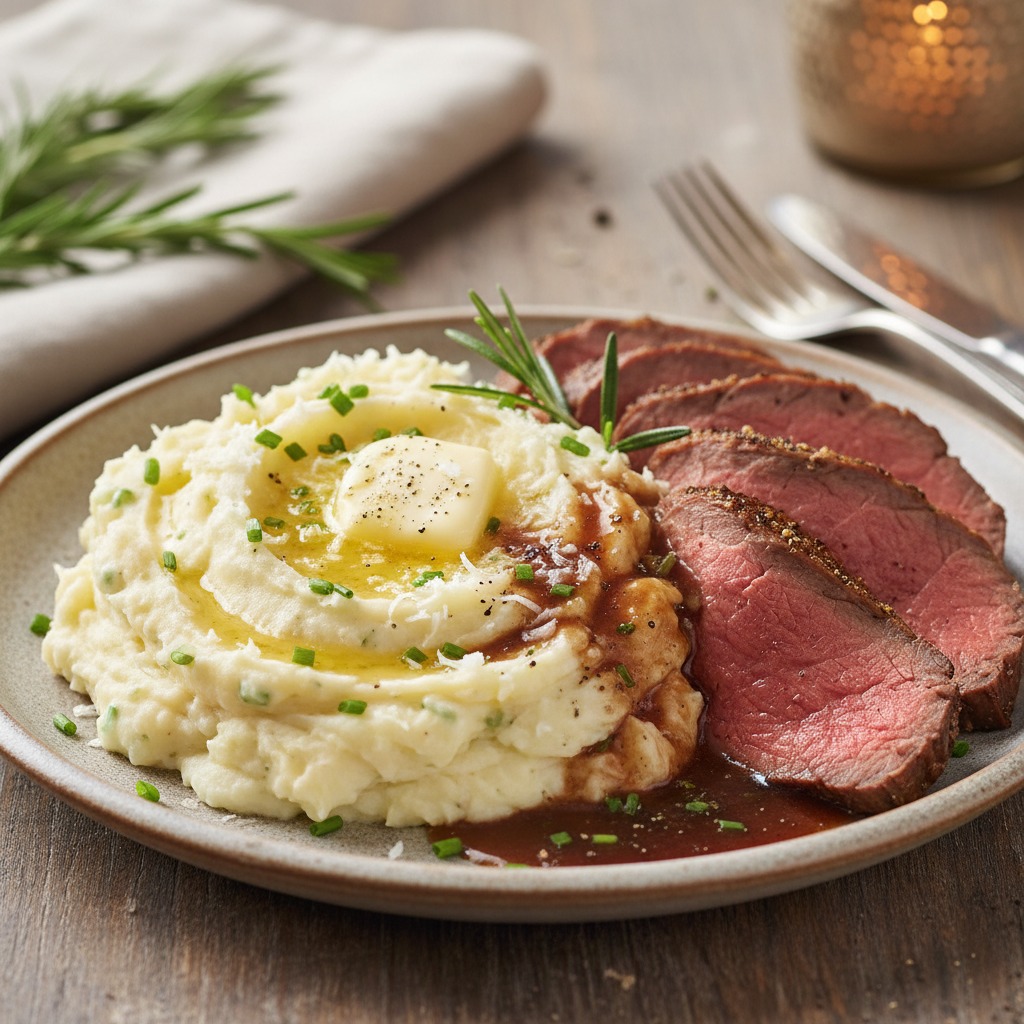
Serve these potatoes with a classic roast beef au jus or a peppery pan sauce; the horseradish acts as a bright foil to rich meats. For presentation, mound them in a warm shallow bowl, add a few knobs of cold butter to melt on top, and finish with chopped chives; pair with a bold red wine like Cabernet Sauvignon or a malty brown ale to match the savory richness.
Classic Creamy Horseradish Mashed Potatoes — Perfect Roast Beef Side FAQs
Can I use russet or red potatoes instead of Yukon Gold?
Yes—russets yield a fluffier, lighter mash while red potatoes give a slightly firmer, creamier texture; adjust butter and be extra careful not to overwork russets because their higher starch content can make the mash gummy.
How can I control the horseradish heat?
Start with the recipe amount and taste after the dairy is folded in; because prepared horseradish varies, add in ½-teaspoon increments until you reach the desired bite, and remember the heat can mellow a bit as it sits.
Can I use freshly grated horseradish instead of prepared?
Yes—fresh grated horseradish is brighter and typically hotter, so use less and fold it into the warm cream before adding to the potatoes to gauge intensity.
Why did my mashed potatoes turn gummy?
Gumminess usually comes from overworking high-starch potatoes or adding cold dairy; use a ricer or mash gently, steam-dry the potatoes, and fold in warmed milk and cream slowly.
What’s the best reheating method for a crowd?
Bake in a covered ovenproof dish at 325°F with added warm cream and butter for 20–30 minutes, or keep in a slow cooker on low with periodic stirring; both methods preserve creaminess and prevent drying out.
About the author
Jake WoodsHello, I'm Jake. I started this recipe site with the idea that I hated recipe websites that overwhelm you with long stories and ads just to see plain content that's not helpful. My goal is to provide you with quality recipes, simple ideas and a fun cooking experience. There's lots of fun things to cook, and I think as you browse the site you'll find that TopShelf.Recipes is the place for quality recipes on the web.
See all recipes by Jake Woods →Ratings & Reviews
Did you make this recipe?
Be the first to share your experience.
Nutrition Facts
Per serving: about 1 cup (200g)
Nutrition values are estimated from USDA ingredient data and may vary based on preparation, brands, and portion sizes. Values are provided for informational purposes only.
Keep Reading
Guides & articles for this recipe

Guides
Trending Backyard Dinner Parties for 2026: 8 Outdoor Dining Formats, Ready‑Made Menus & Host Workflows
Discover the eight backyard dining formats taking off in 2026, with plug‑and‑play menu templates, grill timing and workflow checklists, decor shortcuts, and social‑media and sustainability tips. This practical guide turns your yard into a seamless, shareable dining experience—whether you're hosting a casual progressive grill or an intimate fireside chef demo.

Guides
Trending Backyard Dinner Parties for 2026: 8 Outdoor Dining Formats, Plug‑and‑Play Menus & Host Workflows
Discover eight backyard dinner-party formats taking off in 2026, each with plug‑and‑play menu templates, step‑by‑step host workflows, grill timing tips, decor shortcuts, and social & sustainable ideas. Turn your yard into a memorable, stress‑free dining experience.

Healthy Eating
Gluten-Free Weeknight Grilling Plan
A 7-day gluten-free weeknight grilling plan with quick, family-friendly recipes, prep-ahead timelines, and a printable shopping list that spotlights late-summer produce and pantry staples. Includes clear cross-contamination safety tips and simple swaps to keep dinners fast and crowd-pleasing.
More from Dinner
View all Dinner recipes →
Classic Bacon Carbonara

Al Pastor Tacos

Jamaican Jerk Chicken Marinade for Smoking or Grilling

Air Fryer Chicken Sliders

Smoked Chicken Burger

Beer-Can Grilled Whole Chicken

Grilled Chicken with Chimichurri

Campfire‑Smoked Potato Salad with Mustard‑Bacon Vinaigrette — A Labor Day Grilling Side for Steak

30-Min Steak Grain Bowl with Chimichurri
Ask me anything about this recipe — substitutions, scaling, techniques, timing.
Powered by AI · 6 questions per 5 minutes, 30 per day