Classic Horseradish-Parsnip Purée — Silky Roast Beef Side
A velvety parsnip purée laced with bright prepared horseradish, rich butter, and a squeeze of lemon to cut through roast beef. Choose classic stovetop boiling or oven-roasting for deeper flavor—either yields a silky, elegant alternative to mashed potatoes.
Ingredient Spotlight
Prepared horseradish
Prepared horseradish is a condiment made from grated horseradish root mixed with vinegar (and sometimes salt or sugar); it originates from European culinary traditions and is commonly used as a sharp accompaniment to meats and sauces. It has a pungent, sinus-clearing heat with a bitter, earthy bite that dissipates more quickly than chili heat. You’ll usually find it jarred in the refrigerated or condiment aisle of most supermarkets or at specialty/European markets. Good substitutes are freshly grated horseradish root (if you can source it) or a small amount of wasabi paste—use less of the wasabi and adjust to taste since its flavor profile and intensity differ.
Jake Woods's note
"Bright, silky and slightly piquant, this purée is designed to cut through the richness of roast beef or a grilled steak. Home cooks will love how easily it elevates a roast dinner while being make-ahead friendly."
About This Recipe
This horseradish-parsnip purée is designed to stand up to richly flavored roast beef while offering a silkier, slightly sweeter foil to red meat than traditional mashed potatoes. Parsnips bring a honeyed, nutty backbone that caramelizes beautifully when roasted and becomes luxuriously smooth when boiled and drained properly; prepared horseradish cuts through that richness with a lifted, nasal brightness, and a judicious squeeze of lemon keeps the whole purée from feeling heavy. The contrast between the soft, pillowy texture and the sharp, herbaceous bite is what makes this side feel composed rather than cloying.
This version focuses on technique as much as seasoning: steaming the hot parsnips briefly after draining prevents a watery mash, warming the milk and cream protects the emulsion, and passing the roots through a ricer or using a light hand with a masher preserves a silky finish. Start conservatively with horseradish because it mellows as the purée rests, and plan a final adjustment of lemon, salt, and horseradish at plating so the flavors stay bright alongside roast beef, steak, or a holiday prime rib.
Ingredients for Classic Horseradish-Parsnip Purée — Silky Roast Beef Side
- 2 1/2 lb Parsnips, peeled and cut into 1–1.5" chunks
- 2 tsp Kosher salt
- 1 tbsp Extra-virgin olive oil (for roasting, optional)
- 6 tbsp Unsalted butter, cut into pieces
- 1/2 cup Whole milk, warmed
- 1/4 cup Heavy cream, warmed
- 2 tbsp Prepared horseradish (adjust to taste)
- 1 tbsp Fresh lemon juice
- 1 tsp Freshly ground black pepper
- 2 tbsp Fresh chives, finely chopped (for garnish)
How to Make Classic Horseradish-Parsnip Purée — Silky Roast Beef Side
Step 1: Choose your parsnip cooking method (stovetop or roast)
For stovetop: place the peeled, chunked parsnips in a pot and cover with cold water; add 1 tsp kosher salt. Bring to a simmer, reduce to a gentle boil and cook until very tender, about 15–20 minutes. For oven-roasted: toss parsnip chunks with the remaining 1 tsp kosher salt and 1 tbsp olive oil on a rimmed sheet; roast at 425°F (220°C) for 25–30 minutes, turning once, until caramelized and fork-tender. Roasting concentrates sweetness and adds depth; boiling gives a cleaner, neutral base.For this step
- 2 1/2 lbParsnips, peeled and cut into 1–1.5" chunks
- 2 tspKosher salt
- 1 tbspExtra-virgin olive oil (for roasting, optional)
Step 2: Drain and dry
If boiled, drain the parsnips in a colander and return them to the hot pot for 1 minute to steam-dry — this prevents a watery purée. If roasted, transfer the hot parsnips to a heatproof bowl or the pot you'll use for mashing. Let them sit a minute so steam escapes for a silkier texture.Step 3: Warm dairy and mash with butter and horseradish
Warm the milk and cream together (microwave or stovetop) until just warm. Add the butter pieces to the hot parsnips and mash with a potato masher or pass through a ricer for extra silkiness. Gradually stir in warmed milk and cream until the purée reaches a velvety consistency. Fold in the prepared horseradish to taste, starting with 2 tablespoons; add more if you want more bite.For this step
- 6 tbspUnsalted butter, cut into pieces
- 1/2 cupWhole milk, warmed
- 1/4 cupHeavy cream, warmed
- 2 tbspPrepared horseradish (adjust to taste)
Step 4: Season and brighten
Finish with the lemon juice and freshly ground black pepper, then taste and adjust salt and horseradish. Seasoning tip: the horseradish will mellow slightly as it rests, so add a touch more if serving later; add a splash more warm milk or cream if the purée is too stiff.For this step
- 1 tbspFresh lemon juice
- 1 tspFreshly ground black pepper
Step 5: Serve and garnish
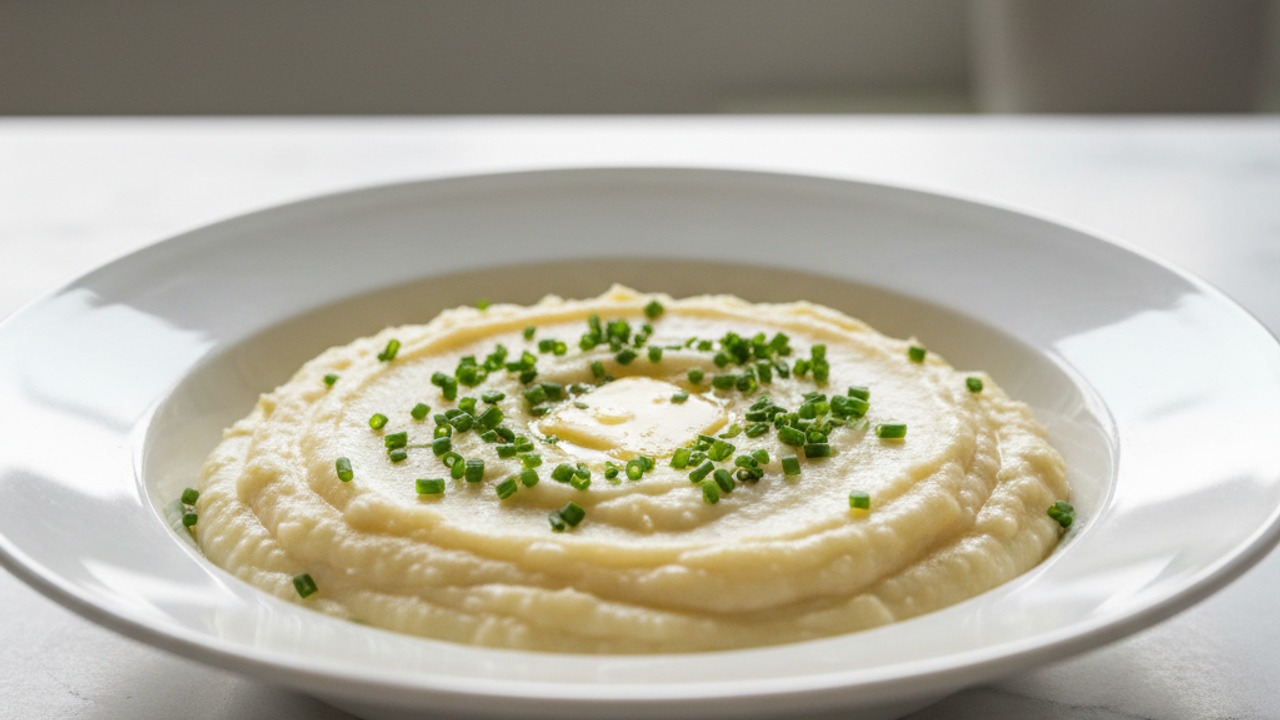
Spoon the purée into a warmed serving bowl, dot with an extra pat of butter if desired, and scatter the chopped chives on top. This purée is perfect alongside roast beef or steak as a bright, elegant alternative to mashed potatoes.For this step
- 2 tbspFresh chives, finely chopped (for garnish)
Step 6: Make-ahead and reheating notes
Make ahead: cool completely, press a piece of plastic directly on the surface to prevent a skin, and refrigerate for up to 3 days or freeze for up to 1 month. Reheat gently: warm on the stovetop over low heat, stirring and adding a splash of warmed milk or cream to revive the texture; or reheat covered in a 325°F (160°C) oven until heated through, stirring once. Season again with lemon and horseradish just before serving to refresh the brightness.


- For stovetop: place the peeled, chunked parsnips in a pot and cover with cold water; add 1 tsp kosher salt. Bring to a simmer, reduce to a gentle boil and cook until very tender, about 15–20 minutes. For oven-roasted: toss parsnip chunks with the remaining 1 tsp kosher salt and 1 tbsp olive oil on a rimmed sheet; roast at 425°F (220°C) for 25–30 minutes, turning once, until caramelized and fork-tender. Roasting concentrates sweetness and adds depth; boiling gives a cleaner, neutral base.
- If boiled, drain the parsnips in a colander and return them to the hot pot for 1 minute to steam-dry — this prevents a watery purée. If roasted, transfer the hot parsnips to a heatproof bowl or the pot you'll use for mashing. Let them sit a minute so steam escapes for a silkier texture.
- Warm the milk and cream together (microwave or stovetop) until just warm. Add the butter pieces to the hot parsnips and mash with a potato masher or pass through a ricer for extra silkiness. Gradually stir in warmed milk and cream until the purée reaches a velvety consistency. Fold in the prepared horseradish to taste, starting with 2 tablespoons; add more if you want more bite.
- Finish with the lemon juice and freshly ground black pepper, then taste and adjust salt and horseradish. Seasoning tip: the horseradish will mellow slightly as it rests, so add a touch more if serving later; add a splash more warm milk or cream if the purée is too stiff.
- Spoon the purée into a warmed serving bowl, dot with an extra pat of butter if desired, and scatter the chopped chives on top. This purée is perfect alongside roast beef or steak as a bright, elegant alternative to mashed potatoes.
- Make ahead: cool completely, press a piece of plastic directly on the surface to prevent a skin, and refrigerate for up to 3 days or freeze for up to 1 month. Reheat gently: warm on the stovetop over low heat, stirring and adding a splash of warmed milk or cream to revive the texture; or reheat covered in a 325°F (160°C) oven until heated through, stirring once. Season again with lemon and horseradish just before serving to refresh the brightness.
Classic Horseradish-Parsnip Purée — Silky Roast Beef Side Tips
Pick your cooking method
Roast for deeper, caramelized sweetness and slightly more texture; boil for a cleaner, sweeter canvas that highlights horseradish.
Steam-dry for silkiness
After draining boiled parsnips, return them to the hot pot for 30–60 seconds to evaporate excess water and avoid a watery purée.
Use a ricer
Passing parsnips through a ricer gives an ultra-smooth texture without overworking the starches, especially useful if you prefer no lumps.
Warm dairy first
Adding warmed milk and cream keeps the purée glossy and prevents the butter from re-solidifying into grainy pockets.
Add horseradish slowly
Fold in prepared horseradish a tablespoon at a time and taste as you go since heat and time will change its intensity.
Classic Horseradish-Parsnip Purée — Silky Roast Beef Side Variations and Substitutions
Lower-fat version
Swap half the butter for a neutral-flavored olive oil and use low-fat milk in place of heavy cream; finish with a little extra lemon to compensate for reduced richness.
Smoky bacon twist
Fold in crisped, chopped bacon and a teaspoon of smoked paprika for a savory, smoky counterpoint that pairs beautifully with roast beef.
Dairy-free cashew purée
Soak raw cashews and blend them with a bit of the cooking liquid until silky, then mix into the mashed parsnips for a dairy-free, creamy result.
Celery root blend
Use half parsnips and half celeriac (celery root) for a nuttier, earthier purée that still benefits from horseradish's brightness.
How to Store and Make Classic Horseradish-Parsnip Purée — Silky Roast Beef Side Ahead
Cool the purée completely before storing and press plastic directly onto the surface to prevent a skin; refrigerate for up to 3 days or freeze in an airtight container for up to 1 month. Reheat gently over low heat on the stovetop or in a 325°F oven, stirring and adding a splash of warmed milk or cream to restore silkiness. Taste and re-season with lemon and horseradish after reheating, since those bright notes fade when chilled.
What to Serve With Classic Horseradish-Parsnip Purée — Silky Roast Beef Side
Serve the purée as a base for thin slices of roast beef or as a side alongside a pan jus or red wine reduction spooned around the plate. Pair with roasted root vegetables or a sharp, vinegary slaw to balance richness, and recommend wines with firm tannin like Cabernet Sauvignon, Syrah, or a structured Malbec to complement the horseradish bite. For plating, sweep a spoon in the bowl for a classic look and finish with a pat of butter and a sprinkle of chopped chives.
Classic Horseradish-Parsnip Purée — Silky Roast Beef Side FAQs
Can I use only potatoes instead of parsnips?
You can swap in potatoes or do a half-and-half blend, but parsnips bring inherent sweetness and perfume that harmonize with horseradish; if using all potatoes, reduce the horseradish slightly to prevent it from dominating.
Why should the milk and cream be warmed?
Warm dairy helps the butter and starches emulsify into a glossy purée and prevents the mixture from cooling and becoming grainy or gluey when combined.
My purée tastes too mild after resting—how do I fix it?
Horseradish and lemon both lose punch over time; stir in an extra teaspoon of prepared horseradish and a small squeeze of lemon just before serving to revive brightness.
How do I avoid a gluey texture?
Avoid overworking with a food processor or blender; use a ricer or light mashing and stop as soon as the purée is smooth, adding warm dairy gradually to loosen rather than excessive stirring.
Is prepared horseradish different from freshly grated?
Prepared horseradish is milder and often in vinegar, which stabilizes heat and adds tang—freshly grated is more volatile and aggressive, so use less if substituting.
About the author
Jake WoodsHello, I'm Jake. I started this recipe site with the idea that I hated recipe websites that overwhelm you with long stories and ads just to see plain content that's not helpful. My goal is to provide you with quality recipes, simple ideas and a fun cooking experience. There's lots of fun things to cook, and I think as you browse the site you'll find that TopShelf.Recipes is the place for quality recipes on the web.
See all recipes by Jake Woods →Ratings & Reviews
Did you make this recipe?
Be the first to share your experience.
Nutrition Facts
Per serving: 1 tbsp
Nutrition values are estimated from USDA ingredient data and may vary based on preparation, brands, and portion sizes. Values are provided for informational purposes only.
Keep Reading
Guides & articles for this recipe

Guides
Trending Backyard Dinner Parties for 2026: 8 Outdoor Dining Formats, Ready‑Made Menus & Host Workflows
Discover the eight backyard dining formats taking off in 2026, with plug‑and‑play menu templates, grill timing and workflow checklists, decor shortcuts, and social‑media and sustainability tips. This practical guide turns your yard into a seamless, shareable dining experience—whether you're hosting a casual progressive grill or an intimate fireside chef demo.

Guides
Trending Backyard Dinner Parties for 2026: 8 Outdoor Dining Formats, Plug‑and‑Play Menus & Host Workflows
Discover eight backyard dinner-party formats taking off in 2026, each with plug‑and‑play menu templates, step‑by‑step host workflows, grill timing tips, decor shortcuts, and social & sustainable ideas. Turn your yard into a memorable, stress‑free dining experience.

Recipes
DIY Edible Monster Eyes Candy
Make safe, fun edible monster eyes for cupcakes, cookies, and candy trays. Step-by-step recipes show baking-soda balls, chocolate and fondant eyes, wafer-print options, plus assembly, storage, and kid-friendly safety tips.
More from Dinner
View all Dinner recipes →
Low-Carb Lettuce Wrapped Chipotle Lime Chicken Burger with Avocado

Coffee‑Chile Rubbed Flank Steak Tacos with Charred Pineapple Salsa

Chicken Marsala Pasta

Jamaican Jerk Chicken Marinade for Smoking or Grilling

Classic Bacon-Balsamic Brussels Sprouts — Crispy Roast Beef Side

Classic Celeriac Purée (Celery Root Purée) — Silky Steakhouse Side

Classic Steakhouse Beer-Battered Onion Rings

Stovetop Peach BBQ Chicken

Quick 20-Minute Butter Chicken
Ask me anything about this recipe — substitutions, scaling, techniques, timing.
Powered by AI · 6 questions per 5 minutes, 30 per day