Classic Hot Cross Buns
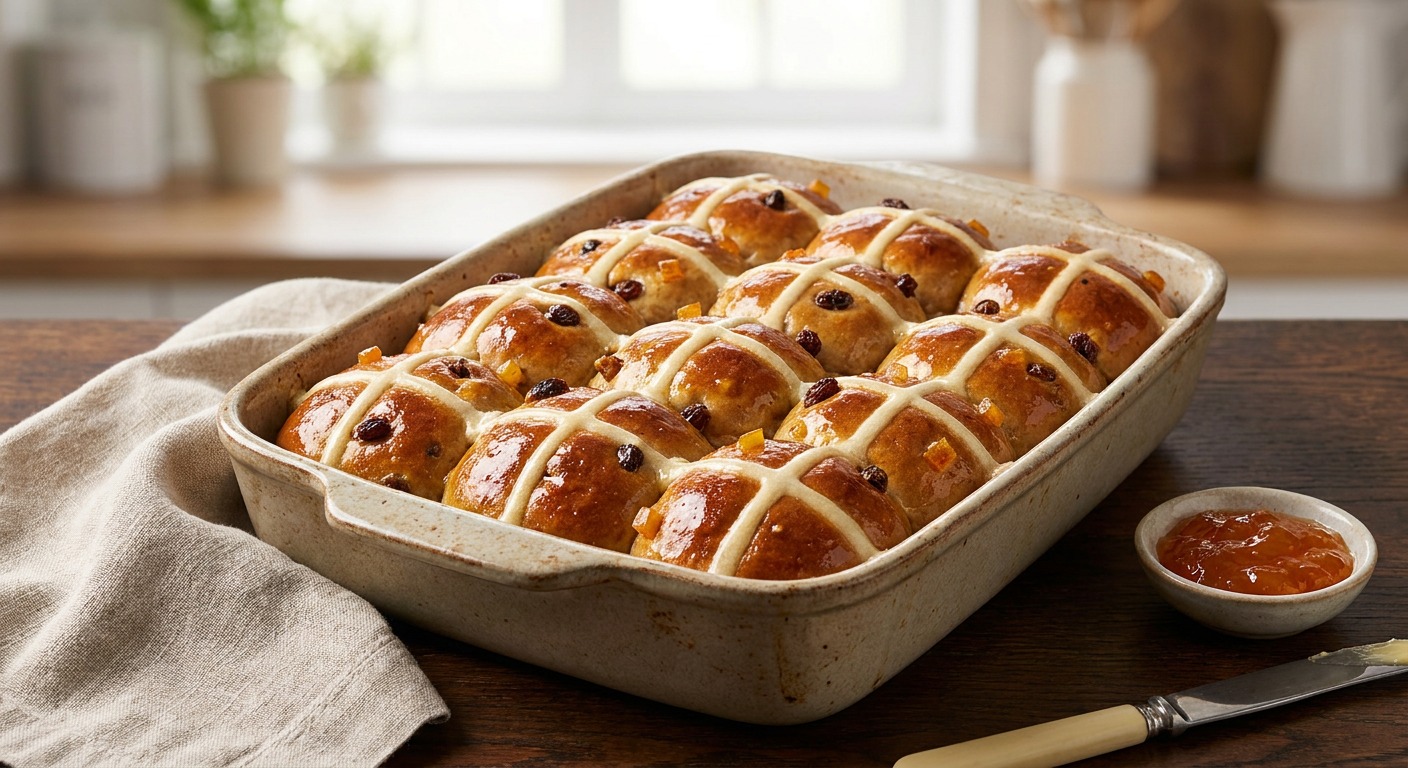
Soft, spiced hot cross buns studded with plump raisins and finished with a shiny apricot glaze — a timeless Easter favorite. These enriched yeast buns are gently spiced and simple to make, perfect for brunch or a festive teatime treat.
Ingredient Spotlight
Mixed spice (or ground cinnamon + nutmeg)
Mixed spice is a British-style baking spice blend commonly used in the UK, Australia and other Commonwealth countries; typical components include cinnamon, nutmeg, allspice, cloves and sometimes coriander or ginger. It smells warm, sweet and a bit floral, similar to pumpkin pie or pumpkin spice but usually milder and more rounded. You can find it in the spice aisle or the international/UK section of larger supermarkets, specialty spice shops, or online; a good substitute is the recipe’s suggestion (ground cinnamon + nutmeg) with a pinch of allspice or cloves if you want closer approximation.
Ingredient Spotlight
Raisins or sultanas
Sultanas are a specific type of golden raisin made from seedless white grapes (widely used in British, Mediterranean and Middle Eastern baking) and are typically plumper, juicier and a touch sweeter than dark raisins. They taste sweet with a mild tang and softer texture compared with common dark raisins. Look for them in the dried fruit aisle labeled “sultanas” or as “golden raisins”; acceptable substitutes are regular raisins, golden raisins, or other dried fruits like chopped apricot if you want a similar sweetness and chew.
Jake Woods's note
"These buns shine on Easter morning but are lovely any time you want a lightly spiced, comforting treat. Home bakers will appreciate the forgiving dough and the rewarding glossy finish from a simple apricot glaze."
About This Recipe
These hot cross buns are the kind of thing that smells like a holiday the moment they go into the oven: warm milk, softened butter, a hint of mixed spice and plump raisins folded into a tender, enriched dough. They’re soft and slightly pillowy, with a chewy crumb punctuated by sweet bursts from the sultanas and a glossy, slightly sticky apricot finish that keeps each bun moist for days. The little piped flour crosses bake into a defined pale stripe rather than disappearing into the crust, giving a satisfying contrast to the deep golden brown of the buns themselves.
This version leans into simplicity and reliability: rubbing the butter into the flour gives a silkier texture than melted butter, and proofing the raisins or tossing them in flour keeps them from sinking. The dough is forgiving—if you have a stand mixer use the dough hook to develop gluten quickly, or knead by hand until the dough is smooth and elastic. These are for hosts who want something homemade without fuss, parents introducing kids to Easter baking, or anyone who wants a warm, spiced bun at Sunday brunch that looks special but truly is straightforward to make.
Ingredients for Classic Hot Cross Buns
- 1 cup Whole milk, warmed to about 100–110°F (38–43°C)
- 2 1/4 tsp Active dry yeast
- 1/4 cup Granulated sugar (divided)
- 3 cups All-purpose flour
- 1/4 cup Unsalted butter, softened
- 1 piece Large egg
- 1 tsp Fine sea salt
- 1 tsp Mixed spice (or ground cinnamon + nutmeg)
- 3/4 cup Raisins or sultanas
- 3 tbsp Apricot jam (for glaze)
How to Make Classic Hot Cross Buns
Step 1: Proof the yeast
Warm the milk to about 100–110°F (38–43°C) and stir in 1 tablespoon of the sugar. Sprinkle the yeast over the milk, stir gently, and let sit 5–10 minutes until foamy to confirm the yeast is active.For this step
- 1 cupWhole milk, warmed to about 100–110°F (38–43°C)
- 2 1/4 tspActive dry yeast
Step 2: Mix and knead the dough
In a large bowl combine the flour, remaining sugar, salt and mixed spice. Cut in the softened butter or mix it in with your fingers or paddle until evenly distributed. Add the beaten egg and the yeast-milk mixture, then stir until a shaggy dough forms. Turn onto a lightly floured surface and knead 8–10 minutes (or use a stand mixer with a dough hook) until smooth and elastic, then knead in the raisins until evenly incorporated.For this step
- 3 cupsAll-purpose flour
- 1/4 cupUnsalted butter, softened
- 1 pieceLarge egg
- 1 tspFine sea salt
- 1 tspMixed spice (or ground cinnamon + nutmeg)
- 3/4 cupRaisins or sultanas
Step 3: First rise
Place the dough in a lightly oiled bowl, cover with plastic wrap or a clean towel, and let rise in a warm draft-free spot until doubled in size, about 60–90 minutes depending on room temperature.Step 4: Shape and proof the buns
Punch down the dough and divide it into 8 equal pieces. Shape each into a tight ball and place on a parchment-lined baking sheet spaced about 1 inch apart. Cover loosely and let rise again until puffy and almost doubled, about 30–45 minutes.Step 5: Pipe the crosses and bake
Mix 3 tablespoons of flour with just enough of the reserved warm milk to make a thick, pipeable paste. Transfer to a small piping bag or zip-top bag with the corner snipped and pipe crosses over each bun. Bake in a preheated 375°F (190°C) oven for 18–22 minutes, until golden brown and cooked through.Step 6: Glaze and cool
Warm the apricot jam with a teaspoon of water until brushable, then brush over the hot buns for a glossy finish. Cool on a rack for 10–15 minutes before serving warm or at room temperature.For this step
- 3 tbspApricot jam (for glaze)


- Warm the milk to about 100–110°F (38–43°C) and stir in 1 tablespoon of the sugar. Sprinkle the yeast over the milk, stir gently, and let sit 5–10 minutes until foamy to confirm the yeast is active.
- In a large bowl combine the flour, remaining sugar, salt and mixed spice. Cut in the softened butter or mix it in with your fingers or paddle until evenly distributed. Add the beaten egg and the yeast-milk mixture, then stir until a shaggy dough forms. Turn onto a lightly floured surface and knead 8–10 minutes (or use a stand mixer with a dough hook) until smooth and elastic, then knead in the raisins until evenly incorporated.
- Place the dough in a lightly oiled bowl, cover with plastic wrap or a clean towel, and let rise in a warm draft-free spot until doubled in size, about 60–90 minutes depending on room temperature.
- Punch down the dough and divide it into 8 equal pieces. Shape each into a tight ball and place on a parchment-lined baking sheet spaced about 1 inch apart. Cover loosely and let rise again until puffy and almost doubled, about 30–45 minutes.
- Mix 3 tablespoons of flour with just enough of the reserved warm milk to make a thick, pipeable paste. Transfer to a small piping bag or zip-top bag with the corner snipped and pipe crosses over each bun. Bake in a preheated 375°F (190°C) oven for 18–22 minutes, until golden brown and cooked through.
- Warm the apricot jam with a teaspoon of water until brushable, then brush over the hot buns for a glossy finish. Cool on a rack for 10–15 minutes before serving warm or at room temperature.
Classic Hot Cross Buns Tips
Check milk temperature
Use a thermometer to keep milk around 100–110°F; hotter will kill the yeast and cooler will delay proofing.
Plump the raisins
Soak raisins 10–15 minutes in warm water, tea, or rum, then drain—this prevents them from drawing moisture from the dough and keeps them tender.
Knead to feel
Knead until the dough is smooth and slightly tacky and passes a gentle windowpane test; this develops gluten for a light crumb without overworking.
Prevent sinking fruit
Toss raisins in a tablespoon of flour before folding them in or add them near the end of kneading to keep them suspended in the dough.
Cross paste consistency
Make the flour-and-milk paste thick enough to hold shape when piped—too thin and the cross will spread; too stiff and it won’t pipe smoothly.
Classic Hot Cross Buns Variations and Substitutions
Citrus & Cardamom
Add 1½ teaspoons ground cardamom and the zest of one orange to the dough, and brush with an orange marmalade glaze instead of apricot for a bright, fragrant twist.
Sticky Fruit Medley
Replace raisins with a mix of chopped dried apricots, cherries, and currents for more varied texture and color, and fold in 2 tablespoons of chopped toasted almonds for crunch.
Vegan Hot Cross Buns
Use plant-based milk, vegan butter, and a flax or aquafaba ‘egg’ (1 tbsp ground flax + 3 tbsp water or 3 tbsp aquafaba) and proceed as written; keep an eye on proof times as rise may be slightly slower.
Overnight Slow Rise
After kneading, refrigerate the dough overnight for a slow, flavorful ferment; shape and proof in the morning before baking for deeper flavor with minimal morning work.
How to Store and Make Classic Hot Cross Buns Ahead
Store cooled buns in an airtight container at room temperature for up to 2 days; refrigeration dries enriched dough, so avoid the fridge unless already sliced and plan to toast. For longer storage, freeze unglazed buns in a single layer on a sheet pan until solid, then transfer to a freezer bag for up to one month; thaw and warm in a 350°F oven for 10–15 minutes, then brush with warmed apricot jam. Reheat individual buns in a microwave for 12–18 seconds or halve and toast for a fresh texture.
What to Serve With Classic Hot Cross Buns
Serve warm with unsalted butter or clotted cream and extra apricot jam on the side; their lightly spiced profile pairs beautifully with sharp cheddar for a savory contrast. For drinks, offer strong English breakfast tea, a milky chai to echo the spices, or a bright sparkling wine for a celebratory brunch; plate on a simple cake stand so guests can pull buns apart and share.
Classic Hot Cross Buns FAQs
Can I use instant yeast instead of active dry?
Yes—use the same weight (2.25 tsp is about one standard packet) and you can mix it directly into the dry ingredients without proofing, though proofing the milk first still helps you confirm activity.
Why did my buns come out dense?
Dense buns are usually from underproofing, too much flour, or overly cold ingredients limiting yeast activity; ensure the dough doubles in the first rise and feels elastic, and keep milk and room temperature ingredients within recommended ranges.
How do I keep the crosses neat?
Pipe the flour paste just before baking and keep it fairly thick so it holds shape; chill the tray 10 minutes before baking if the paste softens, and don’t overwork the paste or add too much milk.
Can I make the dough ahead of time?
Yes—after the first knead, cover the bowl tightly and refrigerate for up to 24 hours for a slow rise; bring to room temperature and finish shaping and proofing before baking.
How do I know when buns are fully baked?
They should be deep golden brown and sound slightly hollow when tapped on the bottom; an internal temperature of about 190–195°F indicates the enriched dough is cooked through.
About the author
Jake WoodsHello, I'm Jake. I started this recipe site with the idea that I hated recipe websites that overwhelm you with long stories and ads just to see plain content that's not helpful. My goal is to provide you with quality recipes, simple ideas and a fun cooking experience. There's lots of fun things to cook, and I think as you browse the site you'll find that TopShelf.Recipes is the place for quality recipes on the web.
See all recipes by Jake Woods →Ratings & Reviews
Did you make this recipe?
Be the first to share your experience.
Nutrition Facts
Per serving: 1 serving
Nutrition values are estimated from USDA ingredient data and may vary based on preparation, brands, and portion sizes. Values are provided for informational purposes only.
Keep Reading
Guides & articles for this recipe
Tips & Techniques
Baking Soda and Tenderized Beef
Learn how baking soda can tenderize, boost browning, and improve moisture for ground beef and other meats. This practical guide covers the science, step-by-step techniques, common mistakes, and recipes to try.

Healthy Eating
Gluten-Free Weeknight Grilling Plan
A 7-day gluten-free weeknight grilling plan with quick, family-friendly recipes, prep-ahead timelines, and a printable shopping list that spotlights late-summer produce and pantry staples. Includes clear cross-contamination safety tips and simple swaps to keep dinners fast and crowd-pleasing.

Healthy Eating
Low-Fat Grill Swaps for Big Flavor
A practical guide to trimming fat from grilled meals without losing juiciness or char. Learn yogurt- and citrus-based marinades, lean protein picks, searing and indirect-heat tricks, plus 5 quick low-fat marinades and a simple weeknight plan.
More from Baking
View all Baking recipes →
Cloud Bread Sandwiches

Honey Mustard Chicken Nuggets

Cheddar Jalapeño Corn Muffins

Basque Burnt Cheesecake

30-Minute Sticky Baked Honey Garlic Chicken Thighs with Crisp Edges

Lemon Butter Salmon

Spritz Cookies

Brown Butter Vanilla Syrup

Honey Glazed Easter Ham
Ask me anything about this recipe — substitutions, scaling, techniques, timing.
Powered by AI · 6 questions per 5 minutes, 30 per day