Crispy Fried Calamari
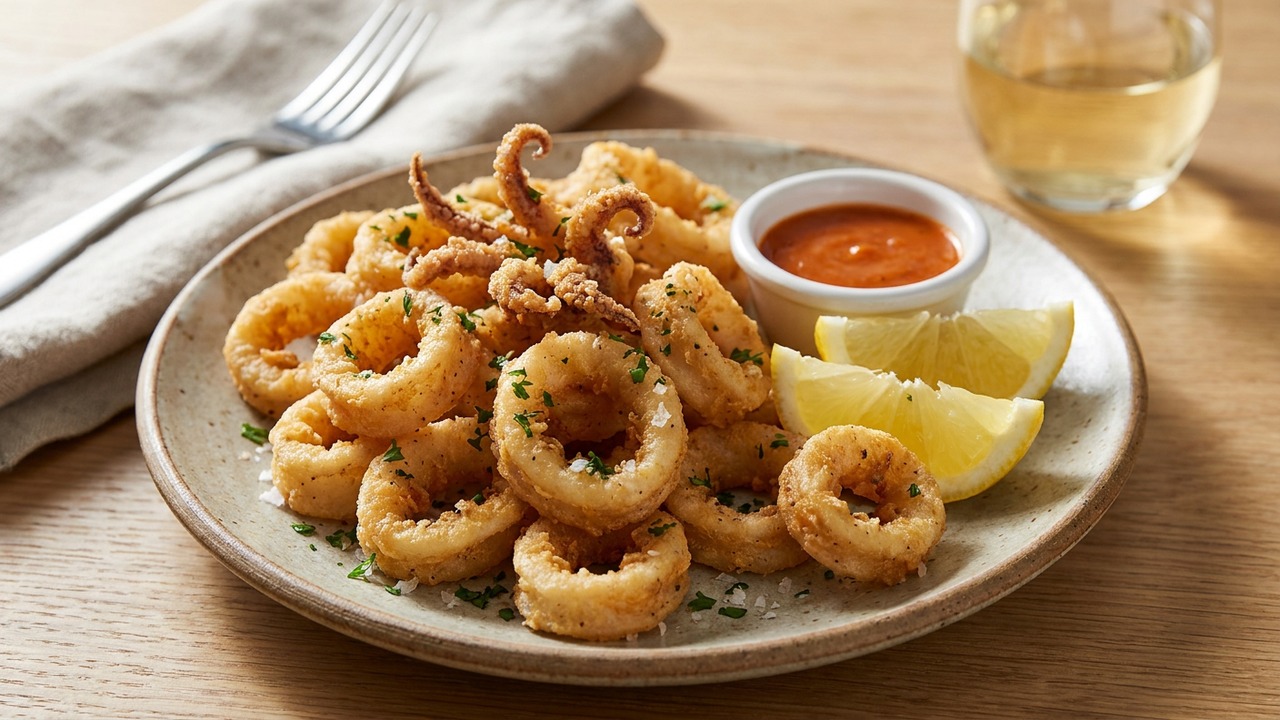
Crispy Fried Calamari features tender rings and tentacles lightly battered and quickly deep-fried to a golden, crunchy finish. Served with a bright squeeze of lemon and your favorite dipping sauce, it’s a classic seafood snack perfect for sharing.
Ingredient Spotlight
Fresh squid (tubes and tentacles)
Squid (often sold as calamari) is a cephalopod used across Mediterranean and East/Southeast Asian cuisines; tubes are the body and tentacles are both edible. It has a mild, slightly sweet and briny flavor and a tender, slightly chewy texture when cooked quickly (or meltingly tender if braised slowly); fresh squid has a clean ocean smell when very fresh. Find it at fishmongers or supermarket seafood counters (often frozen); good substitutes if unavailable are frozen calamari rings, cuttlefish, or other firm seafood like shrimp or scallops, though texture and cook times will differ.
Ingredient Spotlight
Fine cornmeal (or semolina)
Fine cornmeal is finely ground dried corn used for breading and batters and has a mild sweet-corn flavor common in American and Latin cooking; semolina is coarsely ground durum wheat from Italian/North African traditions with a nutty, wheaty taste and gritty texture. Both are used here for a crunchy coating rather than flavor alone; they’re found in the baking or ethnic aisle of supermarkets (look for 'fine' cornmeal, polenta, or durum semolina). If you don’t have them, fine polenta works for cornmeal and fine breadcrumbs or panko (or even a mix of flour and breadcrumbs) can substitute, though the flavor and crunch will vary.
Jake Woods's note
"This recipe delivers a reliably crisp coating and tender squid—ideal for game-day platters or a casual dinner starter. Home cooks will appreciate the simple dredge and quick fry that yield restaurant-quality crunch."
About This Recipe
Crispy Fried Calamari is the kind of appetizer that rewards attention to small details: a quick buttermilk soak brightens and tenderizes the squid, while a flour–cornmeal dredge with a touch of baking powder gives a shatteringly light crust that still clings to each ring and tentacle. The difference between limp, greasy pieces and crackly, tender calamari is in drying the squid well, keeping the oil hot enough, and frying in very small batches so the temperature doesn't dip. This version leans on straightforward pantry ingredients so you get pure texture and flavor without masking the sea-sweetness of the squid.
Serve this when you want something social and immediate — think casual dinner with friends, a seafood night, or a bar-style snack to start a meal. Tentacles will crisp differently than rings, adding variety in every bite; a bright squeeze of lemon and an herby or garlicky dip complement the richness without competing. If you follow the timing (about 1–2 minutes per batch) and season immediately after frying, you’ll have golden, snappy calamari that tastes like it was made to order.
Ingredients for Crispy Fried Calamari
- 1 1/2 lb Fresh squid (tubes and tentacles), cleaned and sliced into 1/2-inch rings
- 1 cup Buttermilk (or whole milk)
- 1 cup All-purpose flour
- 1/2 cup Fine cornmeal (or semolina)
- 1 tsp Baking powder
- 1 tsp Salt
- 1 tsp Garlic powder
- 4 cups Vegetable oil (for deep frying)
- 1 large Lemon wedges (for serving)
How to Make Crispy Fried Calamari
Step 1: Prepare and dry the squid
Pat the cleaned squid tubes and tentacles dry with paper towels and slice tubes into 1/2-inch rings. Thorough drying helps the coating adhere and prevents oil splatter during frying.For this step
- 1 1/2 lbFresh squid (tubes and tentacles), cleaned and sliced into 1/2-inch rings
Step 2: Tenderize in buttermilk
Place the squid in a bowl and pour the buttermilk over it, tossing to coat. Let sit 15–20 minutes in the refrigerator to tenderize and mellow any fishy notes, then drain well and pat dry again.For this step
- 1 cupButtermilk (or whole milk)
Step 3: Mix the dry dredge
In a shallow bowl or rimmed plate, whisk together the flour, cornmeal, baking powder, salt, and garlic powder until evenly combined. The cornmeal gives extra crunch while baking powder lightens the coating for a crisp finish.For this step
- 1 cupAll-purpose flour
- 1/2 cupFine cornmeal (or semolina)
- 1 tspBaking powder
- 1 tspSalt
- 1 tspGarlic powder
Step 4: Heat oil and coat squid
Heat the vegetable oil in a heavy, deep skillet or Dutch oven to 350°F (175°C) — about 2–3 inches deep. Working in small batches, dredge the squid pieces in the dry mix, shaking off excess, then carefully lower into the hot oil. Fry until golden and crisp, about 1–2 minutes per batch, taking care not to overcrowd the pot.For this step
- 4 cupsVegetable oil (for deep frying)
Step 5: Drain and season
Use a slotted spoon to transfer fried calamari to a wire rack set over a sheet pan or to paper towels to drain briefly. Immediately season with a light sprinkle of salt and serve with lemon wedges for squeezing.For this step
- 1 largeLemon wedges (for serving)
Step 6: Serve while hot
Serve the calamari hot for best texture with your choice of dipping sauce—classic marinara, aioli, or a lemon-herb mayo all work well. Enjoy as a snack or appetizer, and fry remaining batches just before serving to keep everything crispy.


- Pat the cleaned squid tubes and tentacles dry with paper towels and slice tubes into 1/2-inch rings. Thorough drying helps the coating adhere and prevents oil splatter during frying.
- Place the squid in a bowl and pour the buttermilk over it, tossing to coat. Let sit 15–20 minutes in the refrigerator to tenderize and mellow any fishy notes, then drain well and pat dry again.
- In a shallow bowl or rimmed plate, whisk together the flour, cornmeal, baking powder, salt, and garlic powder until evenly combined. The cornmeal gives extra crunch while baking powder lightens the coating for a crisp finish.
- Heat the vegetable oil in a heavy, deep skillet or Dutch oven to 350°F (175°C) — about 2–3 inches deep. Working in small batches, dredge the squid pieces in the dry mix, shaking off excess, then carefully lower into the hot oil. Fry until golden and crisp, about 1–2 minutes per batch, taking care not to overcrowd the pot.
- Use a slotted spoon to transfer fried calamari to a wire rack set over a sheet pan or to paper towels to drain briefly. Immediately season with a light sprinkle of salt and serve with lemon wedges for squeezing.
- Serve the calamari hot for best texture with your choice of dipping sauce—classic marinara, aioli, or a lemon-herb mayo all work well. Enjoy as a snack or appetizer, and fry remaining batches just before serving to keep everything crispy.
Crispy Fried Calamari Tips
Dry Squid Thoroughly
Pat tubes and tentacles completely dry before dredging so the coating adheres and the oil stops spattering.
Buttermilk Tenderize Time
15–20 minutes in buttermilk is enough to mellow brine and loosen proteins; avoid very long so the squid doesn't become mushy.
Maintain Oil Temperature
Use a thermometer and keep oil at 350°F (175°C); if it drops, the coating will absorb oil and turn greasy.
Fry Small Batches
Overcrowding lowers oil temperature and causes steaming instead of frying—work in 8–10 piece batches for consistent color and crunch.
Season Immediately After Frying
Salt the calamari the instant they leave the oil so the seasoning sticks to the hot surface.
Crispy Fried Calamari Variations and Substitutions
Gluten-free Crunch
Swap the all-purpose flour for a 1:1 gluten-free flour blend and use fine polenta or cornflour for the cornmeal component to keep the crunch.
Spicy Mediterranean Twist
Add 1 tsp smoked paprika and 1/2 tsp cayenne to the dredge and serve with lemon-herb aioli for a smoky, peppery finish.
Beer-Battered Calamari
Replace the dry dredge with a light beer batter (flour, a pinch of baking powder, and ice-cold lager) for a puffier, more indulgent crust.
Grilled Calamari Option
For a lighter version, marinate rings briefly in olive oil, lemon, and garlic, then grill over high heat until charred and just cooked, skipping the dredge entirely.
Panko Finish
After dredging in flour mix, press squid into fine panko before frying for an extra-flaky, golden texture.
How to Store and Make Crispy Fried Calamari Ahead
Leftover calamari loses its crispness quickly; store cooled pieces in a single layer in an airtight container in the fridge for up to 24 hours. Reheat in a 400°F oven or 350°F air fryer for 3–5 minutes to restore crunch—avoid the microwave, which makes the coating soggy. You can prepare cleaned and sliced squid up to a day ahead, but keep the buttermilk soak to no more than 2 hours before draining and dredging just before frying.
What to Serve With Crispy Fried Calamari
Serve on a warm platter with lemon wedges, a garlicky aioli, and a bright tomato marinara for variety; include a small bowl of chopped parsley or a sprinkle of flaky sea salt for finishing. Pair with a crisp pilsner, an unoaked Sauvignon Blanc, or a citrus-forward IPA to cut the richness, and offer simple sides like hand-cut fries or a fennel and orange salad to balance the plate.
Crispy Fried Calamari FAQs
Why did my calamari become rubbery?
Rubbery calamari is usually overcooked—squid needs only 1–2 minutes in hot oil; either a very short fry at high heat or a long slow cook will make it tough. Keep oil at 350°F and time each batch.
Can I use frozen squid?
Yes—thaw completely in the fridge, pat dry thoroughly, and consider a slightly shorter buttermilk soak; excess moisture from partial thawing causes splatter and soggy coating.
How can I tell when the oil is ready without a thermometer?
Drop a pinch of the flour mixture into the oil—if it sizzles and rises immediately to the surface without burning, the oil is hot enough, but a thermometer is the most reliable method.
Is there a healthier alternative to deep-frying?
You can shallow-fry in a few tablespoons of oil, finish in a hot oven, or use an air fryer for a lower-fat option, though the texture will be slightly different from classic deep-frying.
Can I prepare the dredge and marinate ahead?
You can mix the dry dredge and store it at room temperature, and you may marinate squid in buttermilk for up to 2 hours; dredge right before frying to prevent the coating from becoming pasty.
About the author
Jake WoodsHello, I'm Jake. I started this recipe site with the idea that I hated recipe websites that overwhelm you with long stories and ads just to see plain content that's not helpful. My goal is to provide you with quality recipes, simple ideas and a fun cooking experience. There's lots of fun things to cook, and I think as you browse the site you'll find that TopShelf.Recipes is the place for quality recipes on the web.
See all recipes by Jake Woods →Ratings & Reviews
Did you make this recipe?
Be the first to share your experience.
Nutrition Facts
Per serving: 1 serving
Nutrition values are estimated from USDA ingredient data and may vary based on preparation, brands, and portion sizes. Values are provided for informational purposes only.
Keep Reading
Guides & articles for this recipe

Healthy Eating
Gluten-Free Weeknight Grilling Plan
A 7-day gluten-free weeknight grilling plan with quick, family-friendly recipes, prep-ahead timelines, and a printable shopping list that spotlights late-summer produce and pantry staples. Includes clear cross-contamination safety tips and simple swaps to keep dinners fast and crowd-pleasing.

Healthy Eating
Low-Fat Grill Swaps for Big Flavor
A practical guide to trimming fat from grilled meals without losing juiciness or char. Learn yogurt- and citrus-based marinades, lean protein picks, searing and indirect-heat tricks, plus 5 quick low-fat marinades and a simple weeknight plan.

Recipes
DIY Edible Monster Eyes Candy
Make safe, fun edible monster eyes for cupcakes, cookies, and candy trays. Step-by-step recipes show baking-soda balls, chocolate and fondant eyes, wafer-print options, plus assembly, storage, and kid-friendly safety tips.
More from Snacks
View all Snacks recipes →
Easy Peanut Butter Bars

Fried Jalapeno Rings

Gluten Free Fried Pickles

Labor Day Grilled Lobster Rolls with Charred Scallion Brown Butter & Lemon‑Herb Aioli

Salt & Vinegar Potato Chips

Holiday Cranberry Maple Chex Mix

Snake River Farms Beef Tallow Crispy Air Fryer Chicken Wings

Strawberry Yogurt Bark

Buffalo Chicken Dip
Ask me anything about this recipe — substitutions, scaling, techniques, timing.
Powered by AI · 6 questions per 5 minutes, 30 per day