Crispy Gluten-Free Bagels (Chewy Interior, Boil-and-Bake Method)
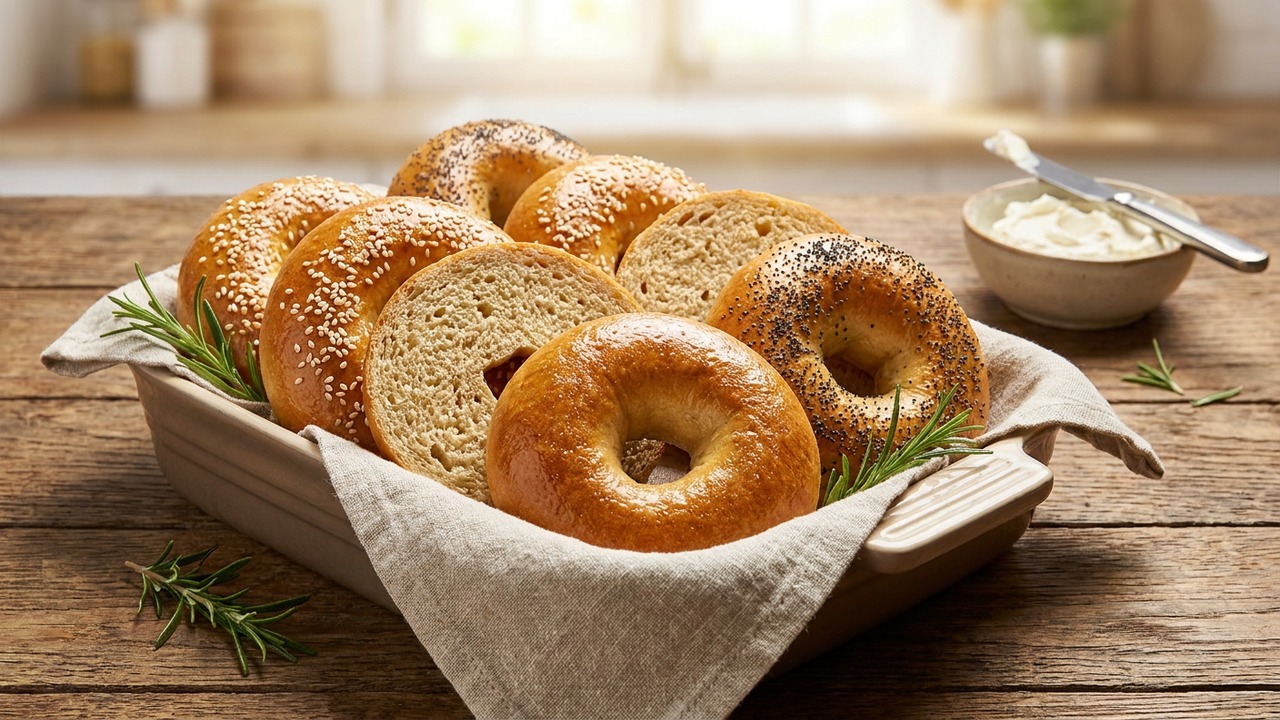
Crispy gluten-free bagels with a chewy, moist interior and a crackly, golden crust made with a simple boil-and-bake method. The short rest and boiling step recreate that classic bagel chew even without wheat, yielding bakery-style bagels at home.
About This Recipe
There’s a reason bagels feel like sorcery to gluten-free bakers: the chewy, dense crumb and crackly, blistered crust usually come from gluten’s unique scaffolding. This recipe leans into a simple trick — a short but purposeful proof and a traditional boil — to coax that familiar bagel character from a gluten-free all-purpose blend. The result is a bagel with a moist, slightly gummy interior and a golden, high-shine crust that snaps when you bite it, thanks to the baking-soda-enriched boil and the egg-white finish.
This version is practical for home kitchens: you won’t need hours of cold fermentation or a freezer-full of special flours. Key choices — using a blend with xanthan gum, keeping the dough noticeably wetter than wheat bagel dough, and boiling long enough to gelatinize the surface — are what make these bagels replicate bakery notes like chew and sheen. They take well to toppings, toast beautifully, and are sturdy enough for filled sandwiches, making them an everyday gluten-free upgrade rather than a once-in-a-while experiment.
Plan your timing
Ingredients for Crispy Gluten-Free Bagels (Chewy Interior, Boil-and-Bake Method)
- 2 1/4 tsp instant yeast
- 1 1/4 cups warm water
- 2 tbsp granulated sugar
- 4 cups gluten-free all-purpose flour blend (preferably one with xanthan gum included)
- 1 tsp xanthan gum (if your flour lacks it)
- 1 1/2 tsp fine salt
- 1 tbsp olive oil
- 2 tbsp baking soda (for the boiling water)
- 1 large large egg white
- 2 tbsp sesame seeds or everything bagel seasoning
How to Make Crispy Gluten-Free Bagels (Chewy Interior, Boil-and-Bake Method)
Step 1: Bloom the yeast
Active 2 min · Passive 8 min
In a small bowl, stir the instant yeast and granulated sugar into the warm water until dissolved. Let sit undisturbed until a thin foam appears on the surface, about 5–8 minutes; this confirms the yeast is active.For this step
- 2 1/4 tspinstant yeast
- 1 1/4 cupswarm water
- 2 tbspgranulated sugar
Step 2: Mix the dough
Active 12 min
Whisk the gluten-free all-purpose flour blend (preferably one with xanthan gum included), xanthan gum (if your flour lacks it), and fine salt in a large bowl. Add the yeast mixture and olive oil, then stir until a moist, slightly tacky dough forms. Knead briefly in the bowl or on a lightly floured surface for about 1–2 minutes—gluten-free dough won’t become elastic, but should hold together.For this step
- 4 cupsgluten-free all-purpose flour blend (preferably one with xanthan gum included)
- 1 tspxanthan gum (if your flour lacks it)
- 1 1/2 tspfine salt
- 1 tbspolive oil
Step 3: Hydrate, portion, and shape
Active 10 min · Passive 25 min
Cover the dough and let it rest at room temperature for 20–30 minutes so the flours fully hydrate. Divide the dough into six equal pieces, shape each into a smooth ball, then form bagels by poking a hole through the center and stretching to about 1½–2 inches in diameter. Transfer to a parchment-lined tray and let shaped bagels rest 10–15 minutes to relax before boiling.Step 4: Boil the bagels
Active 8 min
Preheat the oven to 450°F (230°C). Bring a wide pot of water to a gentle boil and add the baking soda (it will foam). Working 2–3 at a time, carefully lower bagels into the simmering water and boil 60–90 seconds per side for a shiny, chewy crust; remove with a slotted spoon and return to the parchment-lined tray to drain briefly.For this step
- 2 tbspbaking soda (for the boiling water)
Step 5: Egg wash, top, and bake
Active 6 min · Passive 20 min
Brush each boiled bagel lightly with the 1 large large egg white and sprinkle with 2 tbsp sesame seeds or everything bagel seasoning (or leave plain). Bake on a parchment-lined sheet in the preheated oven for 18–22 minutes, rotating once, until deeply golden and crisp. Cool on a rack at least 15 minutes before slicing so the crumb sets.For this step
- 1 largelarge egg white
- 2 tbspsesame seeds or everything bagel seasoning


- In a small bowl, stir the instant yeast and granulated sugar into the warm water until dissolved. Let sit undisturbed until a thin foam appears on the surface, about 5–8 minutes; this confirms the yeast is active.
- Whisk the gluten-free all-purpose flour blend (preferably one with xanthan gum included), xanthan gum (if your flour lacks it), and fine salt in a large bowl. Add the yeast mixture and olive oil, then stir until a moist, slightly tacky dough forms. Knead briefly in the bowl or on a lightly floured surface for about 1–2 minutes—gluten-free dough won’t become elastic, but should hold together.
- Cover the dough and let it rest at room temperature for 20–30 minutes so the flours fully hydrate. Divide the dough into six equal pieces, shape each into a smooth ball, then form bagels by poking a hole through the center and stretching to about 1½–2 inches in diameter. Transfer to a parchment-lined tray and let shaped bagels rest 10–15 minutes to relax before boiling.
- Preheat the oven to 450°F (230°C). Bring a wide pot of water to a gentle boil and add the baking soda (it will foam). Working 2–3 at a time, carefully lower bagels into the simmering water and boil 60–90 seconds per side for a shiny, chewy crust; remove with a slotted spoon and return to the parchment-lined tray to drain briefly.
- Brush each boiled bagel lightly with the 1 large large egg white and sprinkle with 2 tbsp sesame seeds or everything bagel seasoning (or leave plain). Bake on a parchment-lined sheet in the preheated oven for 18–22 minutes, rotating once, until deeply golden and crisp. Cool on a rack at least 15 minutes before slicing so the crumb sets.
Crispy Gluten-Free Bagels (Chewy Interior, Boil-and-Bake Method) Tips
Aim for Wetter Dough
Gluten-free bagel dough should be tacky and slightly pourable compared with wheat dough; this extra hydration gives a moister crumb after baking.
Check Yeast Activity
If your yeast doesn’t foam in 8 minutes, start over — old yeast or too-hot water will stall the rise and give dense bagels.
Boil with Baking Soda
Adding baking soda alkalizes the surface, promotes Maillard browning, and helps form that glossy, crackly crust; don’t skip or underdose it.
Use Egg White Wisely
Brush boiled bagels with egg white for superior shine and crispness, or use aquafaba for a vegan gloss that still helps seeds adhere.
Cool Before Slicing
Let bagels rest at least 15–20 minutes after baking so the crumb finishes setting — slicing too hot yields a gummy texture.
Crispy Gluten-Free Bagels (Chewy Interior, Boil-and-Bake Method) Variations and Substitutions
Vegan Gloss & Toppings
Replace the egg white with 2 tablespoons of aquafaba whisked with a teaspoon of water for brushing; sprinkle with sesame, poppy seeds, or an everything mix before baking.
Cheesy Everything Bagels
Fold 1/2 cup finely grated aged cheddar into the dough before shaping and top with garlic powder and extra cheese for a savory twist that holds up to boiling.
Slightly Sweeter Breakfast Bagel
Increase the in-dough sugar by 1–2 tablespoons and add 1–2 teaspoons of cinnamon plus 1/3 cup raisins for a sweet, toasty breakfast bagel that pairs well with cream cheese.
No-Malt Substitute
If you don’t have barley malt syrup, stir 1 tablespoon of honey or brown sugar into the boiling water to encourage browning and add that subtle bagel flavor note.
Whole-Grain GF Blend
Use a certified gluten-free blend with sorghum and buckwheat up to half the flour to deepen flavor, but keep xanthan gum at recommended levels to maintain structure.
How to Store and Make Crispy Gluten-Free Bagels (Chewy Interior, Boil-and-Bake Method) Ahead
These bagels are best eaten the same day for peak crust crispness; store cooled bagels in a paper bag inside a loose plastic bag at room temperature for up to 24 hours. For longer storage, slice and freeze in a zipper bag for up to 3 months — toast them directly from frozen for best texture. To refresh a thawed bagel, cut in half and toast or reheat in a 350°F oven for 5–8 minutes with a light mist of water for renewed chew.
What to Serve With Crispy Gluten-Free Bagels (Chewy Interior, Boil-and-Bake Method)
Serve warm with generous schmears of cream cheese, whipped ricotta with lemon zest, or smoked salmon and capers for a classic brunch spread. For a savory sandwich, stuff with egg, arugula, and honey mustard; for a sweet option, top with nut butter and sliced banana. Pair with strong coffee, a bright herbal tea, or a crisp pilsner if serving at lunch.
Crispy Gluten-Free Bagels (Chewy Interior, Boil-and-Bake Method) FAQs
My dough seems too sticky to handle—did I do something wrong?
No — gluten-free bagel dough will be noticeably wetter and stickier than wheat dough; use a wet spatula or plastic bench scraper to shape and rely on a light dusting of GF flour only to help form balls, not to dry the dough out.
Is xanthan gum essential?
If your all-purpose blend already contains xanthan gum, you can omit the extra teaspoon; if it doesn’t, add it — it’s key for binding, chew, and preventing crumb fall-apart in gluten-free bagels.
Why do we boil the bagels and how long should I boil them?
Boiling gelatinizes the surface starches, creating a barrier that yields a glossy, chewy crust; boil 45–90 seconds per side depending on how chewy you want the interior, with longer boils producing denser crumb and shinier crust.
Can I skip the egg white if I want a vegan bagel?
Yes — use aquafaba (the liquid from a can of chickpeas) whisked until frothy as an effective vegan egg wash that helps seeds stick and improves surface sheen.
My bagels flatten while boiling—what went wrong?
Flattening usually means the dough lacked sufficient hydration balance or the ball wasn’t shaped tightly enough; try folding the dough to build structure during the brief knead and tighten each ball before poking the hole so it holds shape in the water.
About the author
Jake WoodsHello, I'm Jake. I started this recipe site with the idea that I hated recipe websites that overwhelm you with long stories and ads just to see plain content that's not helpful. My goal is to provide you with quality recipes, simple ideas and a fun cooking experience. There's lots of fun things to cook, and I think as you browse the site you'll find that TopShelf.Recipes is the place for quality recipes on the web.
See all recipes by Jake Woods →Ratings & Reviews
Did you make this recipe?
Be the first to share your experience.
Nutrition Facts
Per serving: 1 bagel (152g)
Nutrition values are estimated from USDA ingredient data and may vary based on preparation, brands, and portion sizes. Values are provided for informational purposes only.
Keep Reading
Guides & articles for this recipe
Tips & Techniques
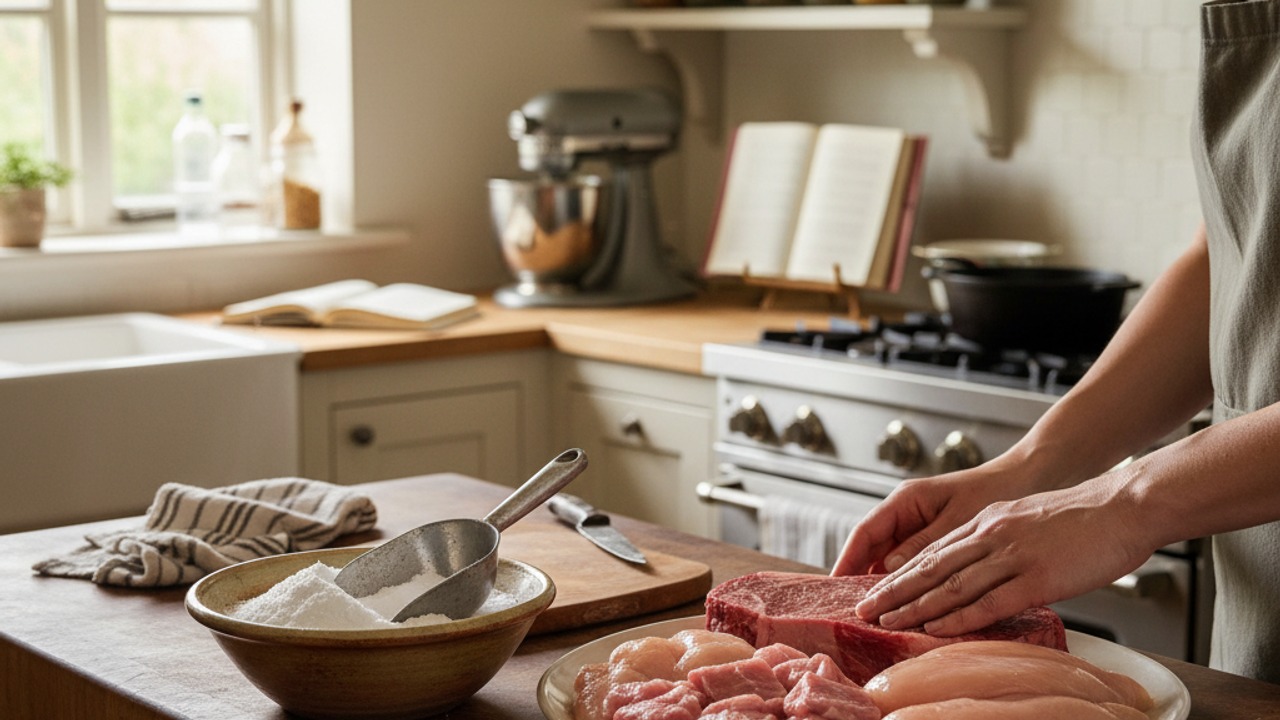
Baking Soda and Tenderized Beef
Learn how baking soda can tenderize, boost browning, and improve moisture for ground beef and other meats. This practical guide covers the science, step-by-step techniques, common mistakes, and recipes to try.

Healthy Eating
Gluten-Free Weeknight Grilling Plan
A 7-day gluten-free weeknight grilling plan with quick, family-friendly recipes, prep-ahead timelines, and a printable shopping list that spotlights late-summer produce and pantry staples. Includes clear cross-contamination safety tips and simple swaps to keep dinners fast and crowd-pleasing.

Healthy Eating
Low-Fat Grill Swaps for Big Flavor
A practical guide to trimming fat from grilled meals without losing juiciness or char. Learn yogurt- and citrus-based marinades, lean protein picks, searing and indirect-heat tricks, plus 5 quick low-fat marinades and a simple weeknight plan.
More from Baking
View all Baking recipes →
Cloud Bread Sandwiches

Honey Mustard Chicken Nuggets

Cheddar Jalapeño Corn Muffins

Basque Burnt Cheesecake

30-Minute Sticky Baked Honey Garlic Chicken Thighs with Crisp Edges

Lemon Butter Salmon

Spritz Cookies

Brown Butter Vanilla Syrup

Honey Glazed Easter Ham
Ask me anything about this recipe — substitutions, scaling, techniques, timing.
Powered by AI · 6 questions per 5 minutes, 30 per day