Croque Madame Breakfast Sandwich
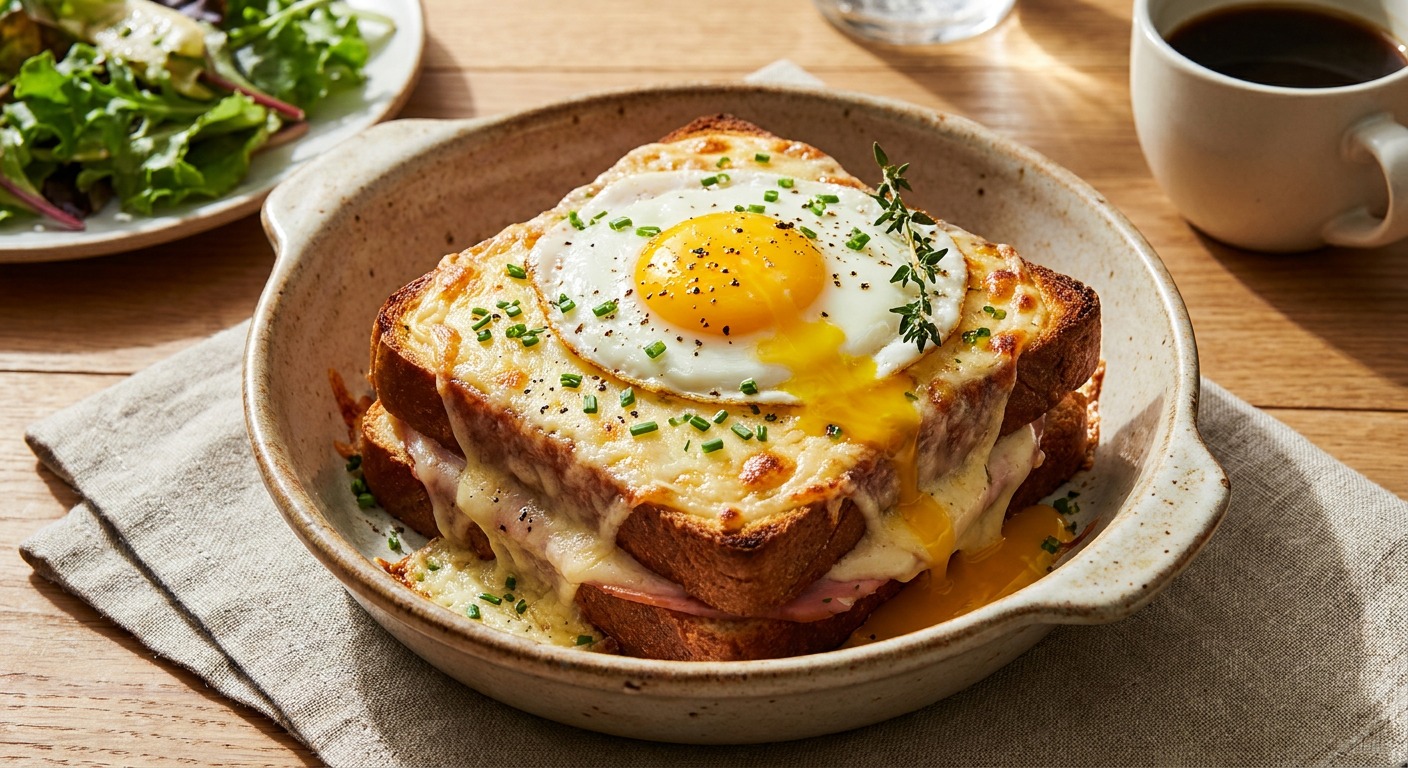
A baked Croque Madame that brings the classic Parisian brunch to your kitchen — rich béchamel, melty Gruyère and ham on buttery bread finished with a runny egg. This reliable oven-forward version is perfect for weekend brunches and scales easily for a crowd.
Ingredient Spotlight
Pain de mie
Pain de mie is a French-style sandwich loaf with a very soft, fine crumb and thin crust, often baked in a lidded pan to keep the shape square. It has a mild, slightly sweet flavor and an even, tender texture that soaks up custard or sandwich fillings without falling apart. You’ll find it at bakeries, specialty grocery stores, or in the bread aisle labeled as sandwich loaf; good substitutes are brioche (for richness) or an ordinary soft white sandwich bread if pain de mie isn’t available.
Ingredient Spotlight
Gruyère cheese
Gruyère is a hard Swiss cheese from the canton of Fribourg/Gruyères with a nutty, slightly sweet and savory flavor that deepens with age and melts beautifully. It’s a classic in French and Swiss dishes like fondue, croque-monsieur, and gratins and has a fragrant, buttery aroma when melted. Look for it at the supermarket cheese counter, specialty cheese shops, or online; good substitutes include Comté, Emmental, or an aged Swiss cheese for similar melting and flavor characteristics.
Jake Woods's note
"This baked Croque Madame keeps the technique approachable — a simple stovetop béchamel and an oven finish produce reliably oozy eggs and crisp edges. It shines at leisurely weekend brunches or when you want an impressive, make-ahead-friendly breakfast."
About This Recipe
This baked Croque Madame translates the classic Parisian sandwich into a reliably fuss-free brunch you can scale without losing anything in flavor. A smooth, lightly nutmegged béchamel replaces the unpredictable skillet step, giving the sandwich a silky interior that partners perfectly with nutty Gruyère and paper-thin ham; finishing the whole stack under high heat melts and caramelizes the cheese while the bread crisps at the edges. Using an oven rather than a stovetop also makes timing predictable for a crowd—once the sandwiches are on the sheet pan you can focus on eggs, salads, or coffee.
The beauty of this version is texture contrast: a slightly crunchy, butter-brushed slice of brioche or pain de mie; a rich blanket of béchamel; bubbling Gruyère that browns and strings; and a final fried or baked egg whose runny yolk acts as a glossy sauce. Little details—warm milk to prevent lumps, a quick mustard smear to cut richness, and a whisper of nutmeg—are what raise this from merely good to habit-forming. It’s ideal for weekend hosts who want something elegant without frantic last-minute work, and it scales simply by using extra sheet pans and a few timing tweaks.
Ingredients for Croque Madame Breakfast Sandwich
- 3 tbsp Unsalted butter
- 3 tbsp All-purpose flour
- 1 1/2 cups Whole milk (warmed)
- 3/4 tsp Kosher salt
- a pinch Ground nutmeg
- 1 tbsp Dijon mustard
- 8 slices Thick-sliced bread (pain de mie, brioche, or sourdough)
- 8 slices Thinly sliced ham
- 2 cups Gruyère cheese, shredded
- 4 large Large eggs
How to Make Croque Madame Breakfast Sandwich
Step 1: Make a smooth béchamel
Warm the milk in a small saucepan or the microwave. In a medium saucepan over medium heat, melt the butter, whisk in the flour and cook 1–2 minutes without browning. Whisk in the warm milk gradually until smooth and gently simmer until thick enough to coat the back of a spoon, about 3–5 minutes. Season with kosher salt and a pinch of nutmeg, then remove from heat and set aside.For this step
- 3 tbspUnsalted butter
- 3 tbspAll-purpose flour
- 1 1/2 cupsWhole milk (warmed)
- 3/4 tspKosher salt
- a pinchGround nutmeg
Step 2: Preheat oven and prepare bread
Position a rack in the middle of the oven and preheat to 425°F (220°C). Lightly brush or spread a little of the reserved melted butter on one side of each bread slice (optional for extra crisping). Spread a thin layer of Dijon mustard on the other side of 4 slices; top each with two slices of ham and a generous handful of shredded Gruyère, then close with the remaining bread slices, mustard side in.For this step
- 1 tbspDijon mustard
- 8 slicesThick-sliced bread (pain de mie, brioche, or sourdough)
- 8 slicesThinly sliced ham
- 2 cupsGruyère cheese, shredded
Step 3: Assemble with béchamel and cheese
Place sandwiches on a baking sheet lined with parchment or a lightly greased pan, seam-side down. Spoon a thick layer of béchamel over the top of each sandwich and sprinkle the remaining Gruyère evenly over the béchamel so it will brown and bubble during baking.Step 4: Bake, add eggs, and finish
Bake the sandwiches until the cheese is bubbly and edges are golden, about 10–12 minutes. Carefully crack one large egg on top of each sandwich and return to the oven, baking until egg whites are set but yolks remain slightly runny, about 5–7 minutes more (or cook longer for fully set yolks).For this step
- 4 largeLarge eggs
Step 5: Rest and serve
Let sandwiches rest 1–2 minutes to firm slightly, then transfer to plates. Season eggs with a pinch of salt (and pepper if desired), garnish with chopped parsley if you like, and serve immediately while yolks are runny and cheese is molten.


- Warm the milk in a small saucepan or the microwave. In a medium saucepan over medium heat, melt the butter, whisk in the flour and cook 1–2 minutes without browning. Whisk in the warm milk gradually until smooth and gently simmer until thick enough to coat the back of a spoon, about 3–5 minutes. Season with kosher salt and a pinch of nutmeg, then remove from heat and set aside.
- Position a rack in the middle of the oven and preheat to 425°F (220°C). Lightly brush or spread a little of the reserved melted butter on one side of each bread slice (optional for extra crisping). Spread a thin layer of Dijon mustard on the other side of 4 slices; top each with two slices of ham and a generous handful of shredded Gruyère, then close with the remaining bread slices, mustard side in.
- Place sandwiches on a baking sheet lined with parchment or a lightly greased pan, seam-side down. Spoon a thick layer of béchamel over the top of each sandwich and sprinkle the remaining Gruyère evenly over the béchamel so it will brown and bubble during baking.
- Bake the sandwiches until the cheese is bubbly and edges are golden, about 10–12 minutes. Carefully crack one large egg on top of each sandwich and return to the oven, baking until egg whites are set but yolks remain slightly runny, about 5–7 minutes more (or cook longer for fully set yolks).
- Let sandwiches rest 1–2 minutes to firm slightly, then transfer to plates. Season eggs with a pinch of salt (and pepper if desired), garnish with chopped parsley if you like, and serve immediately while yolks are runny and cheese is molten.
Croque Madame Breakfast Sandwich Tips
Warm the milk first
Warming the milk before you add it to the roux prevents cold lumps and keeps the béchamel smooth; just warm until steaming, not boiling.
Cook a blond roux
Cook the butter and flour 1–2 minutes until fragrant but not browned—this removes the raw flour taste while keeping a pale sauce that will brown nicely under the oven.
Test sauce thickness
Aim for a béchamel that coats the back of a spoon; if it’s too thin the cheese will sink, and if too thick it won’t spread evenly over the bread.
Make an egg well
Spoon the béchamel in a slight dip on top of each sandwich so the egg sits stably and the whites spread less during the final bake.
Finish on a rack
If you have one, bake sandwiches on a wire rack set over the sheet pan so air circulates and the bottoms stay crisp rather than steaming.
Croque Madame Breakfast Sandwich Variations and Substitutions
Mushroom and Swiss
Sauté mushrooms with thyme and a splash of sherry, swap ham for the mushrooms, and use Swiss or Emmental for an earthy, vegetarian-friendly version.
Smoked turkey and cheddar
Replace ham with smoked turkey and use sharp cheddar for a slightly sharper, less salty profile that’s great with whole-grain mustard.
Spinach and Gruyère
Wilt baby spinach into the béchamel (squeeze out excess moisture) and omit the ham for a lighter, green-forward Croque that still benefits from the melty Gruyère.
Gluten-free or brioche swap
Use sturdy gluten-free sandwich bread or brioche for extra richness, and reduce added butter when using already-rich brioche to avoid overly greasy results.
How to Store and Make Croque Madame Breakfast Sandwich Ahead
Store leftover sandwiches wrapped tightly in the refrigerator for up to 48 hours; the egg yolk won’t stay runny, so plan to reheat without expecting the same texture. For best results, reheat in a 350°F oven on a wire rack for 10–15 minutes until warmed through and crisped, or refresh the bread in a hot skillet and top with a freshly fried egg just before serving. You can assemble sandwiches (unbaked) up to 24 hours ahead; hold eggs separately and bake when ready.
What to Serve With Croque Madame Breakfast Sandwich
Serve with a bright, acidic side to cut the richness—frisée or peppery arugula dressed in lemon vinaigrette or quick pickled shallots are classic companions. For heartier brunches, add roasted fingerling potatoes or crisped pommes vapeur and a handful of cornichons; finish with coarse salt and chopped parsley. Pair with a robust coffee, a dry sparkling wine or a cold lager to balance the béchamel and cheese.
Croque Madame Breakfast Sandwich FAQs
Can I assemble these ahead of time?
Yes—assemble the sandwiches up to 24 hours ahead, cover tightly, and refrigerate. Hold off on cracking the eggs on top until you’re about to bake so the whites don’t become watery.
How do I guarantee a runny yolk?
Bake the sandwiches until the cheese is bubbling, then add the eggs and return to a 425°F oven for about 5–7 minutes; start checking at 5 minutes because ovens vary and the eggs continue to cook slightly after you remove them.
Can I make this on the stovetop instead?
You can pan-toast each sandwich and melt the cheese under a lid, but finishing in the oven gives more even browning and makes it far easier to cook multiple sandwiches at once.
What cheeses can I substitute for Gruyère?
Comté, Emmental, or a good-quality young Swiss are excellent swaps; avoid very oily or crumbly cheeses—mild cheddar works in a pinch but won’t brown the same way.
Can I freeze these sandwiches?
Freeze only fully-cooled, unegged assembled sandwiches for up to 1 month; reheat from frozen in a 350°F oven for 20–30 minutes until heated, then add a freshly cooked egg before serving for best texture.
About the author
Jake WoodsHello, I'm Jake. I started this recipe site with the idea that I hated recipe websites that overwhelm you with long stories and ads just to see plain content that's not helpful. My goal is to provide you with quality recipes, simple ideas and a fun cooking experience. There's lots of fun things to cook, and I think as you browse the site you'll find that TopShelf.Recipes is the place for quality recipes on the web.
See all recipes by Jake Woods →Ratings & Reviews
Did you make this recipe?
Be the first to share your experience.
Nutrition Facts
Per serving: 1 serving
Nutrition values are estimated from USDA ingredient data and may vary based on preparation, brands, and portion sizes. Values are provided for informational purposes only.
Keep Reading
Guides & articles for this recipe
Tips & Techniques
Baking Soda and Tenderized Beef
Learn how baking soda can tenderize, boost browning, and improve moisture for ground beef and other meats. This practical guide covers the science, step-by-step techniques, common mistakes, and recipes to try.

Healthy Eating
Gluten-Free Weeknight Grilling Plan
A 7-day gluten-free weeknight grilling plan with quick, family-friendly recipes, prep-ahead timelines, and a printable shopping list that spotlights late-summer produce and pantry staples. Includes clear cross-contamination safety tips and simple swaps to keep dinners fast and crowd-pleasing.

Healthy Eating
Low-Fat Grill Swaps for Big Flavor
A practical guide to trimming fat from grilled meals without losing juiciness or char. Learn yogurt- and citrus-based marinades, lean protein picks, searing and indirect-heat tricks, plus 5 quick low-fat marinades and a simple weeknight plan.
More from Baking
View all Baking recipes →
Cloud Bread Sandwiches

Honey Mustard Chicken Nuggets

Cheddar Jalapeño Corn Muffins

Basque Burnt Cheesecake

30-Minute Sticky Baked Honey Garlic Chicken Thighs with Crisp Edges

Lemon Butter Salmon

Spritz Cookies

Brown Butter Vanilla Syrup

Honey Glazed Easter Ham
Ask me anything about this recipe — substitutions, scaling, techniques, timing.
Powered by AI · 6 questions per 5 minutes, 30 per day