Dairy-Free Butternut Pasta
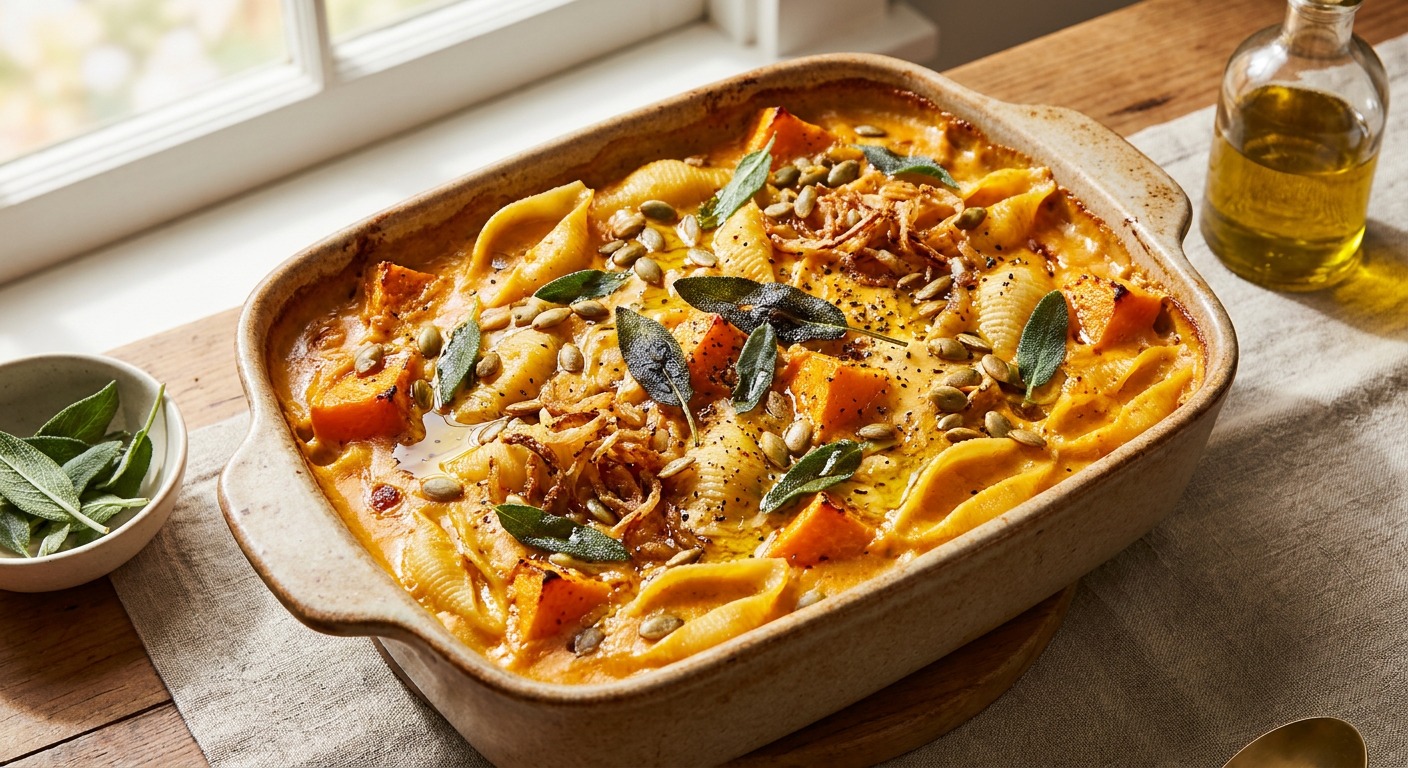
A cozy, dairy-free pasta that captures fall flavors with roasted butternut squash turned into a silky, coconut-milk-forward sauce. Comforting and seasonal, this vegetarian bake-style pasta is perfect for weeknight dinners or a relaxed holiday side.
Ingredient Spotlight
Full-fat canned coconut milk
A thick, creamy liquid made from grated coconut flesh and water, commonly used in Southeast Asian, South Asian and Caribbean cuisines. It has a rich, slightly sweet coconut flavor and a full mouthfeel that adds body to soups, curries and sauces. Find it in the international or canned goods aisle of most supermarkets and at Asian or specialty grocery stores; if you need a substitute, use canned coconut cream (diluted to taste), or for a non-coconut option use heavy cream or a cashew cream for a similar richness (note flavor will differ).
Ingredient Spotlight
Nutritional yeast
Deactivated brewer's yeast sold as yellow flakes or powder, popular in vegan and health-food cooking for its cheesy, nutty, umami flavor and vitamin B content. It has a savory, slightly cheesy aroma and is often sprinkled on popcorn, used in vegan sauces, or stirred into soups. You can find it at well-stocked supermarkets, health-food stores or bulk bins; a good substitute is grated Parmesan (if not vegan) or for vegan umami try a small amount of miso, soy sauce, or a spread like Marmite/Vegemite diluted into the dish.
(paid link) — as an Amazon Associate we earn from qualifying purchases.
Jake Woods's note
"This dish shines on crisp autumn evenings when you want something rich and nourishing without dairy; roasted squash brings natural sweetness while coconut milk and nutritional yeast give a creamy, savory finish. Home cooks will love how roast-and-blend simplicity yields an impressive, bake-style pasta everyone will ask for again."
About This Recipe
This dairy-free butternut pasta is built around two complementary ideas: deeply caramelized squash for savory depth, and creamy coconut milk for silkiness without dairy. Roasting the cubes until their edges brown concentrates the squash’s natural sugars so the sauce reads more savory than sweet, while a splash of full-fat coconut milk keeps the texture lush and clingy to tubes like penne or rigatoni. Nutritional yeast gives the impression of cheesy umami without lactose, and a sauté of shallot and garlic provides the aromatic frame that keeps the flavor from feeling one-note.
The recipe is forgiving yet specific where it counts: don’t skimp on roasting time or the step that reserves pasta water — both are key to body and balance. It’s a weeknight-friendly dish that also behaves like a holiday side when plated for guests, adaptable to add-ins (roasted chickpeas, crispy sage) or served light with a peppery salad. If you cook from the perspective of layers — roast, aromatics, puree, and starch adjustment — you’ll consistently get a silky, satisfying outcome that tastes deeper than its short ingredient list suggests.
Ingredients for Dairy-Free Butternut Pasta
- 4 cups Butternut squash, peeled and cubed
- 3 tbsp Extra-virgin olive oil
- 1 1/2 tsp Kosher salt
- 1/2 tsp Freshly ground black pepper
- 1 medium Shallot, thinly sliced
- 3 cloves Garlic, minced
- 1 cup Vegetable broth
- 1 cup Full-fat canned coconut milk
- 3 tbsp Nutritional yeast
- 12 oz Dried pasta (penne or rigatoni)
🛒 = paid link — as an Amazon Associate we earn from qualifying purchases.
How to Make Dairy-Free Butternut Pasta
Step 1: Roast the butternut
Preheat the oven to 425°F (220°C). Toss the cubed butternut squash with 2 tablespoons olive oil, 1 teaspoon kosher salt, and the black pepper on a rimmed baking sheet; spread in a single layer and roast until caramelized and tender, about 25–30 minutes, turning once. Remove from oven and let cool slightly.For this step
- 4 cupsButternut squash, peeled and cubed
- 1/2 tspFreshly ground black pepper
Step 2: Sauté aromatics
While the squash roasts, heat the remaining tablespoon of olive oil in a large skillet over medium heat. Add the sliced shallot and sauté until softened and translucent, about 4 minutes, then add the minced garlic and cook another 30–60 seconds until fragrant. Reduce heat to low and keep aromatics warm.For this step
- 1 mediumShallot, thinly sliced
- 3 clovesGarlic, minced
Step 3: Blend the creamy squash sauce
Place the roasted squash, sautéed shallot and garlic, vegetable broth, coconut milk, and nutritional yeast into a blender (or use an immersion blender in a deep bowl). Puree until very smooth, adding up to 1/4 cup extra broth or water if needed to reach a silky, pourable consistency. Taste and adjust seasoning with the remaining salt if necessary.For this step
- 1 cupVegetable broth
- 1 cupFull-fat canned coconut milk
- 3 tbspNutritional yeast
Step 4: Cook the pasta
Bring a large pot of generously salted water to a boil and cook the pasta until just al dente according to package directions. Reserve about 1 cup of the starchy pasta cooking water before draining to help thin the sauce as needed.For this step
- 12 ozDried pasta (penne or rigatoni)
Step 5: Combine and finish
Return the pureed sauce to the skillet over low heat and stir in a few tablespoons of reserved pasta water to loosen it. Add the drained pasta and toss gently to coat, adding more pasta water to reach a creamy consistency. Serve warm, finishing with a drizzle of olive oil and an extra grind of black pepper if desired.


- Preheat the oven to 425°F (220°C). Toss the cubed butternut squash with 2 tablespoons olive oil, 1 teaspoon kosher salt, and the black pepper on a rimmed baking sheet; spread in a single layer and roast until caramelized and tender, about 25–30 minutes, turning once. Remove from oven and let cool slightly.
- While the squash roasts, heat the remaining tablespoon of olive oil in a large skillet over medium heat. Add the sliced shallot and sauté until softened and translucent, about 4 minutes, then add the minced garlic and cook another 30–60 seconds until fragrant. Reduce heat to low and keep aromatics warm.
- Place the roasted squash, sautéed shallot and garlic, vegetable broth, coconut milk, and nutritional yeast into a blender (or use an immersion blender in a deep bowl). Puree until very smooth, adding up to 1/4 cup extra broth or water if needed to reach a silky, pourable consistency. Taste and adjust seasoning with the remaining salt if necessary.
- Bring a large pot of generously salted water to a boil and cook the pasta until just al dente according to package directions. Reserve about 1 cup of the starchy pasta cooking water before draining to help thin the sauce as needed.
- Return the pureed sauce to the skillet over low heat and stir in a few tablespoons of reserved pasta water to loosen it. Add the drained pasta and toss gently to coat, adding more pasta water to reach a creamy consistency. Serve warm, finishing with a drizzle of olive oil and an extra grind of black pepper if desired.
Dairy-Free Butternut Pasta Tips
Caramelize the squash
Roast the cubes in a single layer and don’t crowd the pan; browning on the edges is where most of the flavor comes from.
Reserve pasta water
Starchy cooking water is the emulsifier here — add it gradually to the pureed sauce until it clings to the pasta without being soupy.
Blend until silky
Use a high-speed blender or blend in batches and scrape the sides; if the sauce seems grainy, pass it through a fine sieve for a truly velvety finish.
Season in stages
Add a little salt to the squash before roasting and taste the finished sauce before adjusting, because roasting concentrates sweetness and changes seasoning needs.
Warm sauce before tossing
Gently heat the pureed sauce in the skillet so it loosens with pasta water and coats the pasta evenly without breaking or splitting.
Dairy-Free Butternut Pasta Variations and Substitutions
Smoky roasted twist
Add 1 teaspoon smoked paprika and swap half the vegetable broth for a jarred roasted red pepper puree to give the sauce a smoky, slightly tangy edge.
Herbed sage and chickpeas
Top the tossed pasta with pan-crisped sage leaves and roasted chickpeas for crunch and protein, using coconut oil to keep it dairy-free.
Lower-fat option
Use light coconut milk and increase vegetable broth by 1/2 cup, then simmer the sauce a few minutes to concentrate flavor so it still feels rich.
Pumpkin or sweet potato
Substitute equal parts roasted pumpkin or sweet potato for butternut, but reduce added sweetness with an extra pinch of salt and a squeeze of lemon to brighten.
How to Store and Make Dairy-Free Butternut Pasta Ahead
Store leftovers in an airtight container in the refrigerator for up to 4 days; for best texture, keep the pasta and sauce separate if possible. The pureed sauce freezes well for up to 3 months — thaw overnight in the fridge. Reheat gently on the stove over low heat with a splash of broth or reserved pasta water, stirring to reincorporate and prevent scorching.
What to Serve With Dairy-Free Butternut Pasta
Pair this pasta with a crisp green salad dressed in lemon and Dijon to cut the dish’s richness, and scatter toasted pumpkin seeds or chopped toasted hazelnuts on top for crunch. For drinks, a bright unoaked white (Pinot Grigio or Vermentino) or a lightly sparkling apple cider complements the squash’s sweetness and the coconut’s creaminess.
Dairy-Free Butternut Pasta FAQs
Can I use light coconut milk instead of full-fat?
Yes, but the sauce will be less rich; compensate by reducing some of the broth and simmering the blended sauce briefly to concentrate flavors, or add a tablespoon of tahini for extra body.
What if my sauce is too thin or too thick?
If too thin, simmer it gently to reduce and concentrate, or add a small handful of cooked, pureed squash or a teaspoon of cornstarch slurry; if too thick, loosen with reserved pasta water, broth, or a splash of water until it reaches the desired creamy consistency.
Can I make this ahead for a dinner party?
Make the roasted squash and the pureed sauce up to 48 hours ahead and refrigerate separately; reheat sauce slowly and toss with freshly cooked pasta right before serving for best texture.
How do I prevent a grainy texture from the squash?
Cook the squash until very tender, use a high-speed blender and blend hot or warm, and if needed, pass the sauce through a fine-mesh sieve to remove any fibrous bits.
Is nutritional yeast essential?
It’s not essential, but it adds savory, cheesy notes that balance coconut sweetness; omit it and add a teaspoon of white miso or a splash of soy sauce for umami if you prefer.
About the author
Jake WoodsHello, I'm Jake. I started this recipe site with the idea that I hated recipe websites that overwhelm you with long stories and ads just to see plain content that's not helpful. My goal is to provide you with quality recipes, simple ideas and a fun cooking experience. There's lots of fun things to cook, and I think as you browse the site you'll find that TopShelf.Recipes is the place for quality recipes on the web.
See all recipes by Jake Woods →Ratings & Reviews
Did you make this recipe?
Be the first to share your experience.
Nutrition Facts
Per serving: 1 serving
Nutrition values are estimated from USDA ingredient data and may vary based on preparation, brands, and portion sizes. Values are provided for informational purposes only.
Keep Reading
Guides & articles for this recipe
Tips & Techniques
Baking Soda and Tenderized Beef
Learn how baking soda can tenderize, boost browning, and improve moisture for ground beef and other meats. This practical guide covers the science, step-by-step techniques, common mistakes, and recipes to try.

Healthy Eating
Gluten-Free Weeknight Grilling Plan
A 7-day gluten-free weeknight grilling plan with quick, family-friendly recipes, prep-ahead timelines, and a printable shopping list that spotlights late-summer produce and pantry staples. Includes clear cross-contamination safety tips and simple swaps to keep dinners fast and crowd-pleasing.

Healthy Eating
Low-Fat Grill Swaps for Big Flavor
A practical guide to trimming fat from grilled meals without losing juiciness or char. Learn yogurt- and citrus-based marinades, lean protein picks, searing and indirect-heat tricks, plus 5 quick low-fat marinades and a simple weeknight plan.
More from Baking
View all Baking recipes →
Cloud Bread Sandwiches

Honey Mustard Chicken Nuggets

Cheddar Jalapeño Corn Muffins

Basque Burnt Cheesecake

30-Minute Sticky Baked Honey Garlic Chicken Thighs with Crisp Edges

Lemon Butter Salmon

Spritz Cookies

Brown Butter Vanilla Syrup

Honey Glazed Easter Ham
Ask me anything about this recipe — substitutions, scaling, techniques, timing.
Powered by AI · 6 questions per 5 minutes, 30 per day