Double-Fried Potato Chips
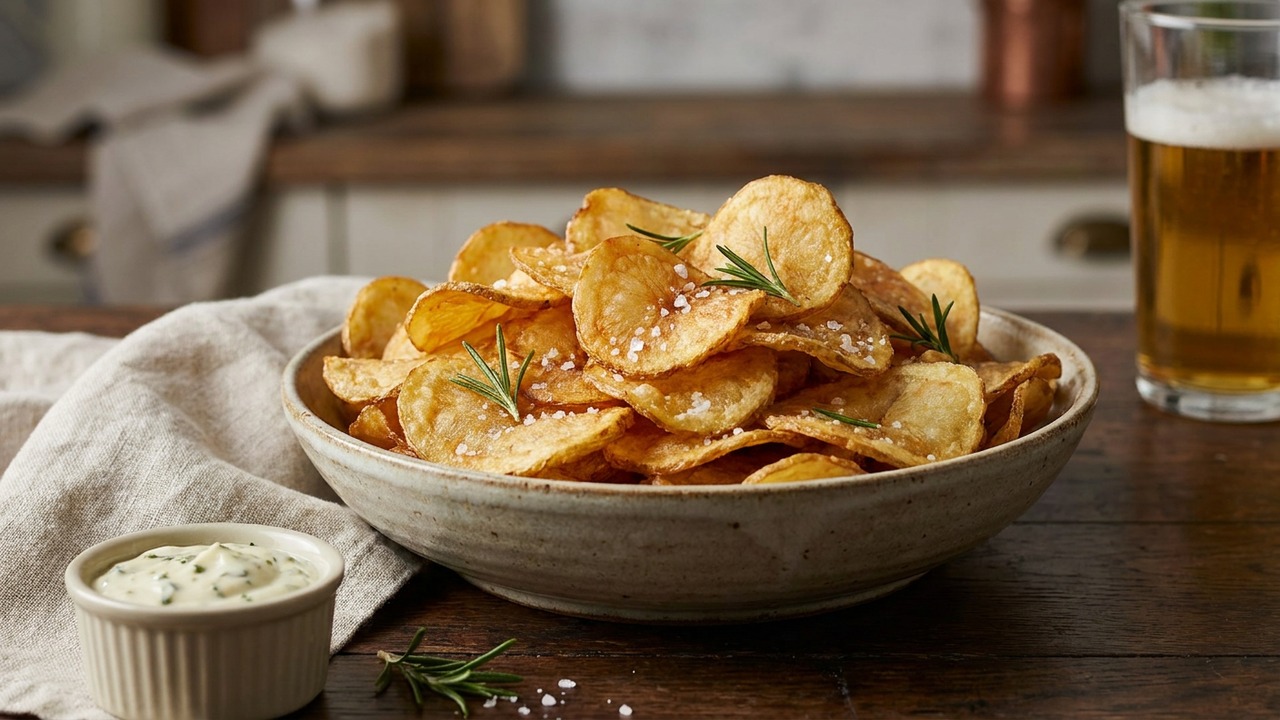
Thinly sliced potatoes double-fried (low then high temperature) for extreme crunch and reliably even results. The low-temperature blanch cooks the potato through; the high-temperature fry delivers a glassy, shattering crisp.
Jake Woods's note
"These chips shine as a party snack or a crunchy side to sandwiches; the double-fry method gives home cooks restaurant-level crisp without fancy equipment. Expect consistent results once you dial in slice thickness and oil temperature."
About This Recipe
There are two things to love about these double-fried potato chips: their uncompromising crunch and how reliably they come out the same every time. Using high-starch Russets and a two-step cook—first a low-temperature blanch to gently cook the flesh, then a high-temperature flash to evaporate remaining moisture—delivers that glassy, shattering crisp that single-stage frying rarely achieves. The ice bath with a touch of vinegar pulls surface starch, keeps slices from oxidizing, and helps the slices stay translucent rather than mottled; the optional cornstarch is a surgeon’s trick for an extra-thin, brittle shell without adding bulk. The result is a chip that snaps cleanly and carries seasoning beautifully, whether you keep it salt-and-paprika simple or finish with a fine-grain flavored salt.
This recipe lives at parties, on sandwich plates, or in a bowl for afternoon grazing, and it’s built to be forgiving so a determined home cook can get professional results. You don’t need a fryer—just a heavy pot and a reliable thermometer—and the method scales: work in small batches, let the first-fry pieces cool, then blitz them hot for the final crackle. If you care about texture more than speed, this technique rewards patience with a chip that tastes like it came from a specialty shop.
Ingredients for Double-Fried Potato Chips
- 3 medium (about) Russet potatoes, unpeeled
- 4 cups Ice water (for soak)
- 1 tbsp Distilled white vinegar
- 6 cups Neutral frying oil (canola, peanut, or vegetable)
- 1 tbsp Cornstarch (optional, for extra crisp)
- 1 1/2 tsp Kosher salt (to taste)
- 1/2 tsp Smoked paprika (optional, for finishing)
How to Make Double-Fried Potato Chips
Step 1: Slice the potatoes thinly
Using a mandoline or very sharp knife, slice potatoes 1.5–2 mm thick for crisp, chip-like results. Work quickly so slices remain cold, and stack them in a large bowl as you go.For this step
- 3 medium (about)Russet potatoes, unpeeled
Step 2: Rinse and soak to remove starch
Place the slices in a bowl of ice water with the tablespoon of vinegar and soak for 20–30 minutes to draw out excess starch and keep the slices from browning. The vinegar is optional but helps prevent darkening and improves texture.For this step
- 4 cupsIce water (for soak)
- 1 tbspDistilled white vinegar
Step 3: Dry the slices thoroughly
Drain the potatoes and spread them on clean kitchen towels or paper towels, then pat completely dry; moisture prevents crisping and causes oil splatter. Allow 5–10 minutes of air-drying while you heat the oil.Step 4: First fry (low temperature) — blanch
Heat oil in a heavy pot or deep fryer to 275°F (135°C). Fry the potato slices in small batches for 6–8 minutes until they’re cooked through and pale (they should be flexible but not golden), then transfer to a wire rack or paper towel–lined tray to drain and cool.For this step
- 6 cupsNeutral frying oil (canola, peanut, or vegetable)
Step 5: Second fry (high temperature) — crisp
Raise the oil temperature to 375–400°F (190–205°C). If using, toss slices lightly with cornstarch in a bowl to coat thinly, then fry in small batches 1–2 minutes until deep golden and glassy-crisp. Work quickly to avoid over-browning.For this step
- 1 tbspCornstarch (optional, for extra crisp)
Step 6: Drain and season immediately
Remove chips to a wire rack or paper towels to drain briefly, then season while hot with kosher salt and a sprinkle of smoked paprika if desired. Serve warm or at room temperature for the best crunch.For this step
- 1 1/2 tspKosher salt (to taste)
- 1/2 tspSmoked paprika (optional, for finishing)


- Using a mandoline or very sharp knife, slice potatoes 1.5–2 mm thick for crisp, chip-like results. Work quickly so slices remain cold, and stack them in a large bowl as you go.
- Place the slices in a bowl of ice water with the tablespoon of vinegar and soak for 20–30 minutes to draw out excess starch and keep the slices from browning. The vinegar is optional but helps prevent darkening and improves texture.
- Drain the potatoes and spread them on clean kitchen towels or paper towels, then pat completely dry; moisture prevents crisping and causes oil splatter. Allow 5–10 minutes of air-drying while you heat the oil.
- Heat oil in a heavy pot or deep fryer to 275°F (135°C). Fry the potato slices in small batches for 6–8 minutes until they’re cooked through and pale (they should be flexible but not golden), then transfer to a wire rack or paper towel–lined tray to drain and cool.
- Raise the oil temperature to 375–400°F (190–205°C). If using, toss slices lightly with cornstarch in a bowl to coat thinly, then fry in small batches 1–2 minutes until deep golden and glassy-crisp. Work quickly to avoid over-browning.
- Remove chips to a wire rack or paper towels to drain briefly, then season while hot with kosher salt and a sprinkle of smoked paprika if desired. Serve warm or at room temperature for the best crunch.
Double-Fried Potato Chips Tips
Consistent 1.5–2 mm slices
Use a mandoline (with guard) or a sharp knife to keep every slice the same thickness so they cook uniformly; slightly thicker slices will taste more like kettle chips and need longer blanching.
Pat and air-dry thoroughly
After the ice bath, drain and pat slices dry, then let them rest on towels for 5–10 minutes—any surface moisture causes oil spatter and soft chips.
Watch oil temperatures
Use a reliable probe or candy thermometer and fry in small batches so the oil quickly returns to target temps; start at 275°F for blanching and finish at 375–400°F for crisping.
Don’t overcrowd the pot
Frying too many slices at once drops the oil temperature and makes greasy chips, so work in batches that allow slices to move freely.
Cornstarch dusting technique
If using cornstarch, toss cooled, first-fry slices very lightly in a bowl—excess powder will scorch; the coating should feel barely dusty, not floury.
Double-Fried Potato Chips Variations and Substitutions
Sweet Potato Chips
Swap in sweet potatoes but slice slightly thicker and extend the low-temperature fry by a couple minutes; expect a sweeter flavor and a less glassy finish but still excellent crunch.
Kettle-Style Thicker Cut
Slice 2.5–3 mm and increase the blanch time until slices are flexible; the final fry will create a meaty, crisper edge rather than a delicate snap.
Vinegar & Sea Salt Finish
Toss hot chips with a light splash of malt or white vinegar and flaky sea salt immediately after frying for a tangy, pub-style chip.
Truffle or Herb Finish
Finish hot chips with a few drops of truffle oil or a sprinkle of powdered rosemary and grated Parmesan for an upscale, umami-rich variation.
Air-Fryer Adaptation
Par-cook at 300°F for 4–6 minutes to soften, then raise to 400°F and finish in 1–3 minute bursts, shaking between cycles—results are close but less glassy than deep-frying.
How to Store and Make Double-Fried Potato Chips Ahead
These chips are best eaten the day they’re made; they lose their signature snap as ambient humidity increases. Store completely cooled chips in an airtight container or zipper bag with as little headspace as possible at room temperature for up to 48 hours. To re-crisp, spread in a single layer on a baking sheet and heat in a 300°F oven for 5–8 minutes; avoid the microwave, which makes them chewy.
What to Serve With Double-Fried Potato Chips
Serve in a wide bowl or cone with small ramekins of garlic aioli, mustard-vinegar dip, or smoked paprika mayonnaise for dipping; they also make a crunchy garnish for pulled pork sandwiches or composed salads. For drinks, pair with a bright, dry lager or a crisp sparkling wine to cut the oiliness, or a citrusy gin-and-tonic if you want a cocktail match.
Double-Fried Potato Chips FAQs
Can I use Yukon Gold or red potatoes instead of Russets?
Yes, but expect differences: lower-starch varieties like Yukon Gold yield a creamier interior and a less glassy snap, so you may need slightly shorter blanching and watch for quicker browning during the final fry.
Why add vinegar to the soak?
A tablespoon of vinegar in the ice water helps prevent enzymatic browning and tightens the potato surface so slices don’t discolor during the soak, and it subtly improves the final texture without tasting vinegary.
My chips are greasy—what went wrong?
Greasy chips usually mean the oil temperature was too low (especially on the second fry) or the pan was overcrowded; allow oil to return to temp between batches and fry in small amounts so slices move freely.
How can I tell when the first fry is done?
They should be cooked through and flexible but still pale—think set but not colored; if they’re rigid or golden, you’ve overcooked the first stage and risk burning in the final fry.
Can I reuse the frying oil?
Yes—let the oil cool, strain through a fine mesh or cheesecloth, and store in a sealed container away from light for a few uses; discard if it smells off, foams, or turns dark.
About the author
Jake WoodsHello, I'm Jake. I started this recipe site with the idea that I hated recipe websites that overwhelm you with long stories and ads just to see plain content that's not helpful. My goal is to provide you with quality recipes, simple ideas and a fun cooking experience. There's lots of fun things to cook, and I think as you browse the site you'll find that TopShelf.Recipes is the place for quality recipes on the web.
See all recipes by Jake Woods →Ratings & Reviews
Did you make this recipe?
Be the first to share your experience.
Nutrition Facts
Per serving: 1 serving
Nutrition values are estimated from USDA ingredient data and may vary based on preparation, brands, and portion sizes. Values are provided for informational purposes only.
Keep Reading
Guides & articles for this recipe

Healthy Eating
Gluten-Free Weeknight Grilling Plan
A 7-day gluten-free weeknight grilling plan with quick, family-friendly recipes, prep-ahead timelines, and a printable shopping list that spotlights late-summer produce and pantry staples. Includes clear cross-contamination safety tips and simple swaps to keep dinners fast and crowd-pleasing.

Healthy Eating
Low-Fat Grill Swaps for Big Flavor
A practical guide to trimming fat from grilled meals without losing juiciness or char. Learn yogurt- and citrus-based marinades, lean protein picks, searing and indirect-heat tricks, plus 5 quick low-fat marinades and a simple weeknight plan.

Recipes
DIY Edible Monster Eyes Candy
Make safe, fun edible monster eyes for cupcakes, cookies, and candy trays. Step-by-step recipes show baking-soda balls, chocolate and fondant eyes, wafer-print options, plus assembly, storage, and kid-friendly safety tips.
More from Snacks
View all Snacks recipes →
Easy Peanut Butter Bars

Fried Jalapeno Rings

Gluten Free Fried Pickles

Labor Day Grilled Lobster Rolls with Charred Scallion Brown Butter & Lemon‑Herb Aioli

Salt & Vinegar Potato Chips

Holiday Cranberry Maple Chex Mix

Snake River Farms Beef Tallow Crispy Air Fryer Chicken Wings

Strawberry Yogurt Bark

Buffalo Chicken Dip
Ask me anything about this recipe — substitutions, scaling, techniques, timing.
Powered by AI · 6 questions per 5 minutes, 30 per day