Fluffy Buttermilk Biscuits
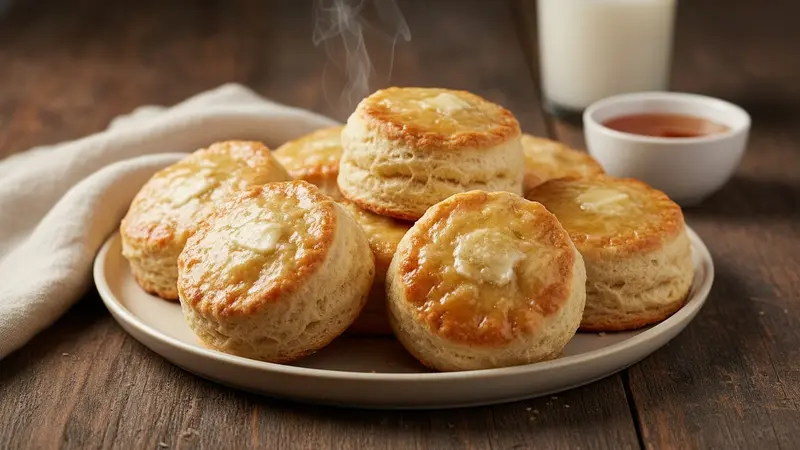
Tender, flaky buttermilk biscuits with a golden top and layered interior—perfect for breakfast, brunch, or a warm snack. Fast to make and oven-baked for reliably even rise and color.
Jake Woods's note
"These biscuits deliver a crisp, buttery exterior and pillowy layers inside—great with jam, honey, or sausage gravy. Home cooks will appreciate the simple technique that yields bakery-style results every time."
About This Recipe
These biscuits are all about contrast: a bronzed, slightly crisp crown giving way to a pillowy, layered interior that pulls apart in soft ribbons. They’re the kind of biscuit that makes weekday mornings feel indulgent and convinces guests that you planned the whole brunch. The buttermilk lends a gentle tang and tender crumb, while the high oven temperature produces an immediate lift and that classic golden top. The reserved tablespoon of butter, brushed on right out of the oven, adds shine and a savory finish that keeps the crust from feeling dry.
What makes this version reliably successful is technique more than fancy ingredients — cold butter grated into the flour gives flaky pockets, a short series of folds creates distinct layers, and a brief rest hydrates the flour so the dough holds structure without becoming tough. Use a straight, not twisting, cutter to preserve rise, and don’t overwork the dough: a shaggy mix yields the lightest results. These biscuits are straightforward enough for a busy weeknight yet elegant enough to anchor fried chicken, poached eggs, or a dollop of jam for a sweeter route.
Plan your timing
Ingredients for Fluffy Buttermilk Biscuits
- 2 cups all-purpose flour
- 1 tbsp baking powder
- 1/2 tsp baking soda
- 1 tbsp granulated sugar
- 1 tsp salt
- 7 tbsp unsalted butter
- 3/4 cup buttermilk
How to Make Fluffy Buttermilk Biscuits
Step 1: Preheat and combine dry ingredients
Active 6 min
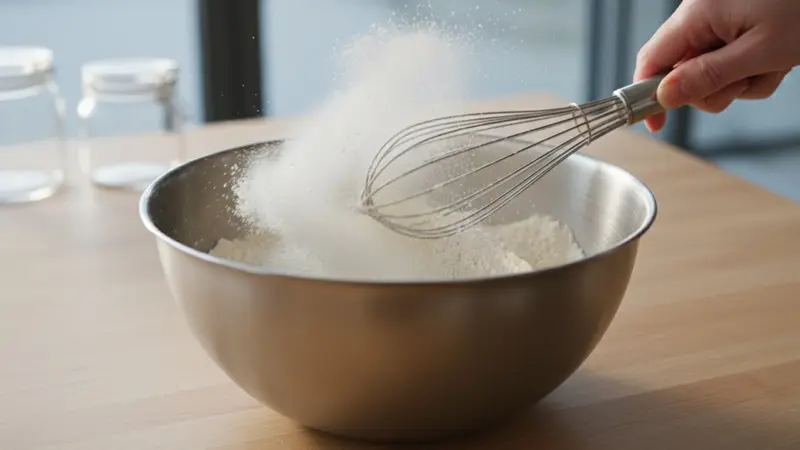
Preheat your oven to 450°F (230°C) and position a rack in the middle. In a large bowl, whisk together the all-purpose flour, baking powder, baking soda, granulated sugar, and salt until evenly distributed.For this step
- 2 cupsall-purpose flour
- 1 tbspbaking powder
- 1/2 tspbaking soda
- 1 tbspgranulated sugar
- 1 tspsalt
Step 2: Cut cold butter into the dry mix
Active 6 min
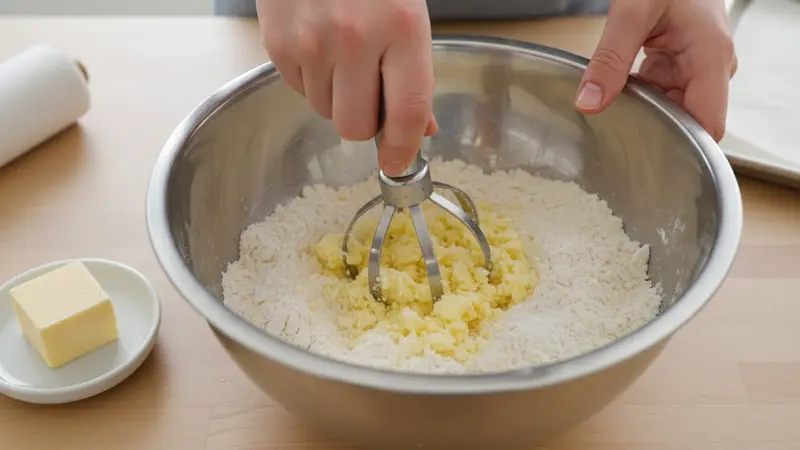
Grate or cut 6 tablespoons of the unsalted butter into small pieces and work it into the dry mixture using a pastry cutter, fork, or pulses in a food processor until the mixture resembles coarse crumbs with some pea-sized bits. Reserve the remaining 1 tablespoon of unsalted butter (for finishing) and keep it chilled until ready to melt for brushing.For this step
- 7 tbspunsalted butter
Step 3: Add buttermilk and form dough
Active 4 min · Passive 10 min
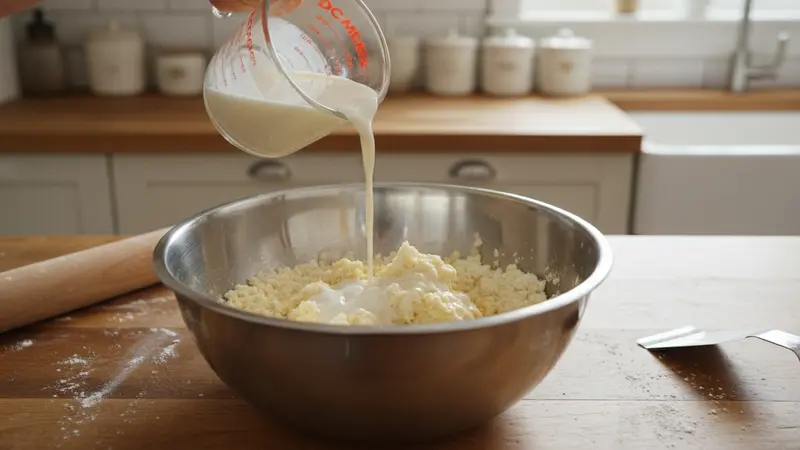
Pour 3/4 cup buttermilk into the flour-and-butter mixture and stir gently just until a shaggy, slightly sticky dough forms; avoid overmixing to keep the biscuits tender. Turn the dough out and fold it over itself 3–5 times to create layers, then let the dough rest for 10 minutes to relax the gluten and hydrate the flour.For this step
- 3/4 cupbuttermilk
Step 4: Shape and cut biscuits
Active 6 min
Lightly flour a work surface and pat the rested dough to about 1 inch (2.5 cm) thickness, folding once and patting again for flaky layers. Use a 2 1/2-inch round cutter to stamp out 8 biscuits (press straight down without twisting) and place them close but not touching on a parchment-lined baking sheet so the sides rise up; re-roll scraps quickly if needed to reach 8 biscuits.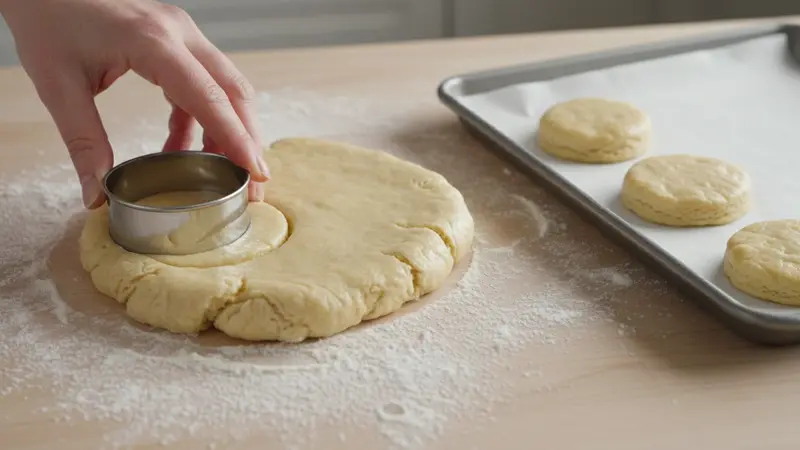
Step 5: Bake until golden
Active 2 min · Passive 15 min
Bake the biscuits in the preheated 450°F (230°C) oven for 12–15 minutes, rotating the pan once if your oven runs hot, until the tops are deep golden brown and the bases are cooked through. Remove the baking sheet from the oven and immediately proceed to the finishing step.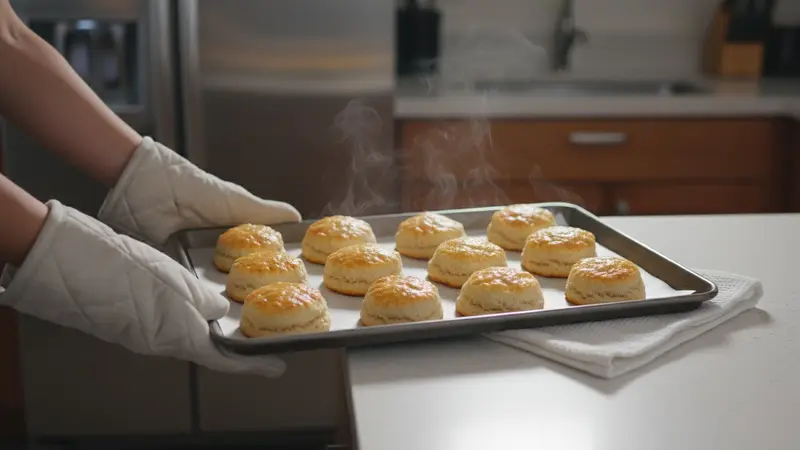
Step 6: Finish and serve warm
Active 2 min
Melt the reserved 1 tablespoon of unsalted butter and brush it over the hot biscuit tops for a shiny, buttery finish. Serve warm—these biscuits yield 8 pieces and are best enjoyed the day they’re baked.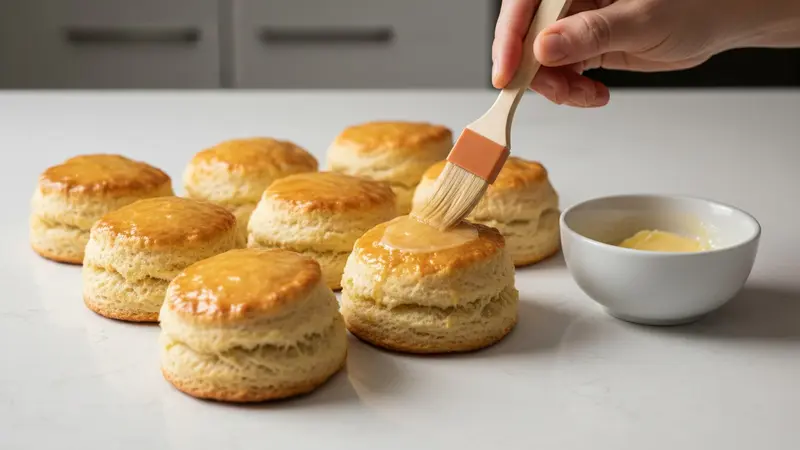
- Preheat your oven to 450°F (230°C) and position a rack in the middle. In a large bowl, whisk together the all-purpose flour, baking powder, baking soda, granulated sugar, and salt until evenly distributed.
- Grate or cut 6 tablespoons of the unsalted butter into small pieces and work it into the dry mixture using a pastry cutter, fork, or pulses in a food processor until the mixture resembles coarse crumbs with some pea-sized bits. Reserve the remaining 1 tablespoon of unsalted butter (for finishing) and keep it chilled until ready to melt for brushing.
- Pour 3/4 cup buttermilk into the flour-and-butter mixture and stir gently just until a shaggy, slightly sticky dough forms; avoid overmixing to keep the biscuits tender. Turn the dough out and fold it over itself 3–5 times to create layers, then let the dough rest for 10 minutes to relax the gluten and hydrate the flour.
- Lightly flour a work surface and pat the rested dough to about 1 inch (2.5 cm) thickness, folding once and patting again for flaky layers. Use a 2 1/2-inch round cutter to stamp out 8 biscuits (press straight down without twisting) and place them close but not touching on a parchment-lined baking sheet so the sides rise up; re-roll scraps quickly if needed to reach 8 biscuits.
- Bake the biscuits in the preheated 450°F (230°C) oven for 12–15 minutes, rotating the pan once if your oven runs hot, until the tops are deep golden brown and the bases are cooked through. Remove the baking sheet from the oven and immediately proceed to the finishing step.
- Melt the reserved 1 tablespoon of unsalted butter and brush it over the hot biscuit tops for a shiny, buttery finish. Serve warm—these biscuits yield 8 pieces and are best enjoyed the day they’re baked.
Fluffy Buttermilk Biscuits Tips
Keep butter ice-cold
Cold butter slows gluten development and creates steam pockets while baking; pop the butter back in the fridge if it softens while you work.
Grate for pea-sized bits
Grating the butter or pulsing briefly in a food processor produces the ideal uneven pieces that bake into flaky layers.
Press straight down
When cutting biscuits, press straight down without twisting the cutter to avoid sealing the edges and inhibiting vertical rise.
Fold just a few times
Fold the dough 3–5 times to create layers but stop before it becomes smooth; overworking develops gluten and yields dense biscuits.
Rest before baking
Letting the shaped biscuits rest 10 minutes hydrates the flour and gives the leaveners a head start for an even, higher rise.
Fluffy Buttermilk Biscuits Variations and Substitutions
Cheddar and chive
Fold 3/4 cup shredded sharp cheddar and 2 tablespoons finely chopped chives into the dry mix for savory, cheesy biscuits that pair well with eggs.
Honey-butter glaze
Brush warm biscuits with a mixture of melted butter and 1 tablespoon honey for a sweet finish that's lovely with fruit preserves.
Vegan cultured swap
Use a plant-based butter that behaves like stick butter and substitute cultured plant milk (unsweetened soy or oat plus 1 tsp apple cider vinegar) for buttermilk to make a vegan version.
Gluten-free adaptation
Use a 1-to-1 gluten-free flour blend containing xanthan gum and handle the dough gently; you may need an extra tablespoon of liquid if the dough seems dry.
How to Store and Make Fluffy Buttermilk Biscuits Ahead
Cool biscuits completely before storing to avoid sogginess. Keep at room temperature in an airtight container for up to 2 days, or freeze individually wrapped for up to 3 months. To reheat, warm in a 350°F oven for 8–12 minutes from thawed (or 12–18 minutes from frozen) to revive crispness; a quick 10–15 second zap in the microwave followed by a minute in a hot skillet also works for single servings.
What to Serve With Fluffy Buttermilk Biscuits
Serve warm with generous pats of butter and flaky sea salt, or spoon sausage gravy over halved biscuits for a classic Southern plate. They also make an excellent base for breakfast sandwiches with fried eggs and cheddar, and pair beautifully with coffee or a bright citrusy tea for brunch.
Fluffy Buttermilk Biscuits FAQs
Why use both baking powder and baking soda?
Baking powder provides the primary lift, while the small amount of baking soda reacts with the buttermilk’s acidity to improve browning and add a slightly tender crumb.
My biscuits came out flat — what happened?
Flat biscuits usually mean the butter was too warm, the dough was overworked, or the leaveners were old; keep ingredients cold, fold gently, and check that your baking powder and soda are fresh.
Can I freeze the unbaked biscuits?
Yes — arrange cut biscuits on a baking sheet to freeze until firm, then transfer to a bag; bake from frozen adding a few minutes to the time, or thaw in the fridge before baking.
How do I handle scraps without overworking dough?
Gather scraps quickly, press them together just enough to form the next round of biscuits, and limit re-rolling to one extra round to preserve flakiness.
Why are my biscuits tough instead of tender?
Toughness comes from overmixing or overworking the dough which develops gluten; mix only until a shaggy dough forms and use short, gentle folds for layers.
About the author
Jake WoodsHello, I'm Jake. I started this recipe site with the idea that I hated recipe websites that overwhelm you with long stories and ads just to see plain content that's not helpful. My goal is to provide you with quality recipes, simple ideas and a fun cooking experience. There's lots of fun things to cook, and I think as you browse the site you'll find that TopShelf.Recipes is the place for quality recipes on the web.
See all recipes by Jake Woods →Ratings & Reviews
Did you make this recipe?
Be the first to share your experience.
Nutrition Facts
Per serving: 1 serving
Nutrition values are estimated from USDA ingredient data and may vary based on preparation, brands, and portion sizes. Values are provided for informational purposes only.
Keep Reading
Guides & articles for this recipe
Tips & Techniques
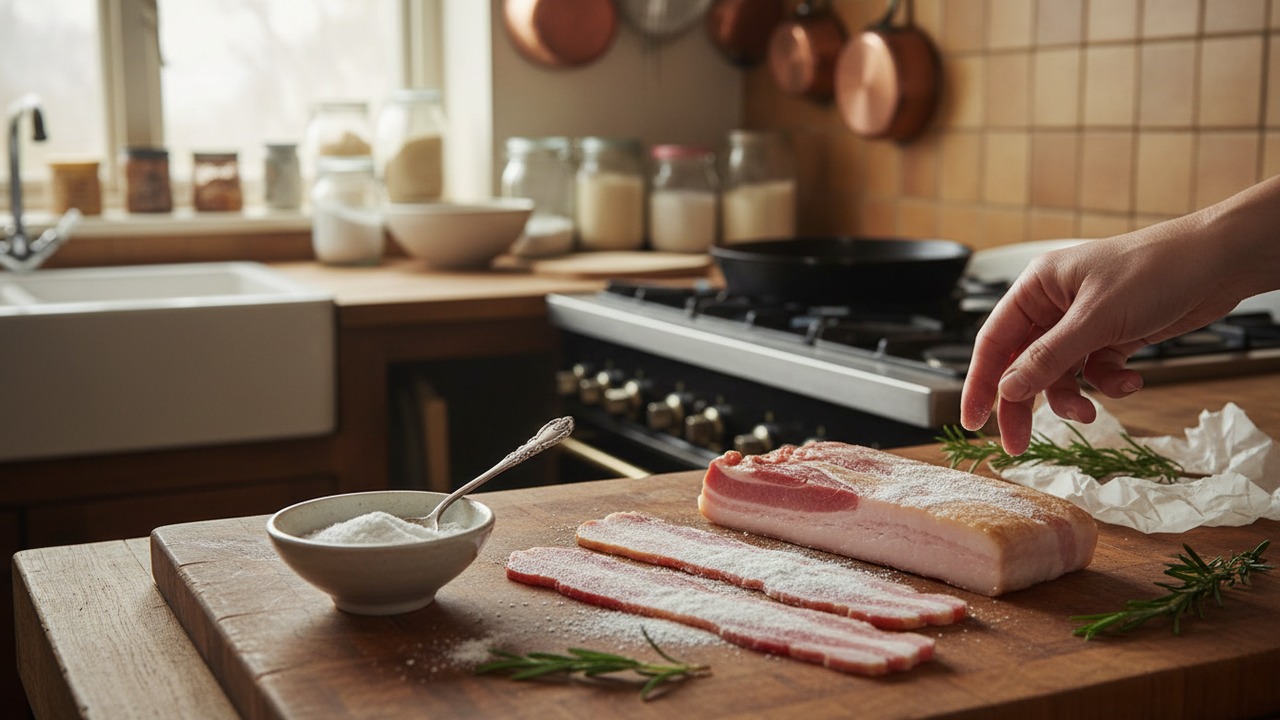
Does Baking Soda Make Bacon Better?
A practical look at the claim that a sprinkle of baking soda makes bacon crisper and better. We test the idea against what you’ll taste, the chemistry behind it, the right way to try it, and safer alternatives.
Tips & Techniques
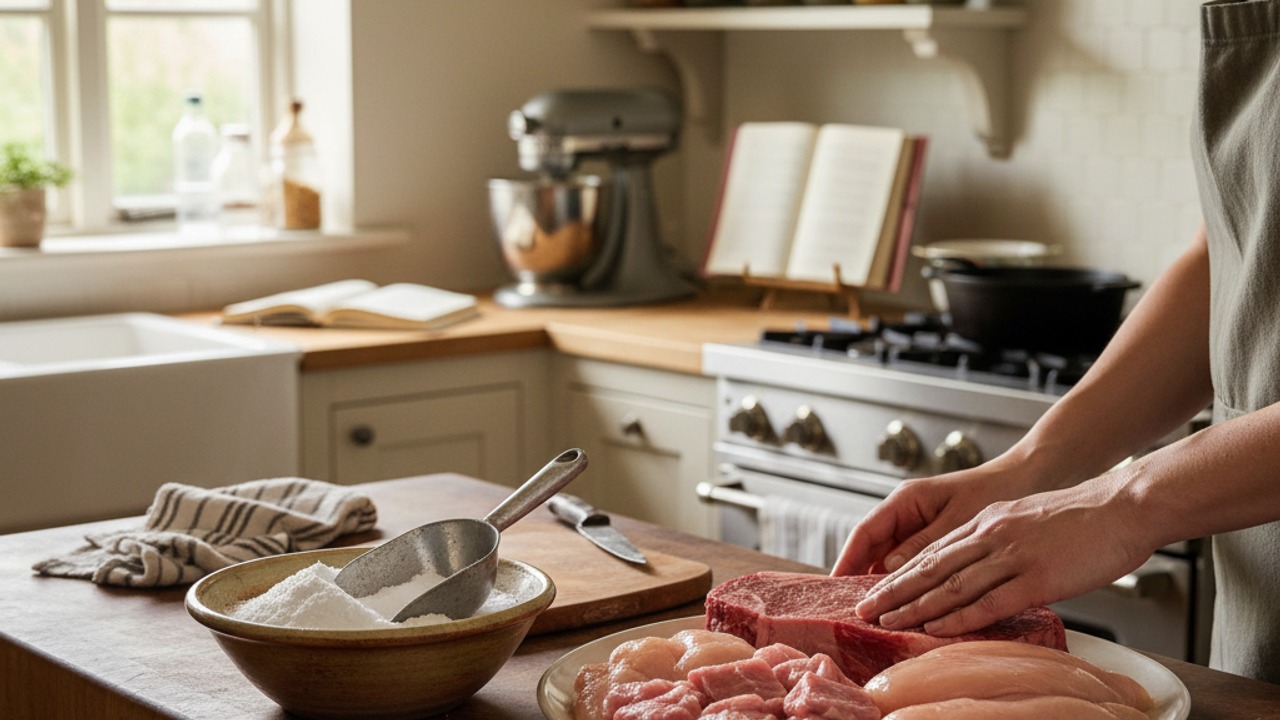
Baking Soda and Tenderized Beef
Learn how baking soda can tenderize, boost browning, and improve moisture for ground beef and other meats. This practical guide covers the science, step-by-step techniques, common mistakes, and recipes to try.
Recipes
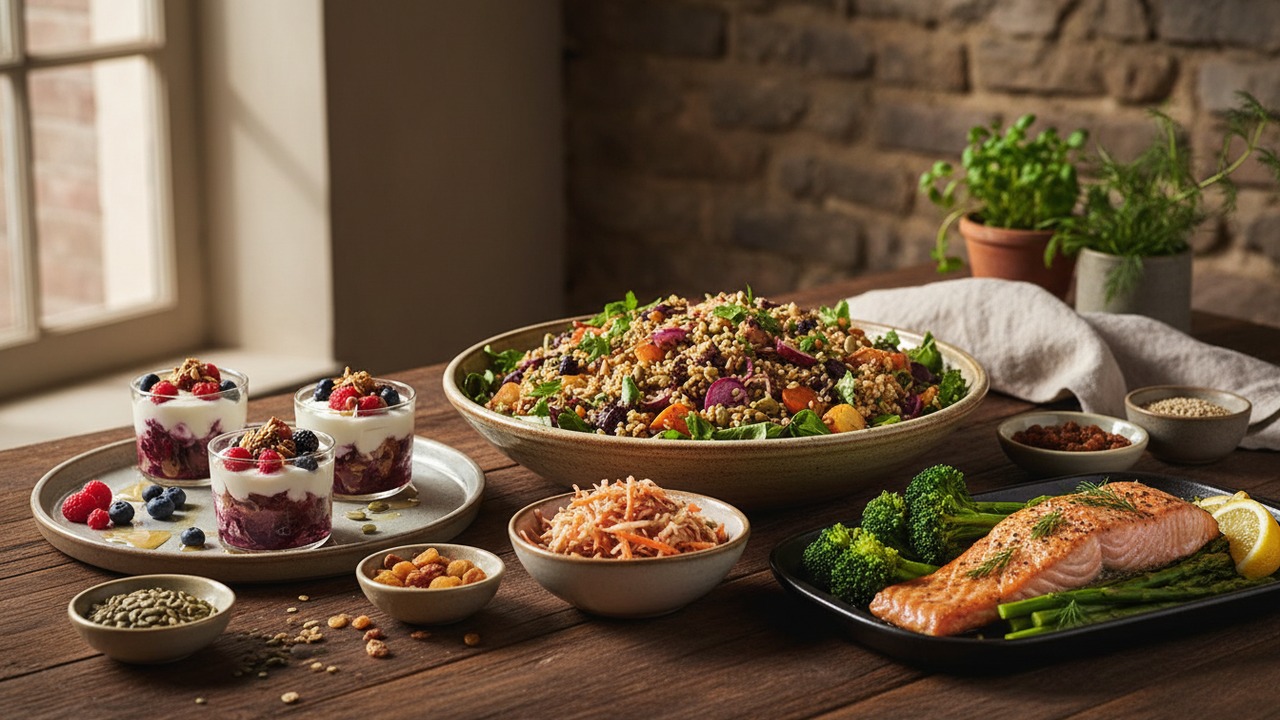
Gut-Healthy Recipe Roundup
A practical collection of recipes that emphasize fiber, prebiotics, and fermented foods to support a diverse microbiome. Mix breakfasts, snacks, bowls and mains to build meals that feel good to eat and are gentle on digestion.
More from Baking
View all Baking recipes →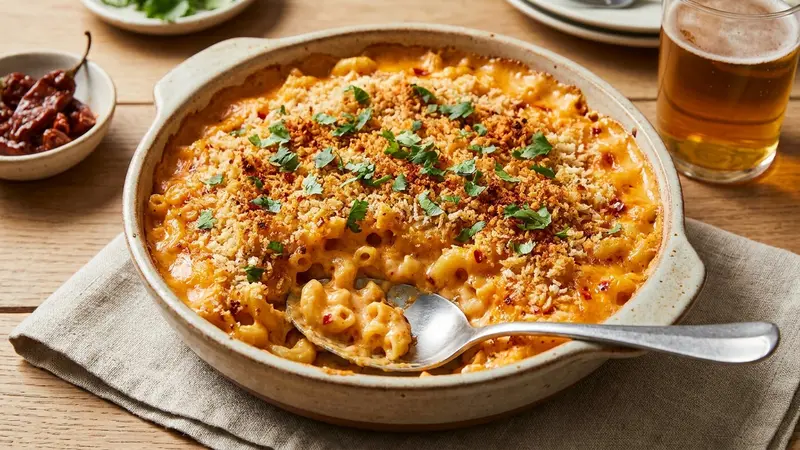
Mac and Cheese with Chipotle and Crispy Breadcrumb Topping
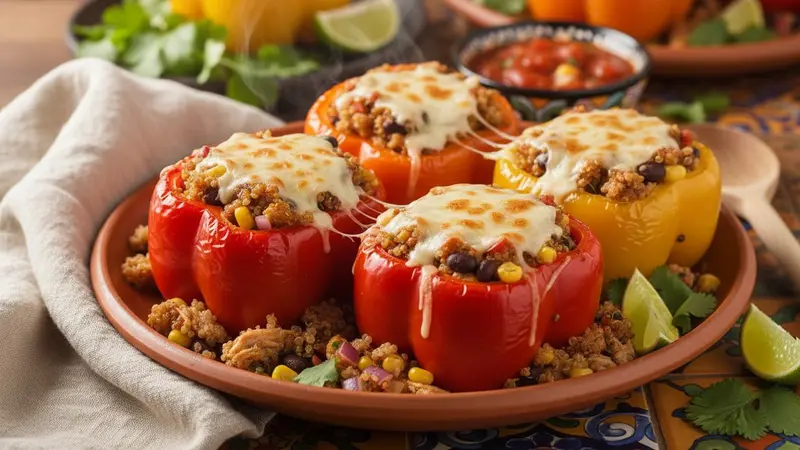
Mexican Chicken & Quinoa Stuffed Peppers
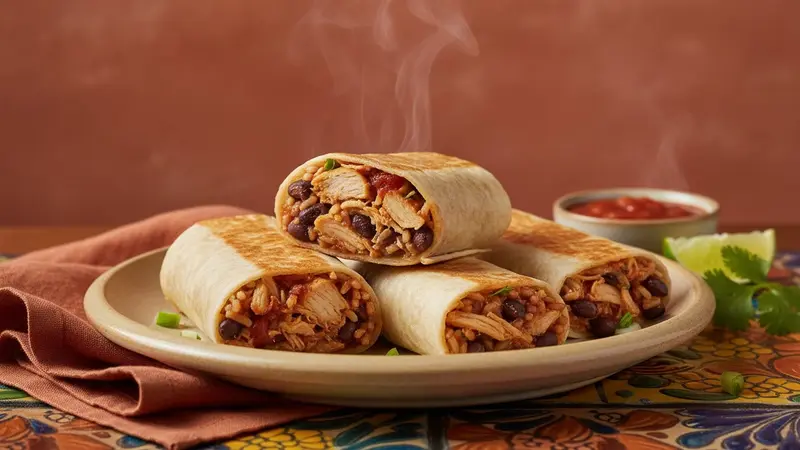
Make-Ahead Mini Chicken & Black Bean Burritos
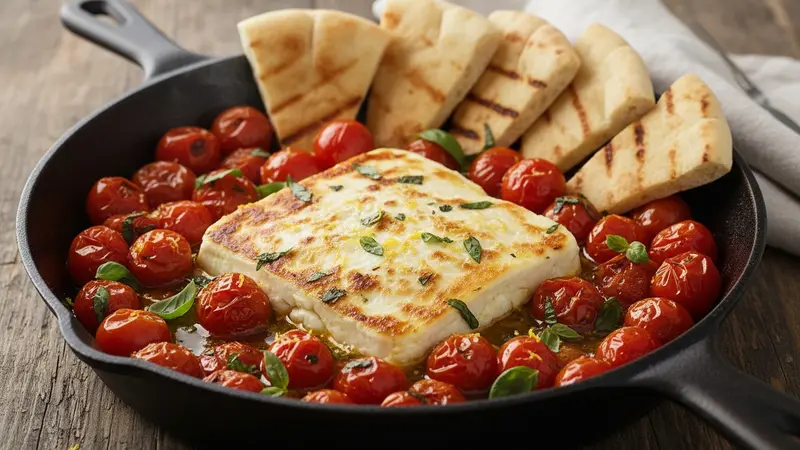
Grilled Baked Feta Dip with Charred Tomatoes
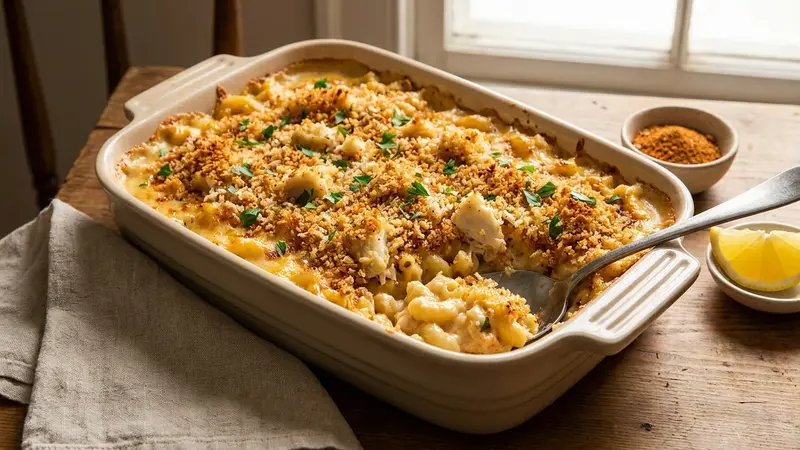
Creamy Crab Mac and Cheese with Old Bay Breadcrumb Topping

Santa Strawberry Cheesecake Cups
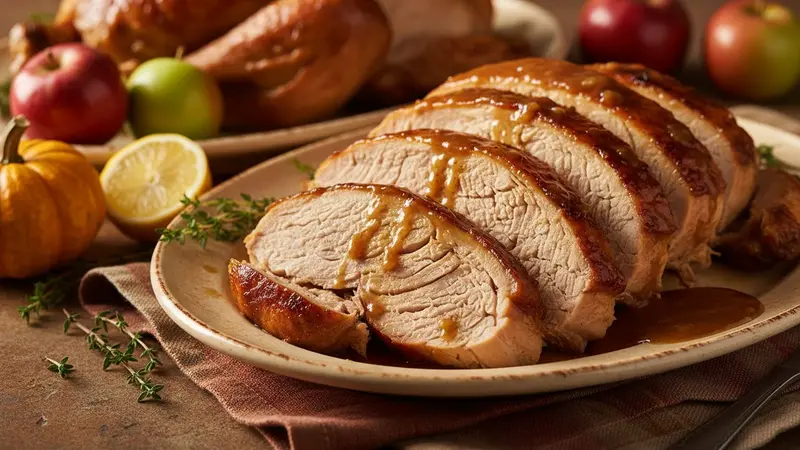
Oven Roasted Thanksgiving Turkey
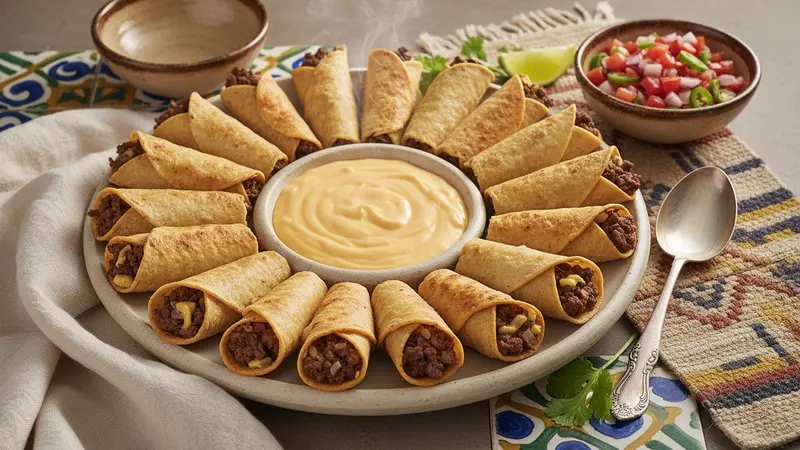
Crispy Beef Taquito Bites with Queso
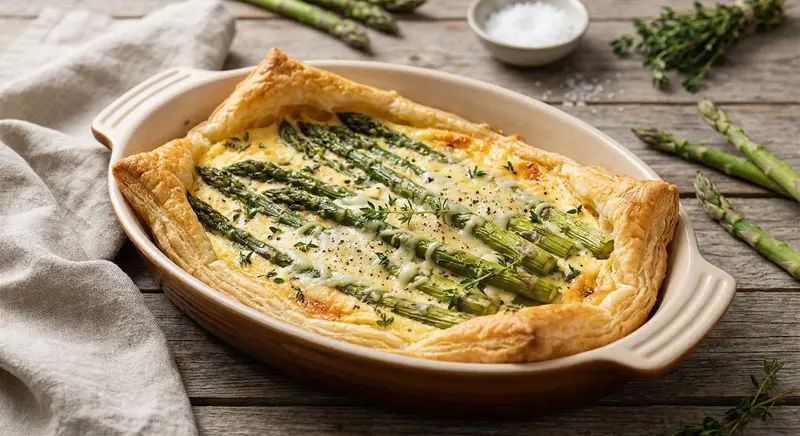
Asparagus Gruyere Tart
Ask me anything about this recipe — substitutions, scaling, techniques, timing.
Powered by AI · 6 questions per 5 minutes, 30 per day