Garlic Herb Crusted Beef Tenderloin Roast with Red Wine Pan Sauce
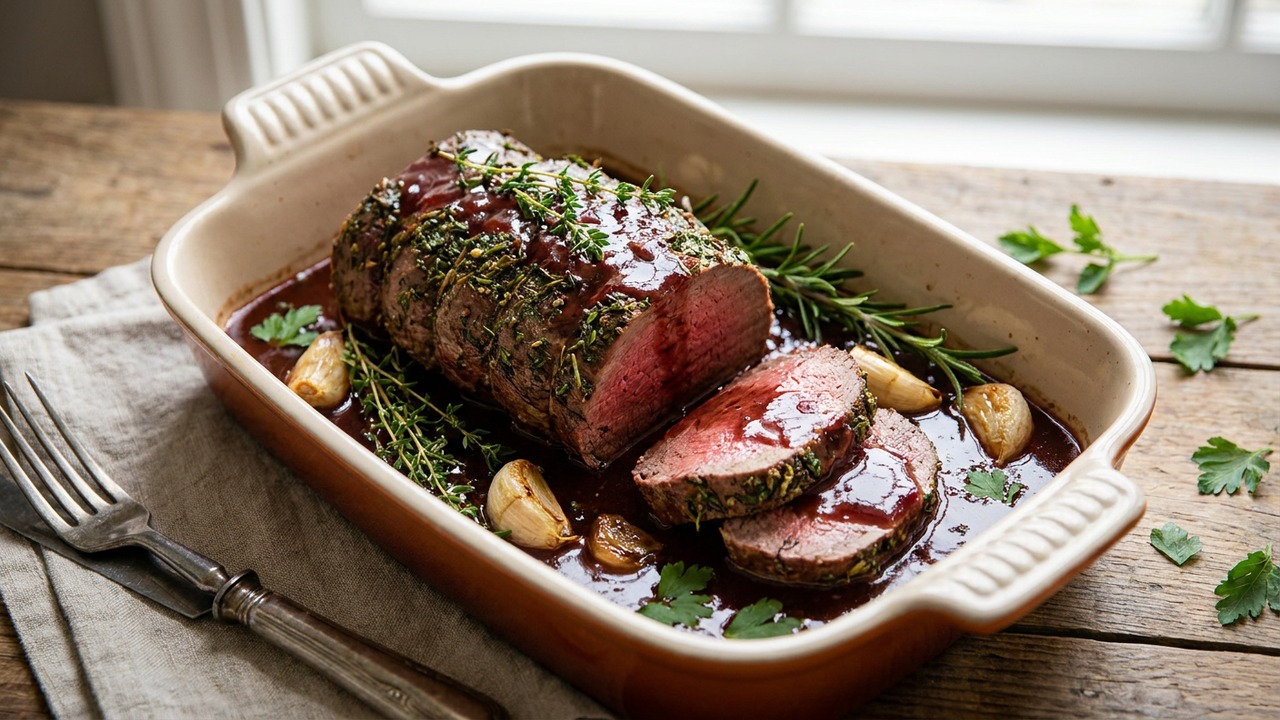
An elegant garlic- and herb-crusted beef tenderloin roasted to a tender medium-rare and finished with a glossy red wine pan sauce. A quick sear locks in juices before oven roasting, and the simple sauce transforms pan drippings into a restaurant-quality accompaniment. Perfect for holidays, celebrations, and any special-occasion dinner.
Jake Woods's note
"This roast is show-stopping without being fussy — it shines at holiday dinners and dinner parties alike. Home cooks will appreciate the straightforward sear-then-roast method and the easy pan sauce that elevates the whole dish."
About This Recipe
This garlic-and-herb crusted beef tenderloin is built to deliver restaurant polish with home-kitchen simplicity. A loose paste of Dijon, minced garlic and a tight mix of parsley, rosemary and thyme clings to the meat and browns into a fragrant, slightly crisp crust during a hot sear and quick oven roast; that contrast—an aromatic, herb-forward exterior against the buttery, melt-in-your-mouth interior of a properly cooked tenderloin—is the dish’s reward. The quick sear concentrates flavor and leaves fond in the pan, which the red-wine reduction pulls into a glossy, slightly tangy sauce that complements rather than competes with the beef.
This version emphasizes timing and technique over trick ingredients: a trimmed, tied roast for even cooking, an instant-read thermometer for precision, and a final whisk of cold butter to give the sauce a silky sheen. It’s ideal for holiday feasts or small celebrations when you want an elegant centerpiece you can mostly prepare ahead—the herb paste can be made earlier and the roast rests while you finish the sauce—so the plating and conversation become the final touch rather than the stress.
Ingredients for Garlic Herb Crusted Beef Tenderloin Roast with Red Wine Pan Sauce
- 3 lb Beef tenderloin, trimmed and tied
- 1 1/2 tsp Kosher salt and freshly ground black pepper
- 4 cloves Garlic, minced
- 1/4 cup Fresh herb mix (parsley, rosemary, thyme), finely chopped
- 2 tbsp Dijon mustard
- 2 tbsp Olive oil
- 1 medium Shallot, finely chopped
- 1 cup Dry red wine
- 1 cup Low-sodium beef stock
- 2 tbsp Unsalted butter (cold, cut into pieces)
How to Make Garlic Herb Crusted Beef Tenderloin Roast with Red Wine Pan Sauce
Step 1: Trim and season the tenderloin
Remove any silver skin and excess fat from the tenderloin, then tie at 1- to 1 1/2-inch intervals to promote even cooking. Pat dry with paper towels and season all over with the kosher salt and freshly ground black pepper. Let the roast sit at room temperature for 20–30 minutes while you prepare the herb crust and preheat the oven. Preheat the oven to 425°F (220°C).For this step
- 3 lbBeef tenderloin, trimmed and tied
- 1 1/2 tspKosher salt and freshly ground black pepper
Step 2: Make the garlic-herb paste and coat the roast
In a small bowl combine the minced garlic, chopped fresh herb mix, Dijon mustard, and olive oil into a loose paste. Rub the mixture evenly over the entire surface of the tenderloin, pressing gently so the paste adheres. This flavorful crust will brown during searing and roasting, creating a fragrant exterior. If you prefer a stronger herb flavor, gently press additional chopped herbs onto the roast before searing.For this step
- 4 clovesGarlic, minced
- 1/4 cupFresh herb mix (parsley, rosemary, thyme), finely chopped
- 2 tbspDijon mustard
- 2 tbspOlive oil
Step 3: Sear the tenderloin
Heat a large ovenproof skillet (cast iron is ideal) over medium-high heat until very hot. Add a light drizzle of olive oil if needed, then sear the tenderloin on all sides until deeply browned, about 2–3 minutes per side, including the ends. Use tongs to hold the roast on its sides to brown evenly. Searing locks in juices and builds the base for the pan sauce.Step 4: Roast to desired doneness and rest
Transfer the skillet to the preheated oven and roast until an instant-read thermometer inserted into the thickest part reads 125°F (52°C) for medium-rare, about 18–22 minutes for a 3 lb tenderloin (adjust time for size and desired doneness). Remove the roast from the oven and tent loosely with foil; let rest for 10–15 minutes so juices redistribute and carryover cooking brings the temperature to about 130–135°F (54–57°C). Slice to serve after making the pan sauce.Step 5: Make the red wine pan sauce
Return the skillet to the stovetop over medium heat (add a touch of oil if the pan is dry) and cook the finely chopped shallot in the pan drippings until translucent, about 1–2 minutes. Pour in the red wine to deglaze, scraping up browned bits, and simmer until reduced by about half, roughly 3–5 minutes. Add the beef stock and reduce again until slightly thickened, about 5–7 minutes, then remove from heat and whisk in the cold butter pieces one at a time to finish the sauce and give it a glossy sheen. Taste and adjust seasoning with a pinch of the reserved salt and pepper, then spoon the sauce over sliced beef to serve.For this step
- 1 mediumShallot, finely chopped
- 1 cupDry red wine
- 1 cupLow-sodium beef stock
- 2 tbspUnsalted butter (cold, cut into pieces)


- Remove any silver skin and excess fat from the tenderloin, then tie at 1- to 1 1/2-inch intervals to promote even cooking. Pat dry with paper towels and season all over with the kosher salt and freshly ground black pepper. Let the roast sit at room temperature for 20–30 minutes while you prepare the herb crust and preheat the oven. Preheat the oven to 425°F (220°C).
- In a small bowl combine the minced garlic, chopped fresh herb mix, Dijon mustard, and olive oil into a loose paste. Rub the mixture evenly over the entire surface of the tenderloin, pressing gently so the paste adheres. This flavorful crust will brown during searing and roasting, creating a fragrant exterior. If you prefer a stronger herb flavor, gently press additional chopped herbs onto the roast before searing.
- Heat a large ovenproof skillet (cast iron is ideal) over medium-high heat until very hot. Add a light drizzle of olive oil if needed, then sear the tenderloin on all sides until deeply browned, about 2–3 minutes per side, including the ends. Use tongs to hold the roast on its sides to brown evenly. Searing locks in juices and builds the base for the pan sauce.
- Transfer the skillet to the preheated oven and roast until an instant-read thermometer inserted into the thickest part reads 125°F (52°C) for medium-rare, about 18–22 minutes for a 3 lb tenderloin (adjust time for size and desired doneness). Remove the roast from the oven and tent loosely with foil; let rest for 10–15 minutes so juices redistribute and carryover cooking brings the temperature to about 130–135°F (54–57°C). Slice to serve after making the pan sauce.
- Return the skillet to the stovetop over medium heat (add a touch of oil if the pan is dry) and cook the finely chopped shallot in the pan drippings until translucent, about 1–2 minutes. Pour in the red wine to deglaze, scraping up browned bits, and simmer until reduced by about half, roughly 3–5 minutes. Add the beef stock and reduce again until slightly thickened, about 5–7 minutes, then remove from heat and whisk in the cold butter pieces one at a time to finish the sauce and give it a glossy sheen. Taste and adjust seasoning with a pinch of the reserved salt and pepper, then spoon the sauce over sliced beef to serve.
Garlic Herb Crusted Beef Tenderloin Roast with Red Wine Pan Sauce Tips
Bring to Room Temperature
Letting the tied tenderloin sit at room temperature for 20–30 minutes ensures a more even internal cook and reduces the time the sear will overcook the exterior.
Tie for Even Cooking
Tying at 1–1½ inch intervals evens the roast’s diameter so the thermometer reading is meaningful and slices present uniformly.
Sear on All Sides
A vigorous sear on every face, including the ends, builds fond for the pan sauce and develops the crust without needing a long oven time.
Use Instant-Read Thermometer
Pull the roast at 125°F (52°C) for medium-rare—carryover will bring it to 130–135°F (54–57°C) while resting, avoiding guesswork.
Finish with Cold Butter
Whisking cold butter into the reduced sauce off the heat emulsifies it and gives a glossy, velvety finish without breaking the sauce.
Garlic Herb Crusted Beef Tenderloin Roast with Red Wine Pan Sauce Variations and Substitutions
Herb-Pecan Crust
Pulse toasted pecans with parsley and a little lemon zest and mix into the herb paste for a nutty crunch that pairs well with the tenderloin’s richness.
Port or Balsamic Sauce
Swap the dry red wine for tawny port for deeper sweetness or a tablespoon of balsamic vinegar added with the stock for a brighter, tangier finish.
Make Dairy-Free
Omit the butter and whisk in a tablespoon of cold olive oil or a teaspoon of cornstarch slurry to slightly thicken and shine the sauce without dairy.
Individual Filet Medallions
Cut the tenderloin into medallions and sear briefly for a buffet-friendly option; reduce roasting time and watch internal temp closely to avoid overcooking.
How to Store and Make Garlic Herb Crusted Beef Tenderloin Roast with Red Wine Pan Sauce Ahead
Cool sliced roast to room temperature before refrigerating in an airtight container for up to 3 days; store the sauce separately to preserve its texture. To reheat, warm slices gently in a low oven (250°F/120°C) covered with foil for 10–12 minutes, then spoon warm sauce over the meat—this prevents drying and keeps the crust intact.
What to Serve With Garlic Herb Crusted Beef Tenderloin Roast with Red Wine Pan Sauce
Serve thin slices over a smear of garlic mashed potatoes, a silky parsnip purée, or alongside a potato gratin for a rich plate, and add roasted root vegetables or grilled asparagus for color and texture. For wine, choose a medium- to full-bodied red such as Cabernet Sauvignon, Syrah, or a structured Malbec; a lighter Pinot can work if you prefer brighter acidity.
Garlic Herb Crusted Beef Tenderloin Roast with Red Wine Pan Sauce FAQs
How do I adjust cooking time for a larger or smaller tenderloin?
Roast time scales with thickness rather than weight; use an instant-read thermometer in the thickest part and remove at 125°F (52°C) for medium-rare, adjusting time until that temp is reached rather than relying on minutes per pound.
Why is my herb crust not sticking?
The Dijon and olive oil create adhesive for the herbs and garlic; if the paste seems too loose, press it firmly onto the surface or chill the roast briefly before searing so the paste sets against the beef.
Can I make the pan sauce ahead of time?
Yes—make the sauce, cool, and refrigerate up to two days; reheat gently and whisk in a small knob of cold butter or a splash of stock to refresh its texture before serving.
Is medium-rare safe for all eaters?
Beef tenderloin is best enjoyed medium-rare to medium for tenderness and flavor; however, for immunocompromised guests or those who prefer it well done, increase internal temperature accordingly and note the texture will be firmer.
How do I prevent the sauce from tasting bitter after reducing wine?
Use a dry red you enjoy by itself and reduce over moderate heat—over-reduction or burning the shallots can create bitterness, and a splash of stock or a tiny pinch of sugar can balance excessive acidity.
About the author
Jake WoodsHello, I'm Jake. I started this recipe site with the idea that I hated recipe websites that overwhelm you with long stories and ads just to see plain content that's not helpful. My goal is to provide you with quality recipes, simple ideas and a fun cooking experience. There's lots of fun things to cook, and I think as you browse the site you'll find that TopShelf.Recipes is the place for quality recipes on the web.
See all recipes by Jake Woods →Ratings & Reviews
Did you make this recipe?
Be the first to share your experience.
Nutrition Facts
Per serving: 1 serving
Nutrition values are estimated from USDA ingredient data and may vary based on preparation, brands, and portion sizes. Values are provided for informational purposes only.
Keep Reading
Guides & articles for this recipe
Tips & Techniques
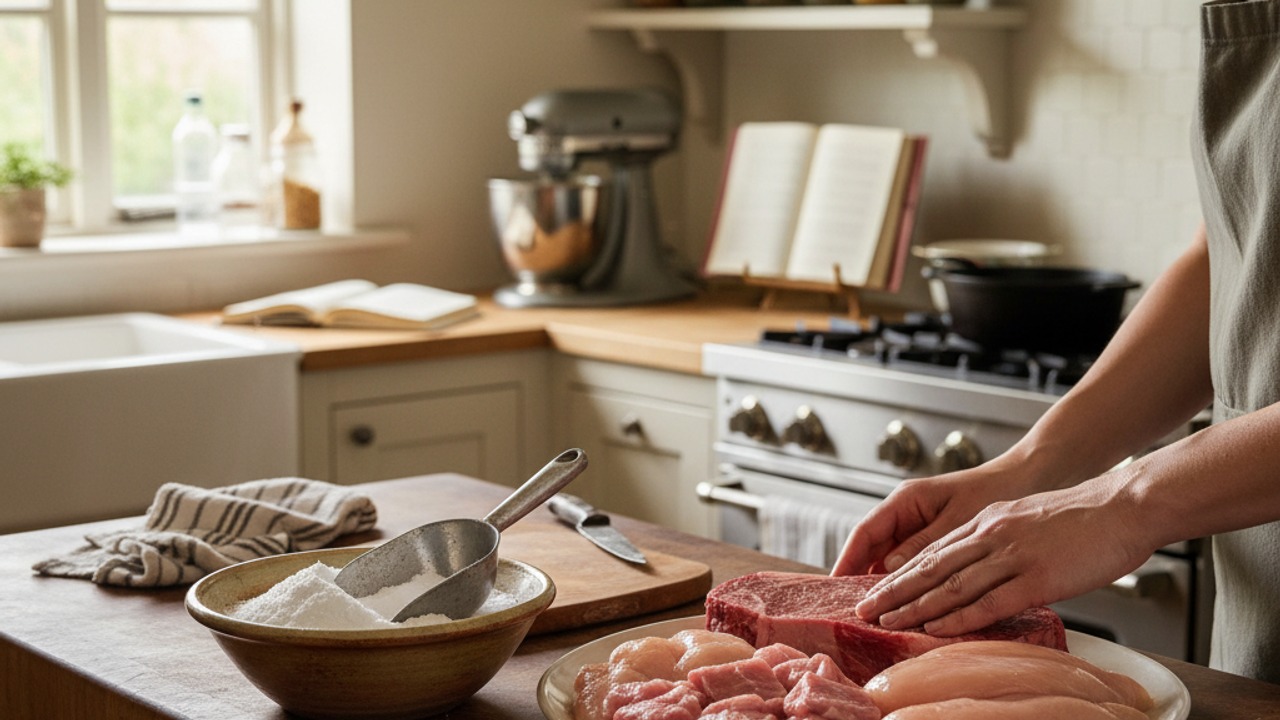
Baking Soda and Tenderized Beef
Learn how baking soda can tenderize, boost browning, and improve moisture for ground beef and other meats. This practical guide covers the science, step-by-step techniques, common mistakes, and recipes to try.

Healthy Eating
Gluten-Free Weeknight Grilling Plan
A 7-day gluten-free weeknight grilling plan with quick, family-friendly recipes, prep-ahead timelines, and a printable shopping list that spotlights late-summer produce and pantry staples. Includes clear cross-contamination safety tips and simple swaps to keep dinners fast and crowd-pleasing.

Healthy Eating
Low-Fat Grill Swaps for Big Flavor
A practical guide to trimming fat from grilled meals without losing juiciness or char. Learn yogurt- and citrus-based marinades, lean protein picks, searing and indirect-heat tricks, plus 5 quick low-fat marinades and a simple weeknight plan.
More from Baking
View all Baking recipes →
Cloud Bread Sandwiches

Honey Mustard Chicken Nuggets

Cheddar Jalapeño Corn Muffins

Basque Burnt Cheesecake

30-Minute Sticky Baked Honey Garlic Chicken Thighs with Crisp Edges

Lemon Butter Salmon

Spritz Cookies

Brown Butter Vanilla Syrup

Honey Glazed Easter Ham
Ask me anything about this recipe — substitutions, scaling, techniques, timing.
Powered by AI · 6 questions per 5 minutes, 30 per day