Gluten-Free All-Butter Flaky Pie Crust (For Savory and Sweet Pies)
A reliably flaky, all-butter gluten-free pie crust that works for both sweet and savory pies. The recipe uses a simple cup-for-cup base boosted with tapioca starch and xanthan gum for crisp, tender layers and clear technique tips to keep butter cold and dough easy to handle.
About This Recipe
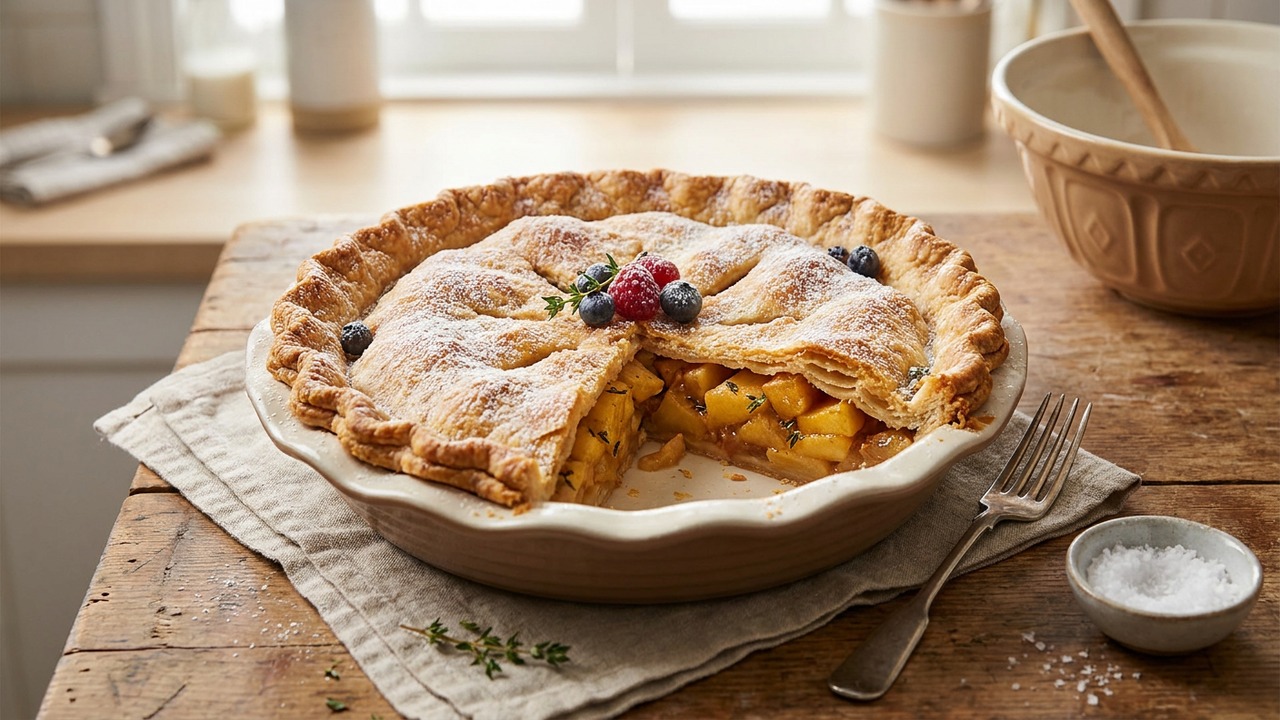
Making a true, all-butter flaky pie crust without wheat is a small act of kitchen alchemy, and this recipe is designed to deliver those fragile, shattering layers whether you’re filling it with apples, lemon curd, or a savory mushroom-potato filling. The structure comes from a reliable cup-for-cup gluten-free blend, tapioca starch for that satisfying crisp chew, and a measured teaspoon of xanthan gum to give the dough the flexible hold that gluten would normally provide. Cold, pebble-sized butter pieces are the literal laminations that steam and separate into flakes, while a touch of apple cider vinegar keeps the finished crumb tender and forgiving and rounds out the butter’s flavor.
This formula is intentionally straightforward — it behaves predictably in home kitchens and tolerates brief freezes and make-ahead windows. Read the instructions as precise cues about temperature and hydration: keep everything cold, add ice water a tablespoon at a time, and give the dough at least an hour to rest so the starches hydrate and the xanthan relaxes. Rolling between parchment prevents sticking and reduces handling; a quick blind-bake or an initial high-heat blast will set the crust so fillings don’t sop it up. If you’ve avoided making pie because gluten-free felt like a compromise, this crust aims to restore the crisp, buttery bite you remember from wheat pastry.
Ingredients for Gluten-Free All-Butter Flaky Pie Crust (For Savory and Sweet Pies)
- 2 cups Gluten-free 1:1 all-purpose flour blend (cup-for-cup)
- 1/2 cup Tapioca starch (for crispness)
- 1 tsp Xanthan gum
- 1 tsp Fine sea salt
- 1 tbsp Granulated sugar (optional — for sweet pies)
- 1 cup Unsalted cold butter (cut into 1/2" cubes)
- 6 tbsp Ice water
- 1 tbsp Apple cider vinegar (helps tenderize)
- 1 large Large egg (for egg wash; optional)
How to Make Gluten-Free All-Butter Flaky Pie Crust (For Savory and Sweet Pies)
Step 1: Combine dry ingredients
In a large bowl whisk together the gluten-free flour blend, tapioca starch, xanthan gum, fine sea salt, and sugar (if using). Chilling any metal bowl briefly helps keep the mixture cool; this keeps the butter from melting when you add it. Ensure the xanthan gum is well distributed so the dough binds evenly.For this step
- 2 cupsGluten-free 1:1 all-purpose flour blend (cup-for-cup)
- 1/2 cupTapioca starch (for crispness)
- 1 tspXanthan gum
- 1 tspFine sea salt
- 1 tbspGranulated sugar (optional — for sweet pies)
Step 2: Cut the cold butter into the dry mix
Add the cold, cubed butter to the dry ingredients and work it in with a pastry cutter, two knives, or 6–8 short pulses in a food processor until the largest pieces are about pea- to almond-sized. You should still see visible chunks of butter — these produce the flaky layers when baked. Avoid overworking; a little butter texture is good.For this step
- 1 cupUnsalted cold butter (cut into 1/2" cubes)
Step 3: Add cold liquid and bring dough together
Mix the ice water and apple cider vinegar together and drizzle in, a tablespoon at a time, folding with a rubber spatula until the dough just holds together when squeezed — you’ll typically use 4–6 tablespoons, up to 6 depending on humidity. The dough should be cohesive but not wet or sticky; stop as soon as it forms large clumps. If using a processor, pulse just until clumps form.For this step
- 6 tbspIce water
- 1 tbspApple cider vinegar (helps tenderize)
Step 4: Form, flatten, and chill
Turn the dough out onto lightly floured parchment and gather into two discs (one slightly larger for the bottom crust) without overworking; press gently to compact. Wrap tightly in plastic or parchment and chill at least 1 hour, or up to 48 hours, which improves hydration and makes rolling easier. If rushed, 30 minutes in the freezer will firm the butter but monitor closely so it doesn’t freeze solid.Step 5: Roll, fit, and optional egg wash
Roll the dough between two pieces of parchment to your desired diameter, gently transfer to the pie dish, and trim and crimp the edges; patch any cracks with a little dough. For a shiny, golden finish on sweet or savory pies, beat the large egg with 1 tablespoon water and brush the exposed crust just before baking. If assembling a filled pie, chill again 20 minutes after fitting for best shape retention.For this step
- 1 largeLarge egg (for egg wash; optional)
Step 6: Blind-bake or bake with filling
For blind-baking, preheat oven to 425°F (220°C), line the crust with parchment and fill with pie weights or dried beans and bake 18–20 minutes, then remove weights and bake another 8–10 minutes until golden. For filled pies, follow your filling recipe’s temperature; start at a high temp (425°F/220°C) for 10–15 minutes to set the crust, then reduce to 350°F (175°C) to finish. Let fully cool on a wire rack before slicing to prevent sogginess and to let the structure set.


- In a large bowl whisk together the gluten-free flour blend, tapioca starch, xanthan gum, fine sea salt, and sugar (if using). Chilling any metal bowl briefly helps keep the mixture cool; this keeps the butter from melting when you add it. Ensure the xanthan gum is well distributed so the dough binds evenly.
- Add the cold, cubed butter to the dry ingredients and work it in with a pastry cutter, two knives, or 6–8 short pulses in a food processor until the largest pieces are about pea- to almond-sized. You should still see visible chunks of butter — these produce the flaky layers when baked. Avoid overworking; a little butter texture is good.
- Mix the ice water and apple cider vinegar together and drizzle in, a tablespoon at a time, folding with a rubber spatula until the dough just holds together when squeezed — you’ll typically use 4–6 tablespoons, up to 6 depending on humidity. The dough should be cohesive but not wet or sticky; stop as soon as it forms large clumps. If using a processor, pulse just until clumps form.
- Turn the dough out onto lightly floured parchment and gather into two discs (one slightly larger for the bottom crust) without overworking; press gently to compact. Wrap tightly in plastic or parchment and chill at least 1 hour, or up to 48 hours, which improves hydration and makes rolling easier. If rushed, 30 minutes in the freezer will firm the butter but monitor closely so it doesn’t freeze solid.
- Roll the dough between two pieces of parchment to your desired diameter, gently transfer to the pie dish, and trim and crimp the edges; patch any cracks with a little dough. For a shiny, golden finish on sweet or savory pies, beat the large egg with 1 tablespoon water and brush the exposed crust just before baking. If assembling a filled pie, chill again 20 minutes after fitting for best shape retention.
- For blind-baking, preheat oven to 425°F (220°C), line the crust with parchment and fill with pie weights or dried beans and bake 18–20 minutes, then remove weights and bake another 8–10 minutes until golden. For filled pies, follow your filling recipe’s temperature; start at a high temp (425°F/220°C) for 10–15 minutes to set the crust, then reduce to 350°F (175°C) to finish. Let fully cool on a wire rack before slicing to prevent sogginess and to let the structure set.
Gluten-Free All-Butter Flaky Pie Crust (For Savory and Sweet Pies) Tips
Keep everything very cold
Chill your bowl, tools, and even the flour briefly so the butter stays firm; if butter softens, pop the whole bowl in the fridge for 10 minutes before continuing.
Size your butter pieces
Cut the butter to mostly pea- and almond-sized bits so you have visible chunks; those chunks steam and create the flaky layers you want.
Hydrate slowly and test
Add the ice water-vinegar mix a tablespoon at a time and stop as soon as the dough holds when squeezed; over-wetting makes a gummy crust.
Rest the dough properly
Chill for at least one hour to hydrate starches and let xanthan relax; this reduces tearing and makes rolling much easier.
Roll between parchment
Rolling between two sheets prevents sticking and limits extra flour; if cracks appear, press them gently together with a fingertip dipped in cold water.
Set crust with heat
For wet fillings, blind-bake or start the filled pie at 425°F for 10–15 minutes to set edges, then reduce heat to finish for a crisp bottom.
Gluten-Free All-Butter Flaky Pie Crust (For Savory and Sweet Pies) Variations and Substitutions
Vegan/dairy-free swap
Use a high-fat, block-style vegan butter and keep it very cold; the texture will be slightly different but the method is identical—add an extra tablespoon water if dough seems dry.
Partial almond-flour swap
Replace up to half the cup-for-cup blend with finely ground almond flour for extra richness, and add 1–2 tablespoons more ice water since almond flour absorbs more liquid.
Herbed savory crust
Omit the sugar and fold 1–2 teaspoons finely chopped fresh herbs (thyme, rosemary, or chives) into the dry mix for a fragrant crust that complements quiches and meat pies.
Brown-butter flavor
Brown the butter, cool completely until firm, then cut into cubes and use as directed to add a nutty, caramel note—don’t use it while still soft or warm.
Substitute cornstarch for tapioca
If tapioca isn’t available, use an equal amount of cornstarch; the crust will still be crisp but slightly less chewy and glossy than with tapioca.
How to Store and Make Gluten-Free All-Butter Flaky Pie Crust (For Savory and Sweet Pies) Ahead
Unbaked, wrapped dough discs keep in the refrigerator for up to 48 hours and can be frozen for up to one month—thaw overnight in the fridge before rolling. Baked pies will stay fresh 3–4 days refrigerated; to revive crispness, reheat slices in a 350°F oven for 10–12 minutes rather than microwaving. You can also blind-bake crusts and freeze them fully baked for quick assembly later.
What to Serve With Gluten-Free All-Butter Flaky Pie Crust (For Savory and Sweet Pies)
For sweet pies, serve warm slices with a scoop of vanilla ice cream or a drizzle of heavy cream and a cup of medium-roast coffee or a late-harvest Riesling. For savory pies, present slices with a bright green salad dressed in lemon vinaigrette or roasted seasonal vegetables, and pair with a crisp cider or a light-bodied red like Pinot Noir.
Gluten-Free All-Butter Flaky Pie Crust (For Savory and Sweet Pies) FAQs
Can I use a different gluten-free blend?
Yes—this recipe is written for a cup-for-cup blend; if your blend already contains xanthan or other gums, reduce or omit the additional xanthan gum to avoid gummy texture.
My dough is crumbly and won’t come together—what now?
That usually means it’s under-hydrated; work in a teaspoon of ice water at a time and gently press until the dough clumps, then chill to let the starches absorb moisture.
Why did my crust get soggy in the middle?
Sogginess most often comes from not blind-baking wet fillings or from skipping the high initial oven temp; blind-bake or start at 425°F for 10–15 minutes to set the bottom before lowering heat.
Can I make the dough ahead of time?
Yes—dough discs benefit from 1–48 hours in the fridge and can be frozen (double-wrapped) for up to a month; thaw in the refrigerator before rolling.
Is xanthan gum absolutely necessary?
Xanthan gum helps replicate gluten’s binding in a shortcrust—if your flour blend includes a gum, you can omit the additional teaspoon; without any gum, the crust will be more fragile and may need extra egg or a different bind.
Can I use salted butter instead of unsalted?
You can, but reduce the added fine sea salt to about 1/4–1/2 teaspoon and taste the filling accordingly, since salted butter’s salt level varies by brand.
About the author
Jake WoodsHello, I'm Jake. I started this recipe site with the idea that I hated recipe websites that overwhelm you with long stories and ads just to see plain content that's not helpful. My goal is to provide you with quality recipes, simple ideas and a fun cooking experience. There's lots of fun things to cook, and I think as you browse the site you'll find that TopShelf.Recipes is the place for quality recipes on the web.
See all recipes by Jake Woods →Ratings & Reviews
Did you make this recipe?
Be the first to share your experience.
Nutrition Facts
Per serving: 1 serving
Nutrition values are estimated from USDA ingredient data and may vary based on preparation, brands, and portion sizes. Values are provided for informational purposes only.
Keep Reading
Guides & articles for this recipe
Tips & Techniques
Baking Soda and Tenderized Beef
Learn how baking soda can tenderize, boost browning, and improve moisture for ground beef and other meats. This practical guide covers the science, step-by-step techniques, common mistakes, and recipes to try.

Healthy Eating
Gluten-Free Weeknight Grilling Plan
A 7-day gluten-free weeknight grilling plan with quick, family-friendly recipes, prep-ahead timelines, and a printable shopping list that spotlights late-summer produce and pantry staples. Includes clear cross-contamination safety tips and simple swaps to keep dinners fast and crowd-pleasing.

Healthy Eating
Low-Fat Grill Swaps for Big Flavor
A practical guide to trimming fat from grilled meals without losing juiciness or char. Learn yogurt- and citrus-based marinades, lean protein picks, searing and indirect-heat tricks, plus 5 quick low-fat marinades and a simple weeknight plan.
More from Baking
View all Baking recipes →
Cloud Bread Sandwiches

Honey Mustard Chicken Nuggets

Cheddar Jalapeño Corn Muffins

Basque Burnt Cheesecake

30-Minute Sticky Baked Honey Garlic Chicken Thighs with Crisp Edges

Lemon Butter Salmon

Spritz Cookies

Brown Butter Vanilla Syrup

Honey Glazed Easter Ham
Ask me anything about this recipe — substitutions, scaling, techniques, timing.
Powered by AI · 6 questions per 5 minutes, 30 per day