Gluten-Free Stuffed Turkey
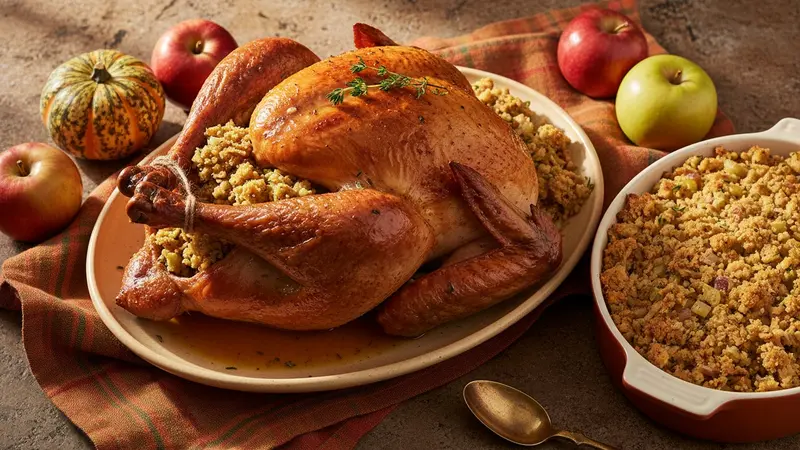
A classic oven-roasted Thanksgiving turkey safely stuffed with a gluten-free bread stuffing. The recipe makes one 12 lb roast turkey with extra stuffing baked alongside so the cavity is filled only to a safe capacity.
Ingredient Spotlight
Gluten-free bread cubes (stale or toasted)
Bread cubes made from gluten-free loaves (often rice, tapioca, potato, or sorghum flour blends) used like regular cubed bread for stuffing; they can be denser and slightly different in crumb and flavor compared with wheat bread. These are a dietary/specialty item for people with celiac disease or gluten sensitivity and are sold in major supermarkets, natural-food stores, or can be made at home by toasting a gluten-free loaf. Good substitutes: regular stale bread cubes if you don’t need to avoid gluten, or other gluten-free starches such as crumbled gluten-free cornbread or crushed gluten-free crackers.
Ingredient Spotlight
Gluten-free chicken broth, low-sodium, warmed
Chicken broth labeled gluten-free is made or certified to contain no gluten-containing ingredients or cross-contamination; while plain chicken stock is often naturally gluten-free, some commercial broths use flavorings or malt extract that contain gluten. It tastes like a milder, savory chicken stock and is used to moisten stuffing without adding excess salt. Find it in the soup/broth aisle with gluten-free or specialty brands, or make your own at home; substitute with regular low-sodium chicken broth if gluten is not a concern or use a gluten-free vegetable stock.
Ingredient Spotlight
Poultry seasoning
A common American dried herb blend typically containing sage, thyme, marjoram, rosemary and sometimes nutmeg, used to season poultry and stuffing; its flavor is savory and sage-forward with warm, resinous notes. It’s not tied to a single culture beyond Anglo-American cooking traditions but is a pantry blend many cooks use at Thanksgiving. Find it in the spice aisle, or make a quick substitute by mixing dried sage, thyme and marjoram (with a pinch of nutmeg) to approximate the flavor.
Jake Woods's note
"Measure the cavity stuffing with a dry 1-cup measure and spoon it in loosely—do not pack; a well-aerated 4 cups is the safety margin for a 12 lb bird. Toast or dry the gluten-free bread until just firm so the stuffing soaks up flavor without turning soupy, and always verify both the deepest thigh and the stuffing center reach 165°F/74°C before removing the turkey from the oven."
About This Recipe
This is a Thanksgiving turkey built for people who need a classic stuffed bird but can’t tolerate gluten. The recipe balances traditional flavors—soft, herbed gluten-free bread, sautéed onion and celery, a beaten egg for binder, and a buttery compound under the skin—with a clear safety-minded approach: only half the stuffing goes into the cavity and the rest bakes separately in a 2-quart dish so you get both a safely cooked cavity and extra, crisp-topped stuffing.
Expect a contrast of textures: glossy, salted butter tucked under the breast skin for moist white meat, crisp golden skin on the exterior, and a tender, well-seasoned stuffing that has enough structure from the egg and toasted cubes to hold together on the plate. The seasoning is simple—poultry seasoning, salt and pepper—so the stuffing complements rather than competes with the turkey, and it’s straightforward to adapt with apples, sausage (pre-cooked) or fresh herbs if you want to push the flavor profile.
Ingredients for Gluten-Free Stuffed Turkey
- 12 pounds Whole turkey (raw weight, bone-in)
- 3 tablespoons Kosher salt
- 2 teaspoons Black pepper, freshly ground
- 6 tablespoons Unsalted butter
- 8 cups Gluten-free bread cubes (stale or toasted), about 1/2-inch cubes
- 1 large Yellow onion, medium, diced
- 2 stalks Celery stalks, diced
- 1 1/2 cups Gluten-free chicken broth, low-sodium, warmed
- 1 large Large egg, beaten
- 2 teaspoons Poultry seasoning
How to Make Gluten-Free Stuffed Turkey
Step 1: Preheat oven and prepare turkey
Active 15 min
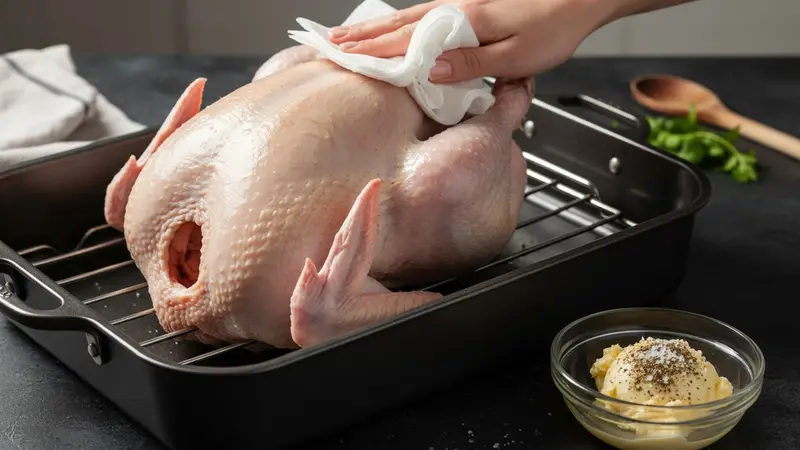
Preheat the oven to 325°F (163°C). Remove the turkey from its packaging, remove and reserve the neck and giblets (do not wash the turkey), pat the skin and cavity dry with paper towels, and place the bird breast-side up on a rack in a roasting pan. Make a compound butter by softening a total of 6 tablespoons unsalted butter and stirring in 3 tablespoons kosher salt, 1.5 teaspoons black pepper, and 1 teaspoon poultry seasoning; rub this mixture under the skin over the breasts and all over the exterior of the turkey. Reserve the remaining 1 tablespoon poultry seasoning, 1 tablespoon kosher salt and 0.5 teaspoon black pepper for the stuffing mix. (Active time: rub and prep turkey ≈ 15 minutes.)For this step
- 12 poundsWhole turkey (raw weight, bone-in)
- 3 tablespoonsKosher salt
- 2 teaspoonsBlack pepper, freshly ground
- 2 teaspoonsPoultry seasoning
Step 2: Make the gluten-free stuffing (make 8 cups; plan to stuff 4 cups)
Active 20 min
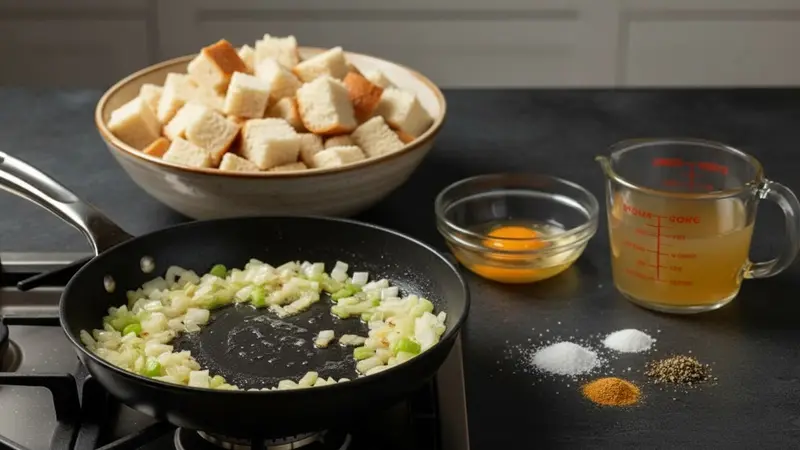
In a medium skillet over medium heat, melt the remaining 3 tablespoons of the unsalted butter and sauté the diced yellow onion and diced celery until softened, about 6–8 minutes. In a large bowl combine 8 cups gluten-free bread cubes, the sautéed onion and celery, the beaten egg, 1 tablespoon of the kosher salt and 0.5 teaspoon black pepper reserved above, 1 teaspoon poultry seasoning, and 1 to 1.5 cups warmed gluten-free chicken broth; stir and add broth until the mixture is moist but not soupy — the total stuffing should be about 8 cups. Divide the stuffing: measure out roughly 4 cups to use for the turkey cavity and put the remaining 4 cups into an uncovered, ovenproof 2-quart baking dish (or similar) and cover it with foil to finish cooking in the oven alongside the turkey. (Active time: preparing stuffing ≈ 20 minutes.)For this step
- 8 cupsGluten-free bread cubes (stale or toasted), about 1/2-inch cubes
- 1 largeYellow onion, medium, diced
- 2 stalksCelery stalks, diced
- 1 1/2 cupsGluten-free chicken broth, low-sodium, warmed
- 1 largeLarge egg, beaten
Step 3: Loosely stuff and truss the turkey
Active 10 min
Using a large spoon, loosely fill the turkey cavity with only about 4 cups of the prepared stuffing (about the approximate safe capacity of a 12 lb turkey cavity); do not pack the stuffing — leave it airy so heat can circulate. Tuck the wing tips under the body and truss the legs with kitchen twine, then brush any exposed skin with a bit of the melted butter from step 1. Place the roasting pan with the rack and turkey in the center of the oven and set the ovenproof dish with the reserved stuffing on a lower rack beside or under the turkey so it cooks in the same oven. (Active time: stuffing and trussing ≈ 10 minutes.)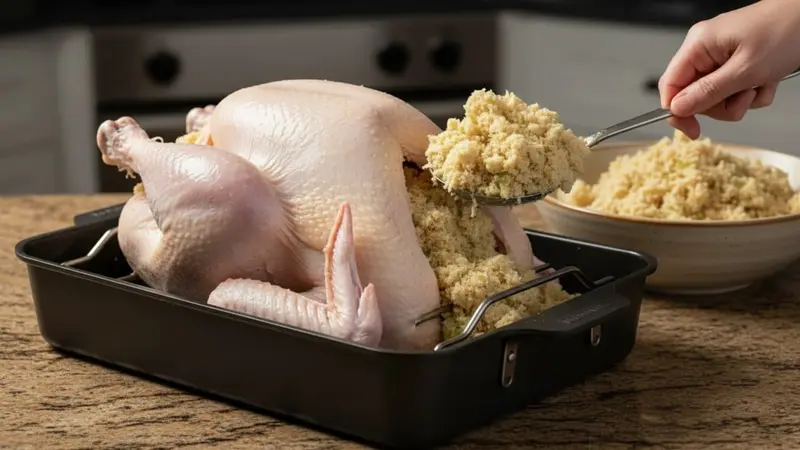
Step 4: Roast the turkey until safe internal temperatures are reached
Active 15 min · Passive 195 min
Roast at 325°F (163°C). For a 12 lb stuffed turkey allow approximately 13–15 minutes per pound; estimate about 3 to 3½ hours total — begin checking temperatures at 2¾ hours. Use an instant-read thermometer to verify safety: the thickest part of the thigh (not touching bone) and the center of the stuffing must both reach at least 165°F (74°C). If the turkey skin is browning too quickly, tent with foil. The oven dish with leftover stuffing should be covered and finish at the same time (or until its center reaches 165°F). Baste only if desired; total active handling during roasting is minimal. (Active time: placing and occasional basting ≈ 15 minutes; Passive roasting time ≈ 195 minutes.)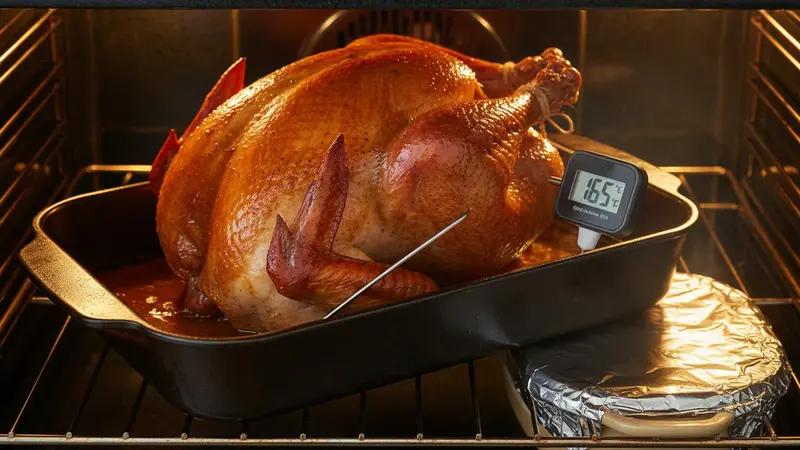
Step 5: Rest and remove stuffing
Active 10 min · Passive 20 min
When both turkey and stuffing reach 165°F/74°C, remove the turkey and the oven dish from the oven and tent the turkey loosely with foil. Let the turkey rest 20 minutes (this is passive time) so juices redistribute; then transfer the cavity stuffing to a warmed serving bowl (do not re-stuff) and stir the baked stuffing in the dish before serving. Refrigerate any leftover stuffing and carved turkey within 2 hours in shallow containers. (Active time: transfer and finish stuffing ≈ 10 minutes; Passive time: resting ≈ 20 minutes.)Step 6: Carve and serve
Active 15 min
Carve the turkey into portions (breast slices, thigh and drumstick pieces) and arrange with the baked stuffing and the cavity stuffing on a platter. Serve each person one plated portion; Makes one roasted stuffed turkey—carve into 10 servings, about 1 serving (about 350g) each (serves 10). Reheat leftovers to 165°F/74°C before serving and use refrigerated leftovers within 3–4 days.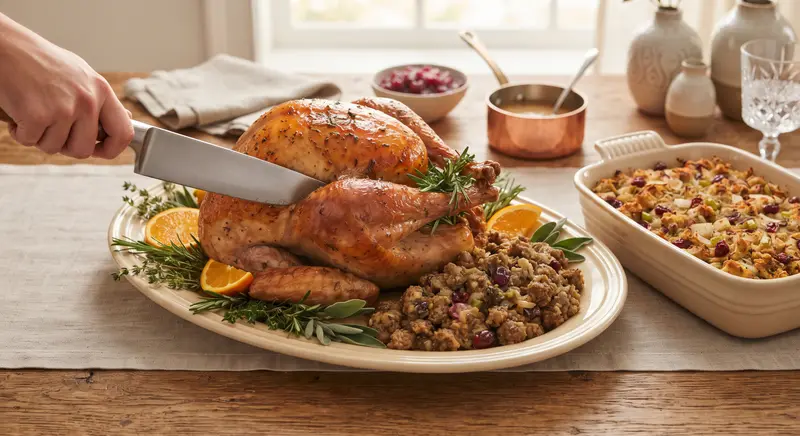
- Preheat the oven to 325°F (163°C). Remove the turkey from its packaging, remove and reserve the neck and giblets (do not wash the turkey), pat the skin and cavity dry with paper towels, and place the bird breast-side up on a rack in a roasting pan. Make a compound butter by softening a total of 6 tablespoons unsalted butter and stirring in 3 tablespoons kosher salt, 1.5 teaspoons black pepper, and 1 teaspoon poultry seasoning; rub this mixture under the skin over the breasts and all over the exterior of the turkey. Reserve the remaining 1 tablespoon poultry seasoning, 1 tablespoon kosher salt and 0.5 teaspoon black pepper for the stuffing mix. (Active time: rub and prep turkey ≈ 15 minutes.)
- In a medium skillet over medium heat, melt the remaining 3 tablespoons of the unsalted butter and sauté the diced yellow onion and diced celery until softened, about 6–8 minutes. In a large bowl combine 8 cups gluten-free bread cubes, the sautéed onion and celery, the beaten egg, 1 tablespoon of the kosher salt and 0.5 teaspoon black pepper reserved above, 1 teaspoon poultry seasoning, and 1 to 1.5 cups warmed gluten-free chicken broth; stir and add broth until the mixture is moist but not soupy — the total stuffing should be about 8 cups. Divide the stuffing: measure out roughly 4 cups to use for the turkey cavity and put the remaining 4 cups into an uncovered, ovenproof 2-quart baking dish (or similar) and cover it with foil to finish cooking in the oven alongside the turkey. (Active time: preparing stuffing ≈ 20 minutes.)
- Using a large spoon, loosely fill the turkey cavity with only about 4 cups of the prepared stuffing (about the approximate safe capacity of a 12 lb turkey cavity); do not pack the stuffing — leave it airy so heat can circulate. Tuck the wing tips under the body and truss the legs with kitchen twine, then brush any exposed skin with a bit of the melted butter from step 1. Place the roasting pan with the rack and turkey in the center of the oven and set the ovenproof dish with the reserved stuffing on a lower rack beside or under the turkey so it cooks in the same oven. (Active time: stuffing and trussing ≈ 10 minutes.)
- Roast at 325°F (163°C). For a 12 lb stuffed turkey allow approximately 13–15 minutes per pound; estimate about 3 to 3½ hours total — begin checking temperatures at 2¾ hours. Use an instant-read thermometer to verify safety: the thickest part of the thigh (not touching bone) and the center of the stuffing must both reach at least 165°F (74°C). If the turkey skin is browning too quickly, tent with foil. The oven dish with leftover stuffing should be covered and finish at the same time (or until its center reaches 165°F). Baste only if desired; total active handling during roasting is minimal. (Active time: placing and occasional basting ≈ 15 minutes; Passive roasting time ≈ 195 minutes.)
- When both turkey and stuffing reach 165°F/74°C, remove the turkey and the oven dish from the oven and tent the turkey loosely with foil. Let the turkey rest 20 minutes (this is passive time) so juices redistribute; then transfer the cavity stuffing to a warmed serving bowl (do not re-stuff) and stir the baked stuffing in the dish before serving. Refrigerate any leftover stuffing and carved turkey within 2 hours in shallow containers. (Active time: transfer and finish stuffing ≈ 10 minutes; Passive time: resting ≈ 20 minutes.)
- Carve the turkey into portions (breast slices, thigh and drumstick pieces) and arrange with the baked stuffing and the cavity stuffing on a platter. Serve each person one plated portion; Makes one roasted stuffed turkey—carve into 10 servings, about 1 serving (about 350g) each (serves 10). Reheat leftovers to 165°F/74°C before serving and use refrigerated leftovers within 3–4 days.
Gluten-Free Stuffed Turkey Tips
Dry the bread thoroughly
Spread the gluten-free cubes on a sheet pan and dry in a 250°F oven for 10–15 minutes or leave uncovered overnight; properly dried cubes absorb broth without becoming mushy.
Measure stuffing loosely
Spoon stuffing into a 1-cup measure without pressing—4 cups loosely packed is the approximate safe capacity for this 12 lb turkey cavity.
Warm the broth
Add warmed broth to the bread gradually so the mix becomes uniformly moist but not puddling; cold liquid will slow evaporation and make the mix soggy.
Thermometer placement
Check the thickest part of the thigh (not touching bone) and the center of the cavity stuffing; both must read 165°F/74°C for safety.
Let it rest
Tent and rest the turkey 20 minutes after roasting to let juices redistribute; transfer cavity stuffing to a warm bowl before carving.
Prevent Cross-Contact in the Kitchen
Prep your turkey and any gluten-free sides on thoroughly cleaned surfaces, use clean or foil-lined roasting pans, and keep separate carving knives and cutting boards away from any traditional bread or gluten products
Gluten-Free Stuffed Turkey Variations and Substitutions
Dairy‑free swap
Use a plant-based stick margarine in place of butter at a 1:1 ratio and choose dairy-free chicken-style broth; the butter-under-skin technique still gives the breast fat for browning and moisture.
Sausage and apple
Sauté 8 oz ground pork sausage and 1 diced apple with the onions and celery, drain excess fat, then proceed—precooking is required to ensure the meat in the stuffing reaches a safe temperature.
Herb-forward fresh twist
Fold in 2 tablespoons chopped fresh sage and 1 tablespoon chopped thyme to the stuffing for brighter, fresher herb notes that complement the poultry seasoning.
Grain-based alternative
Replace half or all the bread with 2 cups cooked wild rice or short-grain brown rice (cooled); reduce broth to 3/4–1 cup to avoid excess moisture and omit the egg if you prefer a looser, grain-style dressing.
How to Store and Make Gluten-Free Stuffed Turkey Ahead
Refrigerate carved turkey and all leftover stuffing in shallow containers within 2 hours of finishing; use within 3–4 days. To reheat stuffing, loosen with a splash of warm broth, cover and heat in a 350°F oven until the center reaches 165°F; reheat turkey portions until 165°F as well.
What to Serve With Gluten-Free Stuffed Turkey
Serve with a simple pan gravy made from the roasting drippings, roasted root vegetables (carrots and parsnips) and a bright cranberry relish to cut the richness. For wine, a medium-bodied Pinot Noir or a rounded Chardonnay meshes well with buttered turkey and savory gluten-free stuffing.
Gluten-Free Stuffed Turkey FAQs
Can I prepare the stuffing a day ahead?
Yes—assemble the stuffing (without stuffing the bird), refrigerate in an airtight container up to 24 hours, then bring to room temperature briefly and add warmed broth before using; bake the reserved portion covered with foil alongside the turkey.
Is it safe to stuff the turkey ahead of time?
No—USDA guidance recommends stuffing the turkey immediately before roasting to reduce bacterial growth; keep the prepared stuffing refrigerated until right before you fill the cavity.
How can I tell if the turkey is done without cutting it open?
Use an instant-read thermometer in the thickest part of the thigh and in the center of the cavity stuffing—both must reach 165°F/74°C; visual cues like loose leg joints and clear juices help but are not substitutes for a thermometer.
My turkey is browning too fast—what should I do?
Tent the breast and wings loosely with foil and continue roasting at 325°F; remove the foil for the last 20–30 minutes if you want to re-crisp the skin.
How much stuffing will each person get?
The recipe makes 8 cups of stuffing total—4 cups go into the cavity and 4 cups bake in the dish—so with 10 servings you’ll have about 0.8 cups of stuffing available per person if divided evenly.
About the author
Jake WoodsHello, I'm Jake. I started this recipe site with the idea that I hated recipe websites that overwhelm you with long stories and ads just to see plain content that's not helpful. My goal is to provide you with quality recipes, simple ideas and a fun cooking experience. There's lots of fun things to cook, and I think as you browse the site you'll find that TopShelf.Recipes is the place for quality recipes on the web.
See all recipes by Jake Woods →Ratings & Reviews
Did you make this recipe?
Be the first to share your experience.
Nutrition Facts
Per serving: 350g
Nutrition values are estimated from USDA ingredient data and may vary based on preparation, brands, and portion sizes. Values are provided for informational purposes only.
Keep Reading
Guides & articles for this recipe
Recipes
Gluten-Free Thanksgiving Guide
A practical, reader-first guide to planning and executing a gluten-free Thanksgiving that tastes like tradition — turkey, sides, stuffing, gravy, and desserts. Includes safety, shopping, and make-ahead strategies to keep your holiday calm and cross-contamination-free.
Seasonal
Mastering Thanksgiving Sides
A practical roundup of Thanksgiving side dishes that balance make-ahead ease with crowd-pleasing flavor. Find vegetable roasts, creamy potatoes, classic casseroles, and breads to round out your holiday table.
Seasonal
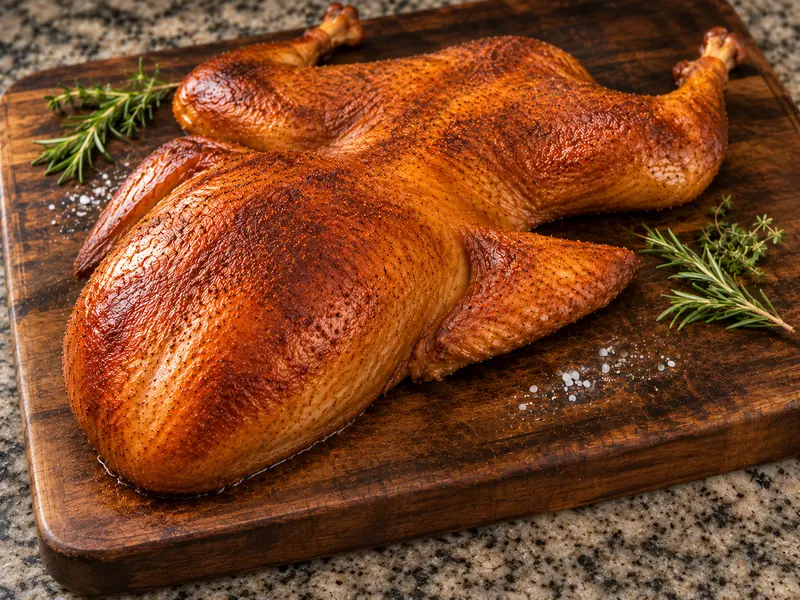
Frog-Style Thanksgiving Turkey
A practical guide to frogging (Al Frugoni) a Thanksgiving turkey: what frog-style means, how it differs from spatchcocking, step-by-step butchery and roasting timing, and seasonal flavoring and serving tips to make the technique work for your holiday table.
More from Thanksgiving
View all Thanksgiving recipes →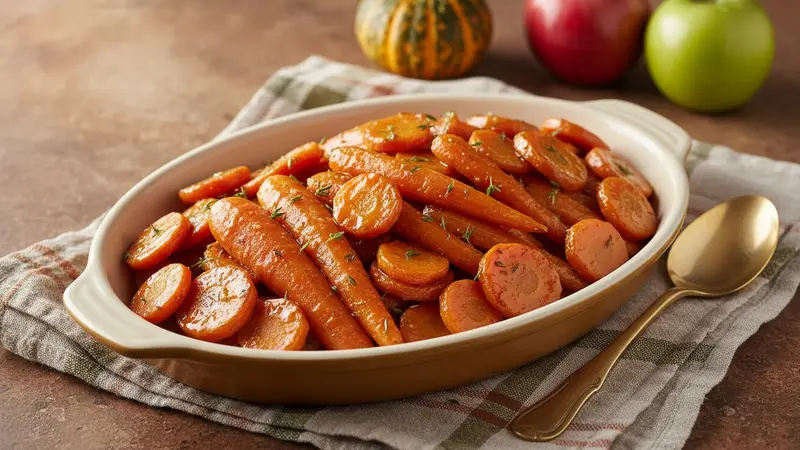
Maple Glazed Carrots

Cranberry Brie Bites with Puff Pastry and Toasted Pecans
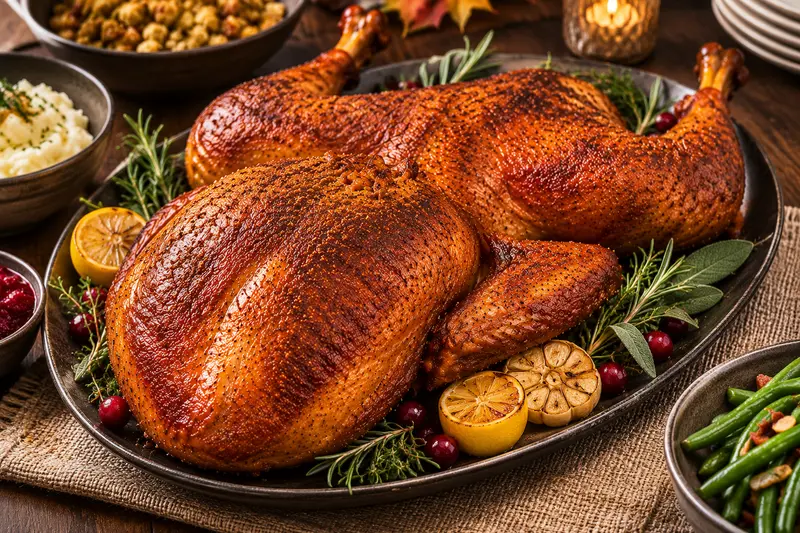
Frog Style Turkey
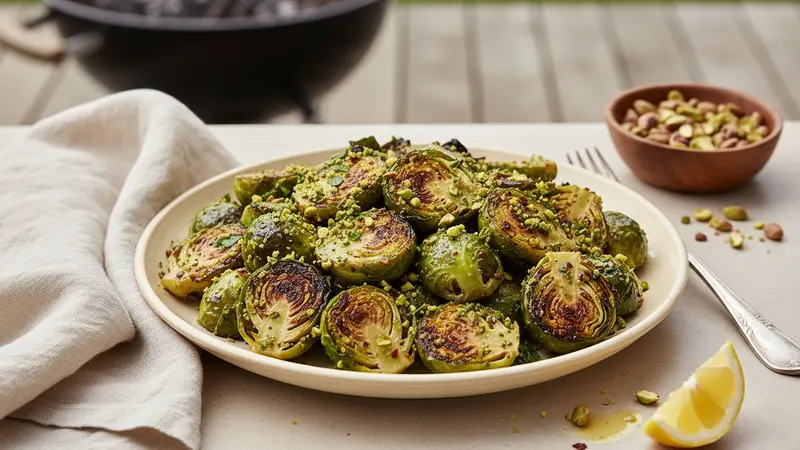
Grilled Brussels Sprouts with Pistachio Gremolata
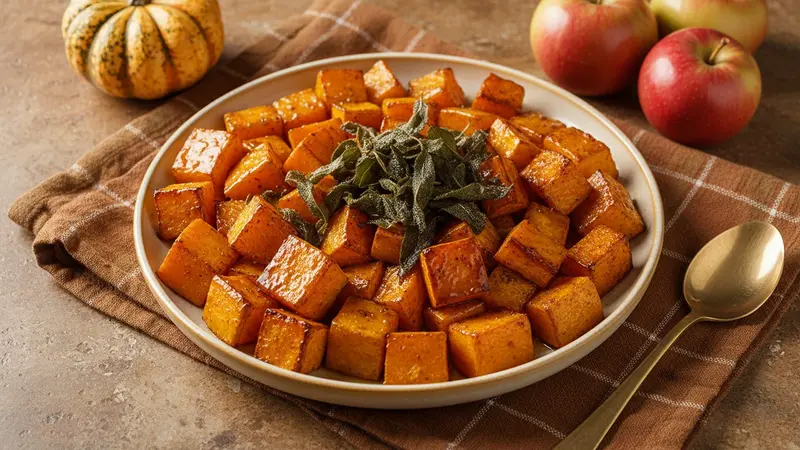
Brown Butter Sage Roasted Butternut Squash
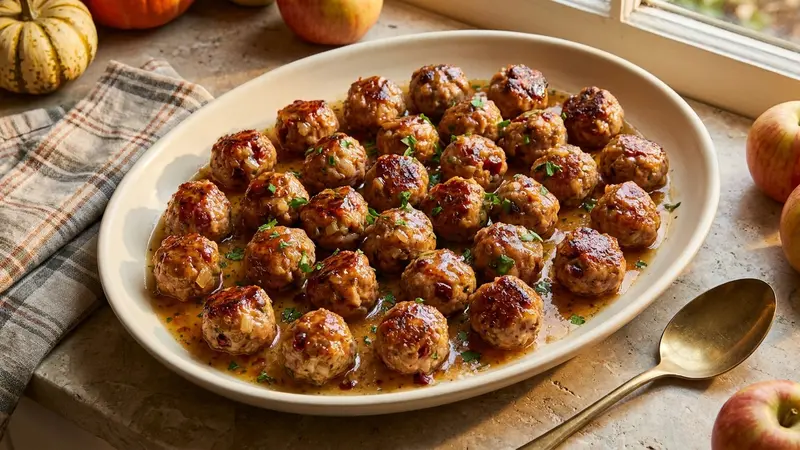
Cranberry-Orange Meatballs
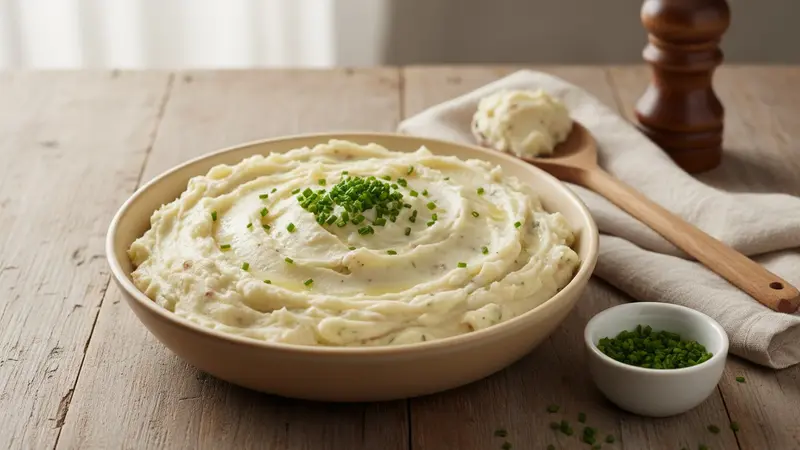
Creamy Boursin Mashed Potatoes with Chives
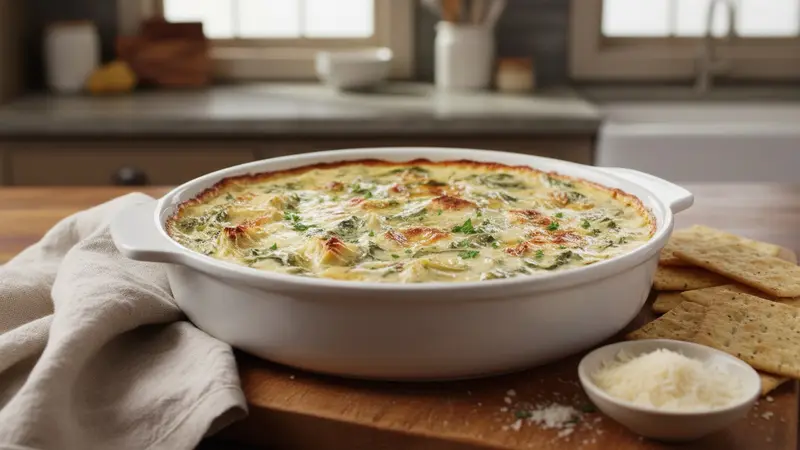
Hot Boursin Spinach Artichoke Dip (Creamy Oven-Baked)

Crispy Baked Parmesan Boursin
Ask me anything about this recipe — substitutions, scaling, techniques, timing.
Powered by AI · 6 questions per 5 minutes, 30 per day