Frog Style Turkey
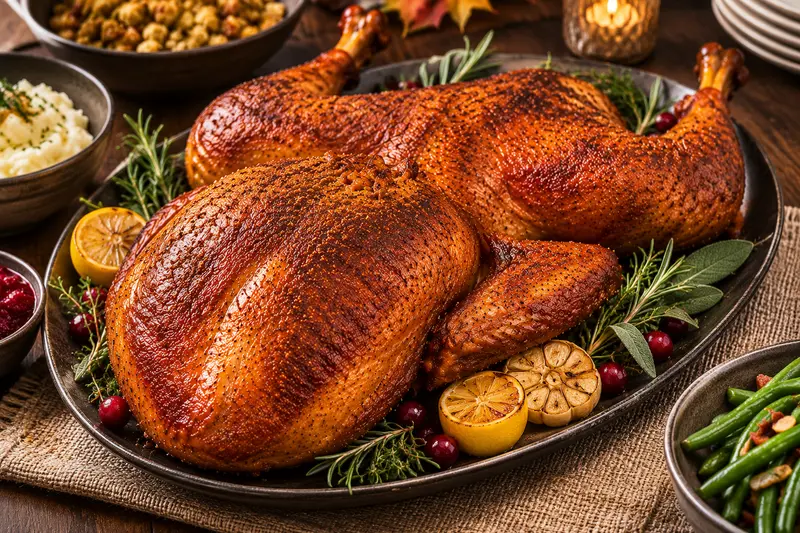
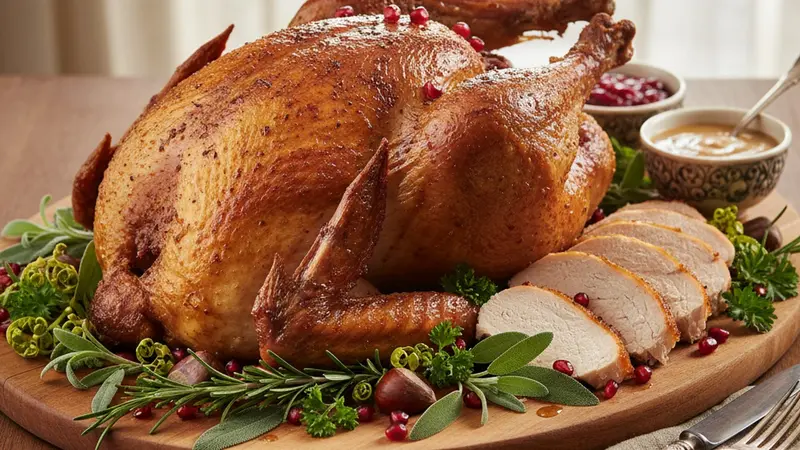
A frog-style turkey is a flattened roasting technique that keeps the backbone intact while opening the bird for even cooking and faster roast time. This recipe uses a short dry-brine and herb-garlic compound butter tucked under the skin for moist, flavorful white meat and crisp, browned skin—ideal for a Thanksgiving centerpiece.
Jake Woods's note
"Loosen the skin gently with your fingertips or a small offset spatula before pushing the compound butter underneath—too much force tears the skin and leaks flavor. Focus on even breast thickness when you press the bird flat and rely on an instant-read thermometer (165°F/74°C in both breast and thigh) rather than a clock for doneness."
About This Recipe
Frog-style turkey is a middle ground between spatchcocking and a traditional roast: the backbone stays attached while the bird is flattened, so the breasts and thighs sit more evenly in the pan. That even profile shortens cook time, encourages a uniformly browned skin, and makes it far easier to keep the white meat juicy. This version leans on a short dry-brine for seasoning and a garlic-herb compound butter tucked under the skin to baste the meat from the inside as it roasts.
The aromatic veg bed and the halved lemon in the pan add a layer of savory, caramelized juices perfect for a gravy, while the reserved butter on the skin helps achieve a deep, glossy color. A 12 lb bird roasted this way will typically yield roughly 6.6 lb (3.0 kg) of carved meat—divide that by eight for approximately 375 g per serving—so you get a reliably generous centerpiece without an all-day roast or complicated equipment.
Ingredients for Frog Style Turkey
- 12 lb Whole turkey (preferably 10–14 lb)
- 3 tbsp Kosher salt
- 2 tsp Black pepper, freshly ground
- 8 tbsp Unsalted butter, softened
- 2 tbsp Fresh thyme leaves, chopped
- 2 tbsp Fresh rosemary, chopped
- 6 cloves Garlic, minced
- 1 each Lemon (zest + 1 large halved)
- 2 tbsp Olive oil
- 1 batch Aromatic vegetables (1 medium onion, 2 carrots, 2 celery stalks), roughly chopped
How to Make Frog Style Turkey
Step 1: Dry-brine the turkey
Active 15 min · Passive 720 min
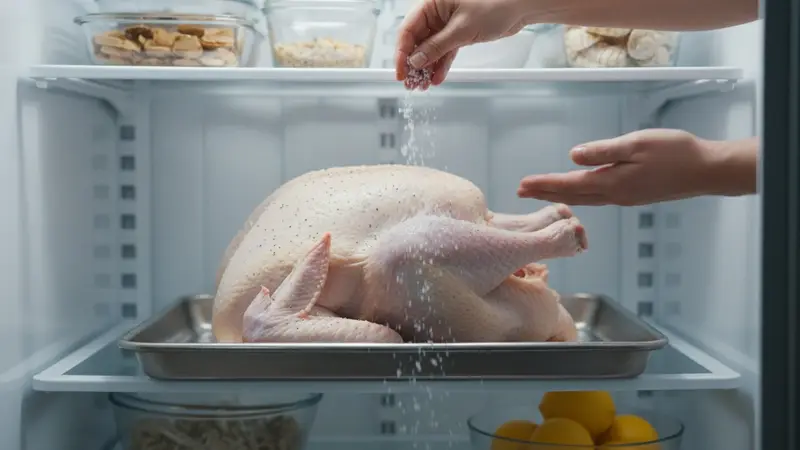
Remove giblets and pat the whole turkey dry with paper towels. Sprinkle the Kosher salt evenly over the skin, inside the cavity, and (where you can) under the skin of the breasts; season the surface with Black pepper. Place the turkey on a rimmed sheet or in a shallow pan, uncovered in the refrigerator for 8–24 hours to dry-brine and firm the skin.For this step
- 12 lbWhole turkey (preferably 10–14 lb)
- 3 tbspKosher salt
- 2 tspBlack pepper, freshly ground
Step 2: Make the herb-garlic compound butter
Active 10 min
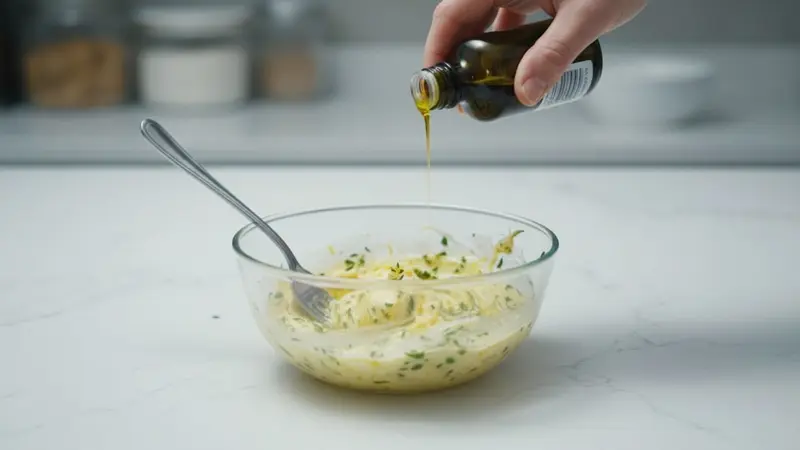
In a bowl, mash the Unsalted butter with Fresh thyme, Fresh rosemary, Garlic and the Zest of the Lemon; add 1 tablespoon Olive oil to loosen if needed and season lightly with Black pepper. Reserve about 2 tablespoons of the compound butter for rubbing the skin later and keep the rest accessible for tucking under the skin.For this step
- 8 tbspUnsalted butter, softened
- 2 tbspFresh thyme leaves, chopped
- 2 tbspFresh rosemary, chopped
- 6 clovesGarlic, minced
- 1 eachLemon (zest + 1 large halved)
Step 3: Flatten the turkey frog-style
Active 5 min
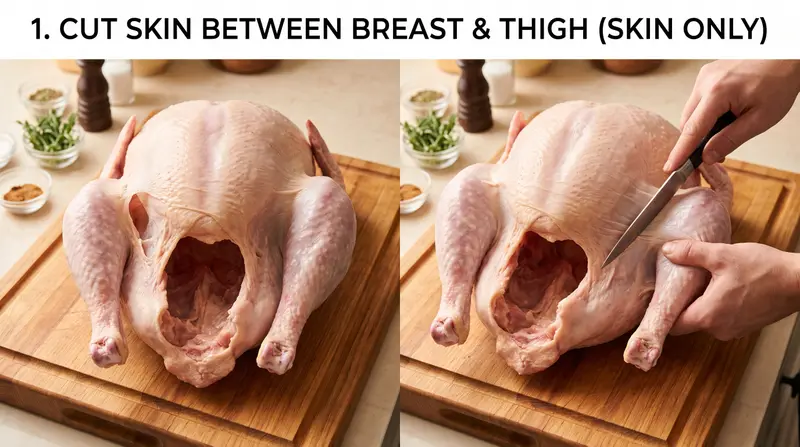
Set the turkey breast-side up on a large cutting board. Using a sharp knife, slice between the legs and the cavity, careful to not cut the meat on the breast or leg.
Step 4: Separate the breast section
Active 5 min
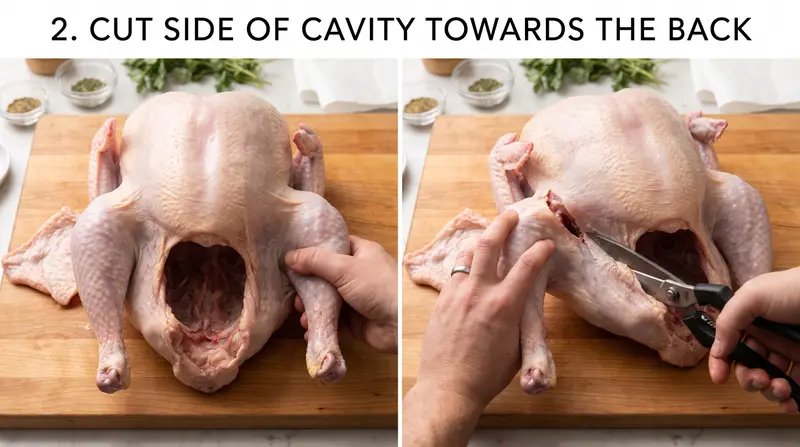
Using poultry shears, carefully cut the sides of the cavity back (cutting the ribs) to allow the breast to open without removing the backbone;
For this step
- 1 batchAromatic vegetables (1 medium onion, 2 carrots, 2 celery stalks), roughly chopped
Step 5: Flip and Flatten
Active 5 min
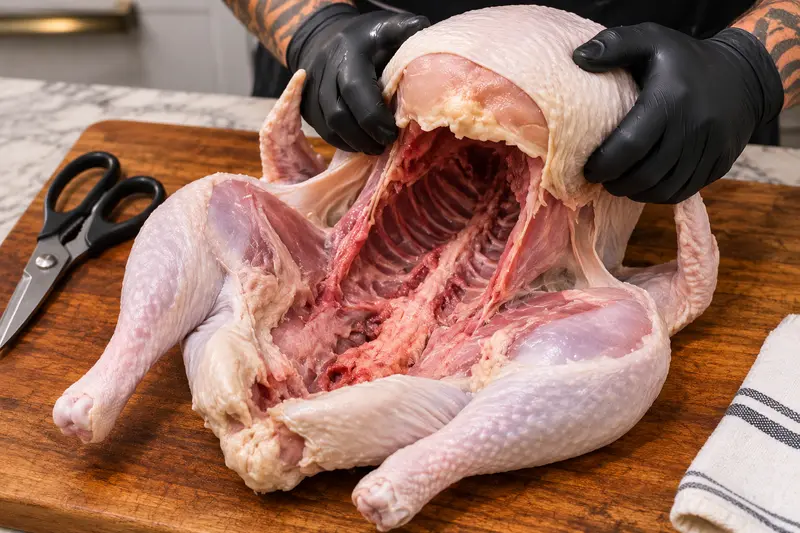
Pull back the breast, rotating the breast so the internal cavity is exposed. Flip over the bird (cavity side down) and then press down firmly on the breast to flatten the bird into a single even layer (backbone remains attached). Tuck wingtips back and arrange the legs so the bird lies flat and even for roasting.
Step 6: Apply compound butter and prep the pan
Active 15 min
Loosen the skin over each breast with your fingers and spread the compound butter under the skin and over the breasts, using the reserved butter on the surface as needed; rub the outer skin lightly with the remaining 1 tablespoon Olive oil and additional Black pepper. Scatter the Aromatic vegetables in a large roasting pan, place halved Lemon and the flattened turkey on top (breast up), and tuck any loose skin to create an even surface.Step 7: Roast, watching temperature not time
Active 10 min · Passive 105 min
Preheat the oven to 425°F (220°C). Roast the turkey at 425°F for 30 minutes to jump-start browning, then reduce oven temperature to 350°F (175°C) and continue roasting until an instant-read thermometer inserted into the thickest part of the breast and the thickest part of the thigh reads 165°F (74°C); expect about 70–90 more minutes for a 12 lb bird (timing varies—use temperature). If the skin is browning too quickly, tent loosely with foil.Step 8: Rest, carve and serve
Active 15 min · Passive 20 min
Remove the turkey from the oven and tent loosely with foil; rest 20 minutes so juices redistribute before carving. Carve the flattened bird into breasts and legs and measure the carved meat; one finished cooked frog-style turkey from a 12 lb (5.4 kg) bird yields roughly 6.6 lb (3.0 kg) carved meat—serve each portion as 1 serving (about 375g). Makes one cooked frog-style turkey; serve 1 serving (about 375g) (serves 8). Refrigerate leftovers within 2 hours and reheat to 165°F (74°C) before serving.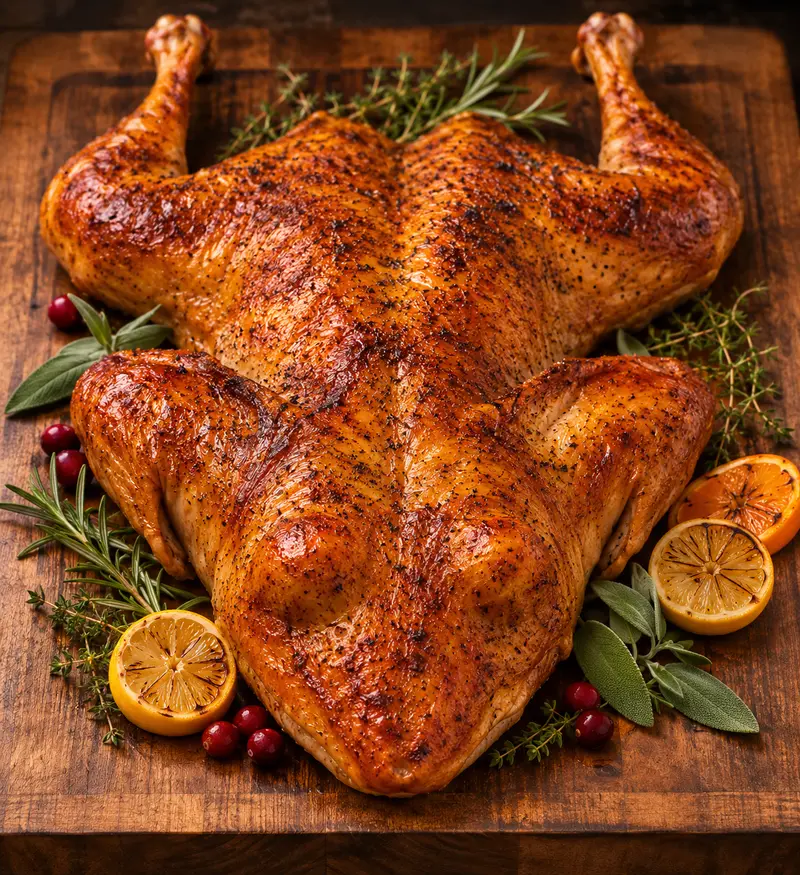
- Remove giblets and pat the whole turkey dry with paper towels. Sprinkle the Kosher salt evenly over the skin, inside the cavity, and (where you can) under the skin of the breasts; season the surface with Black pepper. Place the turkey on a rimmed sheet or in a shallow pan, uncovered in the refrigerator for 8–24 hours to dry-brine and firm the skin.
- In a bowl, mash the Unsalted butter with Fresh thyme, Fresh rosemary, Garlic and the Zest of the Lemon; add 1 tablespoon Olive oil to loosen if needed and season lightly with Black pepper. Reserve about 2 tablespoons of the compound butter for rubbing the skin later and keep the rest accessible for tucking under the skin.
Set the turkey breast-side up on a large cutting board. Using a sharp knife, slice between the legs and the cavity, careful to not cut the meat on the breast or leg.
Using poultry shears, carefully cut the sides of the cavity back (cutting the ribs) to allow the breast to open without removing the backbone;
Pull back the breast, rotating the breast so the internal cavity is exposed. Flip over the bird (cavity side down) and then press down firmly on the breast to flatten the bird into a single even layer (backbone remains attached). Tuck wingtips back and arrange the legs so the bird lies flat and even for roasting.
- Loosen the skin over each breast with your fingers and spread the compound butter under the skin and over the breasts, using the reserved butter on the surface as needed; rub the outer skin lightly with the remaining 1 tablespoon Olive oil and additional Black pepper. Scatter the Aromatic vegetables in a large roasting pan, place halved Lemon and the flattened turkey on top (breast up), and tuck any loose skin to create an even surface.
- Preheat the oven to 425°F (220°C). Roast the turkey at 425°F for 30 minutes to jump-start browning, then reduce oven temperature to 350°F (175°C) and continue roasting until an instant-read thermometer inserted into the thickest part of the breast and the thickest part of the thigh reads 165°F (74°C); expect about 70–90 more minutes for a 12 lb bird (timing varies—use temperature). If the skin is browning too quickly, tent loosely with foil.
- Remove the turkey from the oven and tent loosely with foil; rest 20 minutes so juices redistribute before carving. Carve the flattened bird into breasts and legs and measure the carved meat; one finished cooked frog-style turkey from a 12 lb (5.4 kg) bird yields roughly 6.6 lb (3.0 kg) carved meat—serve each portion as 1 serving (about 375g). Makes one cooked frog-style turkey; serve 1 serving (about 375g) (serves 8). Refrigerate leftovers within 2 hours and reheat to 165°F (74°C) before serving.
Frog Style Turkey Tips
Loosen Skin Carefully
Work with a clean finger or the rounded end of a spoon to separate skin from meat; create a pocket instead of tearing and distribute the butter in thin layers.
Score Keel, Don’t Saw
Make a shallow cut in the keel cartilage to let the breast open; cutting only the cartilage allows you to press the bird flat while keeping the backbone intact for support.
Thermometer Is Essential
Check the thickest part of the breast and the thigh—both should register 165°F (74°C); ignore roast time estimates and rely on temperature.
Even Bed for Roasting
Scatter the chopped onion, carrots and celery to lift the bird off the pan bottom so air circulates and pan juices don’t burn.
Tenting for Browning Control
If the skin reaches your preferred color too soon, tent loosely with foil and continue roasting so the interior can finish without over-browning.
Frog Style Turkey Variations and Substitutions
Make-Ahead Compound Butter
Prepare the herb-garlic butter up to 3 days ahead and keep refrigerated, or freeze in a log for up to 3 months; slice and use directly under the skin when roasting.
Citrus and Sage Twist
Substitute half the rosemary with chopped sage and add 1 teaspoon orange zest instead of lemon for a sweeter, autumnal note that pairs well with pan gravy.
Spatchcock Alternative
If you prefer removing the backbone entirely, follow the same seasoning and butter technique but expect a faster cook time—use a thermometer to determine doneness rather than a preset clock.
Smaller Bird or Chicken
The method scales: for a 4–6 lb chicken, cut the compound butter roughly in half and shorten roasting time; always aim for 165°F (74°C) internal temperature.
How to Store and Make Frog Style Turkey Ahead
Carve the turkey and refrigerate leftovers in shallow, airtight containers within 2 hours of coming out of the oven; use within 3–4 days. To reheat, warm gently in a 325°F oven until the center reaches 165°F (74°C), or slice and reheat portions in a skillet or microwave to the same temperature; you can freeze portions for up to 3 months, thawing in the refrigerator before reheating.
What to Serve With Frog Style Turkey
Use the pan juices and roasted aromatics to make a simple gravy—skim excess fat, deglaze with a splash of white wine or stock, then whisk in a roux or slurry. Serve with mashed potatoes or creamy parsnip purée, roasted Brussels sprouts or green beans, and a bright cranberry relish to cut the richness; pair with a medium-bodied white (Chardonnay) or light red (Pinot Noir). Carve breasts across the grain in thin slices and serve leg quarters whole or separated for visual impact.
Frog Style Turkey FAQs
How long will this take for different turkey sizes?
The recipe’s timing guidance is a framework—after the 30-minute high-heat start at 425°F, a 12 lb bird typically needs about 70–90 more minutes at 350°F, but oven performance and bird shape vary. Always use an instant-read thermometer and remove the turkey when both the thickest part of the breast and thigh reach 165°F (74°C).
Can I remove the backbone entirely instead of scoring the keel?
Yes—spatchcocking (removing the backbone) produces a flatter bird and usually shortens cook time; keep the same compound butter and seasoning, but watch closely with a thermometer because it may finish sooner.
What if the skin tears when I push the butter under?
Patch small tears by gently pressing the reserved butter over the hole and smoothing with a fingertip; if the tear is large, tuck the breast meat under and rub the exterior butter over the skin to promote even browning.
Can I use salted butter instead of unsalted?
You can, but reduce the dry-brine salt slightly—cut the 3 tablespoons down by about 1 tablespoon—because salted butter’s sodium varies by brand and can lead to oversalting.
My breast is done before the thighs—what should I do?
If the breast reaches 165°F before the thighs, tent the breasts loosely with foil and continue roasting until the thighs hit 165°F; this prevents the white meat from drying while the dark meat finishes safely.
About the author
Jake WoodsHello, I'm Jake. I started this recipe site with the idea that I hated recipe websites that overwhelm you with long stories and ads just to see plain content that's not helpful. My goal is to provide you with quality recipes, simple ideas and a fun cooking experience. There's lots of fun things to cook, and I think as you browse the site you'll find that TopShelf.Recipes is the place for quality recipes on the web.
See all recipes by Jake Woods →Ratings & Reviews
Did you make this recipe?
Be the first to share your experience.
Nutrition Facts
Per serving: 1 serving
Nutrition values are estimated from USDA ingredient data and may vary based on preparation, brands, and portion sizes. Values are provided for informational purposes only.
Keep Reading
Guides & articles for this recipe
Seasonal
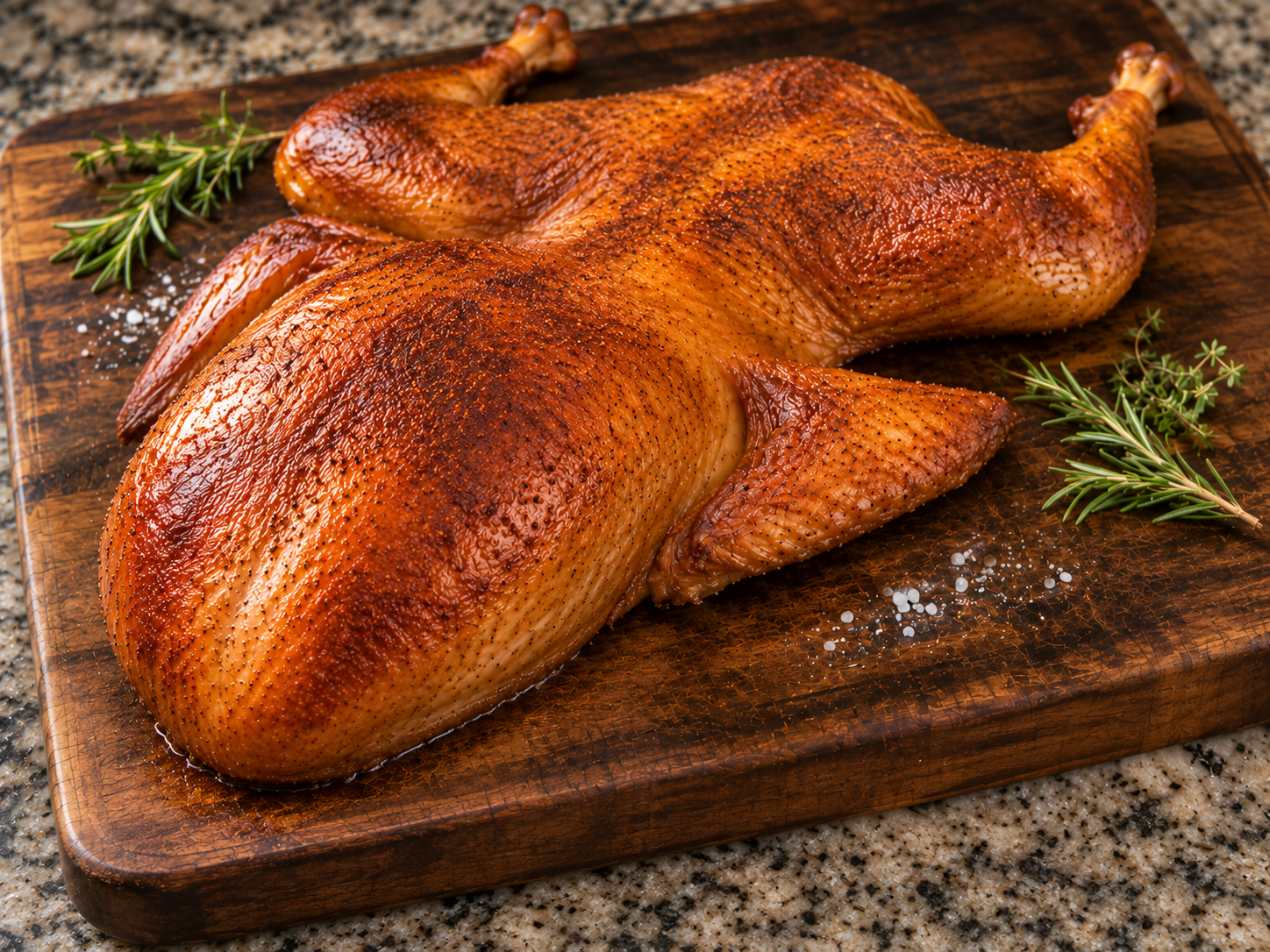
Frog-Style Thanksgiving Turkey
A practical guide to frogging (Al Frugoni) a Thanksgiving turkey: what frog-style means, how it differs from spatchcocking, step-by-step butchery and roasting timing, and seasonal flavoring and serving tips to make the technique work for your holiday table.
Equipment
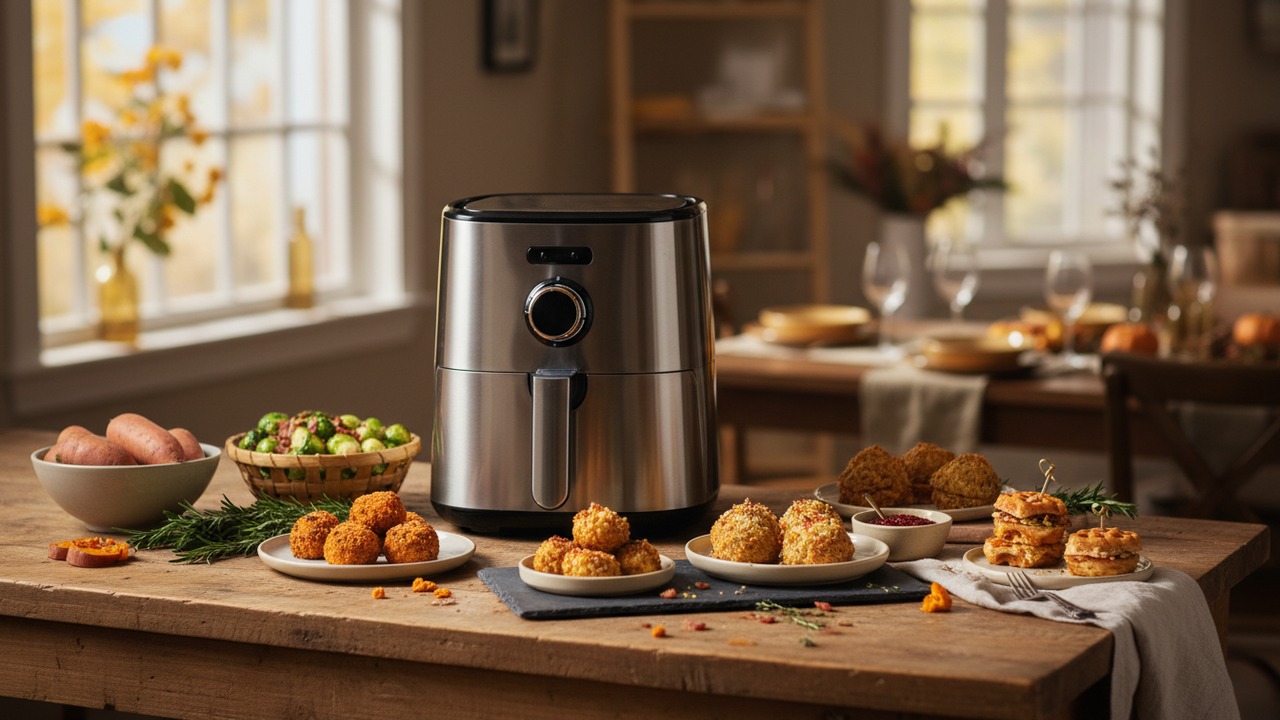
Air Fryer Thanksgiving Appetizers
Quick, crispy starters that are optimized for air fryers instead of oven-only methods. This plan lays out why air-fried appetizers work for holiday crowds and how to deliver 15 easy, crowd-pleasing recipes with timing, scaling, and holding tips.
Recipes
Smoked & Grilled Thanksgiving Appetizers
A practical guide for backyard hosts who want Thanksgiving starters from the smoker or grill. Covers equipment basics, three crowd-pleasing recipes (smoked oysters, shrimp skewers, charred crostini), and timing and pairing tips to keep service smooth.
More from Thanksgiving
View all Thanksgiving recipes →
Ask me anything about this recipe — substitutions, scaling, techniques, timing.
Powered by AI · 6 questions per 5 minutes, 30 per day